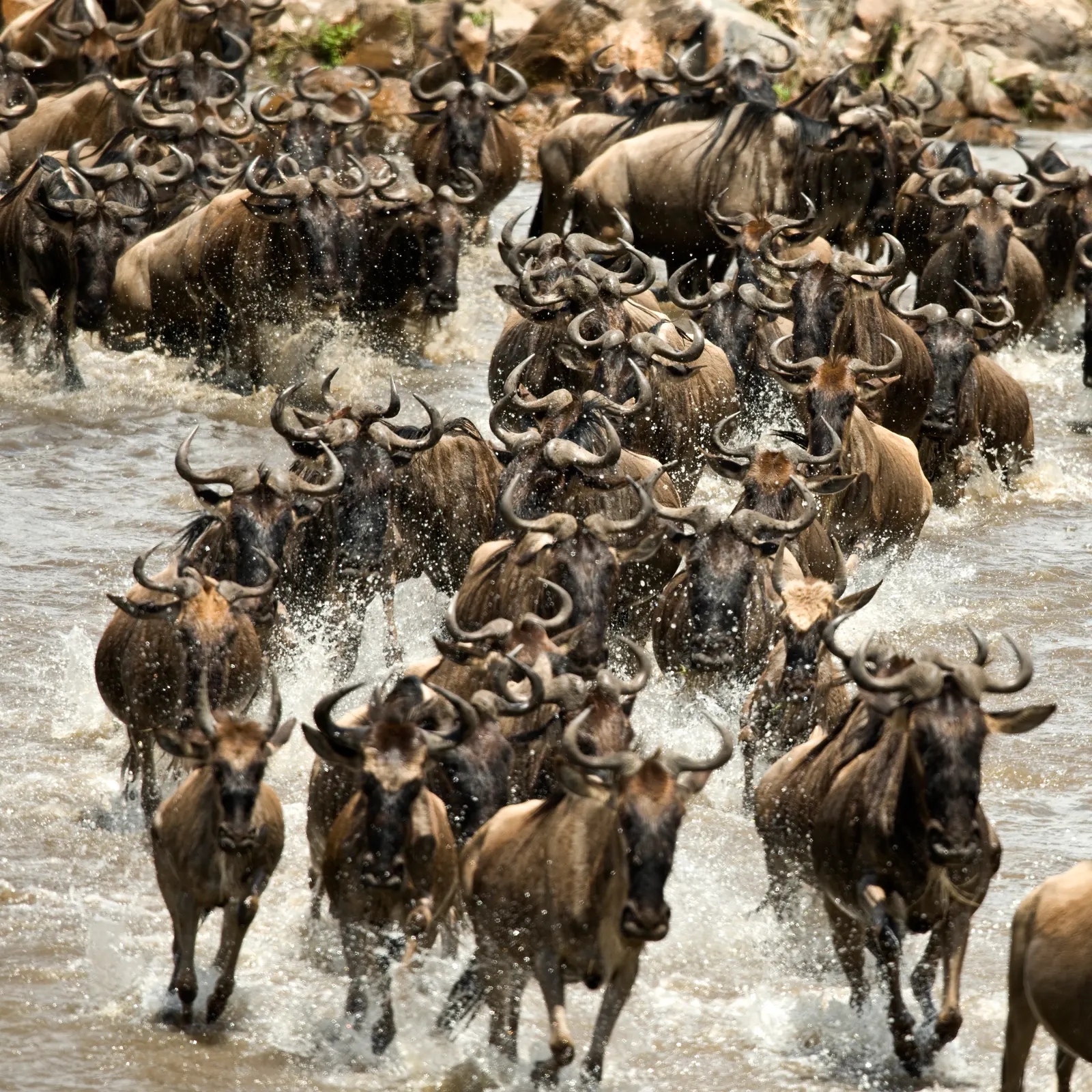
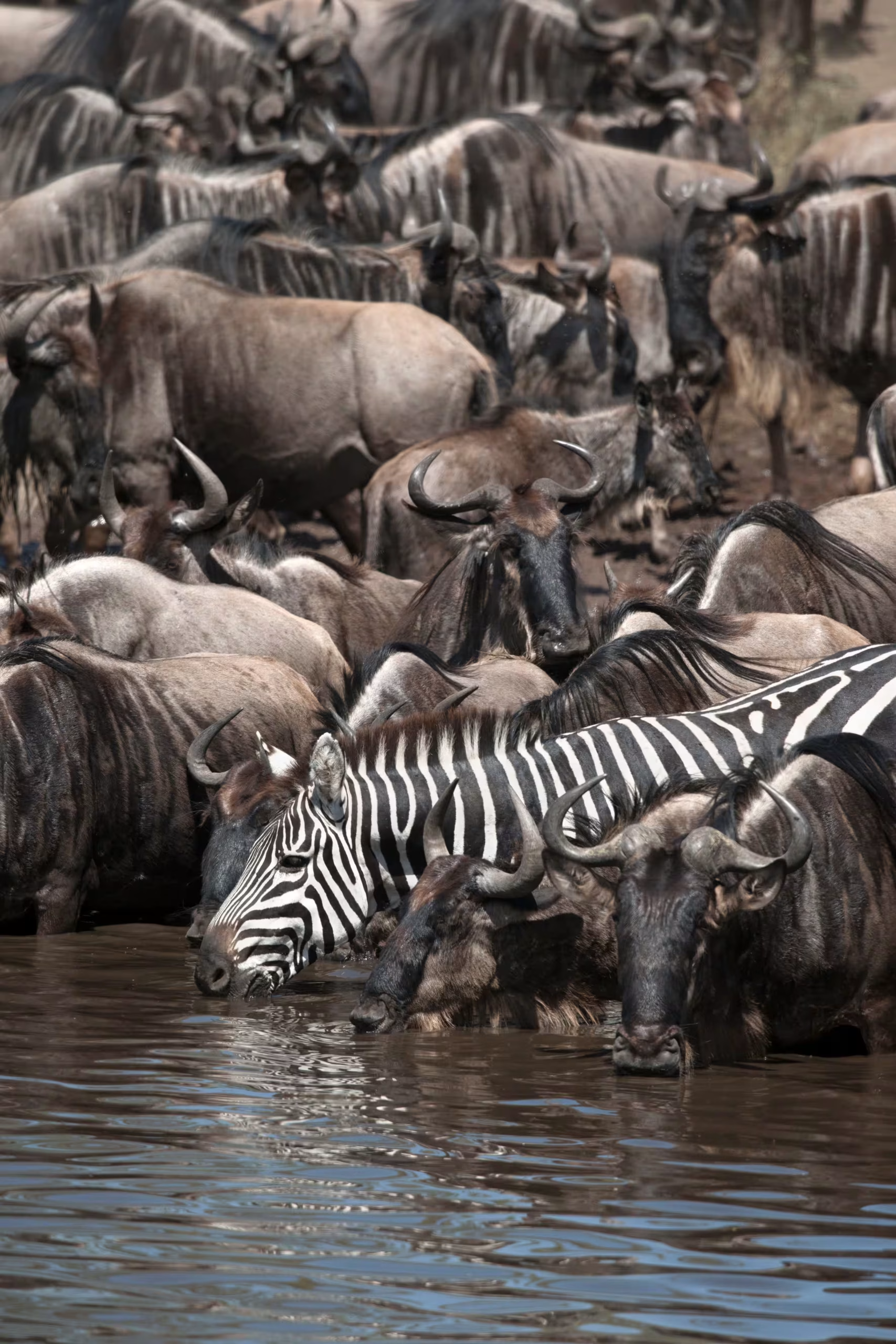
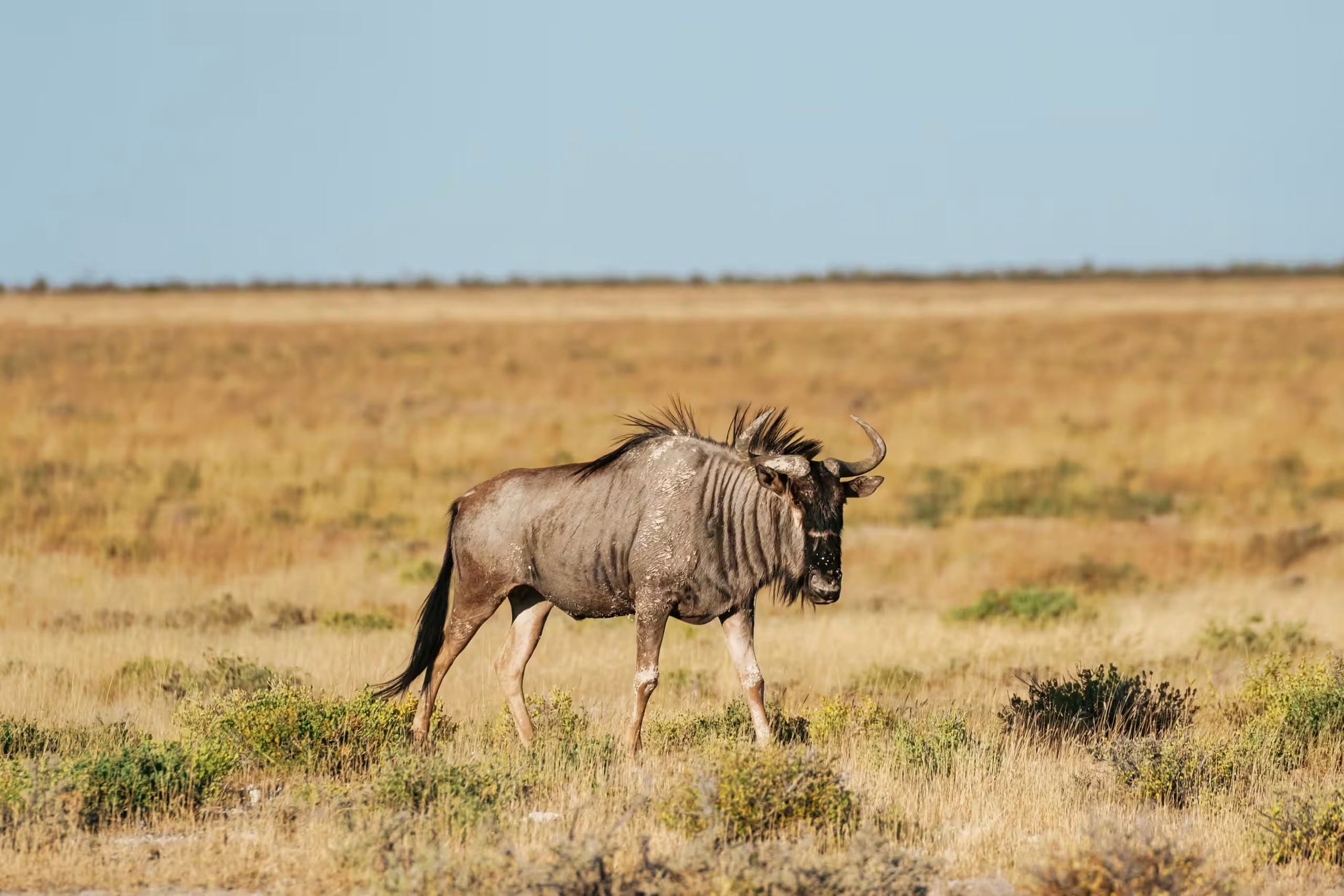
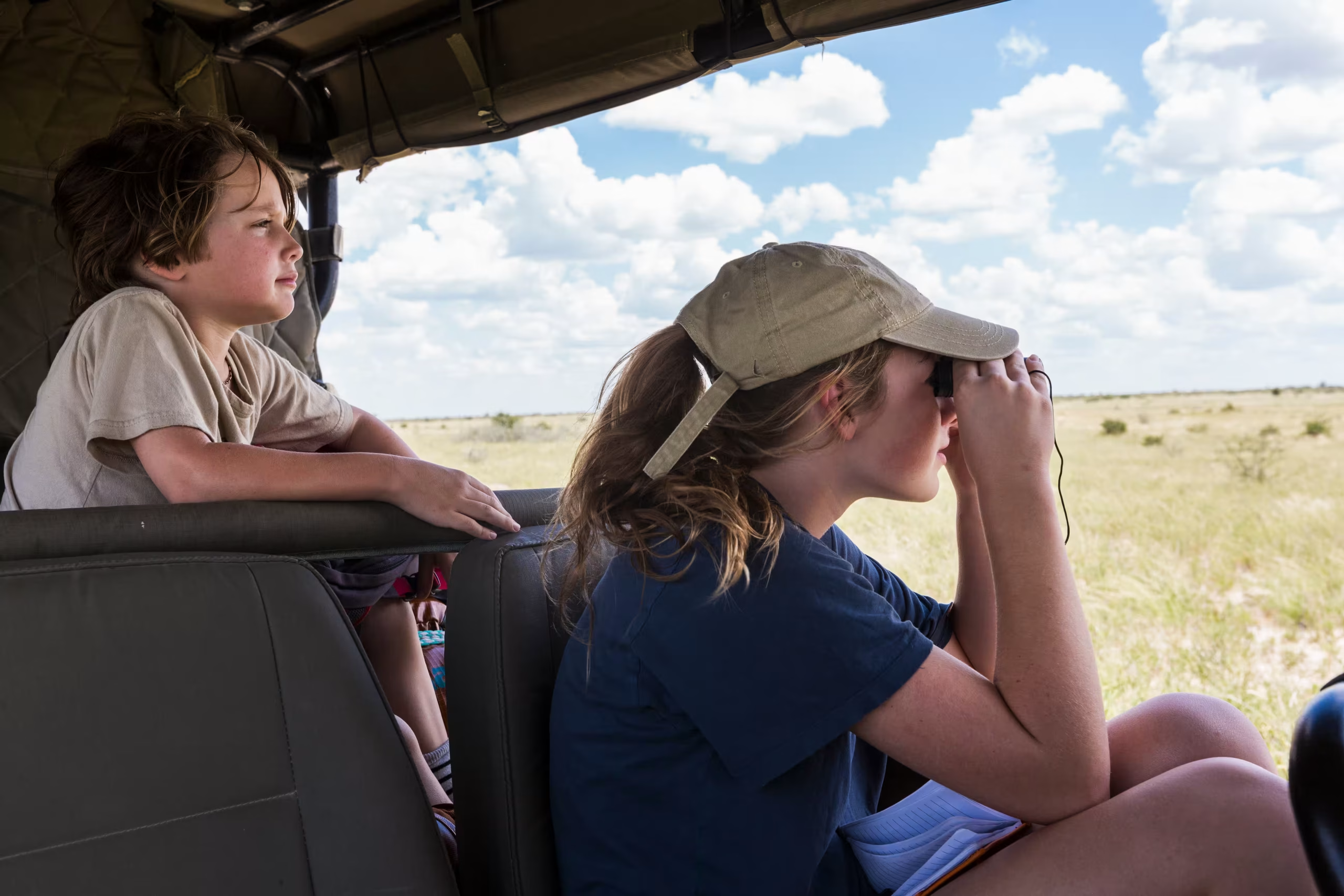
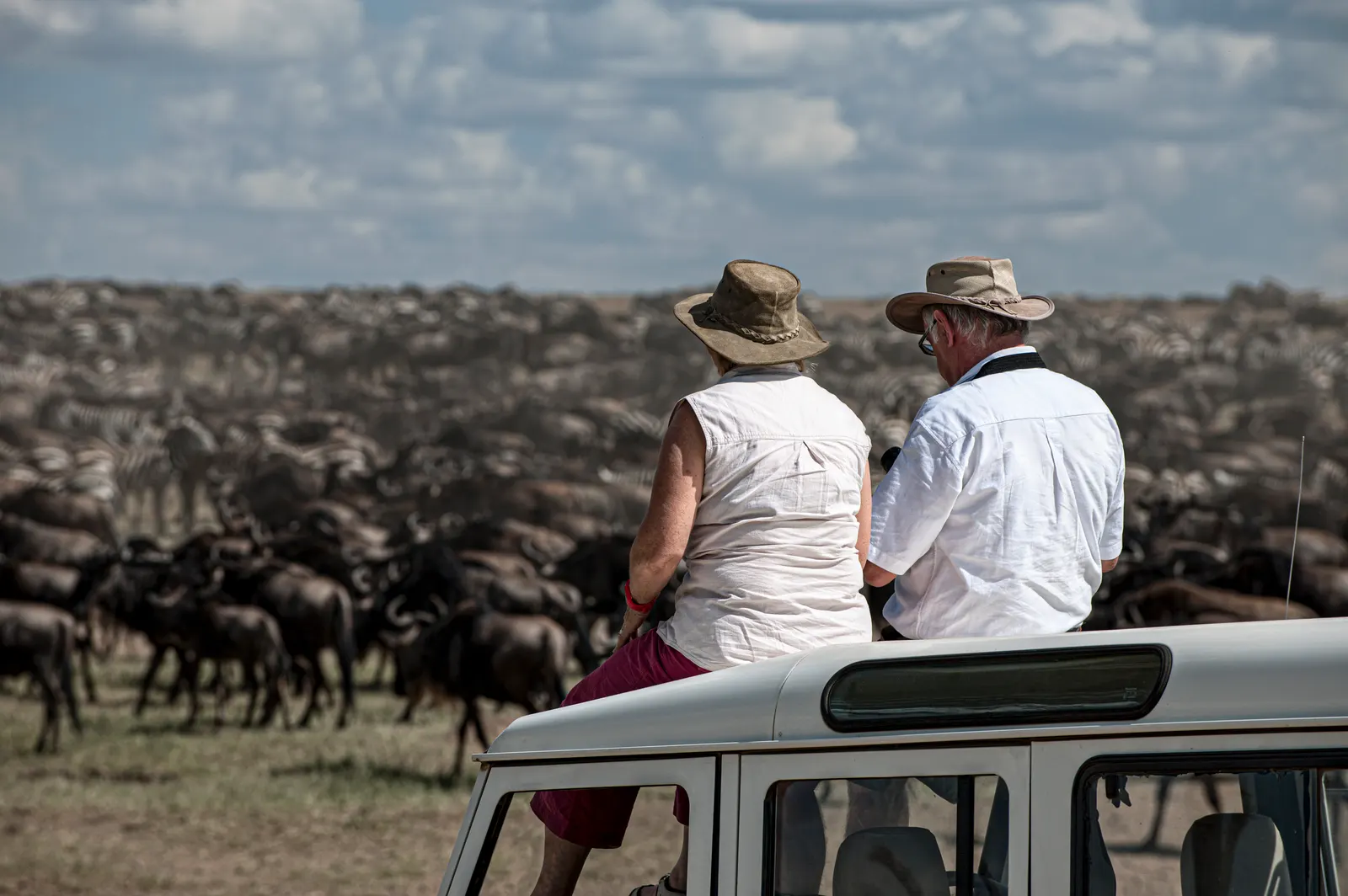
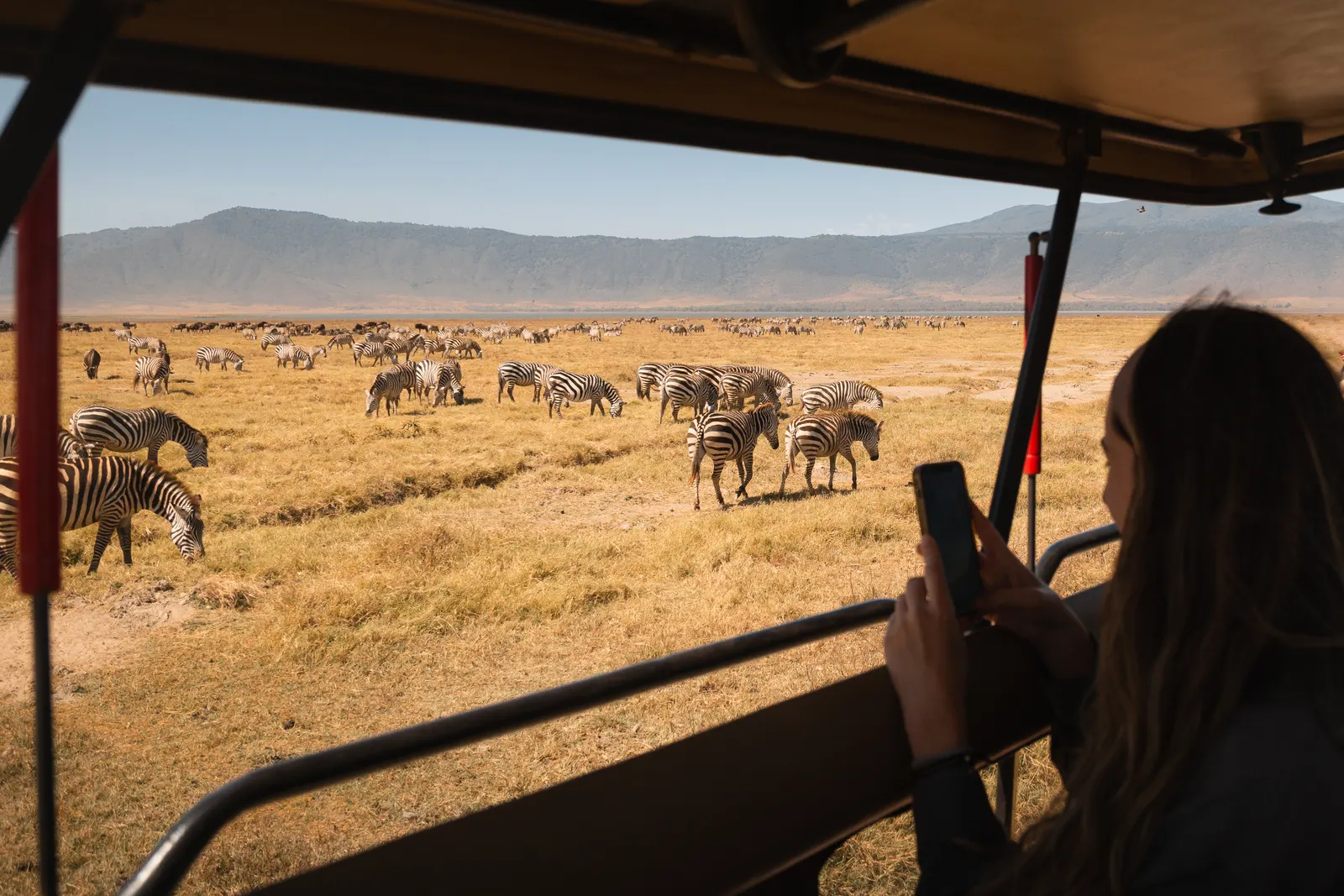
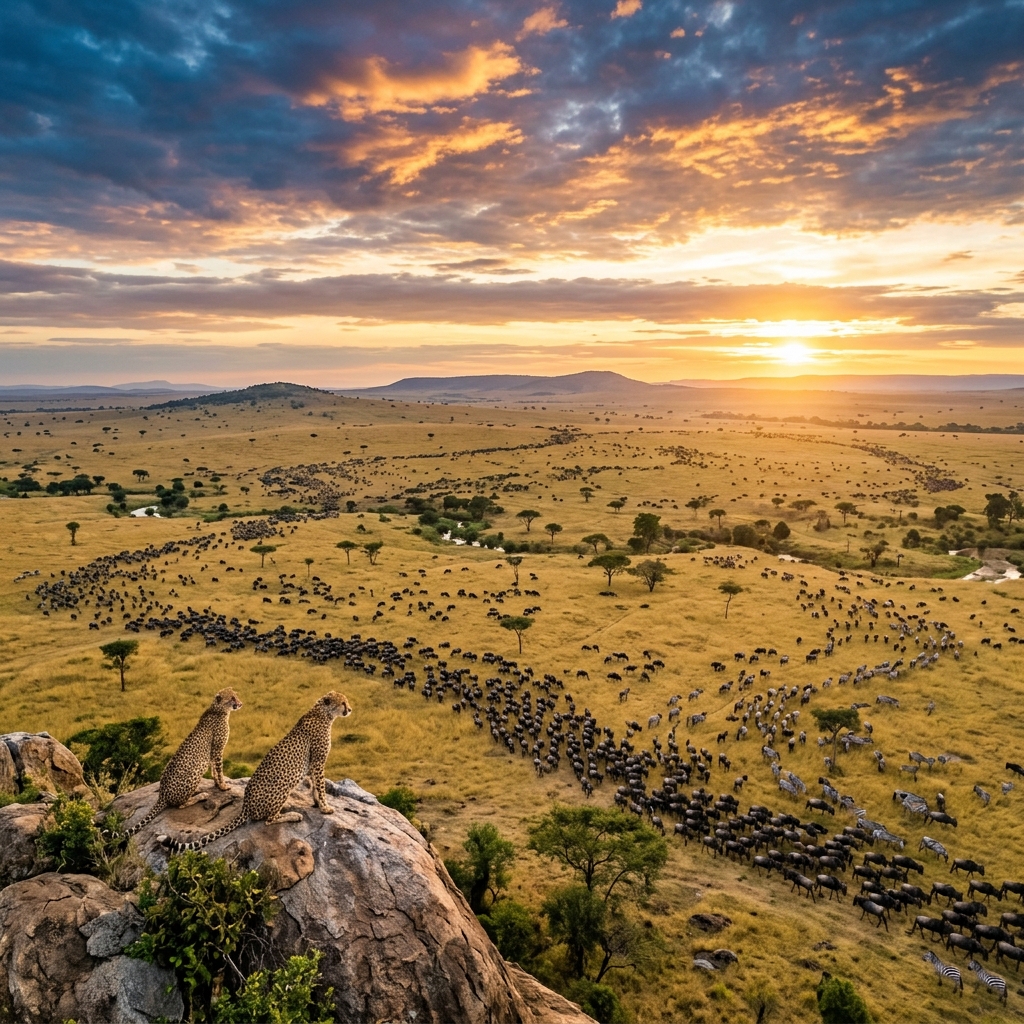
Tanzania splits, broadly, into two circuits. The north holds Tarangire, Lake Manyara, the Ngorongoro Crater and the Serengeti — four parks close enough together to link in a week, with the Great Migration passing through for most of the year and the country’s best chance of a rhino. The south holds Ruaha and Nyerere, each bigger than the Serengeti on its own, with more elephant and lion per park and no migration.
Most first safaris go north, for reasons that hold up. Most second ones do well to go south. What follows is what each circuit genuinely does better, what a lower vehicle count changes on the ground, which parks allow a night drive or a walk, and how access and cost differ before you have reached a gate.
The short answer
For a first Tanzania safari, go north: Tarangire, the Ngorongoro Crater and the Serengeti give you the migration and the country’s best rhino odds in a compact circuit. For a second trip, go south: Ruaha and Nyerere are bigger, hold more elephant and lion per park, and see a fraction of the vehicles.
North and south, at a glance | Northern circuit | Southern circuit |
|---|
| Parks | Tarangire, Manyara, Ngorongoro, Serengeti | Ruaha, Nyerere |
|---|
| Access | Road and short hops from Arusha | Light aircraft from Dar es Salaam |
|---|
| Vehicle density | Busy at the Crater rim and river crossings | Often none seen all morning |
|---|
| Night drives & walking | Tarangire and Manyara only | Both parks, on a permit |
|---|
| Rhino | Ngorongoro Crater, on about half of descents | Effectively absent |
|---|
| Best for | A first safari | A second, quieter trip |
|---|
Northern circuit: the classic first safari
The appeal of the north is concentration. Tarangire, Manyara, the Ngorongoro Crater and the
Serengeti sit close enough that a week can move between all four without a flight, and each has direct road access from Arusha.
The
Ngorongoro Crater is the one place in Tanzania where lion, elephant and buffalo are near-certain and black rhino are seen on roughly half of all descents — a Big Five chance that neither southern park can match, since rhino are effectively absent from both.
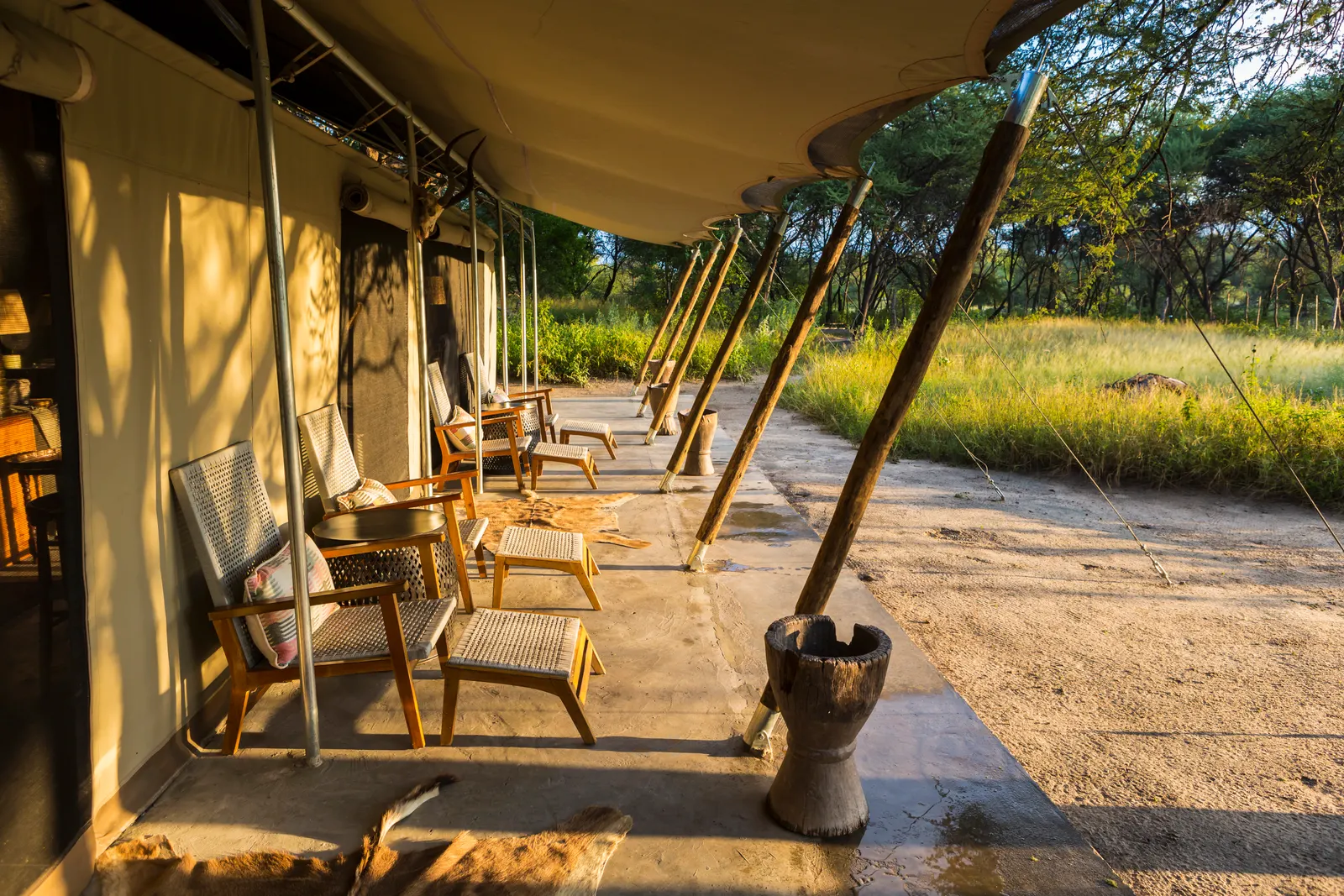
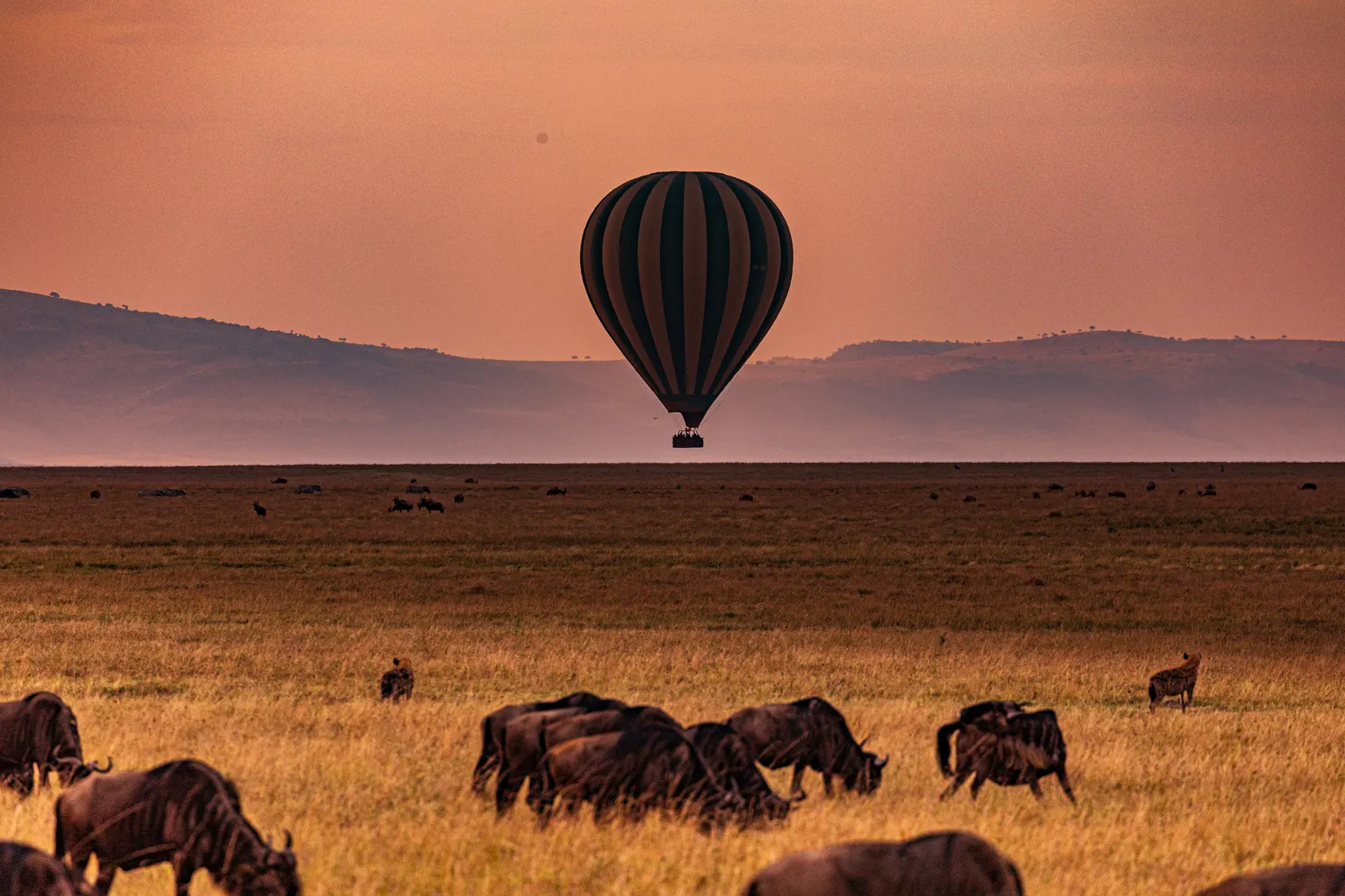
For most of the year the Serengeti also holds some part of the Great Migration, and the north’s camp network runs from simple to very expensive, which makes it the easier circuit for a first trip logistically as well as scenically — a booking agent, a rescue flight and a spare vehicle are all closer at hand than in the south. Our
Northern Circuit, Properly Paced covers all four parks with two nights each, which is enough time in every one of them to stop feeling rushed.
Southern circuit: Ruaha and Nyerere instead
Ruaha and Nyerere are a different scale of park.
Ruaha alone covers just over 20,000 square kilometres, bigger than the Serengeti;
Nyerere, expanded in 2019 from the old Selous Game Reserve, is bigger again.
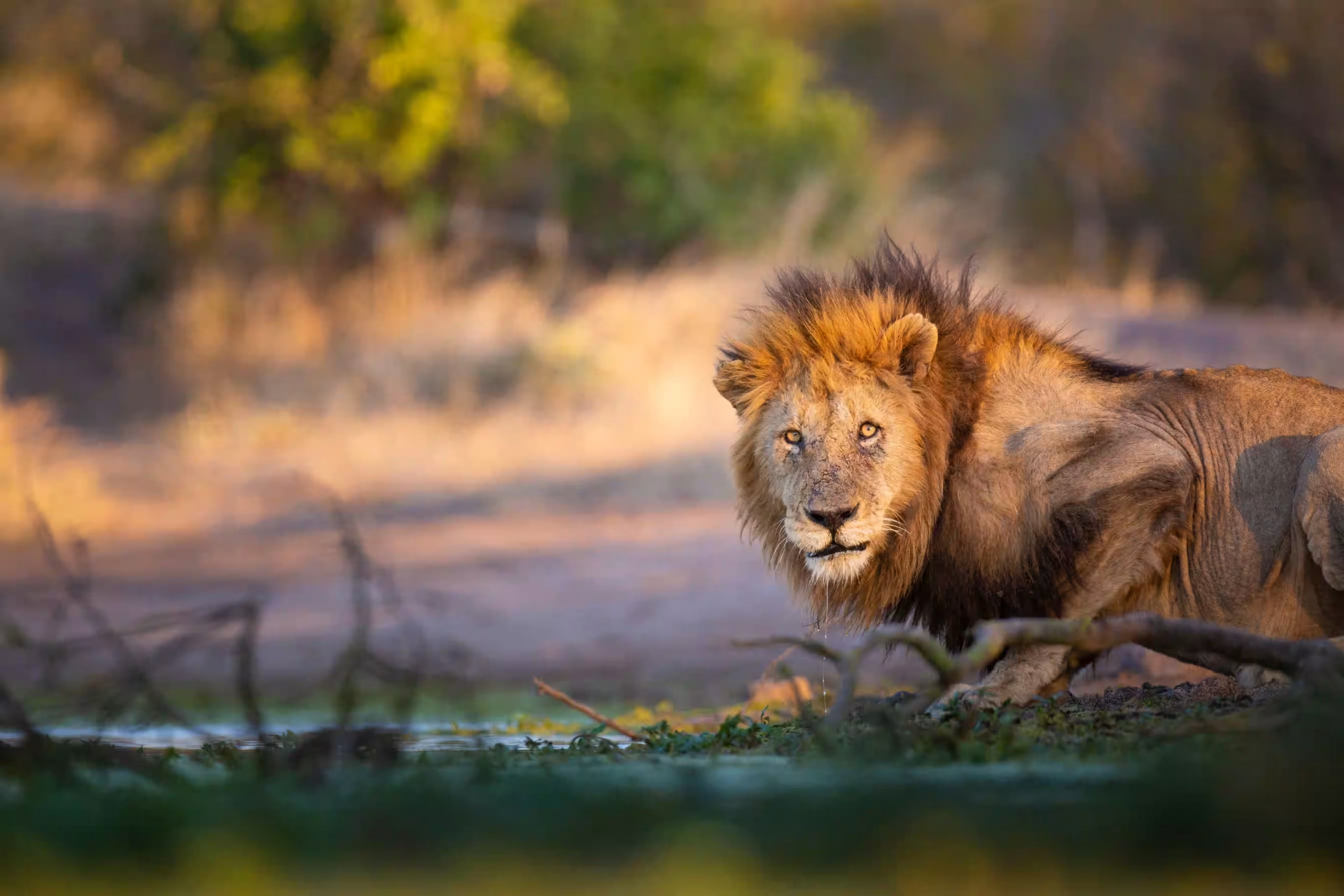
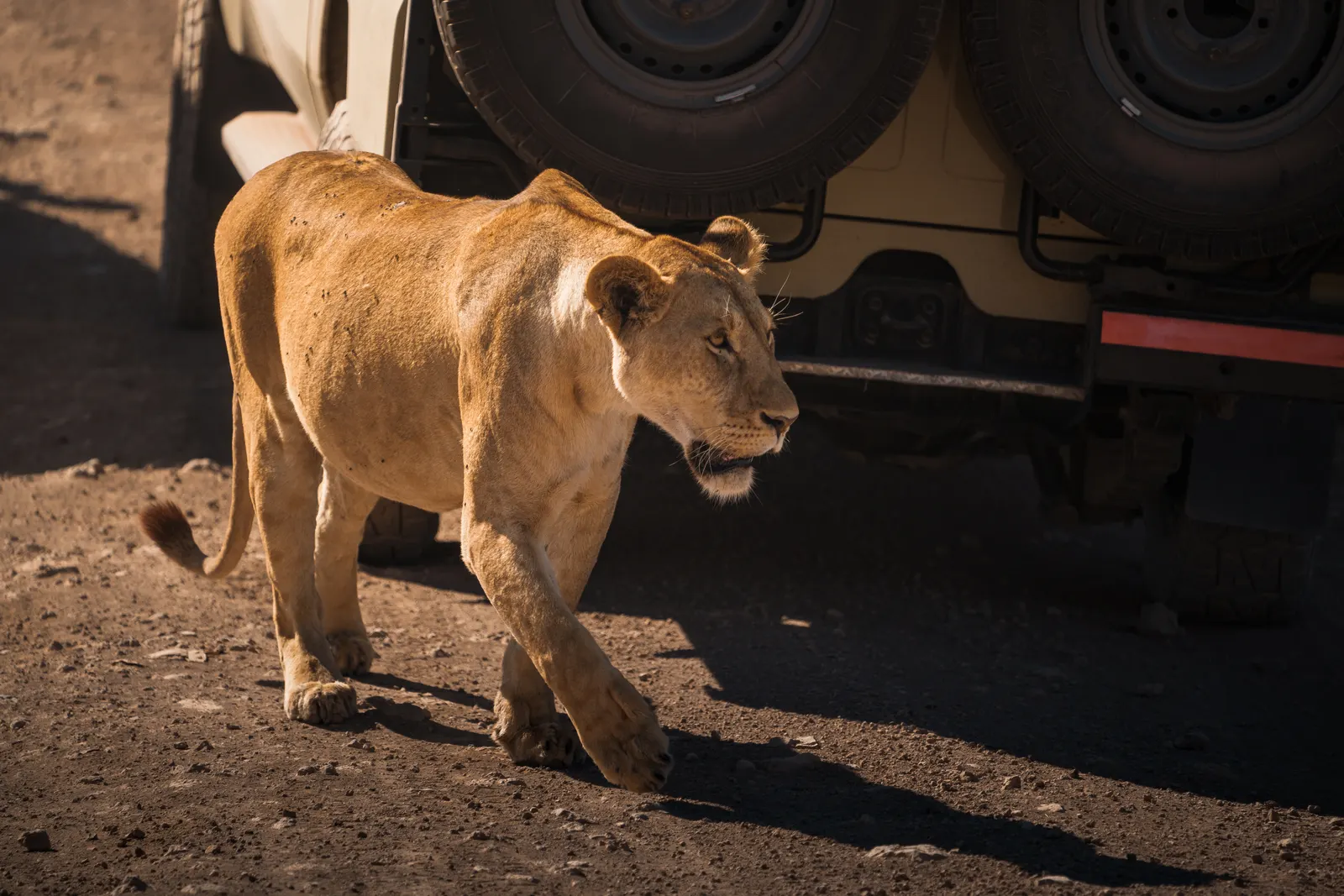
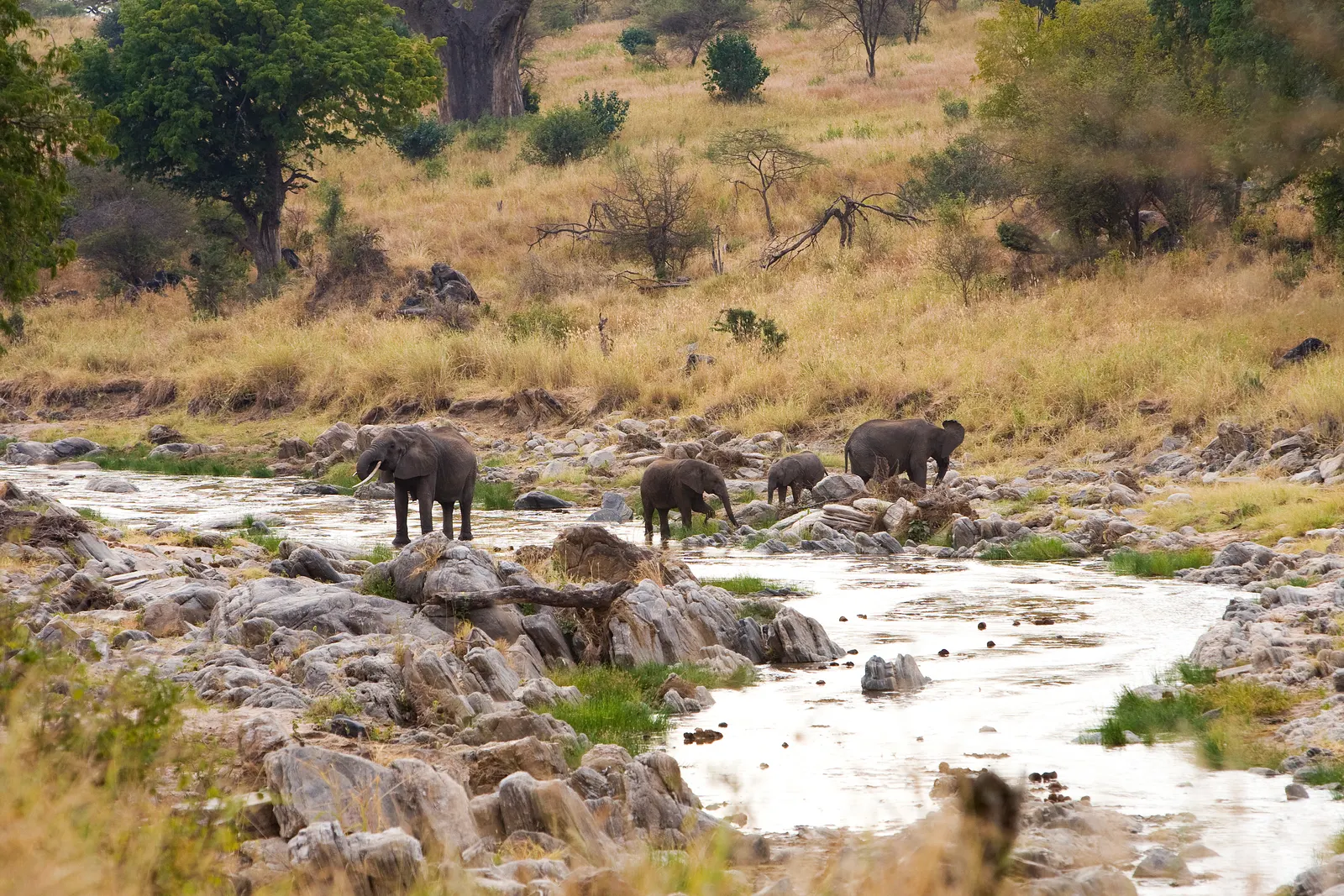
Elephant gather along Ruaha’s sand rivers in herds of several hundred, and its lion prides are among the largest and most visible in the country. Nyerere adds something neither northern park can offer: the Rufiji River is wide enough to swap the vehicle for a boat and watch the bank from the water.
Neither park sees the migration, and rhino are present only in very small, heavily protected numbers — not a realistic sighting. What you trade the migration and the rhino chance for is elephant and lion at a scale most northern camps cannot show you, with
Ruaha: the Southern Wilderness or
Nyerere: River, Plains & Boat Safari as the way in.
Vehicle density: what fewer vehicles means
Numbers make the difference visible before wildlife does. At a Mara River crossing or on the Ngorongoro Crater rim in peak months, a dozen or more vehicles can be parked around one sighting, radios calling in every new one.
In Ruaha or Nyerere it is common to drive a whole morning and pass no other vehicle. Fewer camp beds are issued across a far larger area, so the same lion kill that would draw a queue in the north is often watched by one vehicle in the south, or none.
This is not automatically better — the north’s crowding exists because the sightings it protects, the migration and the rhino, are genuinely rare elsewhere. It is simply a real difference worth weighing against what each circuit shows you.
Night drives and walking: allowed where
Game viewing inside every Tanzanian national park normally runs from six in the morning to six in the evening. The Serengeti and the Ngorongoro Crater keep to that rule with no exception — no night drives, and no walking off a vehicle inside either.
Tarangire and Lake Manyara, both in the north, are licensed for night drives on a separate permit, typically quoted at around USD 59 per person on top of the park fee — worth confirming at the time of booking, since operator quotes for this vary. Our
field note on a Tarangire night drive covers what it involves.
Ruaha and Nyerere allow both a night drive and a guided walk with an armed ranger inside the park itself, not just on a bordering concession, which is a genuinely different kind of day from anything the Serengeti or the Crater can offer.
Access and cost: Arusha or Dar es Salaam
The northern circuit runs on and off the tarmac out of Arusha. Tarangire is roughly a two-hour drive away, and the parks beyond it connect by road or a short light-aircraft hop, which keeps logistics simple for a first visit.
Ruaha and Nyerere are reached from Dar es Salaam by light aircraft, not from Arusha, and there is no road transfer that makes sense. In practice a southern safari is booked as its own trip rather than added to a northern one.
None of that makes the south cheaper. Smaller camps, lower occupancy and the flights themselves tend to offset the saving from fewer vehicles, so ask for current rates rather than assuming either circuit costs less — we would rather quote you directly than guess in print. Budget an extra internal flight and a night either side of the safari itself if the south is a first trip rather than an add-on.
Which to choose: first safari or second
For a first Tanzania safari, the north remains the sensible default. It gives you the migration where the season allows it, the country’s best rhino chance, and an easier logistical trip to plan around.
For a second trip, or for anyone who found the Crater rim more crowded than they expected, the south rewards with elephant and lion at real scale and far fewer vehicles competing for the same sighting. Neither the migration nor the rhino travel with you, so know what you are giving up.
Both circuits can be combined in one longer trip with an internal flight between them, though most guests are better served choosing one well than rushing both.
Find a journey filters our itineraries by park and by month.
Questions people ask
Should I choose the northern or southern circuit in Tanzania?
Go north for a first safari — the Ngorongoro Crater, Serengeti and Tarangire give you the migration, the Big Five and the country’s best rhino chance in a compact week. Go south, to Ruaha or Nyerere, once you have done that and want the same scale of wildlife with far fewer vehicles around you.
Is Ruaha better than the Serengeti?
Neither is better; they are different trips. The Serengeti has the migration, more camps and easier access. Ruaha has no migration but very large elephant herds and lion prides, and you can drive a whole morning without seeing another vehicle.
Can you see the Big Five in southern Tanzania?
Four of them reliably — elephant, buffalo, lion and leopard are all common in Ruaha and Nyerere. Rhino are present in only very small, heavily protected numbers and are not a realistic sighting there. The Ngorongoro Crater is where rhino are seen.
Are night drives allowed in the Serengeti or Ngorongoro Crater?
No. Night drives are not licensed inside the Serengeti or the Crater. They are permitted in Tarangire and Lake Manyara in the north, and in Ruaha and Nyerere in the south, each on a separate permit.
How do you get to Ruaha or Nyerere?
By light aircraft from Dar es Salaam, not from Arusha. There is no road link that makes sense for a visit, so a southern safari is normally booked as its own trip rather than tacked onto the northern circuit.
Is the southern circuit more expensive than the north?
Not reliably. Fewer vehicles does not mean lower rates — camps in Ruaha and Nyerere are smaller and the flights add cost, which tends to offset the lower visitor numbers. Ask for current rates rather than assuming either circuit is cheaper.
Can you combine the northern and southern circuits in one trip?
Yes, with an internal flight between Arusha and Dar es Salaam or a connecting charter, but it adds days and cost that many first-time visitors would rather spend in one circuit.
Find a journey filters both.
Which circuit has fewer tourists?
The south, by a wide margin. Ruaha and Nyerere issue far fewer camp beds than the northern parks, and neither has anything like the vehicle numbers the Ngorongoro Crater rim or a Mara River crossing draws in peak months.
Travel it
Journeys built around this
Last updated 13 September 2026