Game viewing in every Tanzanian national park normally stops at 18:00, when every vehicle must be out of the park regardless of what it is watching.
Tarangire is one of the few parks licensed for an exception to that rule: a permitted night drive, in an open vehicle fitted with a filtered spotlight, that runs after the gates would otherwise have closed on you.
What follows is what actually changes once the sun goes down, which animals a spotlight tends to find that daylight does not, which other parks share the same licence and which do not, and what the add-on costs against what it genuinely gives you over an ordinary early night in camp.
The short answer
Tarangire is one of the few Tanzanian parks licensed for a night drive: an open vehicle and a filtered spotlight, on a separate permit, after the normal 18:00 closure. Night drives are also permitted in Manyara, Ruaha and Nyerere, but not in the Serengeti or the Ngorongoro Crater.
Where night drives are permitted| Park | Night drives | Notes |
|---|
| Tarangire | Permitted | Permit required, on top of park fees |
|---|
| Lake Manyara | Permitted | Same permit system as Tarangire |
|---|
| Ruaha | Permitted | Also allows walking safaris inside the park |
|---|
| Nyerere | Permitted | Also allows walking and boat safaris |
|---|
| Serengeti | Not permitted | Every vehicle out by the 18:00 closure |
|---|
| Ngorongoro Crater | Not permitted | Crater floor closes to vehicles by 18:00 |
|---|
Leaving after dark: what changes
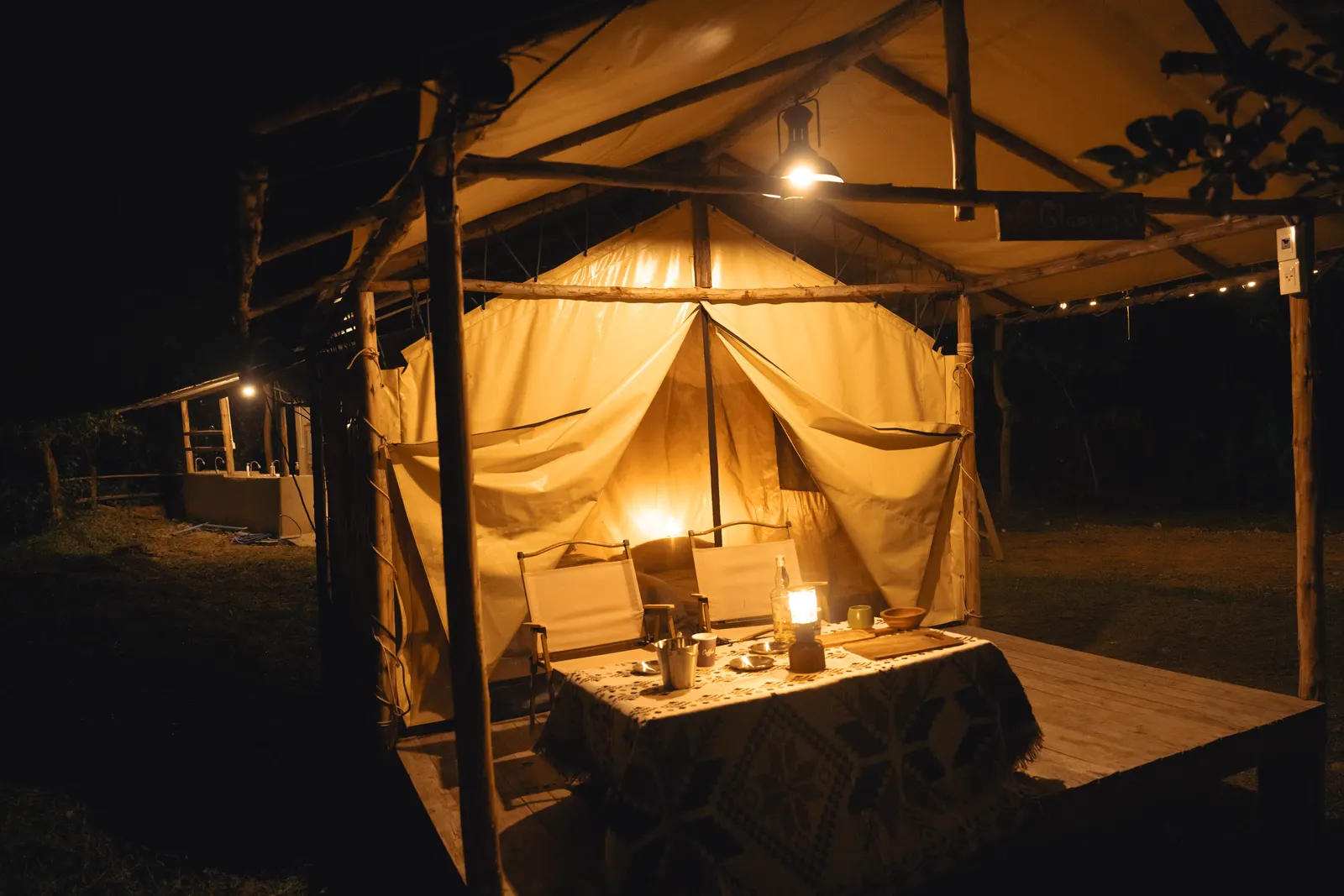
By 18:00 an ordinary game drive is over and the light has usually already gone — Tanzania sits close enough to the equator that dusk falls fast, in around twenty minutes rather than the long, gradual evening travellers from higher latitudes expect, and there is no dusk-to-dark grace period built into the closing time. Camp itself starts to sound different at the same hour: insects rather than birds, and the first hyena whoop of the evening carrying a long way across flat ground.
A night drive leaves the camp or a gate area after that point, under a permit separate from the ordinary park fee, in a vehicle built for the activity: open-sided rather than closed, with a spotter running a filtered beam across the bush from a fixed mount rather than the driver’s own headlights doing the work.
The pace is slower than a daytime drive and the range shorter, since the vehicle is covering ground it cannot see far ahead of and has to stop often to let the spotlight sweep properly rather than driving on past whatever the beam has just crossed. A guide who has done the route before, and knows where a particular animal tends to be found after dark, is worth more on this kind of drive than in daylight, when the terrain is at least visible for itself and a wrong turn costs you little more than time.
What the spotlight finds
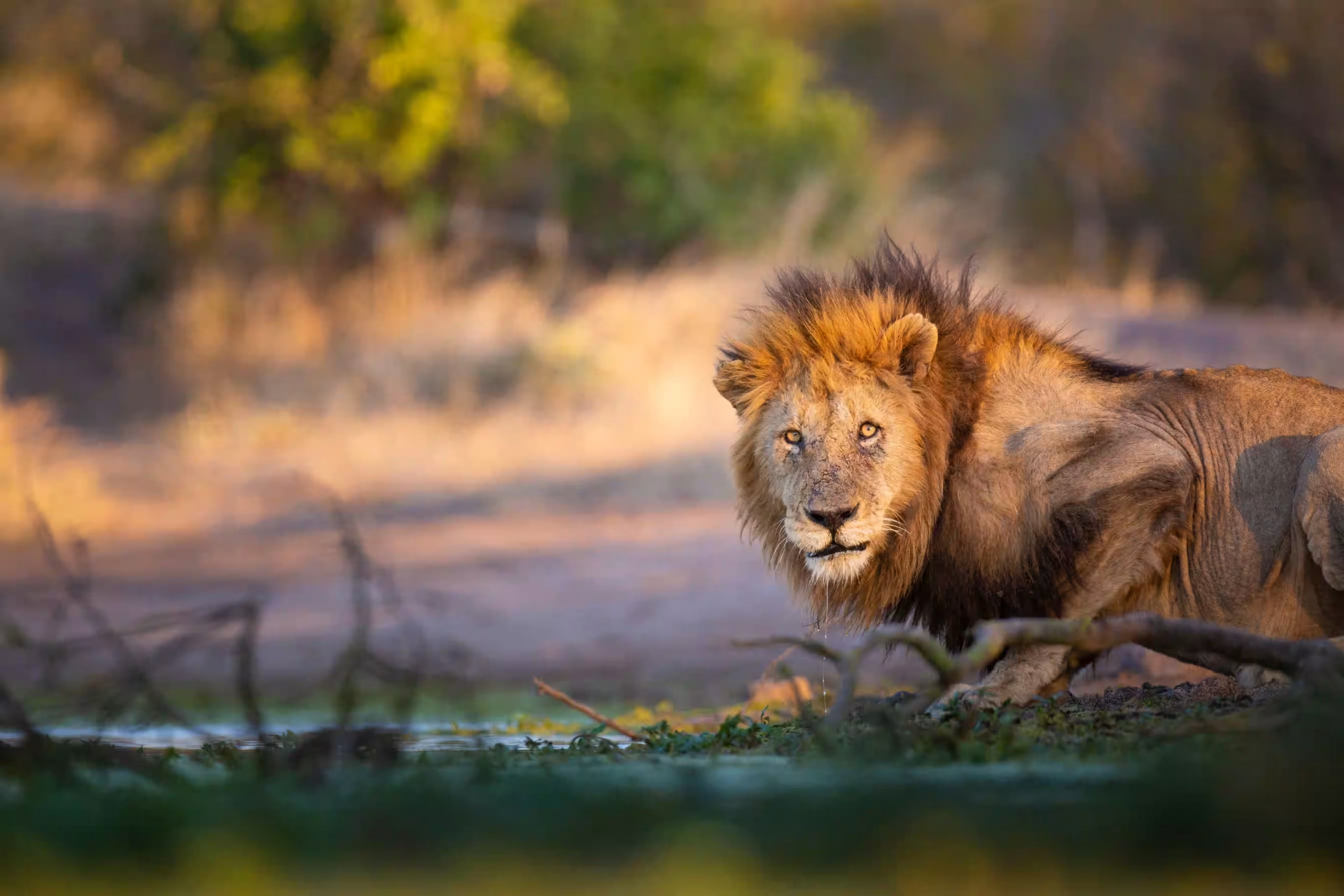
Most of what a night drive is built to find is simply invisible by day. Spotted hyena, largely written off as scavengers on a morning drive, are active hunters after dark and much more likely to be seen doing something other than resting in shade, which is closer to when most of their real behaviour happens.
Smaller nocturnal species come out too — genet and civet moving along the tree line, white-tailed mongoose in loose troops, bushbaby working through the canopy, and, for a patient spotter, the chance of an aardvark or a porcupine, neither of which shows itself on a normal daytime game drive with any regularity. Nightjars sit low on the track and lift off late, and a spotlight across open ground will often pick up nothing but a scatter of eye-shine before resolving into an animal at all.
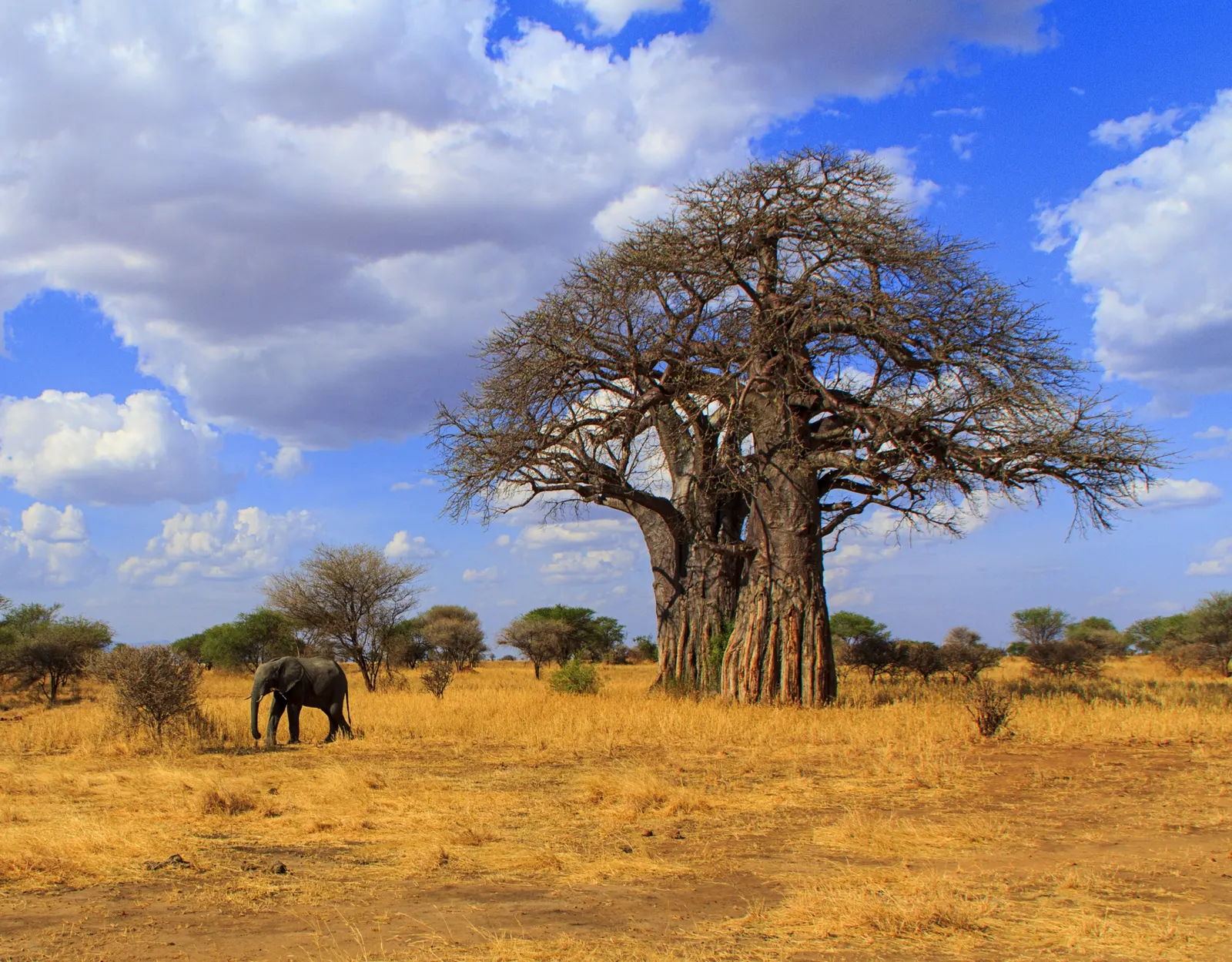
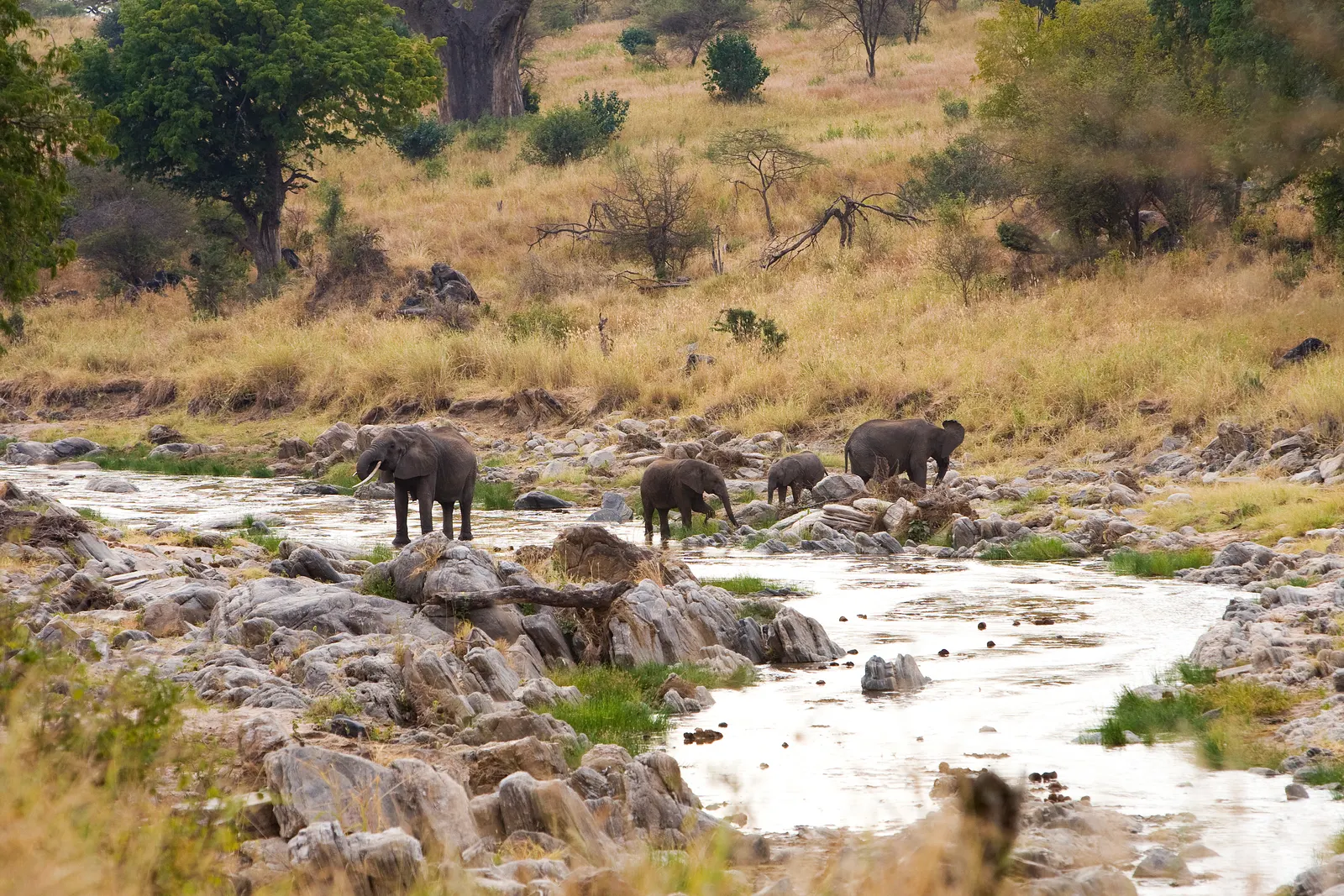
Elephant and buffalo do not stop moving at dusk, and in the dry season a herd heading to the
river to drink after dark is a real possibility, not a guarantee. Nothing about a night drive can be promised in advance — that is true of every sighting on safari, and it is more true after dark than before it, when the animal has to be found rather than simply seen in the open.
Which parks permit it: Tarangire, not the Serengeti
Night drives in Tanzania are licensed park by park, not granted as a blanket rule across the whole national park system, and Tarangire is one of a short list that carries the permit: Tarangire,
Lake Manyara,
Ruaha,
Nyerere, Katavi and Mikumi.
The
Serengeti and the
Ngorongoro Crater are not on that list, and there is no version of the permit that reaches them. Both close to every vehicle at 18:00 with no exception — an earlier claim on this site that put night drives there only on the private concessions bordering each park was wrong, and has since been corrected.
Private concessions bordering several parks, including Tarangire, offer their own night drives and guided walking under separate terms again, arranged directly with the concession rather than through TANAPA, and often with looser limits on where the vehicle can go off-track. That is a different kind of access from a permit inside the national park boundary itself, and it is worth asking any operator to be specific about which one they actually mean before you book, since the two are often described in the same loose language.
What it costs: and whether it is worth it
Operators typically quote a night-drive permit at around USD 59 per person, on top of the standard park entry fee, though this is not a figure we can guarantee in print — permit tariffs are reviewed periodically and it is worth confirming the current rate directly when you book rather than relying on a number written here in September 2026.
Whether it is worth adding depends on how many nights you already have in the park. On a single night in Tarangire it competes directly with an early start the next morning, and something has to give — most guides would rather you slept. Across two nights or more it adds a genuinely different few hours of wildlife without costing you the following day’s drive.
It suits travellers who have already had a good dry-season day of elephant and birdlife and want to see the different half of the park’s wildlife, more than it suits a rushed one-night stop where every hour is already spoken for. Our
Tarangire: Elephants & Baobabs journey gives four nights in the park, which is enough to add a night drive without losing a morning drive to it, and the
Manyara, Lake Eyasi & the Crater journey offers the same option in a second licensed park.
Questions people ask
Can you do a night drive in Tarangire?
Yes. Tarangire is one of a small number of Tanzanian national parks licensed for night drives, on a separate permit and in a vehicle fitted with an approved spotlight, after the normal 18:00 closure that applies to ordinary game drives.
Which national parks in Tanzania allow night drives?
Tarangire, Lake Manyara, Ruaha, Nyerere, Katavi and Mikumi. Night drives are not permitted in the Serengeti or the Ngorongoro Crater, where every vehicle must be out by 18:00 with no exception.
What animals do you see on a Tarangire night drive?
Species that are hard to find by day: spotted hyena hunting rather than resting, genet, civet, white-tailed mongoose, bushbaby and, with real luck, aardvark or porcupine. Elephant and buffalo are often still moving to water after dark too.
How much does a night drive cost in Tarangire?
Operators typically quote around USD 59 per person on top of the standard park fee, though this is not a figure we can guarantee — ask for the current permit cost when you book, since tariffs are reviewed periodically.
Is a night drive worth adding to a Tarangire safari?
If you have at least two nights in the park already, yes — it shows you a different set of animals for a modest add-on cost. On a single night it competes with an early start the next morning, which is worth weighing honestly.
Why can't you do a night drive in the Serengeti?
TANAPA licenses night driving park by park, and the Serengeti and the Ngorongoro Crater are not on that list. Both close to every vehicle at 18:00, with no permit available to extend it.
Is a night drive in Tarangire safe?
It is run under the same TANAPA rules as any licensed activity: open 4×4 vehicles, a filtered spotlight rather than a bare beam, and limits on vehicle numbers and group size on each route.
Do you need a special vehicle for a night drive?
Yes. Night drives use an open-sided 4×4 fitted with an approved, filtered spotlight — a standard closed safari vehicle without one is not licensed for the activity, which is why it is booked and permitted separately.
Travel it
Journeys built around this
Last updated 13 September 2026