The common practice
What we do instead
Booked through a brokerMany safaris sold online are resold by an overseas agency to whichever local operator quotes lowest that month. You never learn who is actually running your trip until you land.
We are the operatorOur vehicles, our payroll, our licence. There is no middle party taking a margin, and no ambiguity about who is responsible when something goes wrong.
A different driver at each gateCheaper trips hand you over between parks, so nobody ever learns what you want to see. The person at the wheel is a driver with a permit rather than a guide.
One licensed guide throughoutThe same guide from arrival to departure, licensed through TANAPA and in most cases trained at the College of African Wildlife Management at Mweka. By day three they know what you photograph.
Park fees quoted vaguely“Fees included” with no breakdown, so a tariff rise becomes a surcharge email six weeks before you travel.
Fees itemised, and absorbedPark entry, the Ngorongoro conservation levy and the crater descent fee are roughly a third of your price and we show it. If TANAPA raises the tariff between booking and travel, we absorb the difference.
One night per parkFour parks in four nights looks generous on an itinerary and means you spend the trip in transit, arriving at dusk and leaving after breakfast.
Two nights minimum, everywhereNever more than one park per two nights. Fewer places, properly seen, is the single biggest difference between a good safari and an exhausting one.
Nine strangers in a nine-seaterShared departures sold as “small group”, with somebody always in the middle seat and no window.
Six maximum, or seven if sharedPrivate departures cap at six in an extended Land Cruiser, every seat a window seat. Our joining safaris cap at seven and we say so plainly rather than calling it exclusive.
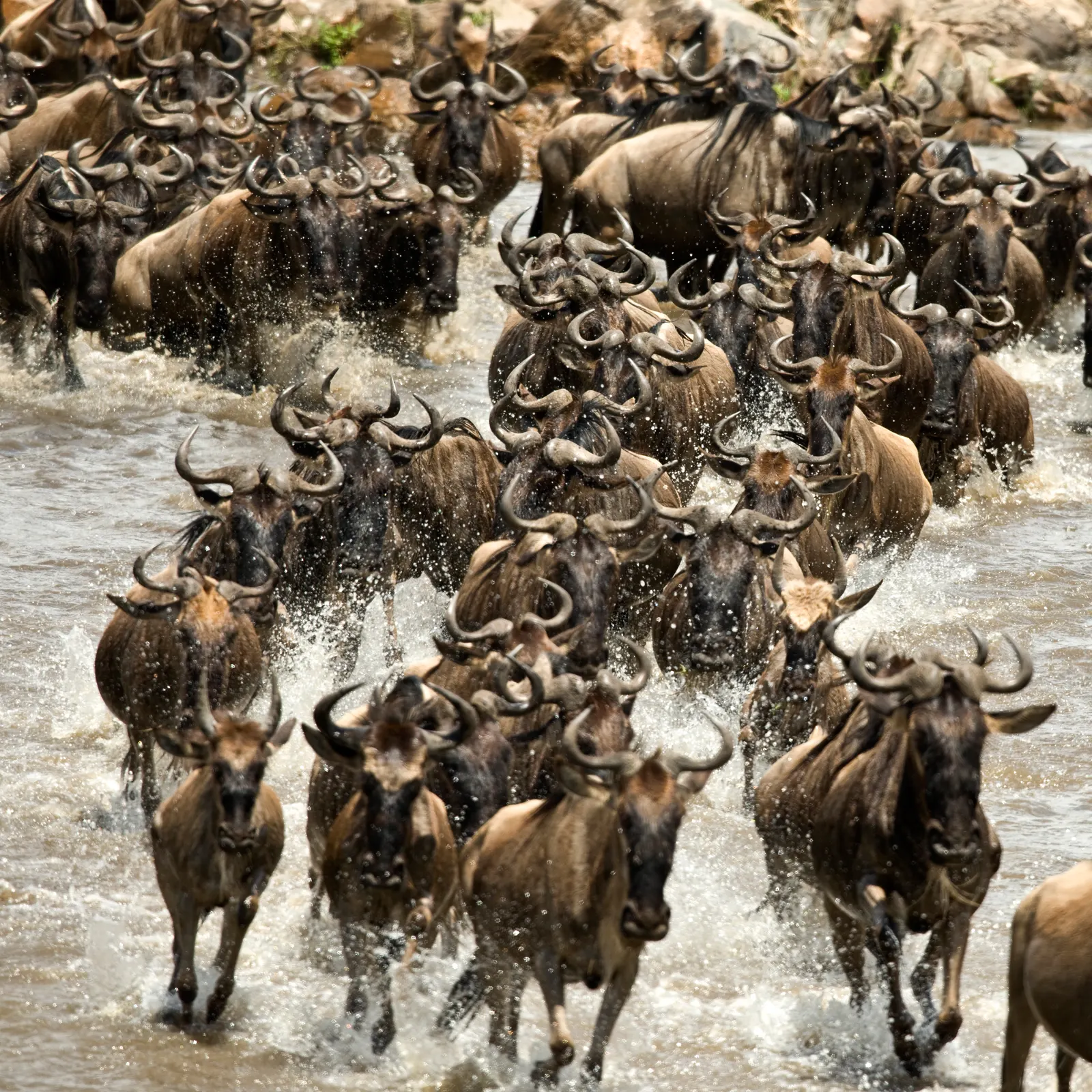
Sold whatever month you ask forApril and May are the long rains. Plenty of operators will happily sell you a Serengeti trip then without mentioning it.
Told when your dates are wrongIf your window suits the migration we will build around it. If it does not, we will say so and suggest a different park or a different month, even when that means a smaller booking.
Porter welfare unexaminedOn Kilimanjaro, undercutting on price is usually paid for by the porters — overloading, poor food, no shelter.
Loads capped, wages shownTwenty kilograms per porter as regulation requires, and we climb to the standards set by the Kilimanjaro Porters Assistance Project. Ask us for the wage sheet — ask anyone for it.
Evacuation cover assumedMany quotes are silent on what happens if you need a hospital from a place with no road.
Flying-doctor cover includedAMREF Flying Doctors / other — confirm provider evacuation membership is included on every safari, and we tell you what it does and does not cover before you pay.