Places of Africa Safaris

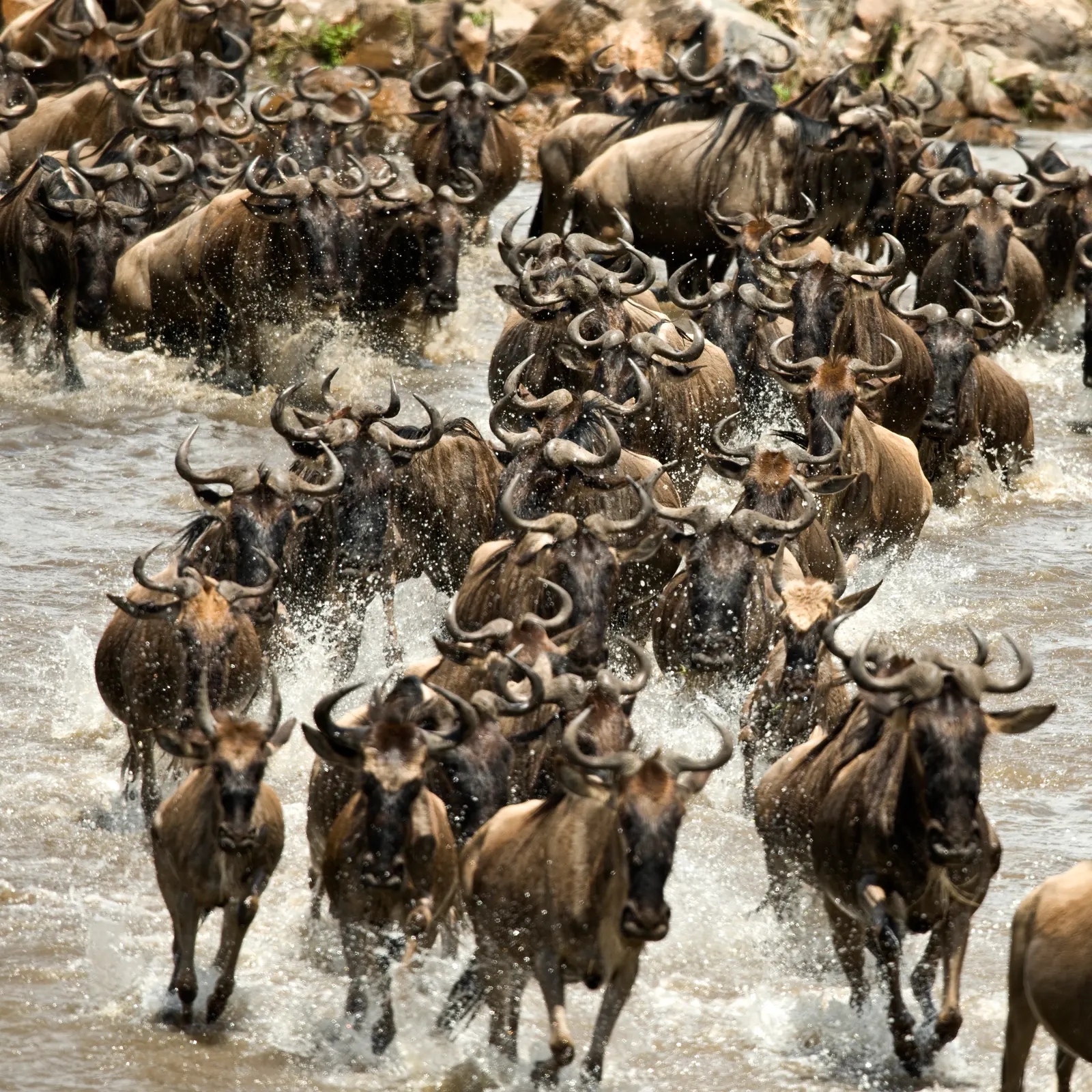
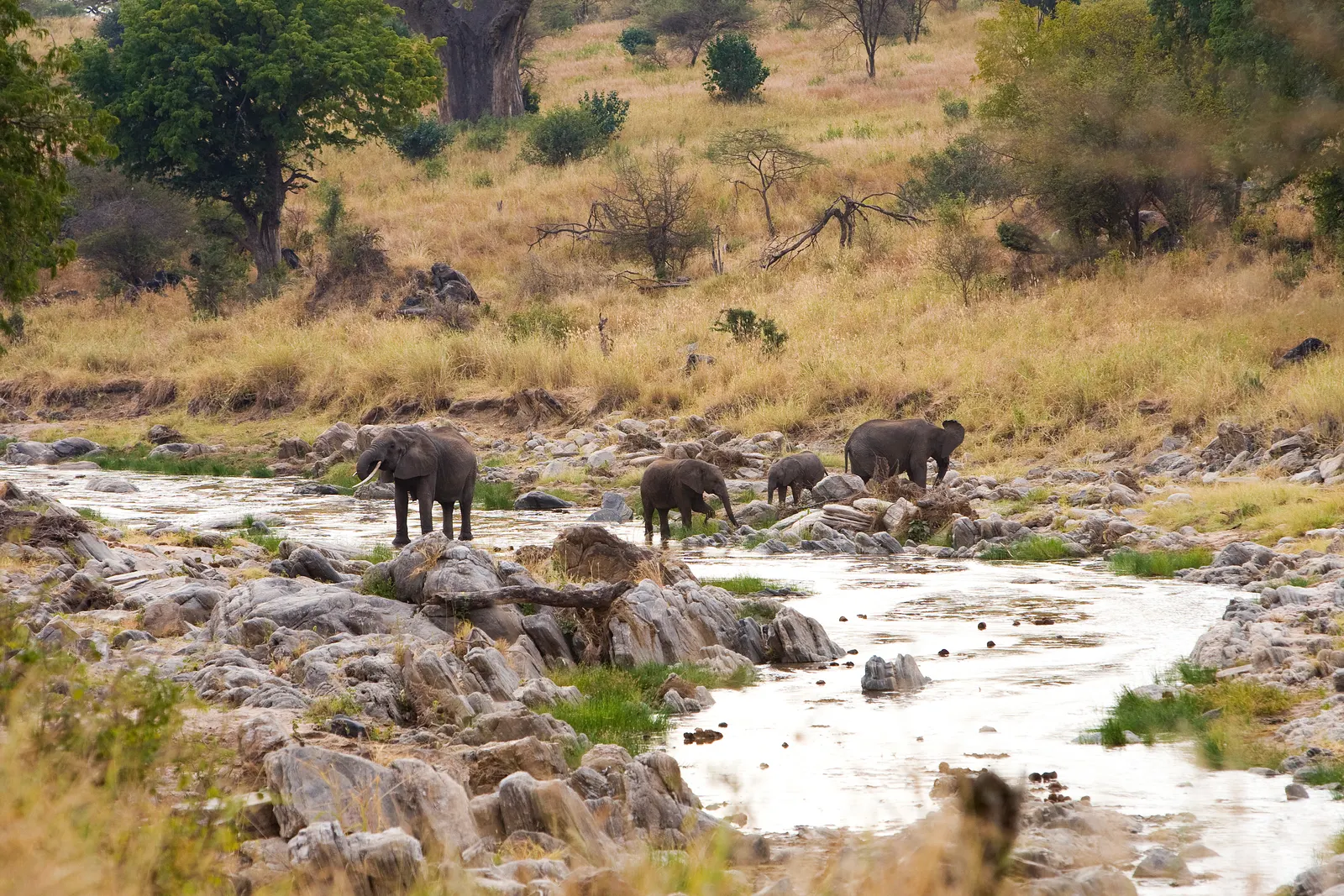
Elephants crossing the Great Ruaha River
Southern Circuit · Eight Days

Ruaha: the Southern Wilderness

One park, two camps, five nights, and whole mornings without another vehicle — flown in from Dar es Salaam and flown out again.
8
Days
7
Nights
1
Park
Full
Board
I · Overview

The route, and why this shape

One park, entered by air. The second camp is the whole point.
Ruaha is the park Tanzanian guides ask to be sent to. It is roughly 20,000 square kilometres of river, baobab and rocky hill in the middle of the country, it holds the largest elephant population of any park in Tanzania and a tenth of the continent’s lion, and on a dry-season morning you can drive for three hours and pass one other vehicle. It gets a fraction of the Serengeti’s visitors because it is hard to reach, and this itinerary treats that as the feature.
The shape is simple. A night in Dar es Salaam so the morning flight is not a gamble, then five nights in the park split between two camps — three on the Great Ruaha river near the Mwagusi, where the game and the big prides are densest, then two in the south-west, where the tracks thin out to nothing and the baobab hills begin. The move between them is a full day’s game drive, not a transfer.
Ruaha allows what the northern parks do not: walking with an armed ranger, and driving after dark. Both are built in. The trade-off is that this is one park and only one — no crater, no migration, no second habitat to fall back on if the week is quiet. If you want variety, it is the wrong trip. If you want to be somewhere, it is the right one.
Length
8 days / 7 nights
Country
Tanzania
Start / end
Dar es Salaam → Dar es Salaam
Tour type
Private fly-in safari
Group size
Private — 1 to 6 guests per vehicle
Meal plan
Full board
Best months
June – October
Activity level
Moderate — two walking mornings, heat
Vehicle
Toyota Land Cruiser 4×4 with a pop-up roof, a window seat for every guest, charging points and a cool box
II · The days

Day by day, all eight

Every day opens. A night in Dar, three nights on the river, two in the south-west, a night in Dar. See every lodge and camp we use
Day
01
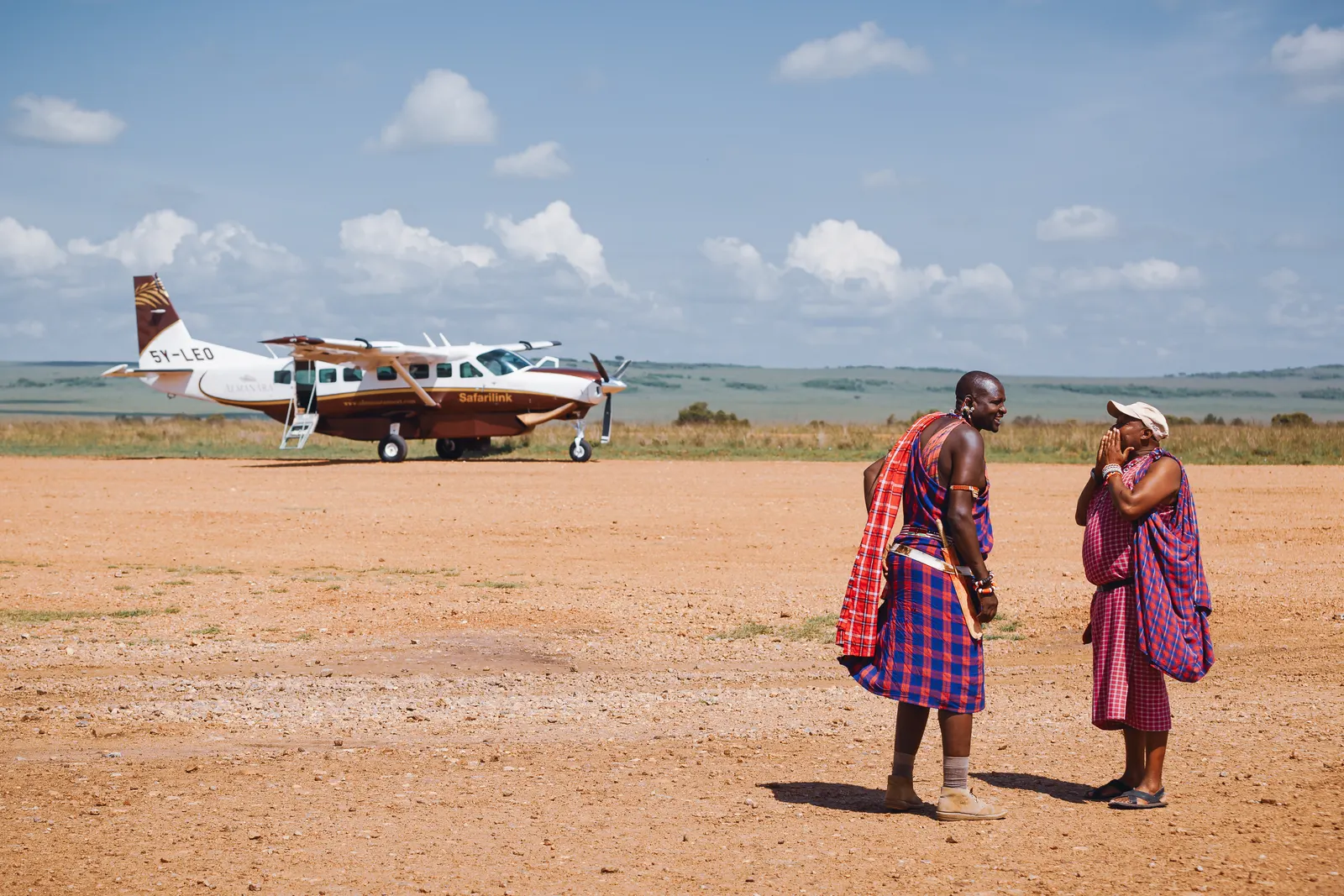
Two Maasai men beside a light aircraft on a bush airstrip
Arrival

Dar es Salaam, and an early night

06°52′S 39°12′E
Dinner
Two Maasai men beside a light aircraft on a bush airstrip
Dar es Salaam, and an early night
06°52′S 39°12′E
You land at Julius Nyerere International on the southern edge of Dar es Salaam. The city is at sea level, humid in every month, and the traffic between the airport and the seafront hotels is the worst in Tanzania — thirteen kilometres can take an hour at the wrong time of day. You are met at the door and driven to a hotel near the airport or on the peninsula, whichever your arrival time makes sensible.
Nothing is scheduled tonight and that is deliberate. The aircraft to Ruaha leaves in the morning, and light aircraft in Tanzania leave on time because they are threading a circuit of airstrips before the afternoon heat. Missing it costs a day, and there is no road alternative worth taking — Iringa is nine to ten hours from Dar by tarmac, and the park gate another two beyond that.
Repack into a soft bag tonight. The luggage limit on the Ruaha flights is 15 kilograms per person in soft bags, and it is enforced by weighing, not by asking. Anything over stays in Dar with the hotel.
Meals
Dinner
Travel
Julius Nyerere International · city hotel 13 km, 30 – 60 min
Highlight
Land, sleep, and be at the domestic terminal by seven
Meet at Julius Nyerere International
15 kg soft-bag limit
No game drive today
Where you sleep
Hotel Blue Sapphire: Hotel exterior
COMFORT

Hotel Blue Sapphire

★★★★☆
Dar es Salaam, near the airport
A clean, quiet hotel ten minutes from the domestic terminal. Chosen for the morning, not the evening.
Outside view of Sea Cliff Hotel with ocean views
LUXURY

Sea Cliff Hotel

★★★★★
Dar es Salaam, Msasani peninsula
On the water, with a pool and a proper dinner. A longer drive to the airport in the morning, which we allow for.
Elephants crossing the Great Ruaha River
Over the Selous to Msembe
07°40′S 34°55′E
The flight south-west from Dar takes two to two and a half hours, usually with a stop or two at Nyerere airstrips along the way. From the window the country changes from coastal green to miombo woodland to the dry, red, baobab-studded ground of the Ruaha basin. You land at Msembe, the park headquarters airstrip, at around 900 metres, and the temperature drop from Dar is the first thing you notice.
Your guide meets you at the strip with the vehicle, and the drive to camp is a game drive whether or not anyone calls it one. The first camp sits on or near the Great Ruaha river, the park’s one permanent-ish watercourse; by August the river has shrunk to a chain of pools in a wide sand bed, and everything in the eastern park walks to those pools at some point in the day.
Lunch at camp, a rest through the heat, and an afternoon drive along the river until the light goes. Elephant are close to certain on this drive; Ruaha holds the largest elephant population of any Tanzanian park.
Meals
Breakfast · Lunch · Dinner
Travel
Light aircraft Dar → Msembe, ~2 – 2½ hrs with stops
Highlight
The first game drive is the transfer from the airstrip
Light aircraft flight
Great Ruaha river
Afternoon game drive
Where you sleep
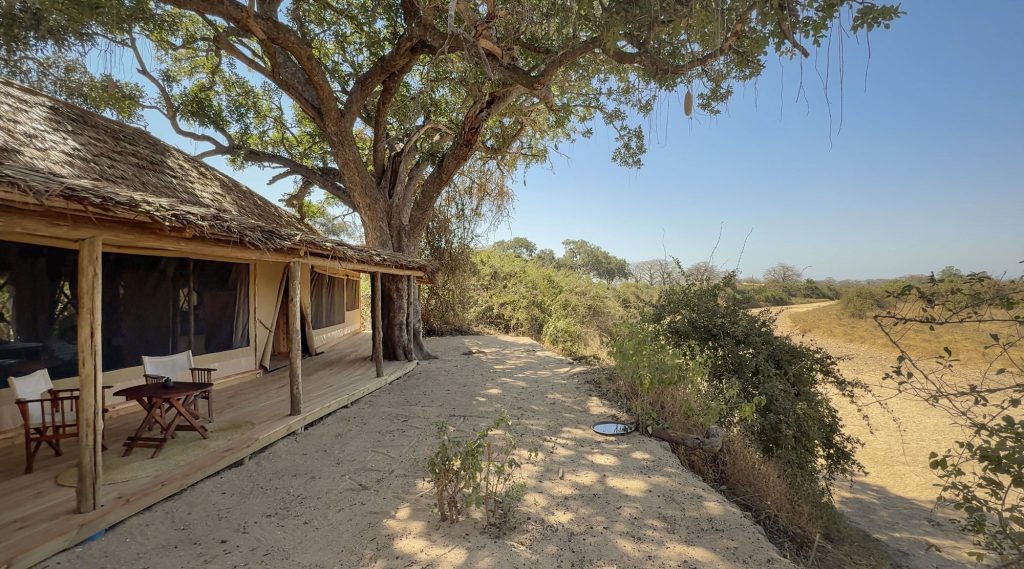
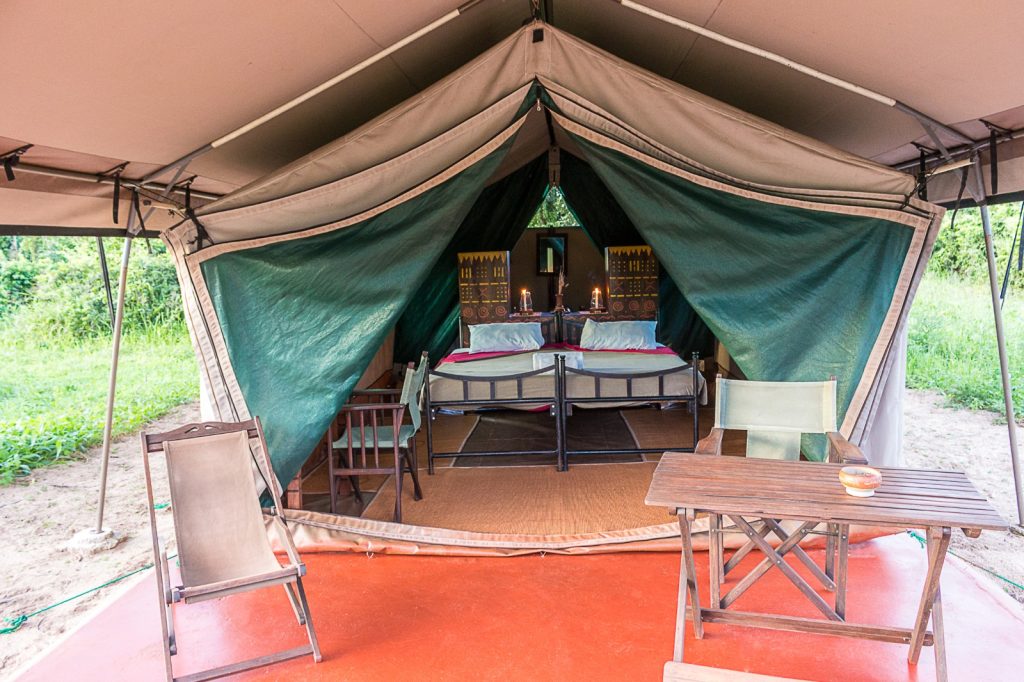
Riverside bandas at Ruaha River Lodge
COMFORT

Ruaha River Lodge

★★★★☆
Ruaha, Great Ruaha river, Msembe – Mwagusi area
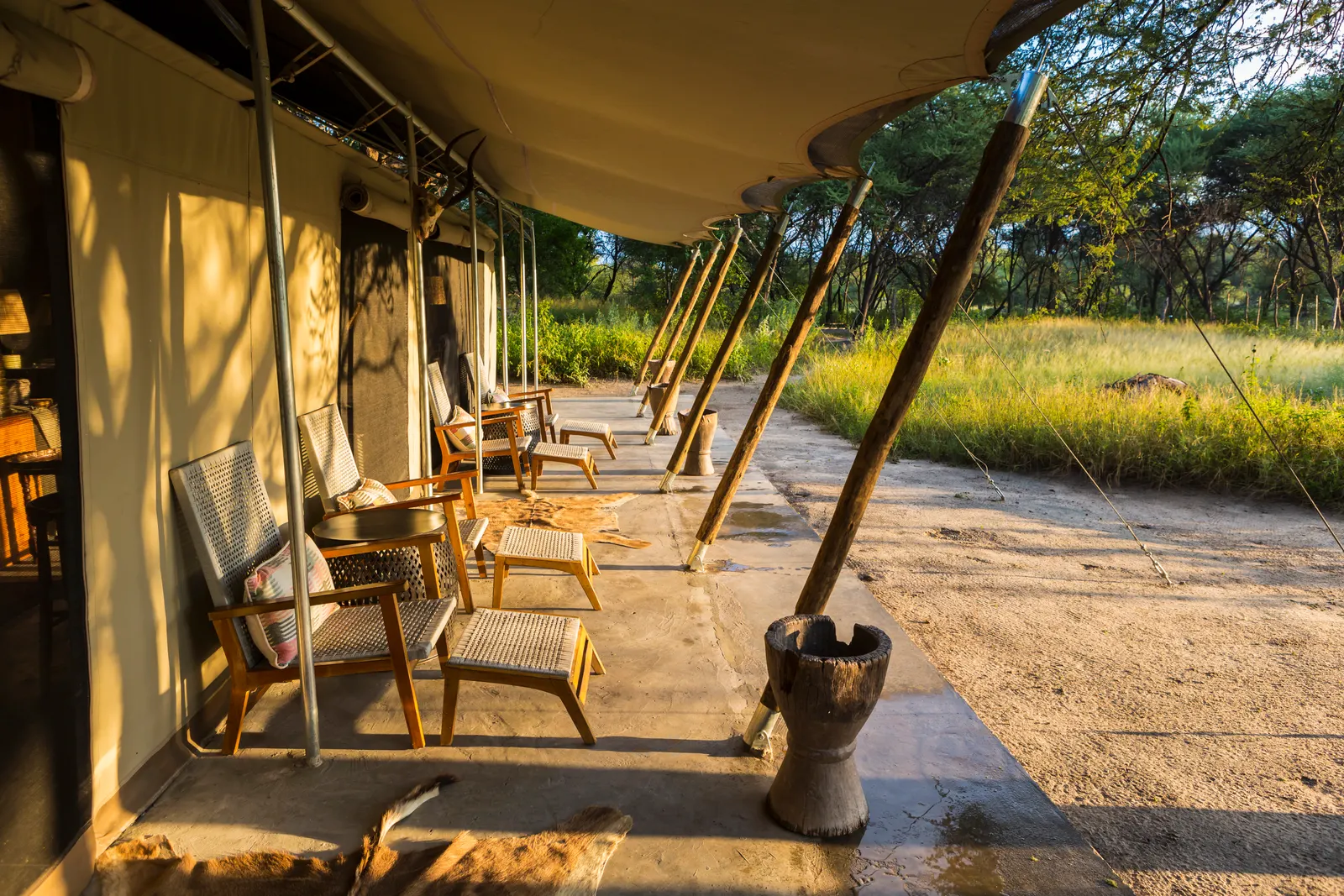
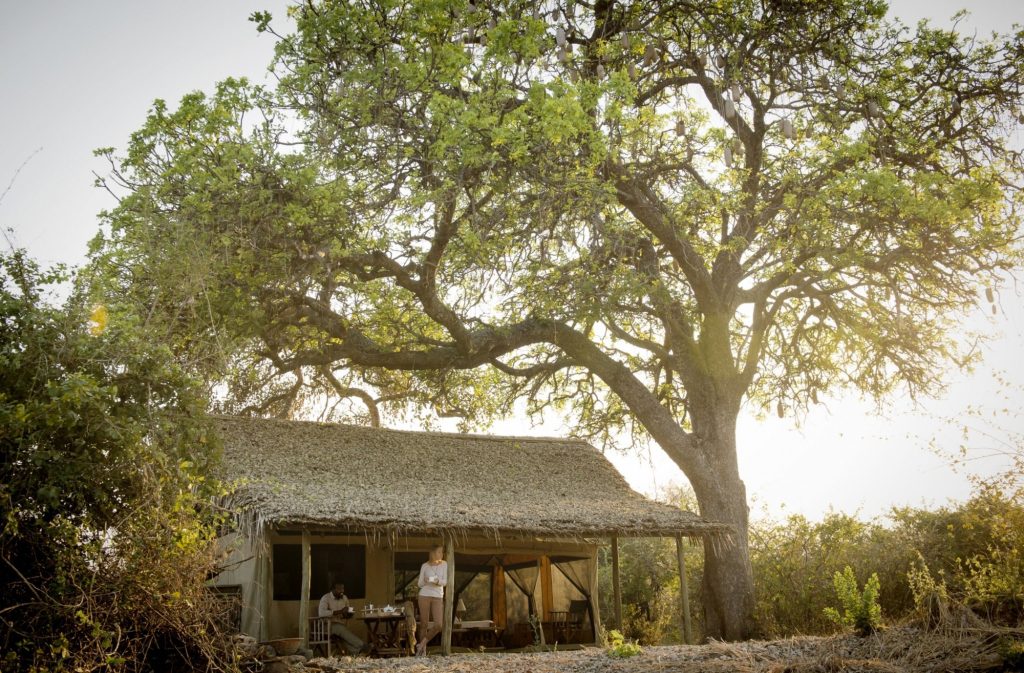
Tented, en-suite, full board, on the river within a short drive of the airstrip. Elephant walk through camp at night.
Kigelia Ruaha, Tanzania
LUXURY

Kigelia Ruaha

★★★★★
Ruaha, Mwagusi sand river
Fewer tents, further from headquarters, and built to look down the sand river where the game digs for water.
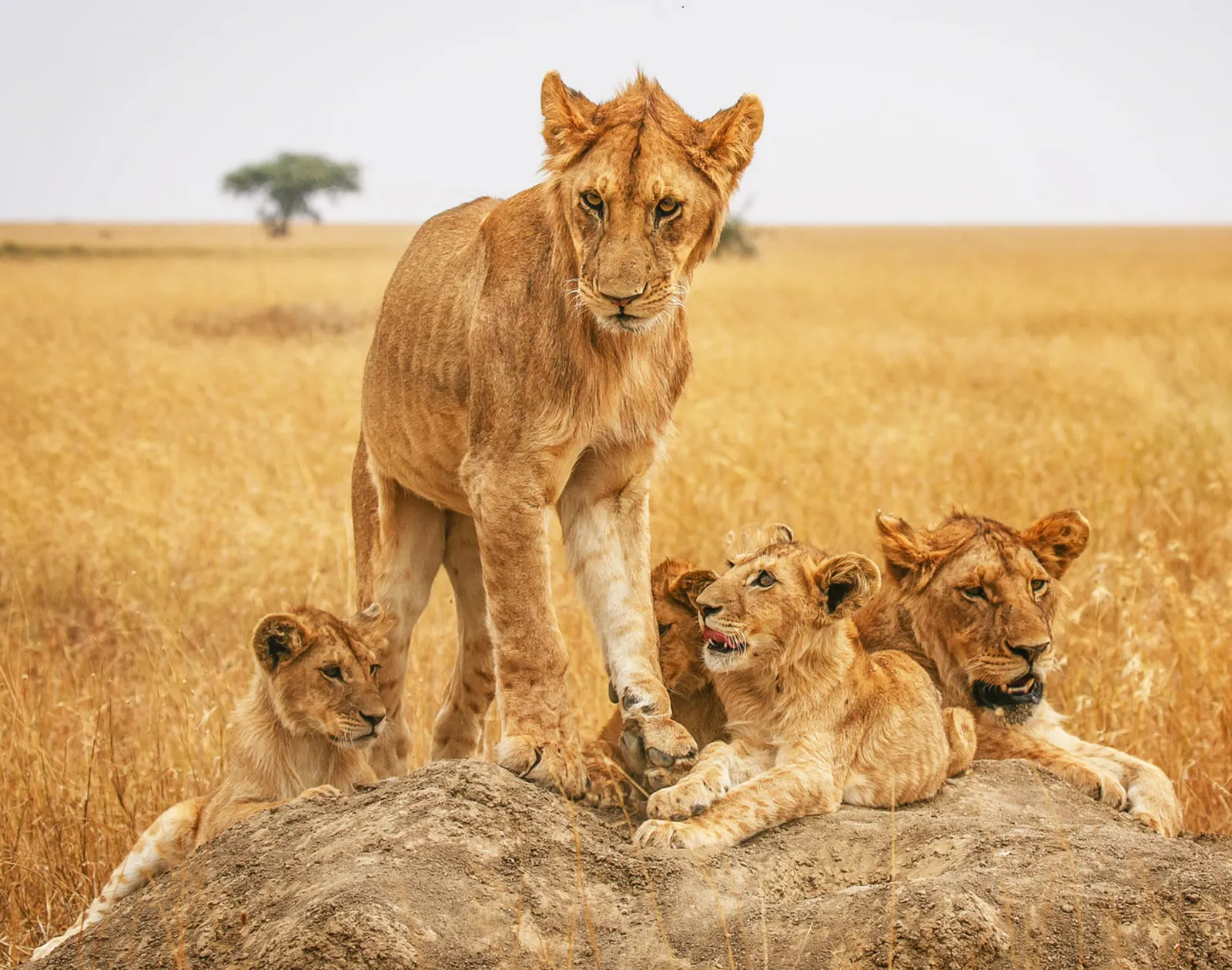
A lioness with her cubs
The river circuit, and the big prides
07°37′S 34°58′E
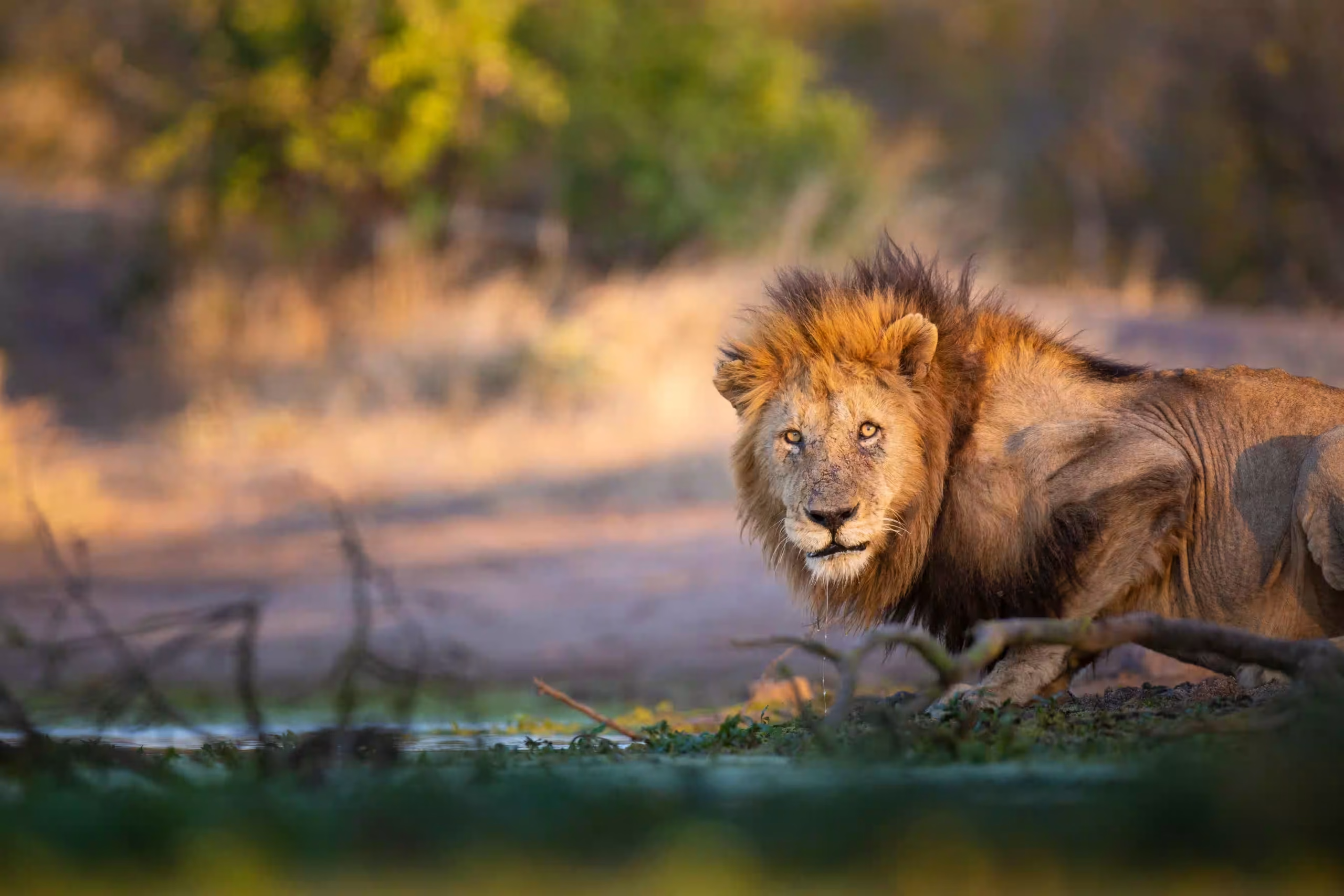
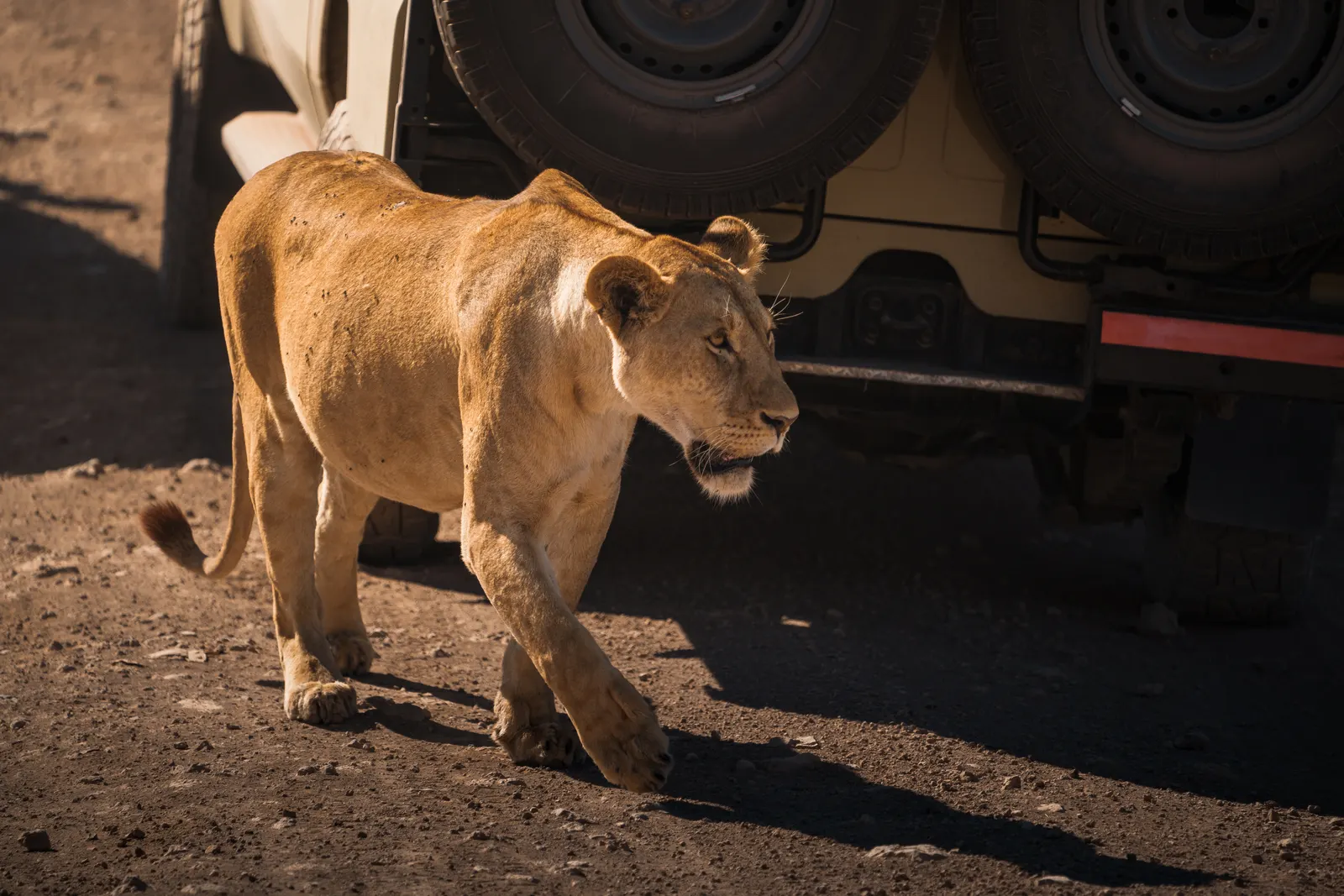
Out at six with breakfast in the vehicle. The Mwagusi sand river joins the Great Ruaha a short drive from camp, and the ground between the two holds the highest density of game in the park. This is where the large prides live — Ruaha carries something like a tenth of Africa’s remaining lion, and prides here of twenty and more are recorded, not rumoured, because a buffalo herd of several hundred needs that many mouths to bring down.
You will not see twenty lion in a row every morning. What you will see, most mornings, is lion; and because the prides work the river rather than the open plain, you find them by working the river yourself, slowly, stopping at each pool.
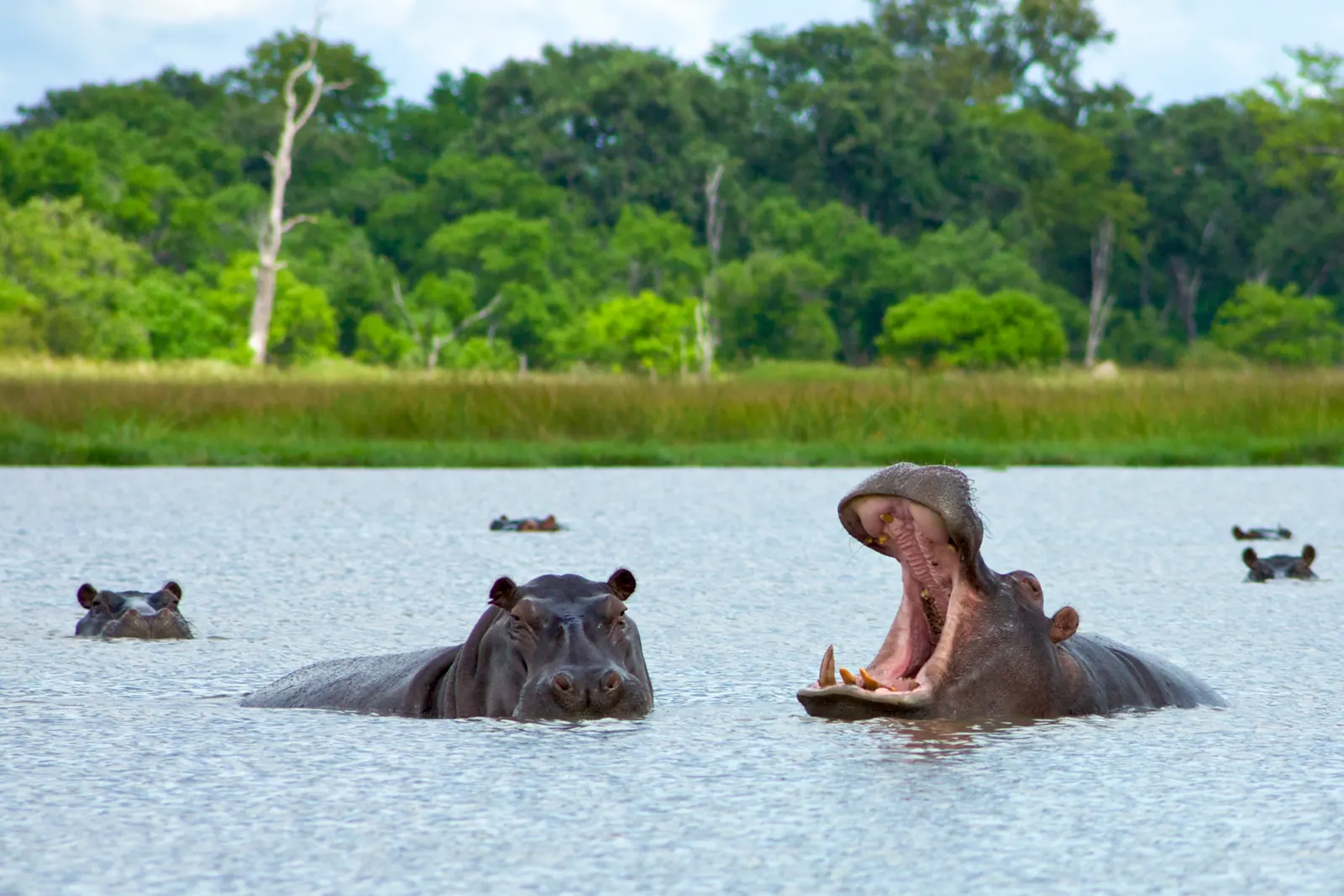
The afternoon drive runs the other direction along the Great Ruaha. Hippo in the deeper pools, crocodile on every sandbar, and the evening walk to water: impala first, then zebra and giraffe, then the elephant families, in an order that barely changes from one dry season to the next. Back to camp before the 18:30 cut-off.
Meals
Breakfast · Lunch · Dinner
Travel
Full day in the park
Highlight
Lion prides of twenty or more along the Mwagusi
Big lion prides
Buffalo herds
River game drive
Where you sleep
Ruaha River Lodge: The lodge
COMFORT

Ruaha River Lodge

★★★★☆
Ruaha, Great Ruaha river, Msembe – Mwagusi area
Second night. No packing, no transfer — a full day on the river instead.
Kigelia Ruaha, Tanzania
LUXURY

Kigelia Ruaha

★★★★★
Ruaha, Mwagusi sand river
Second night. The value of staying put is the late return and the early start, both within sight of the sand river.
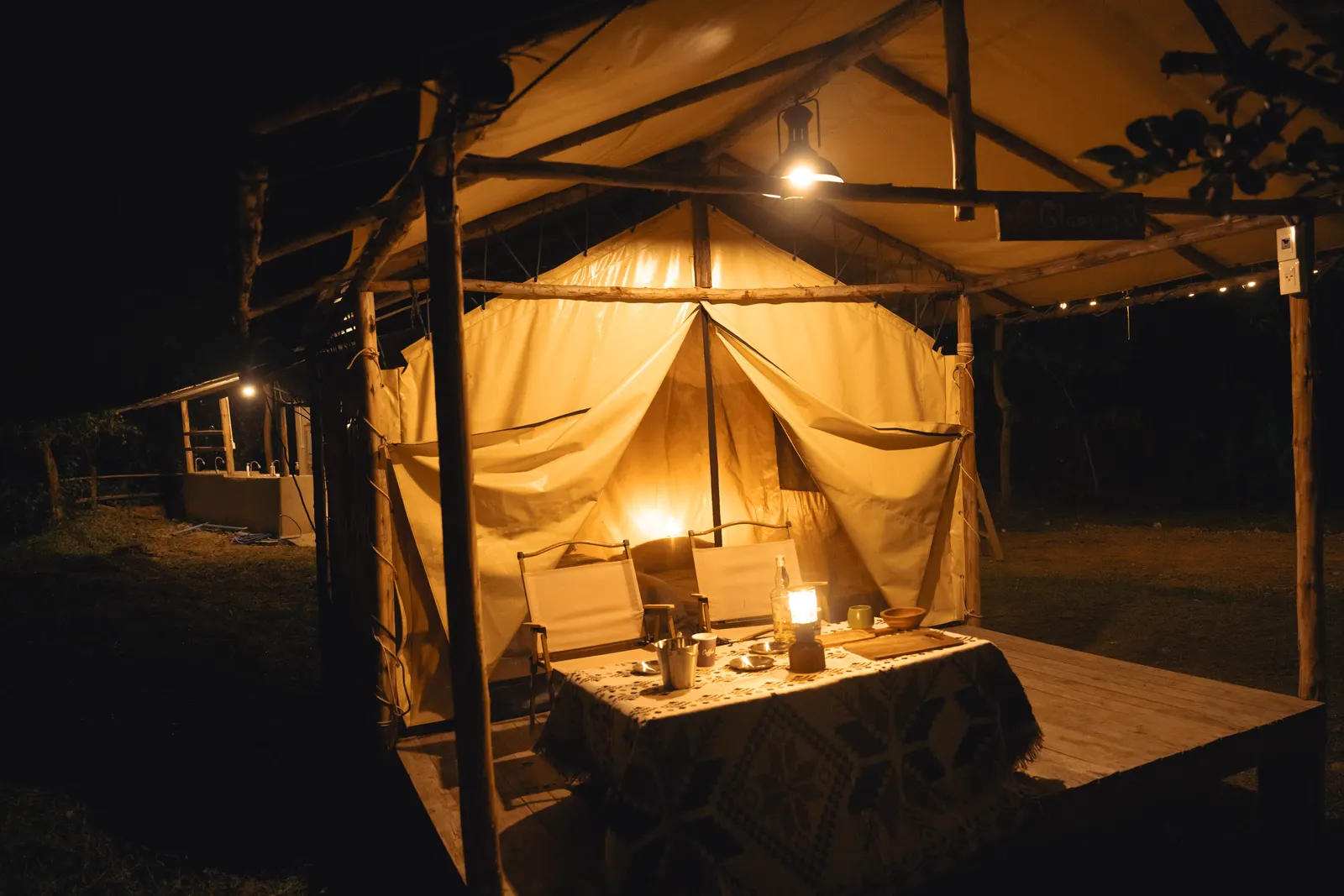
A safari tent at night
Walking with the ranger, and a night drive
07°37′S 34°58′E
This morning you leave the vehicle. Walking in Ruaha is done with an armed park ranger in front and your guide behind, in single file, at a pace set by what the ground is telling you. Two to three hours, in the cool, along the sand river and back. The point is not to walk up to elephant — it is to read the track of one, learn why the impala are standing the way they are, and understand that you are small. Minimum age is 16 for the walk.
The middle of the day is a rest. Ruaha in the dry months is hot from eleven to four, and nothing sensible moves, including you.
After dinner the vehicle goes out again, which it cannot do in the Serengeti or the crater. Ruaha is one of the parks licensed for night drives, and the night drive is a different park: the spotlight is filtered, the pace is walking, and the things you find are the things the day hides — genet, civet, porcupine, bat-eared fox, the occasional aardwolf, and lion doing what they actually do, which is hunt. Leopard are seen on night drives more often than by day here. Not promised, but the odds are better than anywhere else on the trip.
Meals
Breakfast · Lunch · Dinner
Travel
Morning on foot · night drive after dark
Highlight
The bush at head height, then the bush by spotlight
Walking safari, armed ranger
Night drive
Age 16+ for both
Where you sleep
Ruaha River Lodge: The lodge
COMFORT

Ruaha River Lodge

★★★★☆
Ruaha, Great Ruaha river, Msembe – Mwagusi area
Third and last night at the first camp. The night drive returns late; dinner is timed around it.
Kigelia Ruaha, Tanzania
LUXURY

Kigelia Ruaha

★★★★★
Ruaha, Mwagusi sand river
Third night. The night drive from a camp on the sand river starts in good country the moment you leave the gate.
Elephants crossing the Great Ruaha River
South-west, into the baobab country
07°58′S 34°32′E
Today you move camp, and you do it the slow way — a whole day’s game drive south-west with lunch in the shade somewhere on the route, arriving at the second camp in the late afternoon. The second camp is in the south-western part of the park, in country most visitors never reach because they fly in and out of Msembe and stay near it.
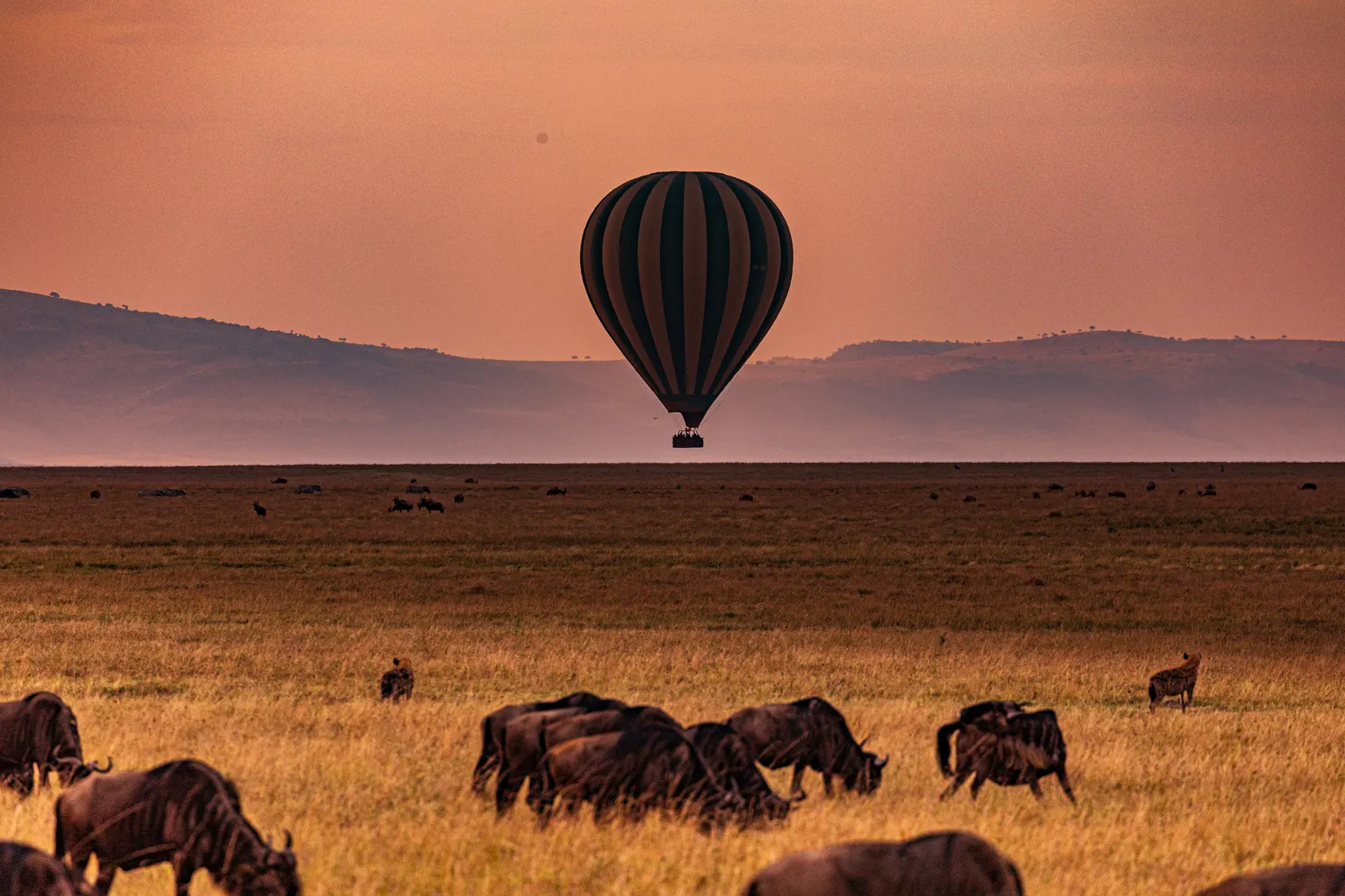
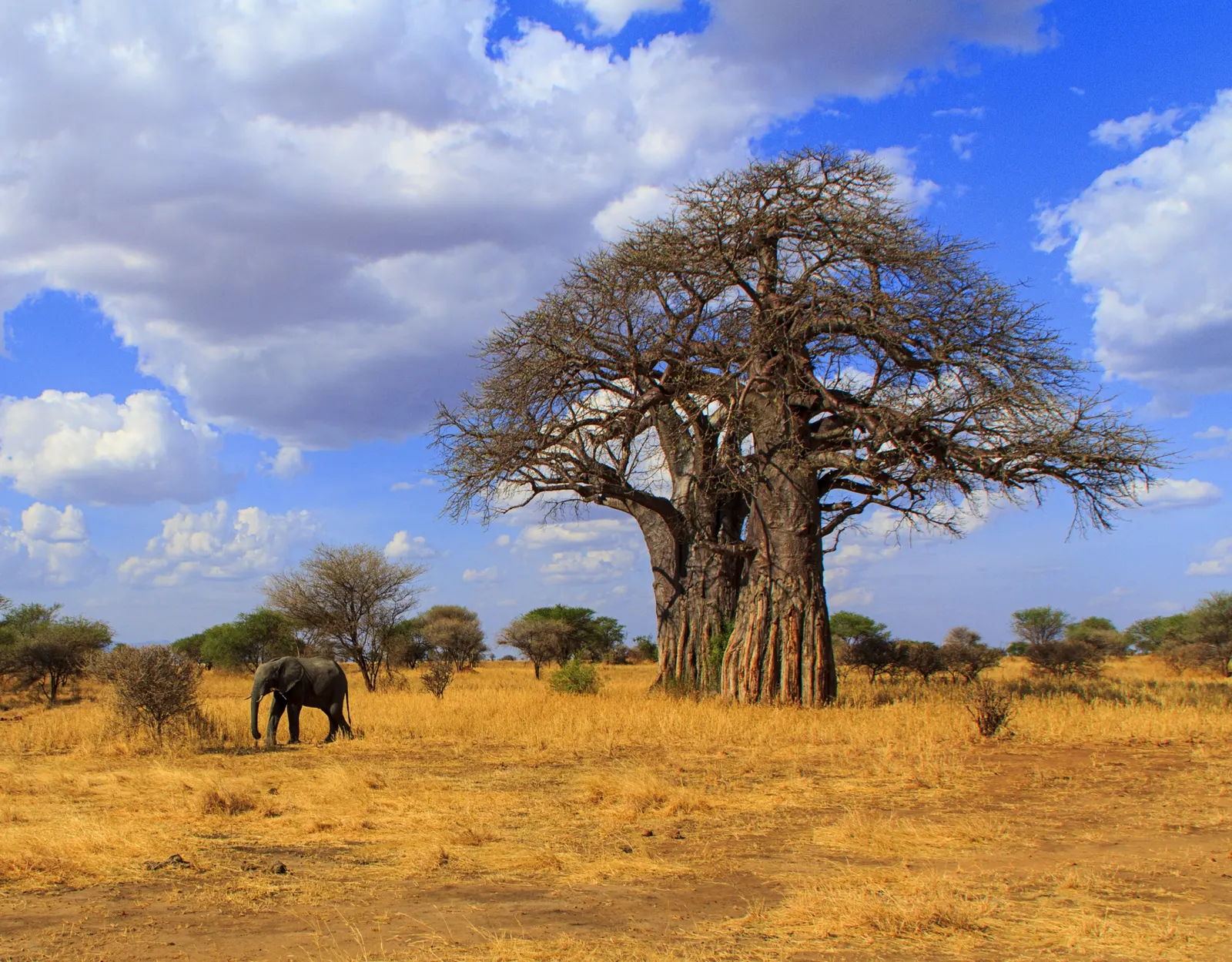
This is the baobab country. Ruaha has more of them, and bigger, than anywhere on the northern circuit; whole hillsides of them, grey and leafless in the dry season, some of them a thousand years old and most of them carrying elephant scars at exactly trunk height. The park is also where East African acacia savannah meets southern miombo woodland, and the animals change with the trees — this is the drive on which you start seeing sable and roan antelope, neither of which lives in the Serengeti.
Vehicles thin out as you go. On the first two days you will have seen a handful of other cars; from this afternoon on you may see none. That is the reason for the second camp and the whole reason for the trip.
Meals
Breakfast · Lunch · Dinner
Travel
Airstrip to camp as a game drive · about 1–2 hours · a full-day game drive, not a transfer
Highlight
The far side of the park, where the tracks end
Baobab country
Sable and roan
No other vehicles
Where you sleep
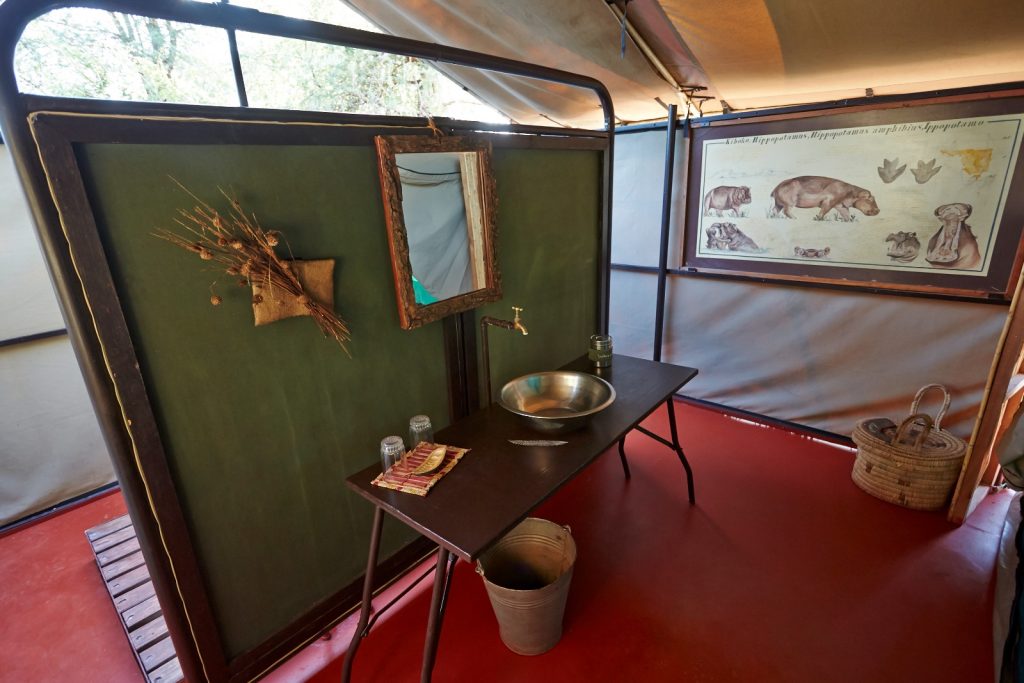
Mdonya Old River Camp: Guest tent
COMFORT

Mdonya Old River Camp

★★★★☆
Ruaha, south-west, remote river camp
Small tented camp on a seasonal river well away from the headquarters area. Simple, quiet, no other camp within an hour.
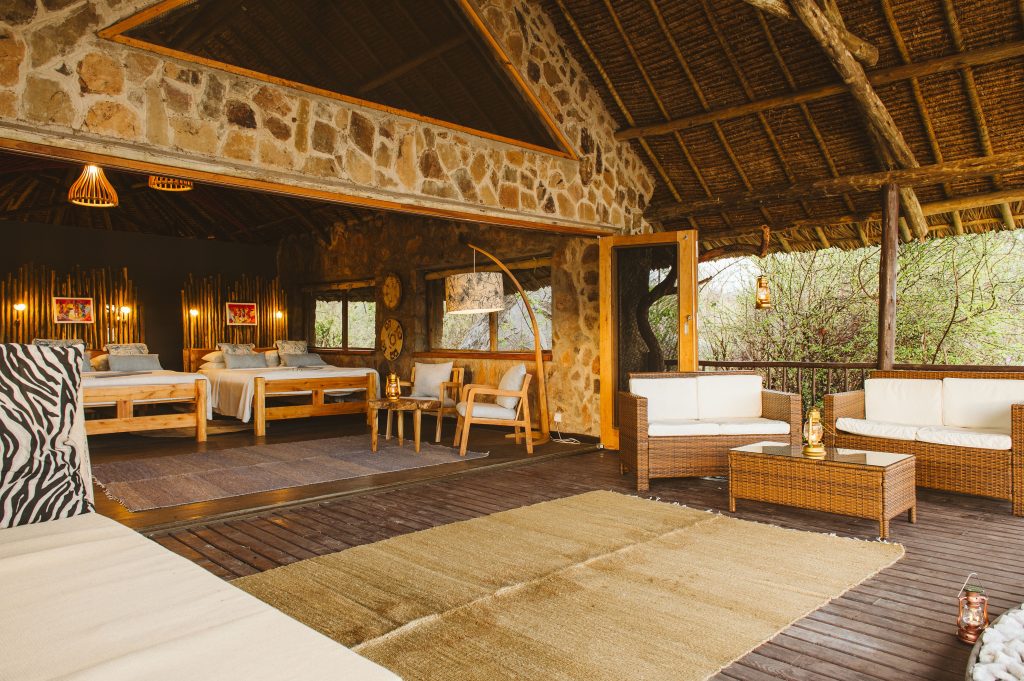
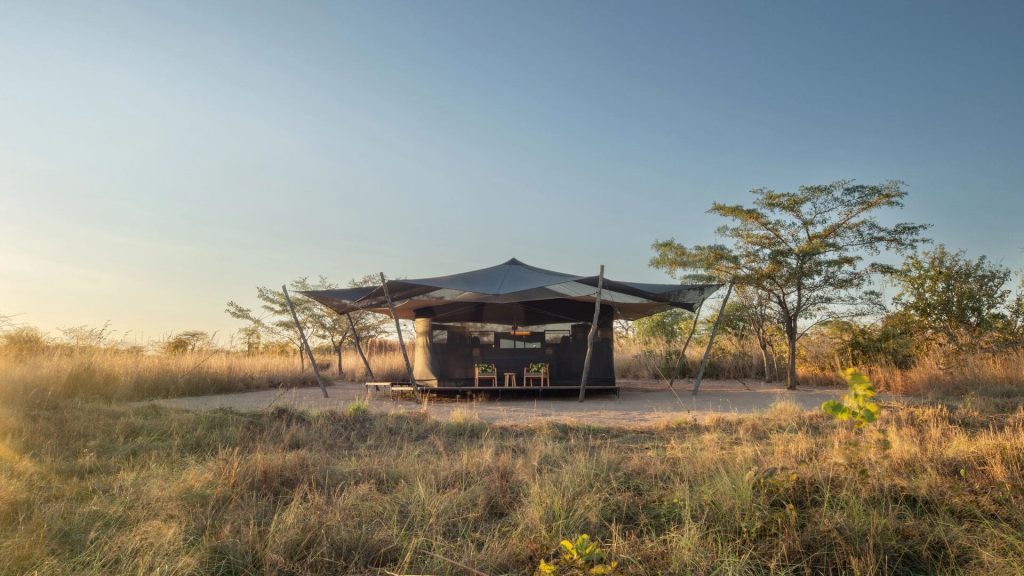
Usangu Expedition Camp: Guest tent on a raised platform among dry grass and scattered trees
LUXURY

Usangu Expedition Camp

★★★★★
Ruaha, south-west, private riverbed camp
A handful of tents with the riverbed in front and nothing behind. The guides here walk daily.
An elephant beside a baobab in Tarangire
Kudu, and the chance of wild dog
07°58′S 34°32′E
A full day from the second camp, with no packing and no plan beyond the one your guide makes at first light. The thickets and rocky hills here are kudu country. Ruaha is one of the very few places where greater and lesser kudu overlap — the greater in the taller woodland, the lesser in the dense thorn, both with the spiral horns and both very good at standing still until you have driven past.
African wild dog live in Ruaha at one of the healthiest densities left in Africa, and this is the part of the park where the packs range. We do not promise them. Dogs den between roughly June and August, and a pack with a den is findable for weeks; a pack without one can cover fifty kilometres in a day and be anywhere. Your guide will know whether there is a den within reach this year, and will tell you honestly.
The afternoon is yours to shape: a second walk with the ranger if the morning went well in the vehicle, or a long, slow drive back along a different riverbed with a sundowner where the vehicle stops. Cheetah are here too, on the more open ground, though far fewer than in the north.
Meals
Breakfast · Lunch · Dinner
Travel
Full day in the park
Highlight
Greater and lesser kudu in the same park — and dogs, if you are lucky
Greater and lesser kudu
Wild dog possible
Optional second walk
Where you sleep
Mdonya Old River Camp: Guest tent
COMFORT

Mdonya Old River Camp

★★★★☆
Ruaha, south-west, remote river camp
Second night at the far camp. The evening here is the quietest of the week, and the sky the darkest.
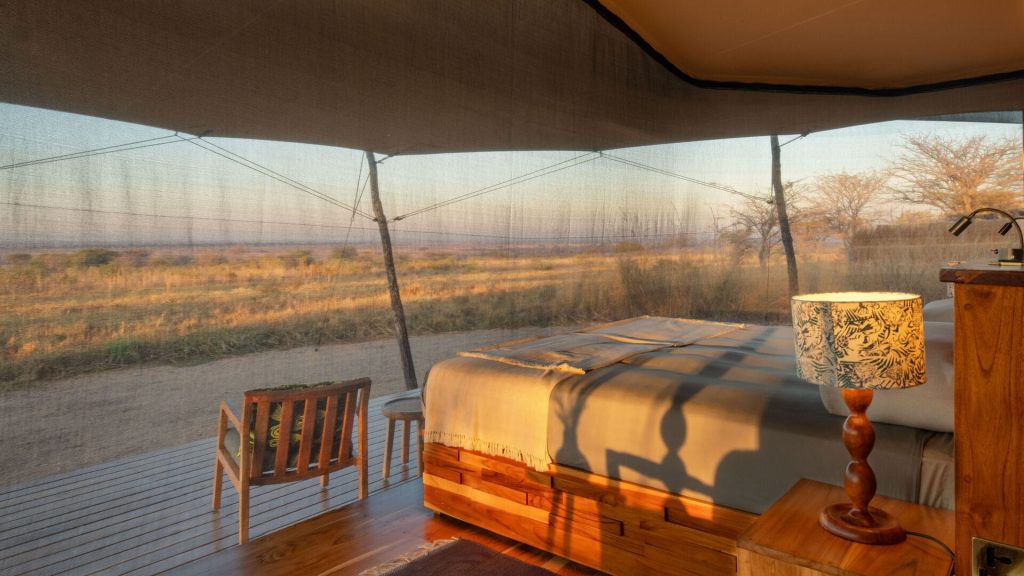
Usangu Expedition Camp: Guest bedroom interior: bed facing wide views of Ruaha through mesh walls
LUXURY

Usangu Expedition Camp

★★★★★
Ruaha, south-west, private riverbed camp
Second night. Dinner outside on the riverbed if the wind allows, which in August it usually does.
Two Maasai men beside a light aircraft on a bush airstrip
A last drive to the strip, and back to Dar
06°52′S 39°12′E
An early breakfast and a game drive that ends at an airstrip rather than at camp. Whether you fly from a strip near the second camp or drive back to Msembe depends on the schedule that season, and we will tell you which when we confirm the camps. Either way the morning is a proper drive, cold and low-lit, with the game still out.
The aircraft retraces the route east over the Nyerere reserve and lands at Dar in the early afternoon. You overnight in the city rather than trying to connect straight onto a long-haul flight, because light aircraft schedules move, and an international connection built on a bush-strip departure is a bad bet. If your flight home leaves late tonight and the timings genuinely work, we will say so — but we build the itinerary with the night in Dar and remove it only when the flight times justify it.
If you are going on to Zanzibar the aircraft can, on some days, continue there rather than stopping in Dar; tell us before we book and we will shape the last two days around it.
Meals
Breakfast · Lunch · Dinner
Travel
Game drive to the airstrip · light aircraft to Dar ~2 – 2½ hrs
Highlight
The best drive of the week is the one to the aircraft
Morning game drive
Light aircraft to Dar
Overnight in the city
Where you sleep
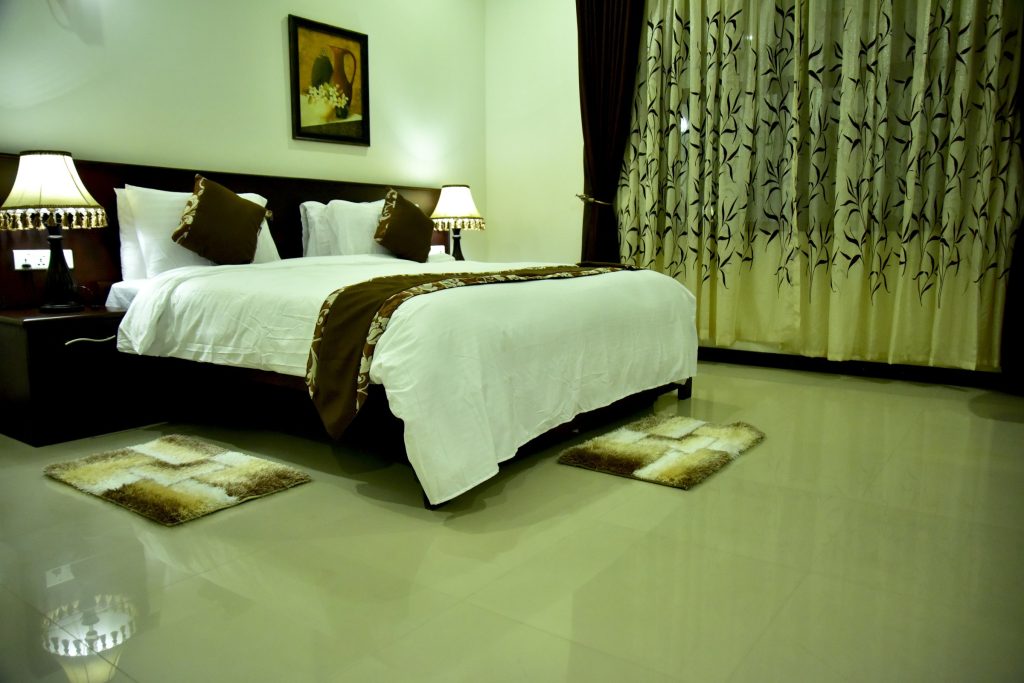
Hotel Blue Sapphire: Guest room
COMFORT

Hotel Blue Sapphire

★★★★☆
Dar es Salaam, near the airport
Back where you started — ten minutes from the international terminal for the morning.
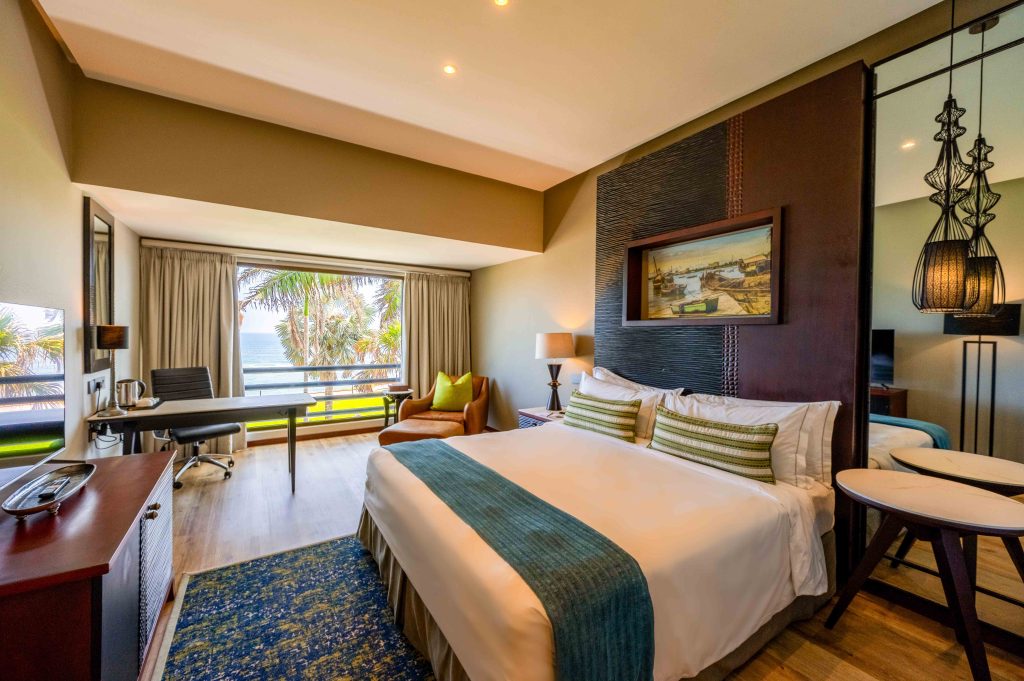
Sea Cliff Hotel: Deluxe Sea View room
LUXURY

Sea Cliff Hotel

★★★★★
Dar es Salaam, Msasani peninsula
An evening on the water and a proper last dinner, with the airport transfer timed to your flight.
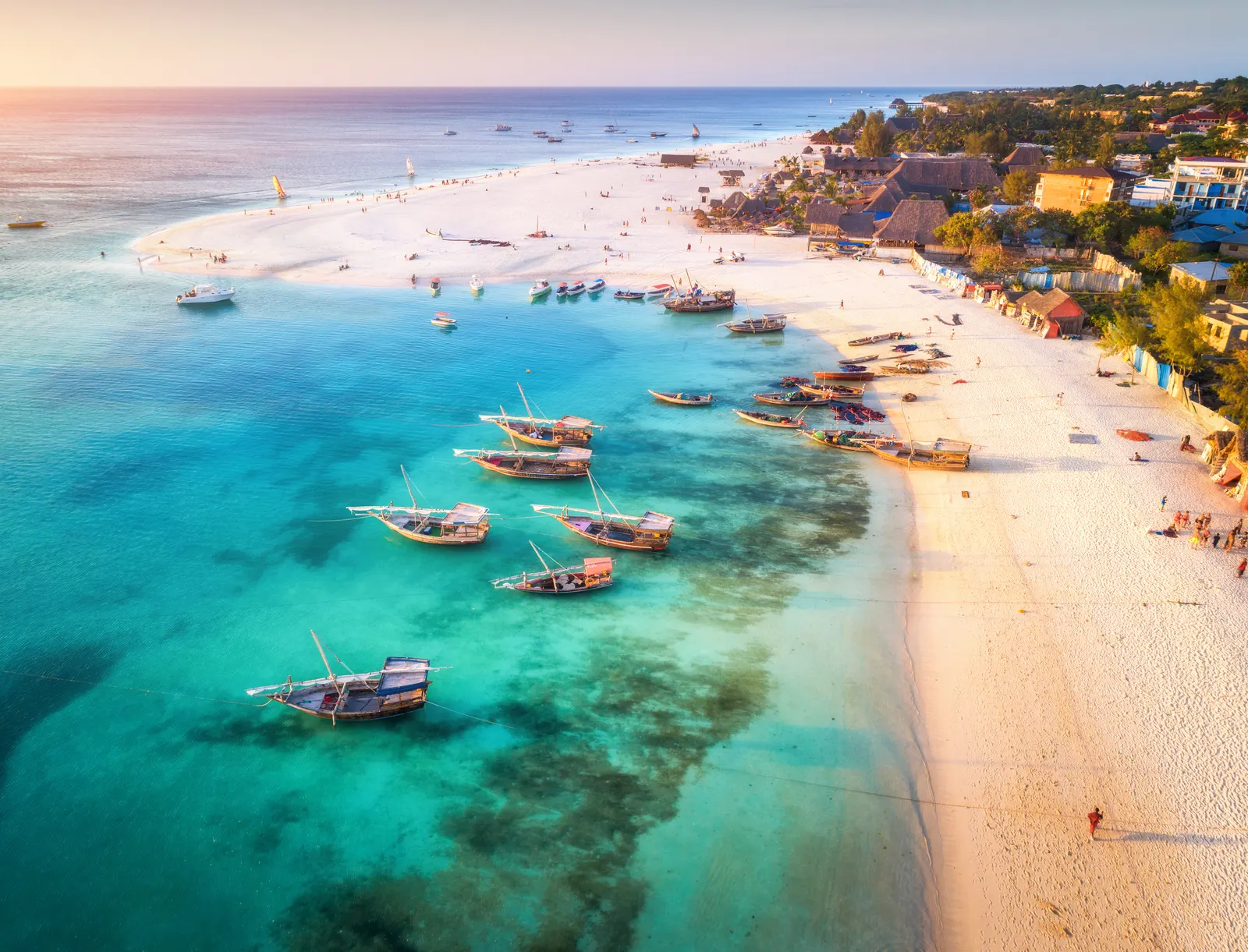
Dhows moored off a white-sand beach on Zanzibar
Dar es Salaam, and home
06°52′S 39°12′E
Breakfast, and the transfer to Julius Nyerere International for your flight home. Allow three hours at the terminal for a long-haul departure; Dar’s airport is not fast, and the road to it from the peninsula hotels can take an hour in the morning traffic. Your guide from the park does not come to Dar — a city driver does this leg — so the goodbyes happen at the airstrip the day before.
If the flight is an evening one there is a day to use. A late checkout at the hotel is the simplest answer; a morning at the National Museum or in the Kariakoo market is the more interesting one, with a driver, and we can arrange either.
The other way to end this trip is not to end it. Zanzibar is twenty minutes by air from Dar, and three or four nights on the east coast after a week of dust is the extension most guests on this route ask for once they are here. It is easier to add before you travel than from a tent.
Meals
Breakfast
Travel
Hotel to Julius Nyerere International, 30 – 60 min
Highlight
Out — or on to the coast
Airport transfer
Late checkout possible
Zanzibar add-on
Where you sleep
Departure day — no overnight
III · Rates

What it costs, by group size

A fly-in safari is priced per seat and per tent. Choose a tier to see the table.
Comfort rates by group size, per person and group total
Group sizeRoomsPer personGroup total
1 guest1 room$5,940$5,940
2 guests1 room$4,820$9,640
3 guests2 rooms$5,130$15,390
4 guests2 rooms$4,770$19,080
5 guests3 rooms$4,970$24,850
6+ guests3 rooms$4,760$28,560
Single supplement
$1,040
Added when a guest does not share a tent
Child, 6 – 15 years
30% off
Sharing with two adults; no walking or night drives under 16
Peak season uplift
Included in the rates above
July – October
All figures in US dollars, per person sharing unless stated. Valid for travel until 30 June 2027. Park fees, guiding, vehicle, accommodation and full board are included — see what is and is not covered below.
IV · Included

What is in the price, and what is not

Stated in full, both ways.

What is included

What is not

V · Add-ons

Worth adding, if you have the days

Priced separately and arranged on request. Fly-camping is the one to ask about.
A safari tent at night
First camp · after dinner

A second night drive

One is included. A second, from the far camp, goes out into country that has never seen a spotlight in daylight either. Same park permit, same filtered lamp, and a different set of animals.
USD 80 per person
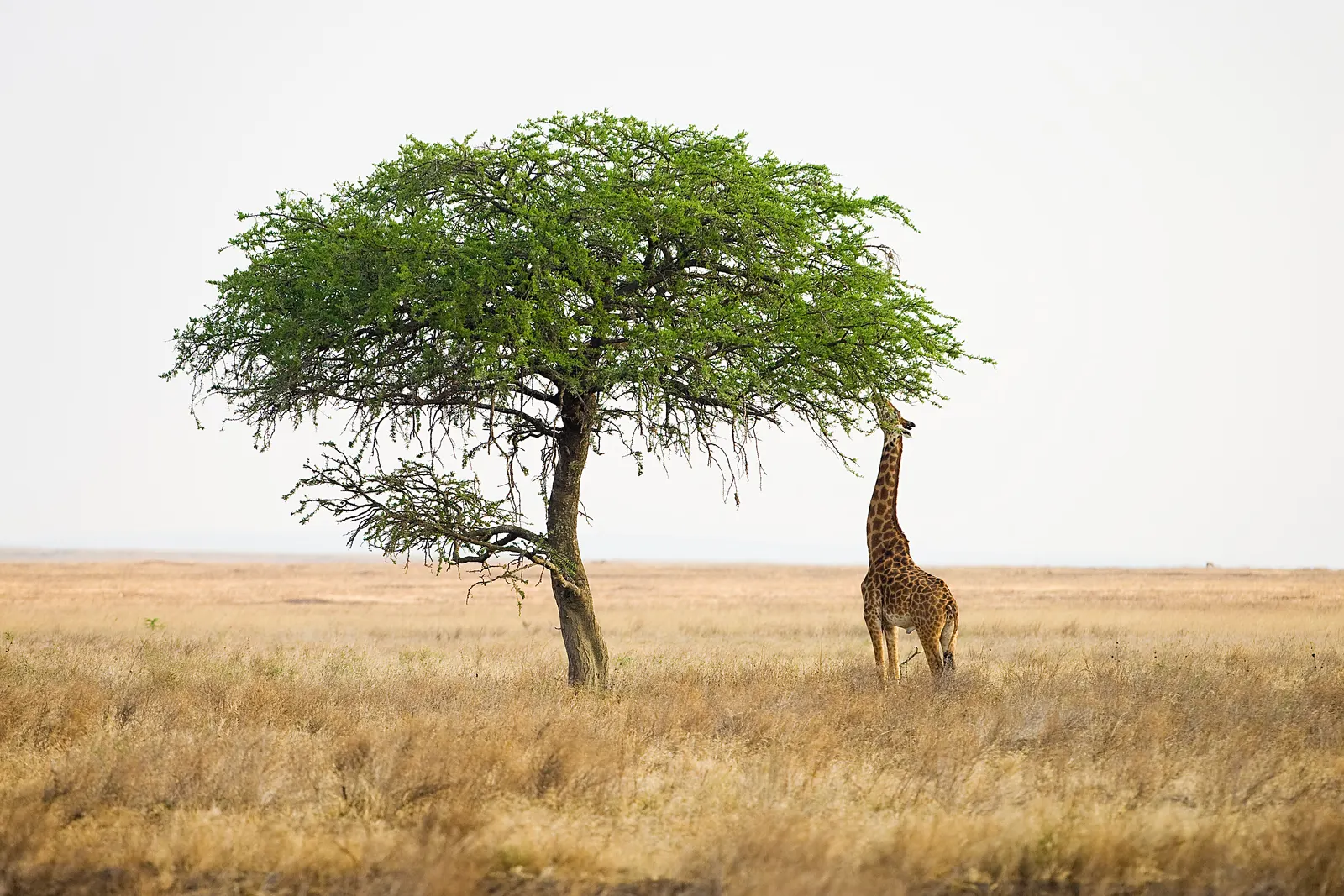
A giraffe browsing an acacia tree on the plains
South-west camp · one night

Fly-camping under a mosquito net

Walk out from the second camp in the afternoon with the ranger and sleep on a bedroll under a net, with a fire and a watch kept all night. Available at some camps only, in the dry months only, and it is the one thing on this page guests remember first.
USD 230 per person
Two guests relaxing by a lodge plunge pool
Before day 1

A night in Dar before you start

Day 1 already includes a night in Dar. If your long-haul flight lands after midnight, add a second so that the safari does not begin on two hours of sleep and a 06:30 domestic check-in.
USD 150 per person, for 2 guests
Dhows moored off a white-sand beach on Zanzibar
After day 7 · 3–5 nights

Zanzibar, afterwards

Twenty minutes by air from Dar, or on some days directly from the park by the same aircraft. Three nights on the east coast after a week of red dust is the extension most guests on this route take.
From USD 1,340 per person, 3 nights
VI · The ground

Where this itinerary takes you

One park in two halves, and the city that gets you there.
Elephants crossing the Great Ruaha River

Ruaha National Park — the river

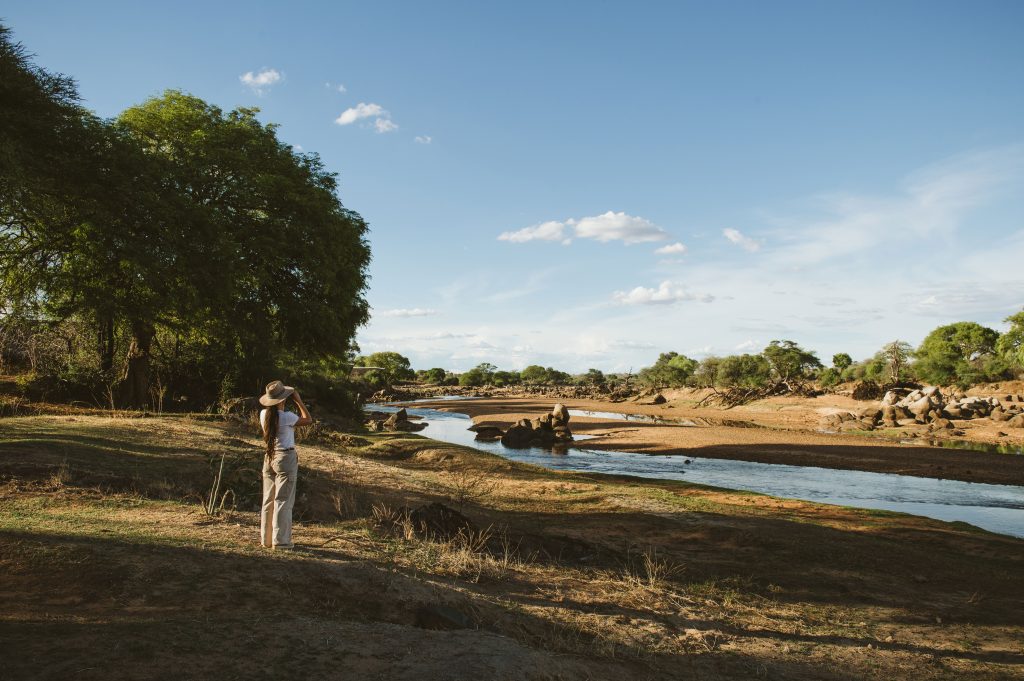
The Great Ruaha runs along the park’s eastern boundary and, in the dry season, shrinks to pools in a sand bed a hundred metres wide. The Mwagusi joins it near Msembe. Between the two rivers is the densest game in the park — the big lion prides, buffalo herds in the hundreds, elephant, giraffe, and hippo and crocodile in the deeper pools.
Elephants crossing the Great Ruaha River

Ruaha National Park — the south-west

Beyond the river circuit the park rises into rocky hills and baobab-covered slopes where acacia gives way to miombo. This is sable, roan, greater and lesser kudu country, the range of the wild dog packs, and the part of a 20,000-square-kilometre park that almost nobody drives.
Two Maasai men beside a light aircraft on a bush airstrip

Dar es Salaam

Tanzania’s largest city and its international gateway on the Indian Ocean coast. Not a destination on this trip — a night at each end so that the light-aircraft connections are safe rather than tight.
The question everyone asks

Will you see wild dog?

1 in 10
Of Africa’s lion live in the Ruaha ecosystem — the dogs are rarer, and the honest question
Lion, elephant, buffalo, giraffe and kudu are near-certain on this route in the dry season. The animal guests ask about is the African wild dog, because Ruaha carries one of the largest surviving populations and because there is nowhere in the north to see them reliably at all.
The answer is that it depends on whether a pack has denned within reach of the camps that year. Dogs den from roughly June to August, and a denning pack stays put for two months and can be visited most days. Outside the denning window a pack ranges across hundreds of square kilometres and is found by luck and by radio. We place the second camp in the south-west because that is where the packs most often are, and your guide will tell you on arrival what the year looks like. Nobody can promise dogs. Anyone who does is guessing.
VII · Season

The best time to travel

Built for June to October. The months that do not work are listed too.
June to October is the season, and this itinerary is built for it. The Great Ruaha shrinks to pools, the grass goes down, the baobabs drop their leaves, and everything in the eastern park walks to the river every day. Game viewing gets better week by week through the dry season; September and October are the peak, and the hottest.
August and September are also the wild dog denning months, which is the one reason to favour mid-season over the end of it. Days are hot — 35°C is normal in October — and nights are cool enough for a fleece on the night drive.
November brings the short rains and the first green, and the park is still very good until the roads start to go. Rates drop. It is the month to come if you want the dry-season game and cannot pay the dry-season price.
December to May is the wet season. Many Ruaha camps close from roughly March to the end of May, the grass is over head height, the game disperses away from the river, and some tracks are impassable. The birding is exceptional and the light is the best of the year — but this is not the itinerary for those months, and we will say so rather than sell it to you.
VIII · Flights

Getting there and back

Fly into Dar es Salaam, not Kilimanjaro. The night before the bush flight is already in.
Fly into Dar es Salaam (DAR), Julius Nyerere International — not Kilimanjaro. Ruaha is reached from Dar by scheduled light aircraft, and JRO adds a domestic leg and most of a day. Most European routings connect through Doha, Istanbul, Amsterdam, Addis Ababa or Nairobi and land in Dar in the late evening or early morning.
The Ruaha flights leave Dar in the morning, and this itinerary already includes the night before. If your long-haul lands after midnight, consider a second night so day 2 starts on sleep.
Coming home, the itinerary ends in Dar on day 8, with the night before it spent in the city. Book an international departure on day 8, not day 7 — the bush-strip aircraft is reliable but not something to connect a long-haul flight onto. Zanzibar is twenty minutes by air from Dar and is the usual onward step.
Tanzania requires a visa for most passports — USD 50, or USD 100 for United States citizens, valid up to 90 days. Apply online in advance rather than on arrival; the queue at Dar late at night is long.
IX · Other costs

What else you will spend

Visas, insurance, tips and drinks — set out so there is no surprise on the ground.
Tanzania issues a tourist visa online (eVisa) or on arrival at Dar es Salaam. Applying in advance is faster and avoids the queue at immigration, which after a late-evening arrival at Dar is longer than at Kilimanjaro.
A yellow fever certificate is required only if you are arriving from a country where yellow fever is endemic. Coming directly from Europe or North America, it is not.
We ask every guest to travel insured. Medical cover and evacuation are the parts that matter here more than anywhere else we send people — the nearest hospital to Ruaha is Iringa, two to three hours by road from the gate, and the nearest serious one is a flight away.
Check that your policy covers walking safaris and night drives explicitly. A few insurers exclude them.
Tipping is customary in Tanzania and it is genuinely optional. The figures below are what guests commonly give, not what is expected of you. On this route there is one extra person to think about: the park ranger who walks with you, who is tipped separately on the morning, in cash.
Guide tips are usually handled at the end of the trip; camp staff tips go into a shared box so that the kitchen and the askari who walked you to your tent at night are included.
Drinking water in the vehicle is included throughout. Whether drinks at the camp are included depends on the camp — several of the remoter Ruaha camps are all-inclusive, and we will tell you which of yours are when we confirm them.
There is very little to spend money on inside Ruaha, which is one of its virtues. Laundry at the camps, the odd curio, and tips are the whole list. Bring cash in small US dollar notes: there is no card connection at either camp and no bank between Dar and the park.
Notes dated before 2009 are refused across Tanzania. Bring newer ones.
X · Why us

Why book this with us

01

We send our best guides south

Ruaha rewards a guide who reads tracks and rivers rather than one who follows the radio. The guides who ask to be sent here are the ones we send, and one of them is with you from the airstrip to the airstrip.
02

Two camps, not one

Most fly-in Ruaha trips stay near Msembe all week. The second camp in the south-west costs a day’s driving and buys you the kudu, the dog country, and the part of the park with nobody in it.
03

The walk and the night drive are in, not extra

The two things Ruaha allows that the Serengeti forbids are built into the price and the plan, on the days they work best, rather than sold back to you at camp.
04

We will tell you not to come in April

Camps close, roads go, and the grass hides everything. There are months when this route is not worth doing, and we would rather move you than take money for a quiet week.
XI · Questions

Frequently asked

What guests ask before booking this itinerary.
The rate depends on your group size and which camp tier you choose, and it moves with the season. Fly-in safaris cost more per day than drive-in ones, because the aircraft seats and the remote camps are the main lines. The table above sets out the per-person price for every group size from one to six. Our rates for this itinerary are set out in the table above — ask us and we will quote for your exact dates rather than give you a range.
Because the road is nine to ten hours of tarmac to Iringa and then two hours of dirt to the gate, each way. Driving turns an eight-day trip into four days of driving and four in the park. The aircraft does it in two and a half hours and lands you in the middle of the game. Luggage is limited to 15 kg per person in soft bags.
For Ruaha, yes. It is roughly 20,000 square kilometres — bigger than the Serengeti — with two quite different halves, and five nights across two camps is what it takes to see both. If you want a second park, the honest answer is the Southern Explorer, which adds Nyerere and the Rufiji river with ten nights, not eight.
Maybe. Ruaha holds one of the largest remaining populations in Africa and the south-western camp sits in their range, but a pack that is not denning can be fifty kilometres away by lunchtime. June to August, when packs den, gives the best odds. We do not promise them and would not trust anyone who does.
It is a private safari, so the game drives can be. The limits are the walking safari and the night drive, which are 16 and over, and some of the remoter camps set their own minimum age. Tell us the ages and we will say plainly whether this route works. Child rates are 30% below the adult rate for children sharing with two adults.
Able to walk two to three hours on flat, sandy ground in the cool of the morning, with stops. It is not a hike. The heat later in the day is the real demand of this trip, not the walking — October days reach 35°C — and the middle of the day is rested for that reason.
August and September: the river is low, the game is on it, the wild dogs are denning, and the heat has not yet peaked. June and July are cooler and greener with slightly more dispersed game; October is the driest and the hottest. We do not recommend this route between December and May.
Yellow fever is required only if you are arriving from a country where it is endemic — not from Europe or North America. Beyond that, speak to a travel clinic six weeks before you fly. Malaria prophylaxis is advised for Dar es Salaam and for Ruaha; tsetse flies are present in the miombo and bite through thin clothing, so avoid dark blue and black.
Yes, and it is the most common extension. Zanzibar is twenty minutes by air from Dar, and on some days the Ruaha aircraft continues there directly. Three to five nights on the coast is the usual shape. Rates are from USD 1,340 per person for three nights.
XII · Your trip

Request your personalised safari proposal

Tell us how you like to travel and we will put together a personalised proposal for this route — dates, camps and a firm price per person. No payment is required at this stage.

No payment is required at this stage. We reply by email and WhatsApp within one working day.

Ruaha: the Southern Wilderness

8
Days
7
Nights
1
Park
Full
Board
Starts
Dar es Salaam, Tanzania
Ends
Dar es Salaam, Tanzania
Departures
Daily — a private safari on the dates you choose
Availability
Open all year, subject to lodge space
From
from$4,760/pp
Per person, sharing
Private safari · no booking fee · we reply within one working day
from $4,760 / person
Loading itinerary…
Saved Trips