Places of Africa Safaris

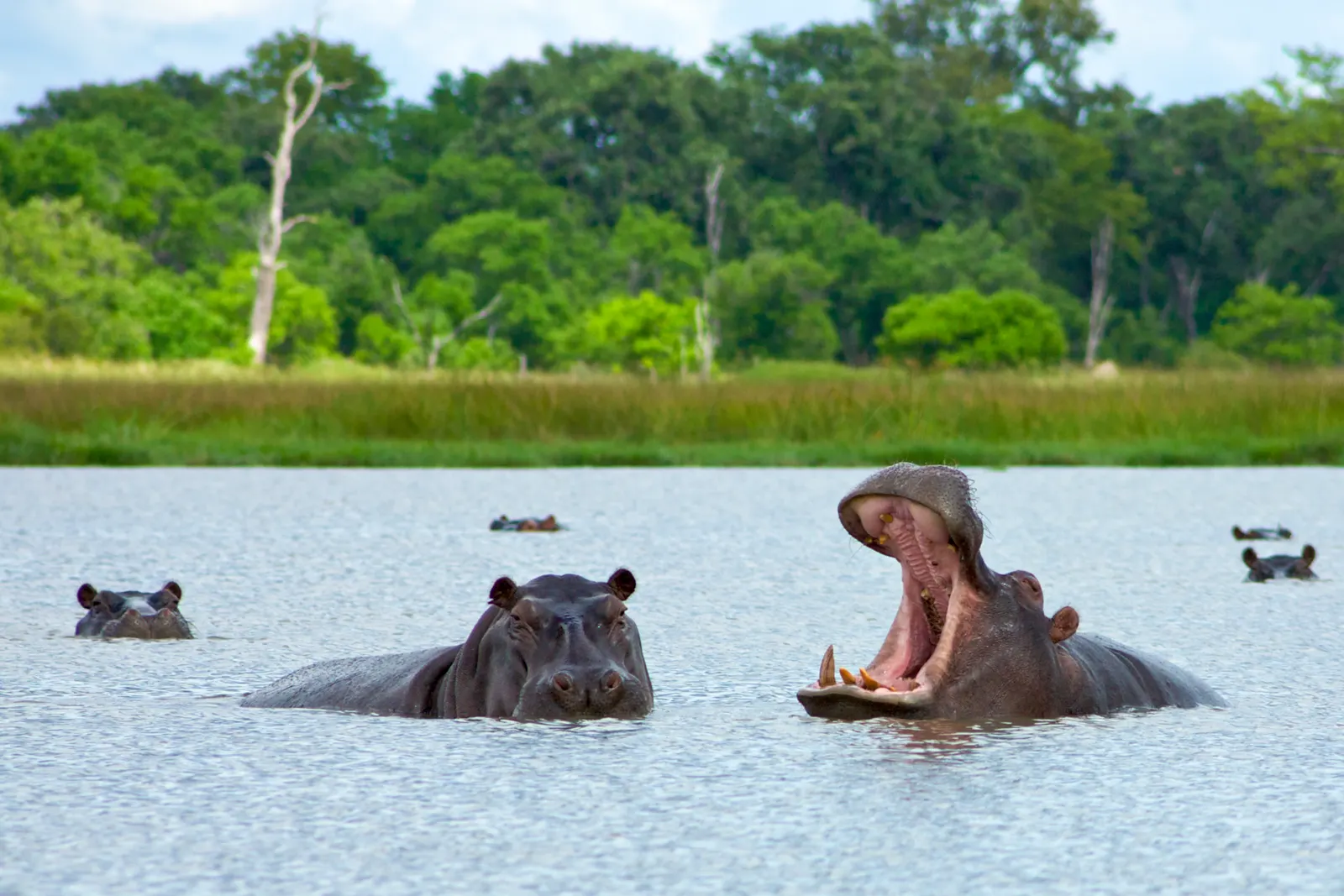
Hippos crowded into a pool
Southern Circuit · Seven Days

Seven days on the Rufiji

One park, four nights on the water, and four ways to see it — by boat, on foot, from the vehicle, and after dark — with a 45-minute flight in place of every long drive.
7
Days
6
Nights
4
On the river
Full
Board
I · Overview

The route, and why this shape

One park, four nights on the water. A 45-minute flight replaces every long drive.
Nyerere is the northern part of what was the Selous Game Reserve, gazetted as a national park in 2019 and, at around 30,000 square kilometres, the largest in Tanzania. Almost none of it is visited. The tourist sector is a strip along the Rufiji River and the five lakes north of it, and that is where this itinerary stays, because that is where the water is and the water is the point.
The Rufiji makes this the one park in the country where you can leave the vehicle and see the bank from a boat. It also allows what the northern parks do not: walking with an armed ranger, night drives with a spotlight, and a night under a net on a sandbank if you want one. Four nights in one place gives you all of them without a single day lost to packing.
The trade is plain. You will not see the Serengeti’s numbers, there is no crater, and the game is more spread out than in the north — you work for the sightings and some afternoons are quiet. In return you go whole mornings without another boat, and you see hippo, crocodile and elephant from below rather than from a roof hatch. June to October is when it works. We will tell you about the rest.
Length
7 days / 6 nights
Country
Tanzania
Start / end
Dar es Salaam → Dar es Salaam
Tour type
Private fly-in safari
Group size
Private — 1 to 6 guests per vehicle
Meal plan
Full board
Best months
June – October
Activity level
Easy to moderate — one dawn walk of 2–3 hours
Vehicle
Toyota Land Cruiser 4×4 with a pop-up roof, a window seat for every guest, charging points and a cool box
II · The days

Day by day, all seven

Every day opens. One night in Dar at each end, four on the Rufiji river system between them. See every lodge and camp we use
Day
01
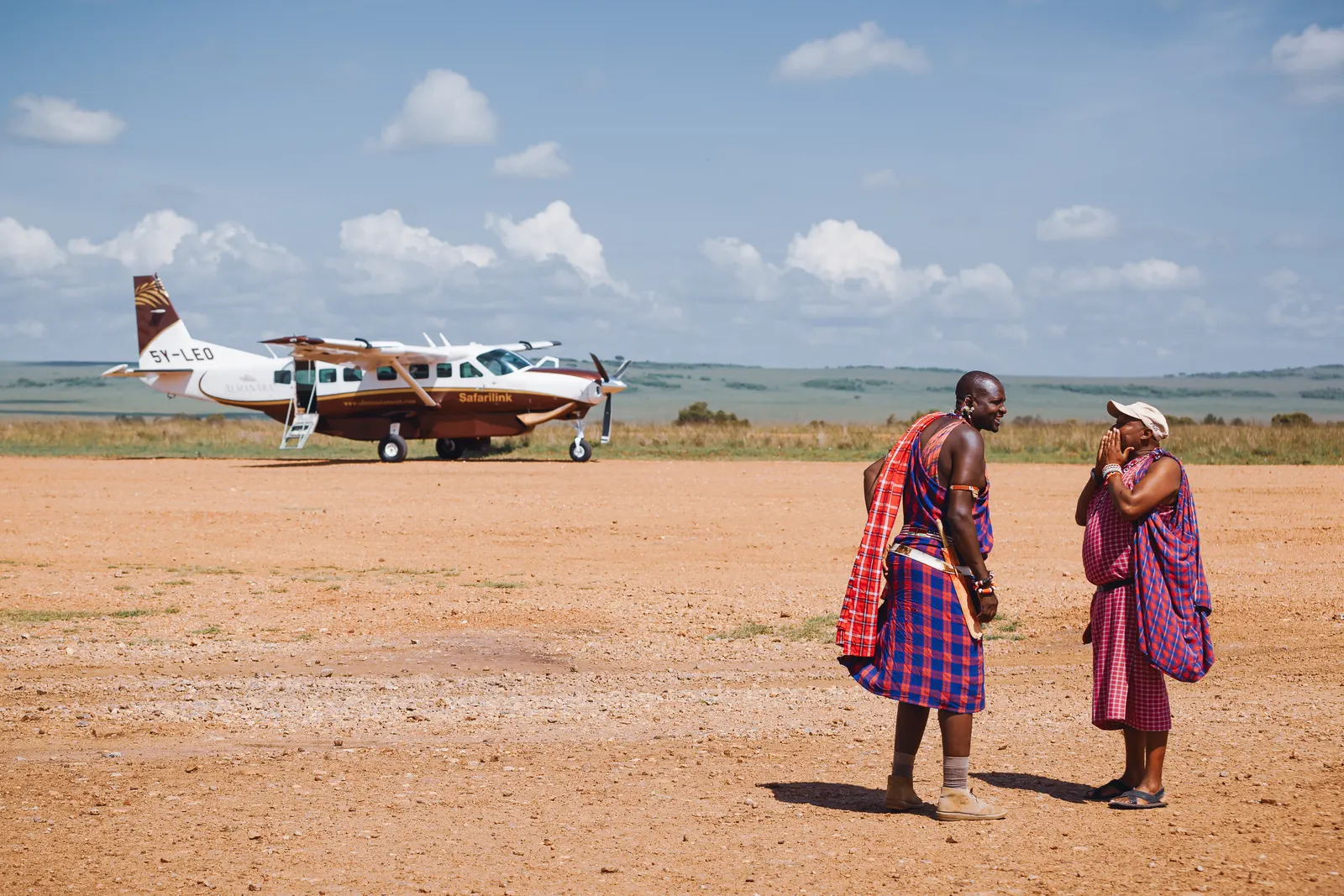
Two Maasai men beside a light aircraft on a bush airstrip
Arrival

Dar es Salaam, and an early night

06°48′S 39°17′E
Dinner
Two Maasai men beside a light aircraft on a bush airstrip
Dar es Salaam, and an early night
06°48′S 39°17′E
You land at Julius Nyerere International, on the southern edge of Dar es Salaam. The hotel is twelve kilometres away and the drive can take twenty minutes or ninety, because this is a city of six million with two main roads in. Your transfer driver will know which one is moving.
Nothing is scheduled tonight, and the reason is the flight tomorrow. The light aircraft to the park leaves in the morning, and the only way to be on it without stress is to sleep near the airport the night before. Most long-haul routings into Dar land in the afternoon or late evening, which makes a same-day connection a gamble we do not take with your first day in the park.
Use the evening for one piece of admin: repack into a soft bag of fifteen kilograms or less. The aircraft tomorrow has a strict weight limit and no hold for a hard case. Anything you do not need on the river can be left at the hotel and collected on day six.
Meals
Dinner
Travel
Airport to hotel ~12 km · allow an hour in traffic
Highlight
A night in the city so the flight south leaves rested
Meet at Dar es Salaam airport
Repack to 15 kg
No game drive today
Where you sleep
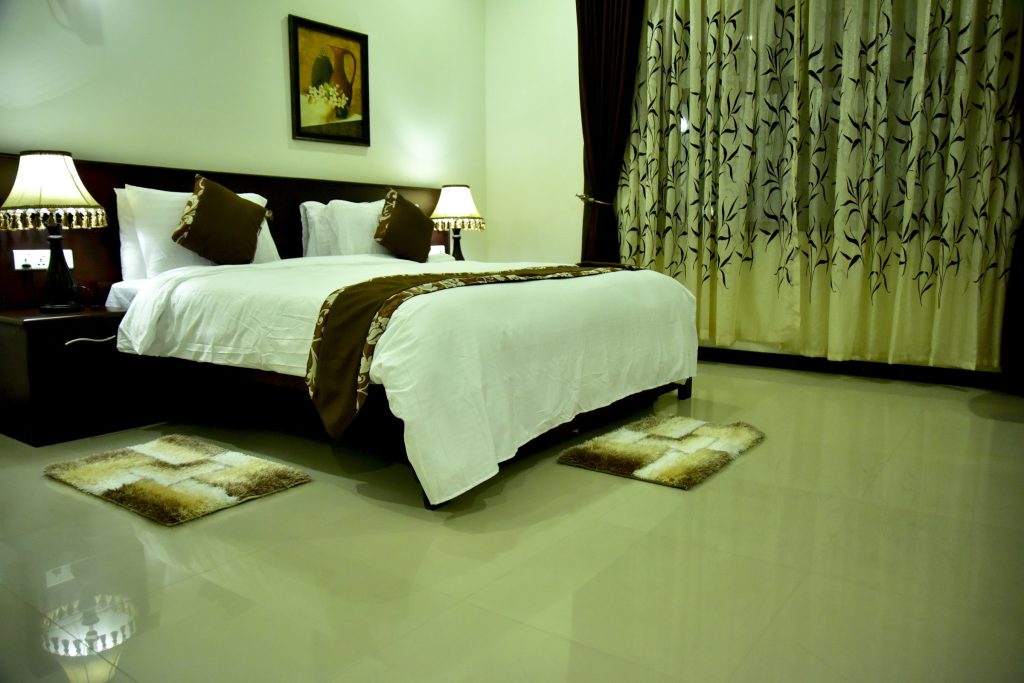
Hotel Blue Sapphire: Hotel exterior
COMFORT

Hotel Blue Sapphire

★★★★☆
Dar es Salaam, near the airport
A clean, quiet hotel chosen for the morning flight rather than for the view. Air-conditioned, and ten minutes from the domestic terminal.
Outside view of Sea Cliff Hotel with ocean views
LUXURY

Sea Cliff Hotel

★★★★★
Dar es Salaam, on the peninsula
On the Msasani peninsula, with the ocean in front of the terrace. Further from the airport, so the morning starts earlier.
Hippos crowded into a pool
Forty-five minutes south, then the river
07°44′S 38°14′E
The flight is short and low. You cross the coastal plain, then the Rufiji delta, and within half an hour the fields stop and the miombo woodland starts. From the window you see the river before you land beside it: a wide brown channel braided around sandbanks, with the lakes to the north of it catching the light.
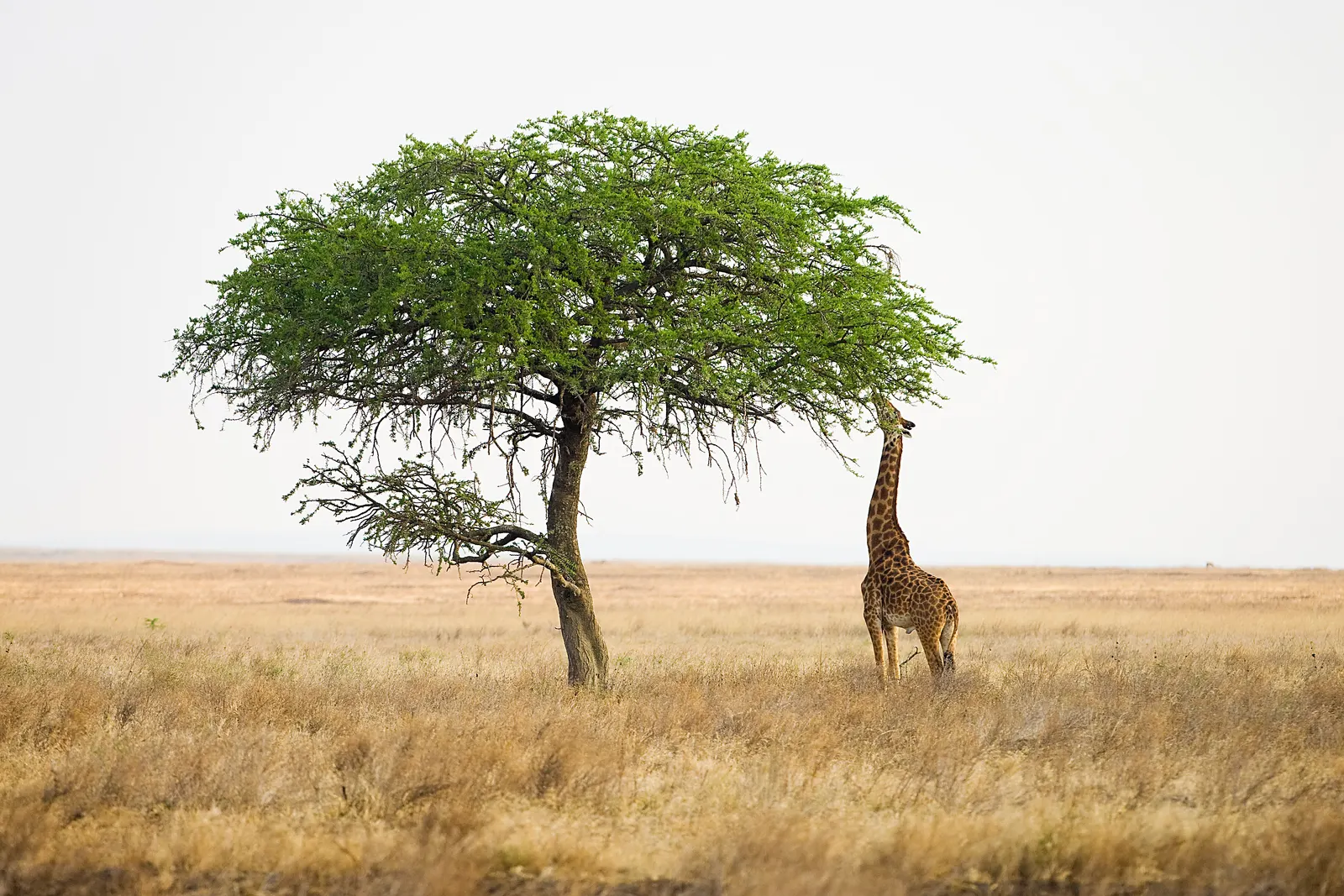
Your guide meets the aircraft on the airstrip, and the drive to camp is a game drive. This is the northern sector of what was the Selous Game Reserve, gazetted as Nyerere National Park in 2019. The vegetation is different from the north of the country — borassus palms, tamarind along the water, and open grassland on the lake margins where the giraffe and impala stand.
After lunch and the heat of the middle of the day, you go out again for the last two hours of light, either in the vehicle or on the water depending on where the animals are. Elephant are usually the first thing you meet; hippo are the first thing you hear.
Meals
Breakfast · Lunch · Dinner
Travel
Dar to Nyerere by light aircraft ~45 min
Highlight
The Rufiji from the air, and a first drive to camp
Scheduled light aircraft
Game drive from the airstrip
First afternoon on the river
Where you sleep
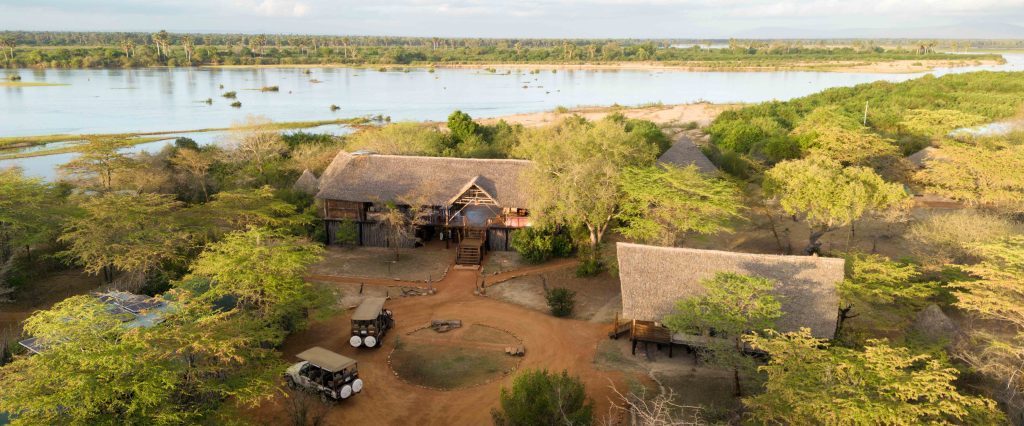
Selous Impala Tented Camp: Aerial view of the camp
COMFORT

Selous Impala Tented Camp

★★★★☆
Nyerere, on the Rufiji or one of the lakes
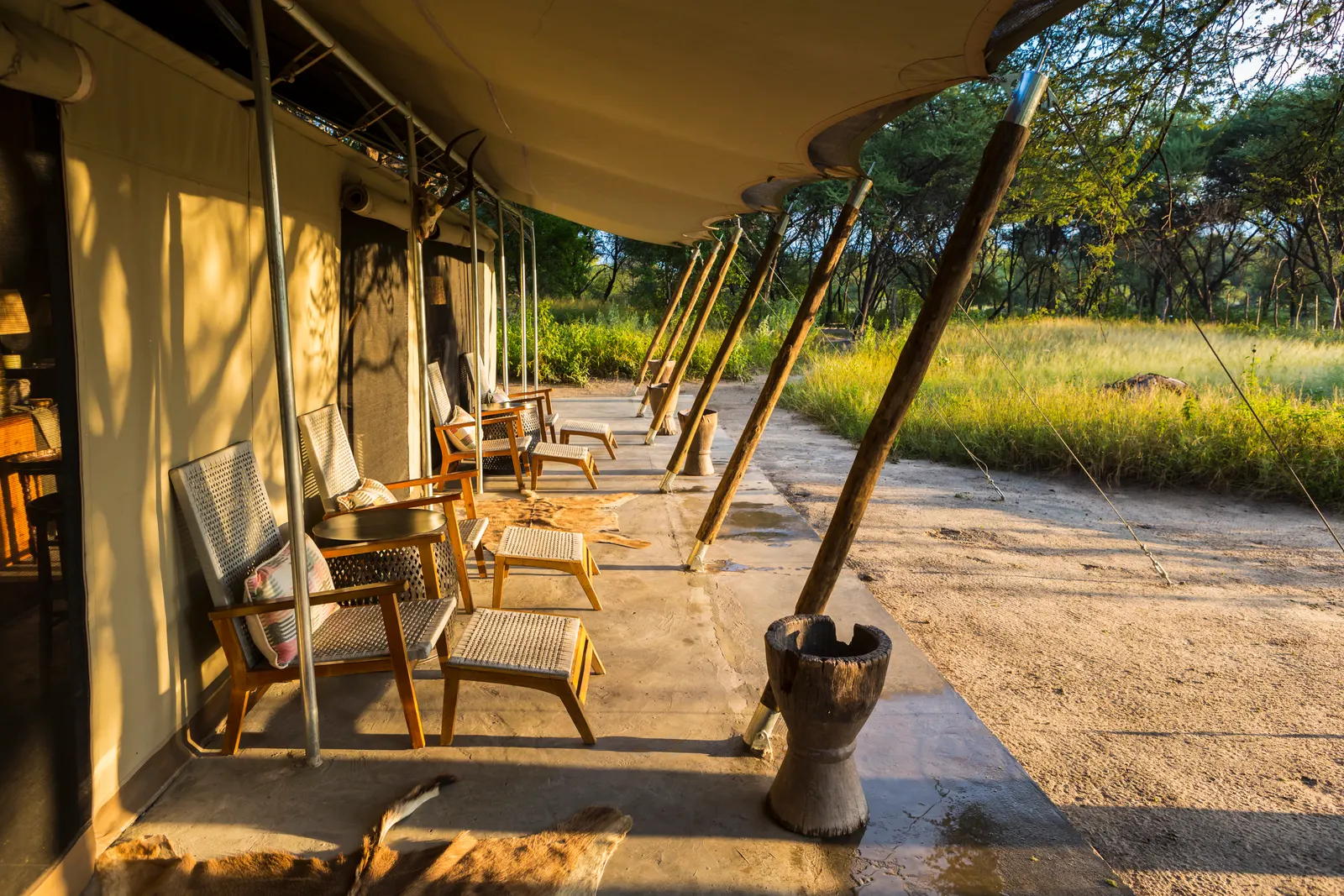
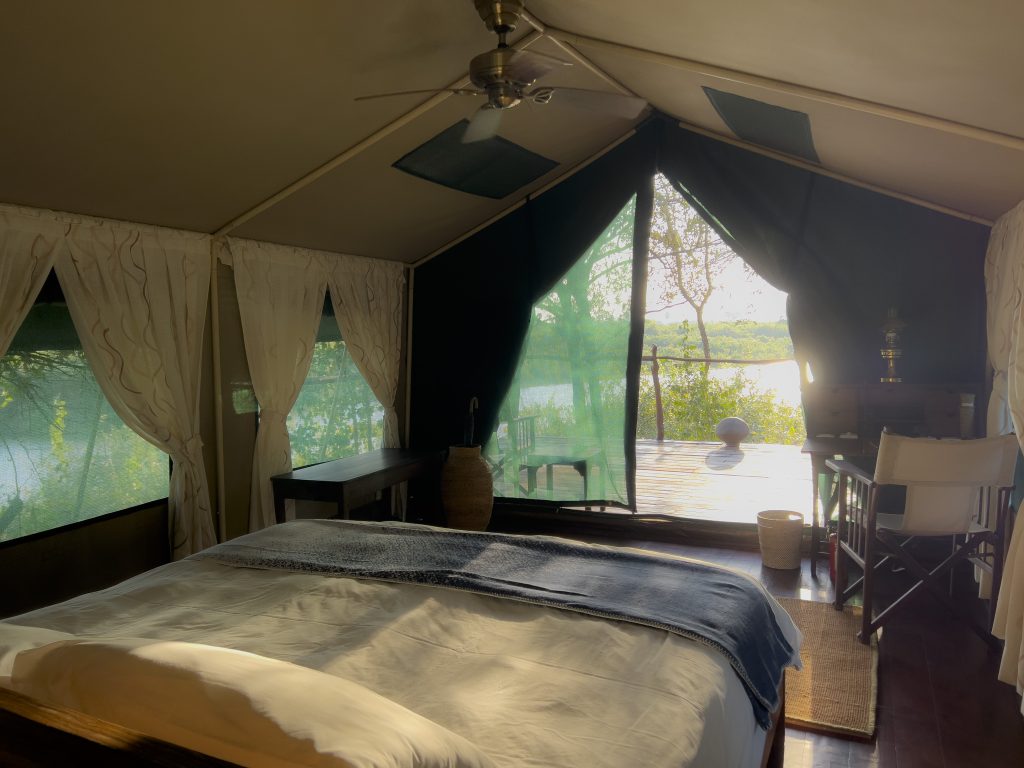
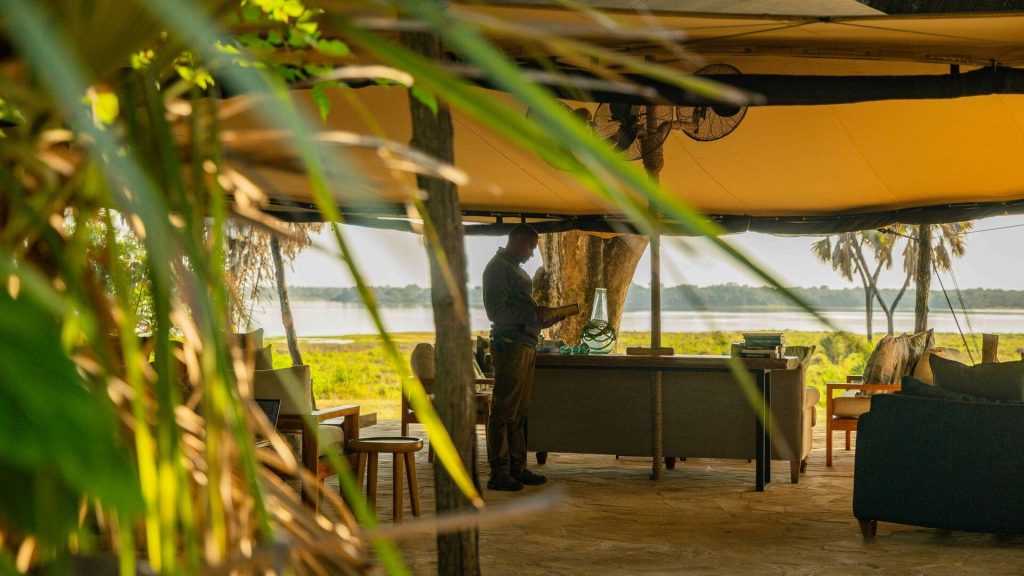
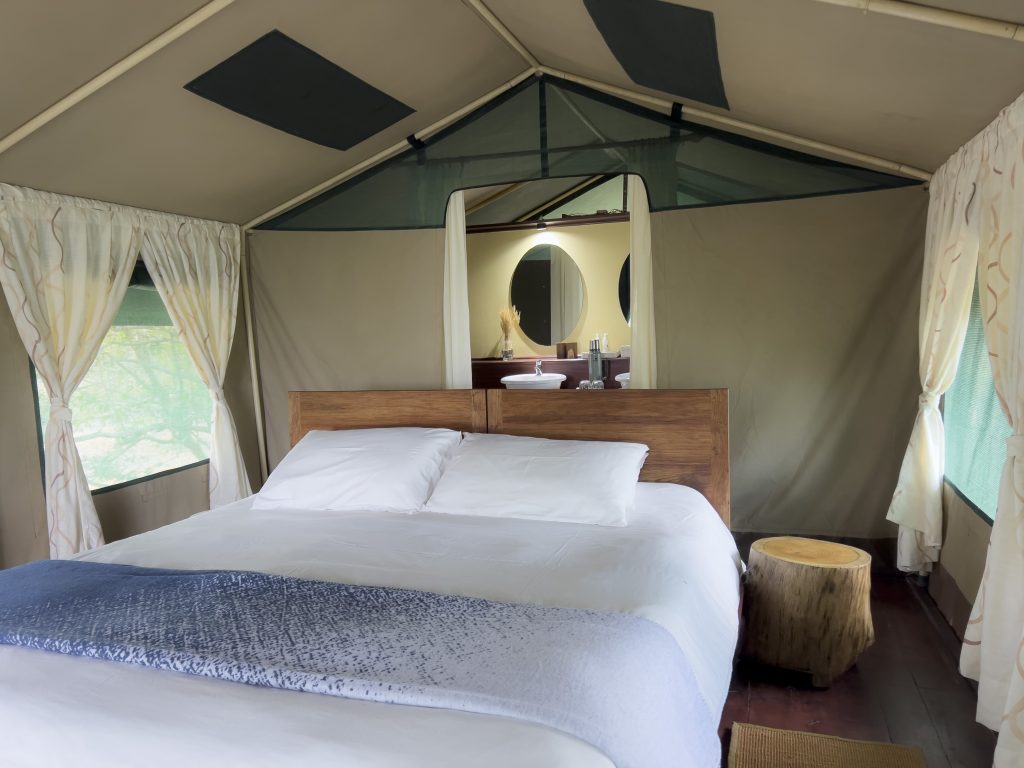
Tented, en-suite, on the water. The bank in front of camp is the game drive you did not have to leave for.
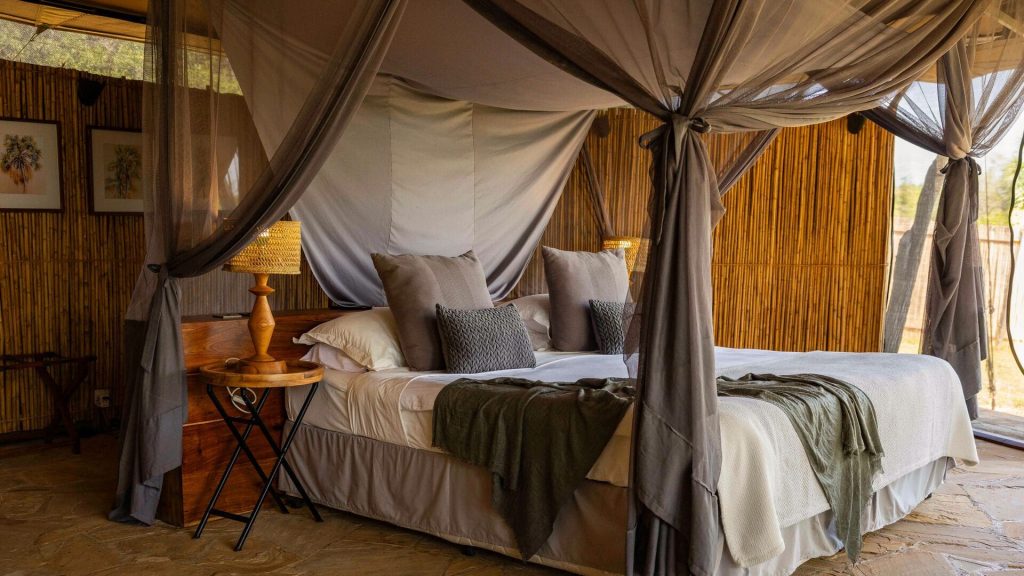
Roho ya Selous: Guest tent interior with canopy bed, wooden furnishings and neutral decor
LUXURY

Roho ya Selous

★★★★★
Nyerere, on a lakeshore
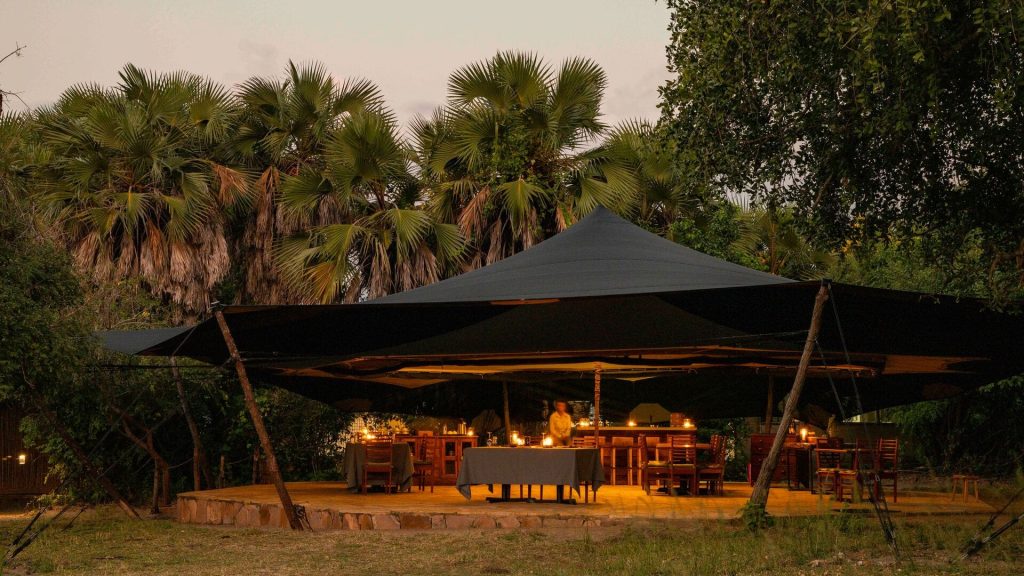
Larger tents set back under the palms, a private boat for guests of the camp, and staff who stop the dinner service when the elephant walk through.
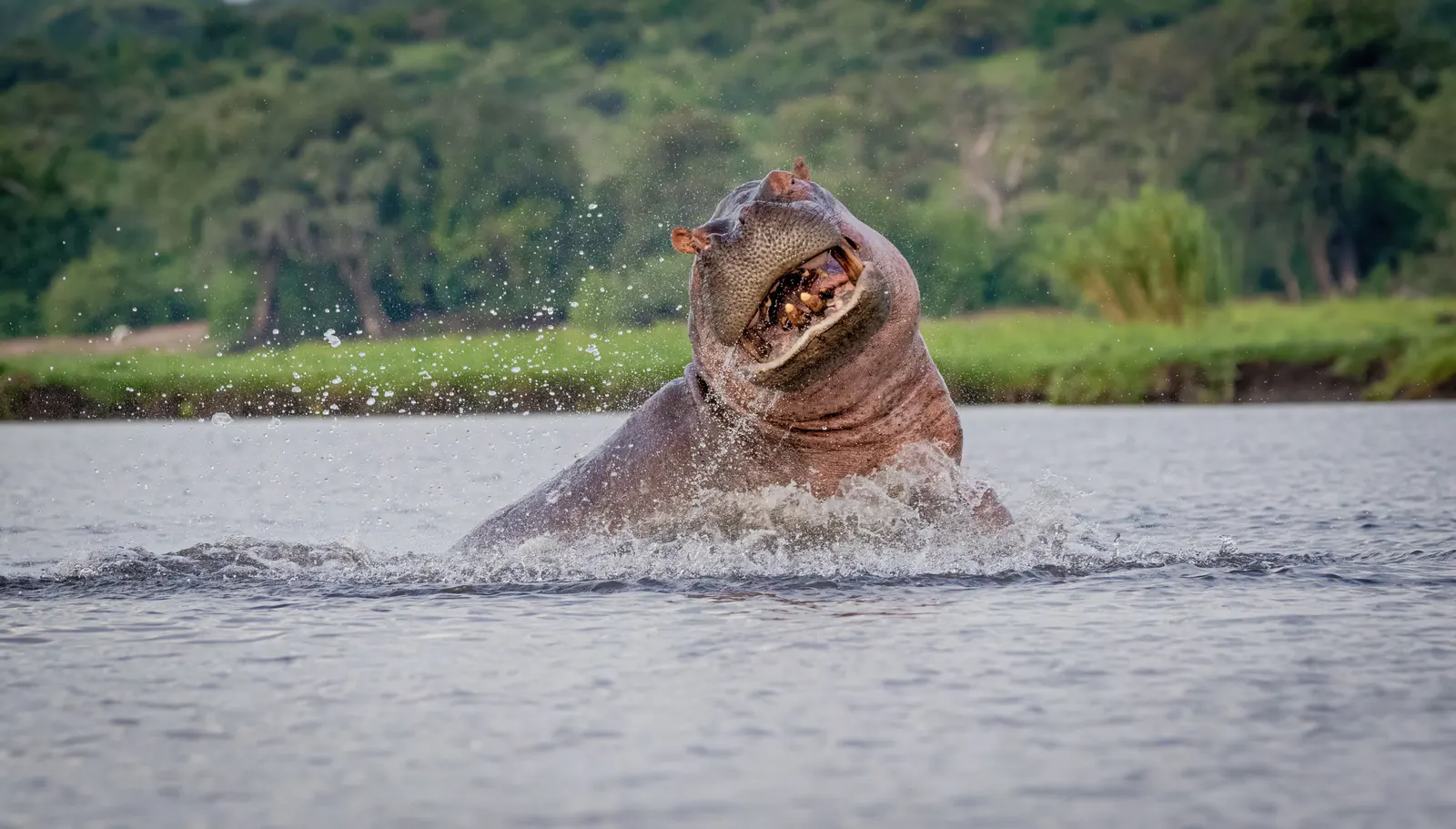
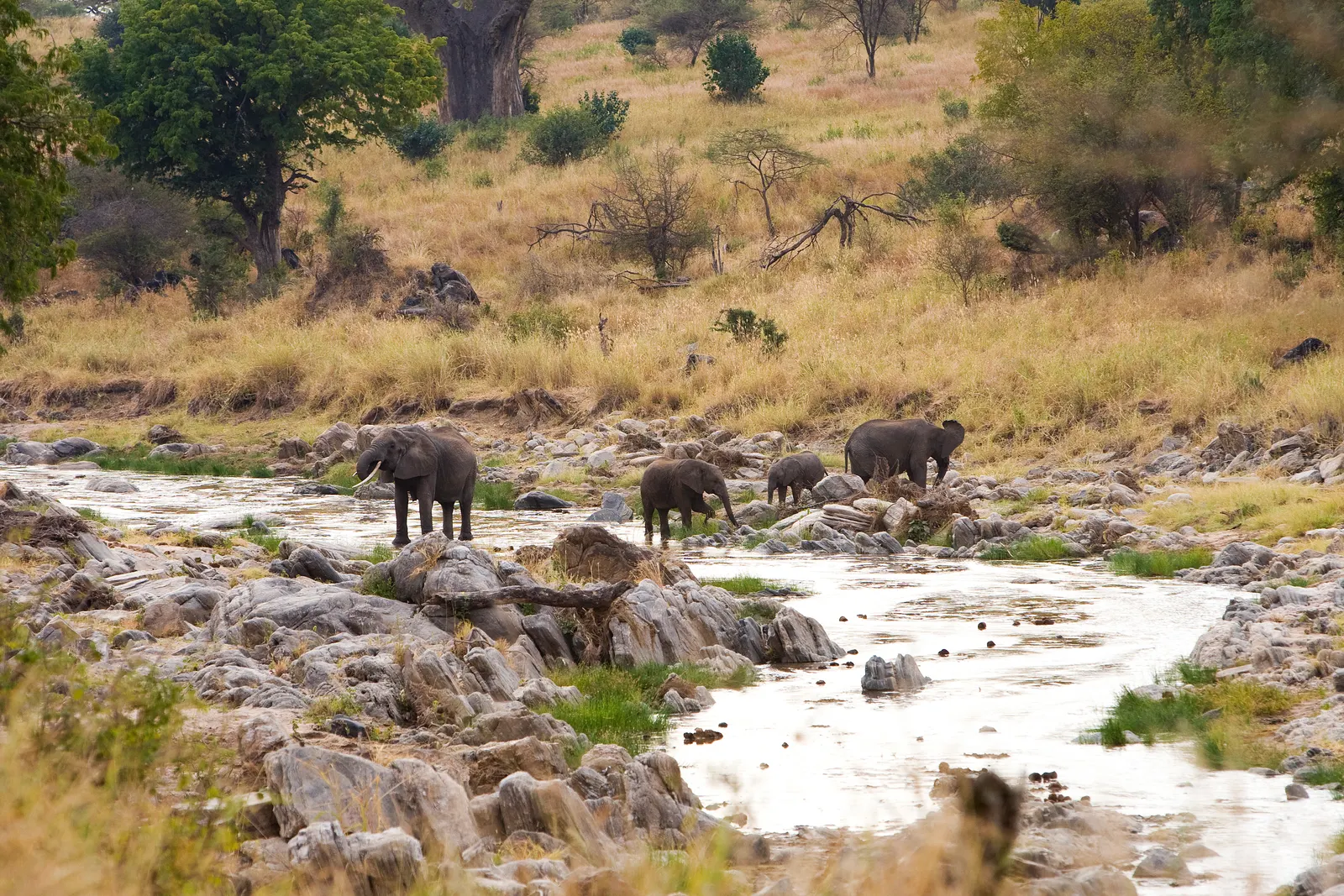
Hippos in the river
The lakes and the channels by boat
07°43′S 38°03′E
This is the day the trip is built around, and the reason to come here rather than anywhere else in Tanzania. Nyerere is the one park where the boat is a normal way to see the bush, not a novelty, and the river system north of the Rufiji — lakes Tagalala, Manze, Nzerakera, Siwandu and Mzizimia, joined to the river by channels — gives you flat water and a shoreline that animals must come to.
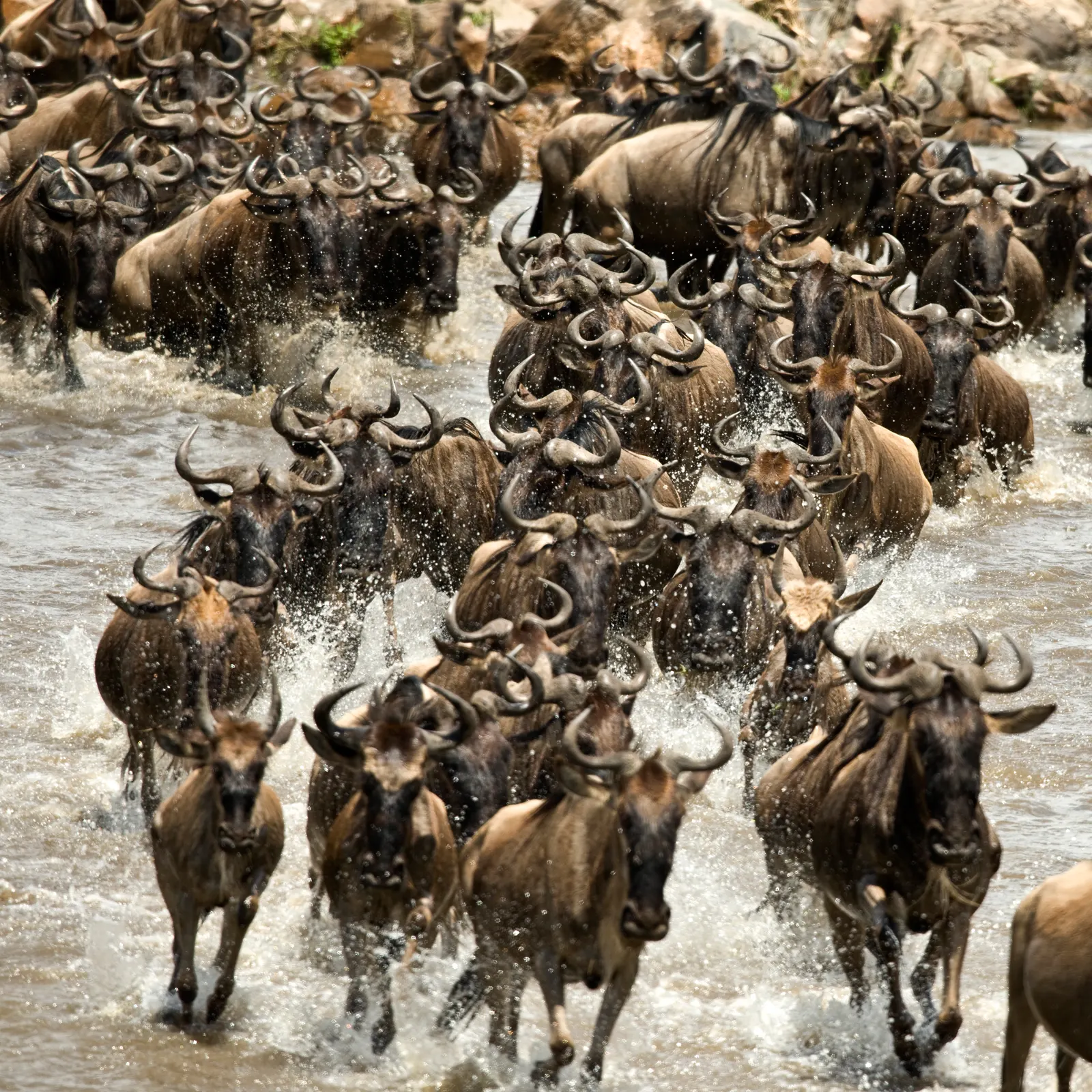
You go out early, before the wind gets up. Hippo are everywhere and you keep a respectful distance; crocodile line the sandbanks with their mouths open. The birds are the thing people do not expect: fish eagle, African skimmer, open-billed stork, carmine bee-eater nesting in the cut banks in the late dry season, and the palm-nut vulture that lives in the borassus.
The late afternoon boat is the better one. In the dry months the elephant, buffalo and giraffe walk down to the lake edge to drink as the temperature drops, and from the water you are below them and downwind. The boat is quieter than any vehicle. Sunset happens while you are still out.
Meals
Breakfast · Lunch · Dinner
Travel
On the water, morning and late afternoon
Highlight
The bank from the water at the hour everything drinks
Boat safari
Hippo and crocodile
Water birds
Where you sleep
Selous Impala Tented Camp: Guest tents
COMFORT

Selous Impala Tented Camp

★★★★☆
Nyerere, on the Rufiji or one of the lakes
Second night, same camp. Two boats in a day means you saw the lake at both ends of the light.
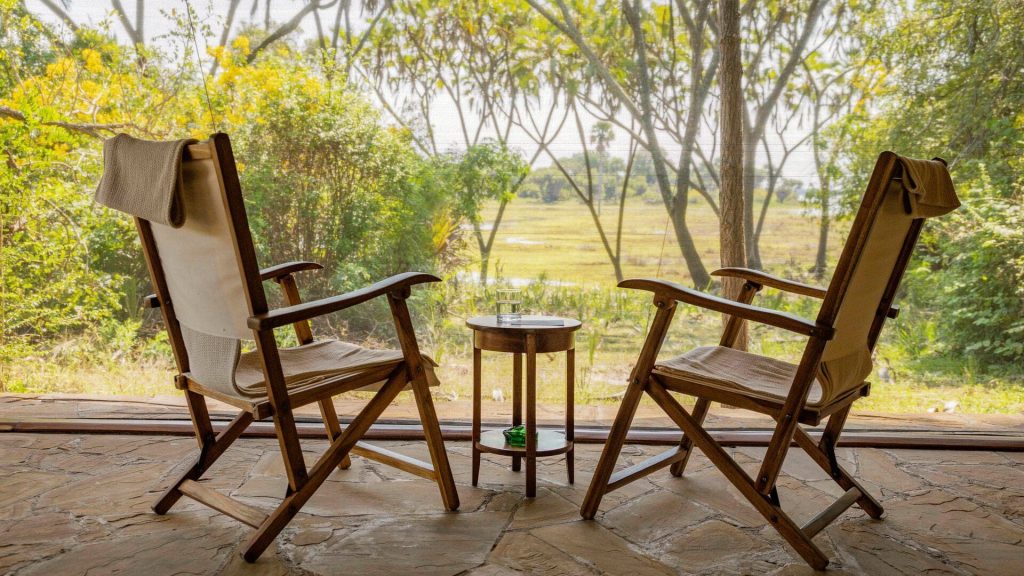
Roho ya Selous: Guest deck: two wooden chairs and a small table facing a green riverside view through trees
LUXURY

Roho ya Selous

★★★★★
Nyerere, on a lakeshore
Second night. The advantage here is the private boat: you stay out until the last of the light without waiting for another party.
A giraffe browsing an acacia tree on the plains
A walk at dawn, and the hot springs
07°47′S 38°06′E
You walk at first light with an armed ranger and your guide, for two or three hours, before the heat makes it pointless. A walking safari is not about seeing big animals close up — if you do, the ranger will move you away. It is about the small things the vehicle drives over: tracks in the sand, the dung beetles, the difference between a civet’s scat and a genet’s, and the sound of the bush when there is no engine under it.
Walking in the park is normally restricted to guests of sixteen and over, and the camps set their own rules on top of that. Wear neutral colours and closed shoes; the tsetse fly is here and it goes for blue and black.
In the afternoon you drive to Maji Moto, the hot springs near Lake Tagalala, where water comes out of the rock warm and clear and collects in a pool you can sit in. It is the one place in the park where getting into the water is a good idea — everywhere else the crocodiles have the argument. Back to camp by the lake for the last hour of light.
Meals
Breakfast · Lunch · Dinner
Travel
Walking ~2–3 hrs · vehicle to Maji Moto
Highlight
The bush at walking pace, then a swim at Maji Moto
Walking safari, age 16+
Armed ranger
Maji Moto hot springs
Where you sleep
Selous Impala Tented Camp: Refurbished tents 1-7
COMFORT

Selous Impala Tented Camp

★★★★☆
Nyerere, on the Rufiji or one of the lakes
Third night. A walk in the morning and a soak in the afternoon is a day that ends early, on purpose.
Roho ya Selous: Open lounge area with seating facing the river and green landscape
LUXURY

Roho ya Selous

★★★★★
Nyerere, on a lakeshore
Third night, with the option of moving to a sister camp on a different lake for the last night if you want a new shoreline.
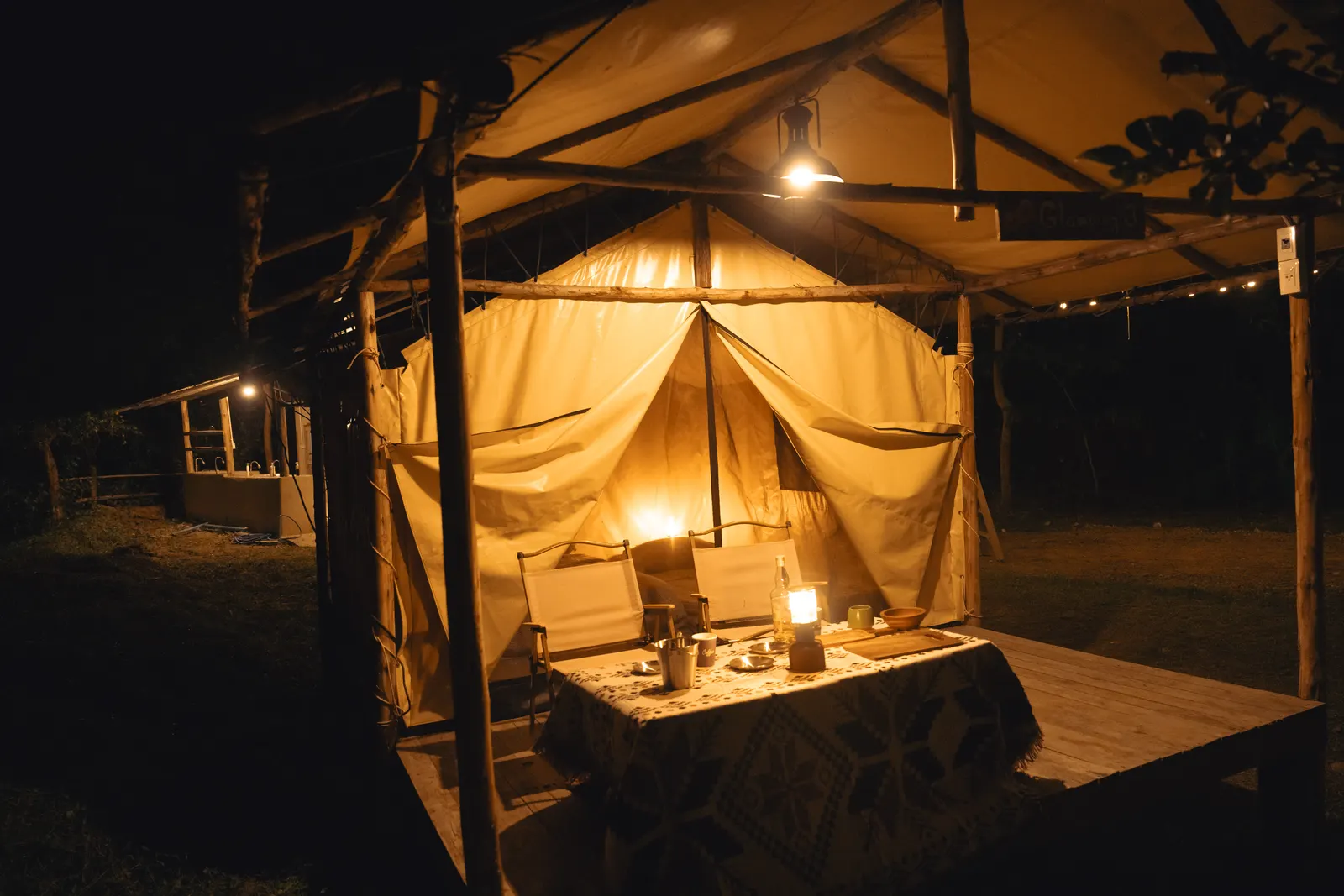
A safari tent at night
A full day, and the park after dark
07°40′S 38°00′E
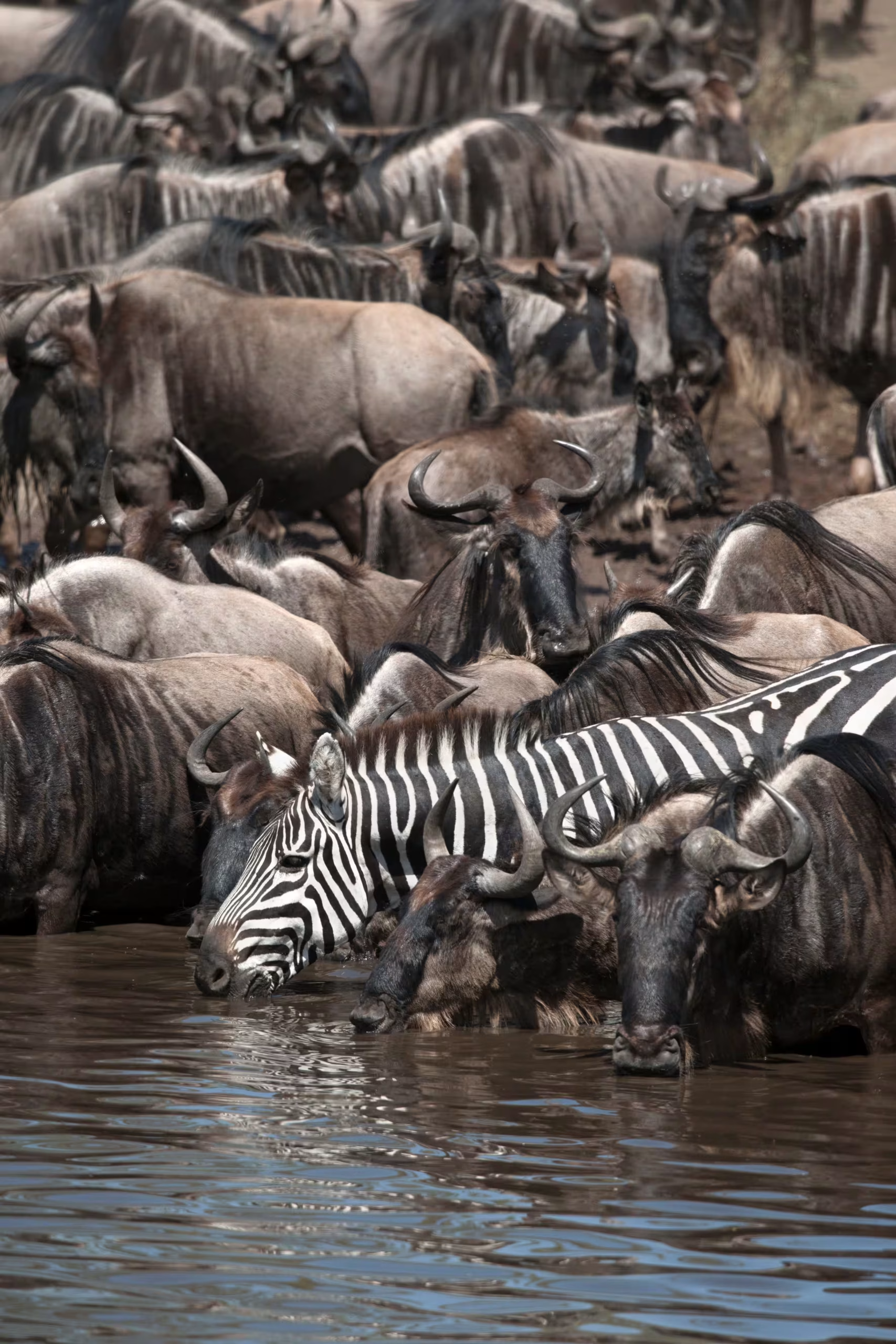
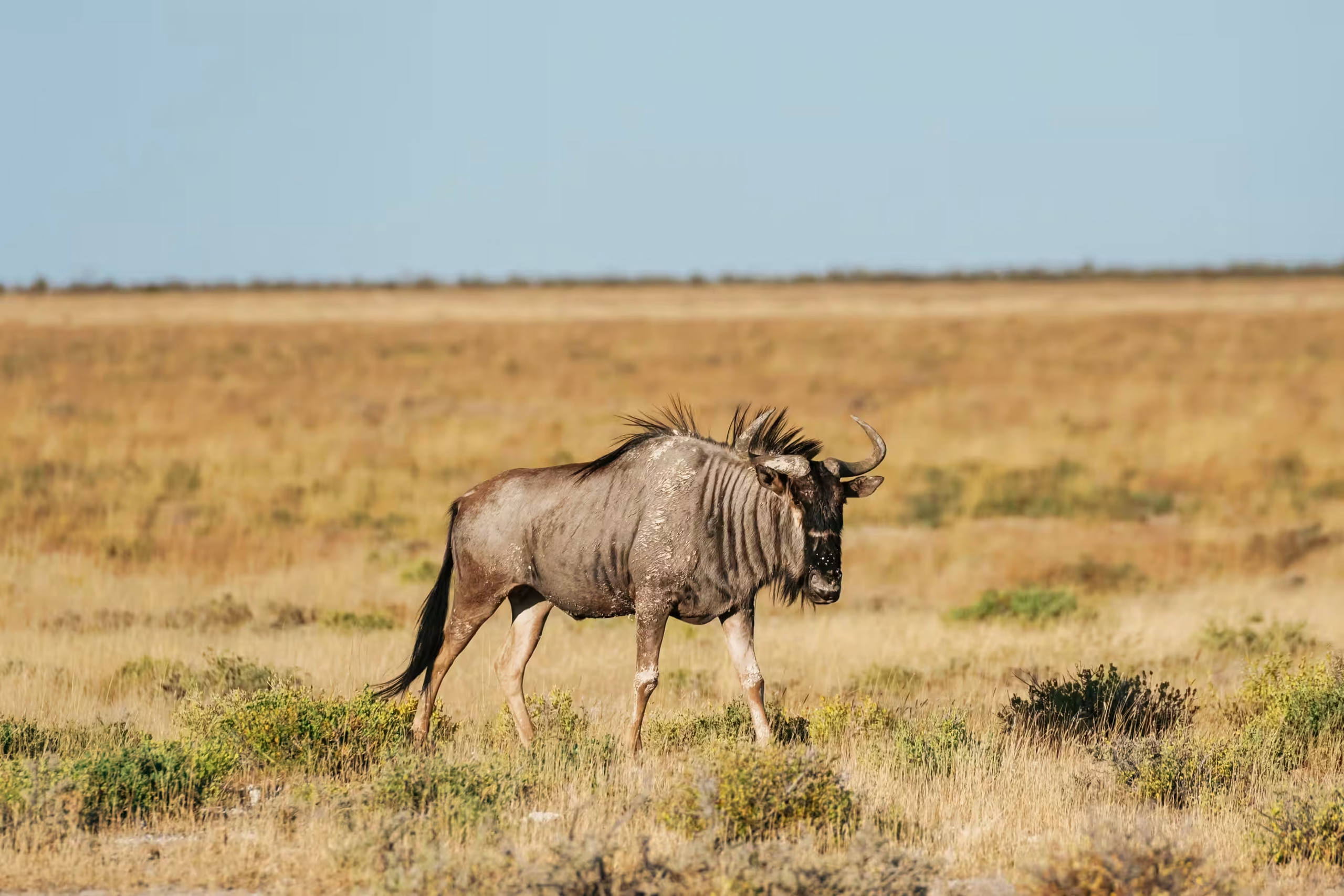
A full day in the vehicle, ranging further from camp than the shorter drives allow. The plains between the lakes hold the animals that mark the south as different from the north: Nyasa wildebeest with the white chevron across the face, Lichtenstein’s hartebeest, sable in the miombo, and greater kudu in the thicket.
This ecosystem carries one of the largest remaining populations of African wild dog on the continent, and between June and August the packs are denning, which means they stay in one area long enough to be found. We will not promise them. What we can say is that your guide will know where the nearest den was last week, and that this is the day set aside to go and look.
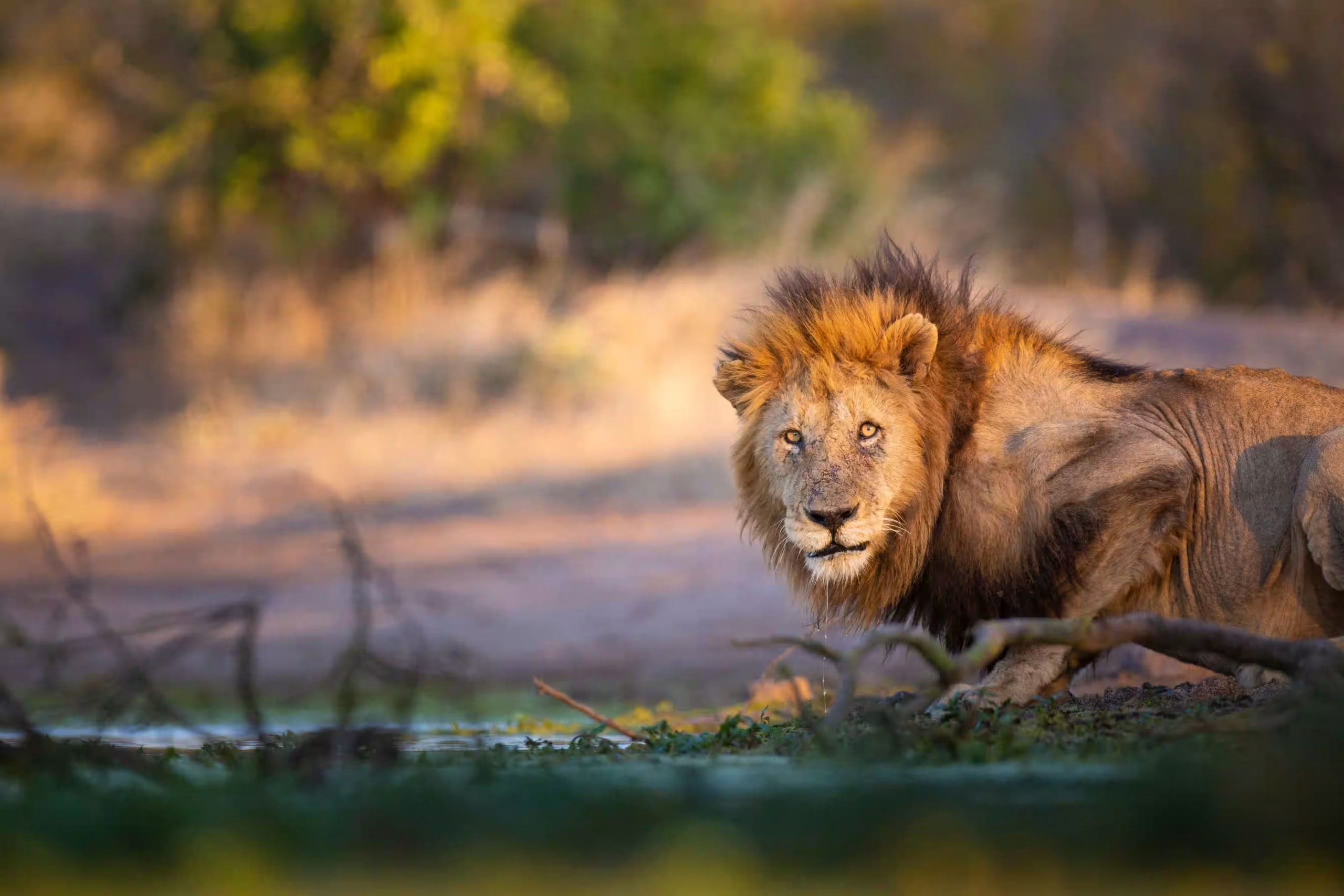
Nyerere is one of the few Tanzanian parks where night drives are permitted, and this is the night you take one. After dinner the vehicle goes out with a filtered spotlight for an hour or two. Genet, civet, bushbaby, porcupine, and the honey badger if you are lucky; hippo out of the water and grazing, which they only do after dark; and, some nights, lion moving. Fly camping on the sand of a dry riverbed can replace the tent tonight as an add-on.
Meals
Breakfast · Lunch · Dinner
Travel
Full day in the park · night drive after dinner
Highlight
Wild dog country by day, and a spotlight drive by night
Full day drive
Wild dog, not promised
Night drive
Where you sleep
Selous Impala Tented Camp: Double/twin tent
COMFORT

Selous Impala Tented Camp

★★★★☆
Nyerere, on the Rufiji or one of the lakes
Fourth and last night on the river. A late return after the night drive, and no packing until the morning.
Roho ya Selous: Open-air dining area under a canopy, candle-lit at dusk
LUXURY

Roho ya Selous

★★★★★
Nyerere, on a lakeshore
Fourth night. Fly camping is offered from this camp — a bedroll under a mosquito net on the riverbank, with a fire and a ranger.
Two Maasai men beside a light aircraft on a bush airstrip
A last morning, then north to Dar
06°48′S 39°17′E
You are out at first light for a final drive, timed to end at the airstrip. This is always the best drive of the week: early, cool, and you now know what you are looking at. The flight north leaves mid-morning, and the ground crew have been doing this long enough that a lion on the airstrip is a delay, not a problem.
Forty-five minutes later you are back in Dar es Salaam, with the afternoon free. The honest use of it is a slow lunch and the hotel pool. If you want the city, the National Museum and the fish market at Kivukoni are both close to the harbour and both worth an hour; the traffic between them is not.
The night in Dar is a deliberate buffer. Light aircraft do not fly in bad weather and international departures do not wait for them, so this itinerary never asks the two to meet on the same day. If you are going on to Zanzibar, the ferry and the flight both leave from the city and you can do that today instead.
Meals
Breakfast · Lunch · Dinner
Travel
Morning game drive · light aircraft ~45 min
Highlight
The best drive of the week is the one to the airstrip
Final game drive
Fly back to Dar
Buffer night before departure
Where you sleep
Hotel Blue Sapphire: Guest room
COMFORT

Hotel Blue Sapphire

★★★★☆
Dar es Salaam, near the airport
Back where you started, with the bag you left behind waiting at reception.
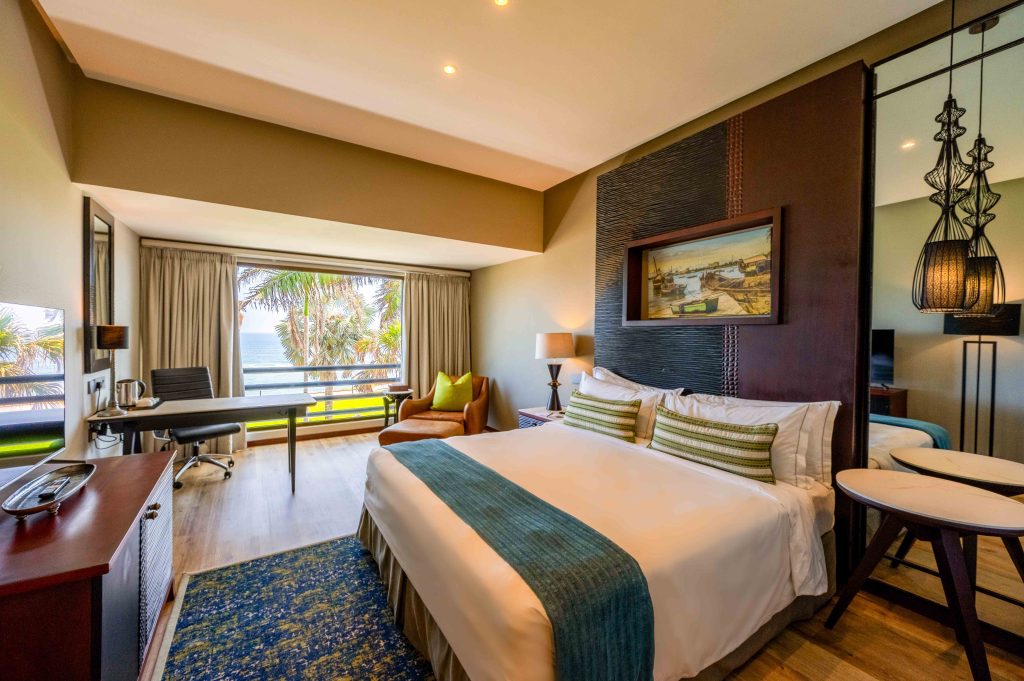
Sea Cliff Hotel: Deluxe Sea View room
LUXURY

Sea Cliff Hotel

★★★★★
Dar es Salaam, on the peninsula
The ocean, a proper shower, and dinner at a table that is not under a tree. A gentler end than an airport.
Dhows moored off a white-sand beach on Zanzibar
Dar es Salaam, and home
06°48′S 39°17′E
Breakfast, and the transfer to Julius Nyerere International for your flight home. Allow an hour for twelve kilometres; the road to the airport is the worst in the city and mornings are its worst hour.
If your flight leaves in the evening, the room can usually be held into the afternoon and the day used for the beach at Coco or Kigamboni across the harbour — ask us and we will arrange the late check-out when we book the hotel.
The more common ending is not this one. Most guests who come this far south add Zanzibar, which is a twenty-minute flight from Dar, or Ruaha, which pairs with Nyerere in a single light-aircraft circuit. Both are set out under add-ons below.
Meals
Breakfast
Travel
Hotel to airport ~12 km · allow an hour
Highlight
Transfer to the international terminal
Airport transfer
Late check-out possible
Onward to Zanzibar or Ruaha
Where you sleep
Departure day — no overnight
III · Rates

What it costs, by group size

A safari gets cheaper per person as the vehicle fills. Choose a tier to see the table.
Comfort rates by group size, per person and group total
Group sizeRoomsPer personGroup total
1 guest1 room$6,550$6,550
2 guests1 room$5,210$10,420
3 guests2 rooms$5,590$16,770
4 guests2 rooms$5,160$20,640
5 guests3 rooms$5,390$26,950
6+ guests3 rooms$5,140$30,840
Single supplement
$1,240
Added when a guest does not share a room
Child, 6 – 11 years
30% off
Sharing with two adults; walking and night drives excluded
Peak season uplift
Included in the rates above
July – October
All figures in US dollars, per person sharing unless stated. Valid for travel until 30 June 2027. Park fees, guiding, vehicle, accommodation and full board are included — see what is and is not covered below.
IV · Included

What is in the price, and what is not

Stated in full, both ways.

What is included

What is not

V · Add-ons

Worth adding, if you have the days

Fly camping, a fifth night, Ruaha, Zanzibar — priced separately.
Two Maasai men beside a light aircraft on a bush airstrip
Day 5 · one night

Fly camping on the riverbank

A bedroll under a mosquito net on the sand of a dry riverbed, a fire, a ranger awake all night, and no canvas between you and the sound of hippo. Offered from some camps, not all; tell us early.
USD 230 per person
Hippos crowded into a pool
After day 6 · 3–4 nights

Ruaha, on the same circuit

The other southern park sits west of Nyerere and a light aircraft links them in a morning. Big lion prides, baobab and a completely different dry-river landscape. Our ten-night version of the pair is on the private safari page.
USD 2,350 per person, for 2 guests
Dhows moored off a white-sand beach on Zanzibar
After day 6 · 3–5 nights

Zanzibar, afterwards

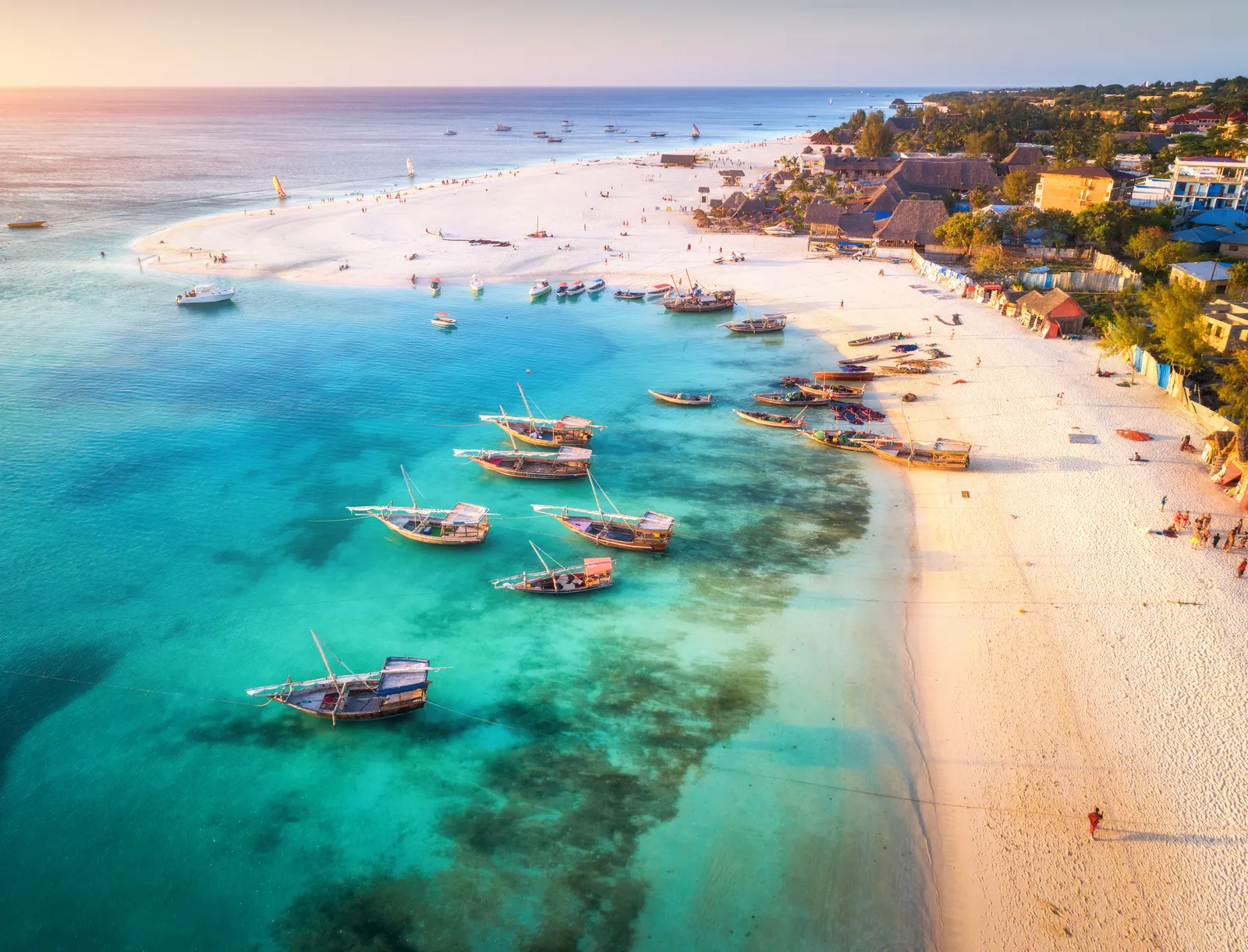
Twenty minutes by air from Dar es Salaam, and in the dry season some scheduled flights go from the park airstrips to the island directly. Three nights on the east coast or in Stone Town is the usual shape.
From USD 1,340 per person, 3 nights
Hippos crowded into a pool
Between days 5 and 6

A fifth night on the river

The most useful extra on this route. It buys a second boat day on a different lake, or a second attempt at the wild dog if the first morning came up empty.
USD 1,050 per person, for 2 guests
VI · The ground

Where this itinerary takes you

One park and one river. The lakes north of the Rufiji are where the whole trip happens.
Hippos crowded into a pool

Nyerere National Park

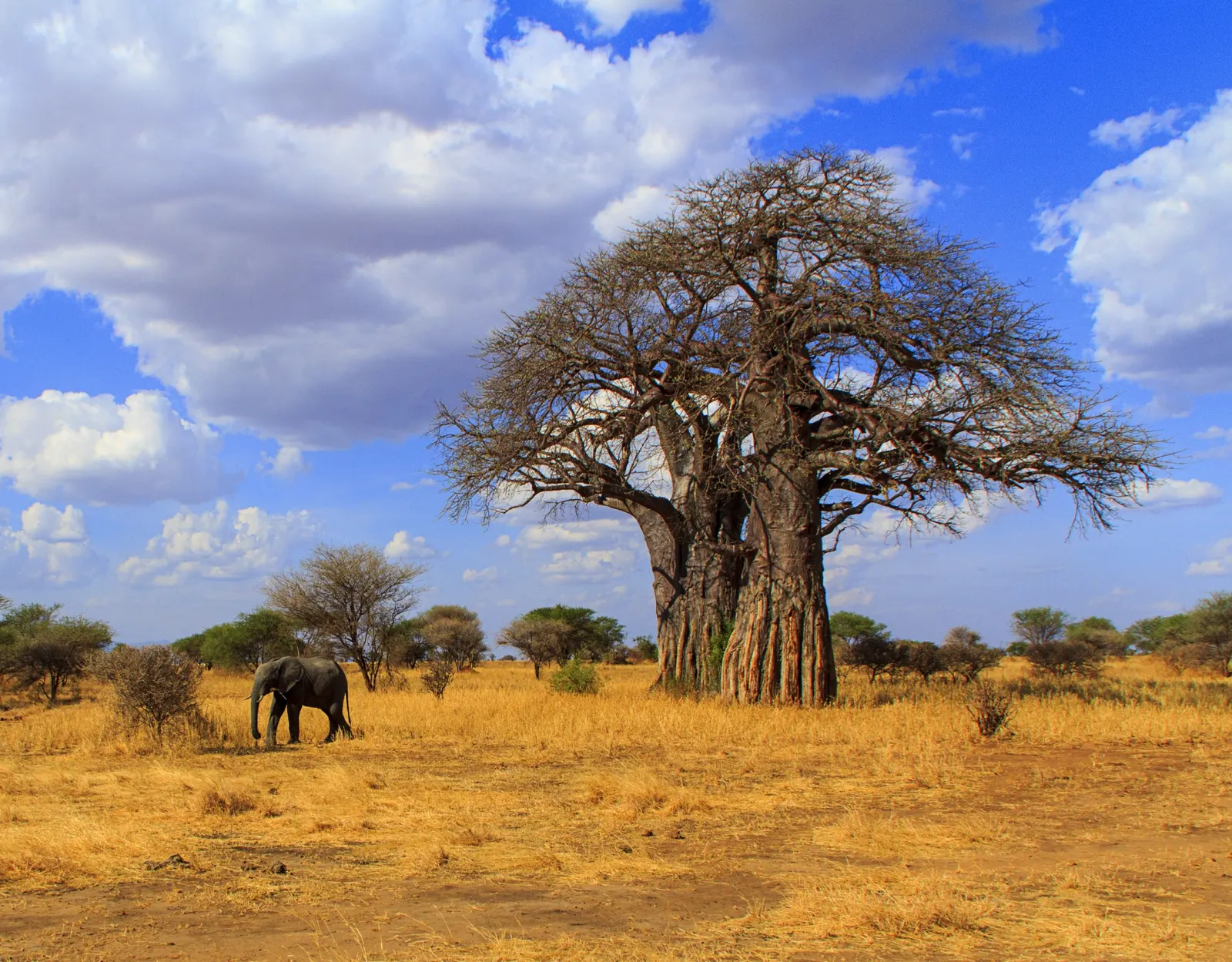
About 30,000 square kilometres of miombo woodland, floodplain and river, gazetted in 2019 from the northern Selous Game Reserve. Elephant, buffalo, lion, greater kudu, sable, Nyasa wildebeest, and one of the largest remaining wild dog populations in Africa. Walking and night drives are permitted here; they are not in the Serengeti.
Hippos crowded into a pool

The Rufiji and its lakes

Tanzania’s largest river, with five lakes — Tagalala, Manze, Nzerakera, Siwandu and Mzizimia — strung along its northern bank and linked to it by channels. Hippo and crocodile in numbers, a shoreline every animal must come to in the dry season, and the hot springs at Maji Moto beside Tagalala.
Two Maasai men beside a light aircraft on a bush airstrip

Dar es Salaam

The port city this route starts and ends in, and the hub for every flight into the south. A night here at each end is a buffer, not a sight: it keeps the light aircraft and the long-haul flight from having to meet on the same day.
The question everyone asks

Will you see wild dog?

Jun – Aug
Denning months, when a pack stays near one place
The Selous ecosystem holds one of the largest wild dog populations left in Africa, and Nyerere is the best place in Tanzania to look for them. That is not the same as a promise. A pack ranges over hundreds of square kilometres and can be forty kilometres from where it was yesterday, and anyone who tells you they will find one on a given day is guessing.
The honest odds improve sharply in the denning months. From roughly June to August the pack has pups underground and returns to the den every day, so a guide who knows where the den is can put you there at dawn or dusk when the adults leave and come back. Day 5 is set aside for that. Outside those months you are relying on luck and the radio, and some weeks it does not happen.
VII · Season

The best time to travel

June to October. The camps close for the long rains, and we say so.
June to October is the dry season and the only window we sell this route in without a conversation first. The Rufiji drops, the floodplain grass is short, and every animal in the sector has to come to the river or the lakes to drink, which is exactly what a boat safari needs. Mornings are cool; by October the afternoons are hot, above thirty-five degrees, and the last hour before rain is the best game viewing of the year.
July and August are the busiest weeks, which in Nyerere means three boats on a lake rather than one. June and September are quieter and just as good. June to August is also the wild dog denning period.
November brings the short rains, and the river starts to rise. It is a fair month — green, cheaper, fewer people — but the game disperses away from the water, and the reason to be on a boat weakens. January and February are hot and green, with excellent birding, and the boats still run.
March to May are the long rains, and most camps on the river close for them. The lakes flood, tracks go under, and the airstrips can be unusable for days. We do not run this itinerary in those months. If they are the only weeks you have, we will tell you so and build something else.
VIII · Flights

Getting there and back

Fly into Dar es Salaam, not Kilimanjaro. The light aircraft south leaves in the morning.
Fly into Dar es Salaam (DAR), Julius Nyerere International, not Kilimanjaro. Every scheduled flight to the park leaves from here, and Kilimanjaro would add a domestic leg and most of a day. Most European routings connect through Doha, Dubai, Istanbul, Amsterdam or Addis Ababa.
Arrive in the afternoon or evening of day 1. The light aircraft south leaves in the morning, so a same-day connection is not built into this itinerary — the night in Dar is what makes the flight to the park a certainty rather than a hope.
The flights to and from the park are scheduled light aircraft, twelve to fourteen seats, and they land on graded earth airstrips near the camps. Luggage is soft bags only, usually capped at fifteen kilograms per person including hand luggage. Excess can be stored at your Dar hotel.
Tanzania requires a visa for most passports — USD 50, or USD 100 for United States citizens, valid up to 90 days. Apply online in advance rather than on arrival; the queue at Dar after an evening landing is long.
IX · Other costs

What else you will spend

Visas, insurance, tips and drinks — set out so there is no surprise on the ground.
Tanzania issues a tourist visa online (eVisa) or on arrival at Dar es Salaam. Applying in advance is faster and avoids the immigration queue, which after an evening arrival can take over an hour.
A yellow fever certificate is required only if you are arriving from a country where yellow fever is endemic. Coming directly from Europe or North America, it is not.
We ask every guest to travel insured. Medical cover and evacuation are the parts that matter here — the nearest hospital to the Rufiji is a flight away, not a drive, and the flight has to be paid for by someone.
Check that your policy covers walking safaris, boat travel and light-aircraft flights. Some policies exclude one of the three unless you ask.
Tipping is customary in Tanzania and it is genuinely optional. The figures below are what guests commonly give, not what is expected of you, and no one will treat you differently for giving less.
On this route there are more people to thank than on a vehicle safari: your guide, the boat driver, the ranger who walked with you, and the camp staff. Most camps run a shared box at reception so the kitchen and housekeeping are included.
Drinking water is included throughout. Some of the southern camps include local beer, soft drinks and house wine in their rate and some do not; we will tell you which yours is when the camps are confirmed. Imported spirits and wine are extra everywhere.
Laundry at the camps, souvenirs in Dar, and anything you forgot to pack. Cash in small US dollar notes is more useful than a card once you leave the city — the river camps have no bank connection and cards fail more often than they work.
Notes dated before 2009 are refused across Tanzania. Bring newer ones.
X · Why us

Why book this with us

01

One park, done four ways

Most seven-day itineraries cover three or four parks from a roof hatch. This one stays in one and uses the boat, the walk, the vehicle and the spotlight. You see the same river at four different speeds, and you never pack a bag mid-trip.
02

A flight instead of the road

Dar es Salaam to the park by road is six to eight hours on a surface that changes with the rain. Forty-five minutes in the air turns two lost days into two extra mornings on the water.
03

A buffer at both ends

Light aircraft do not fly through weather and international flights do not wait. The night in Dar at each end exists so that the two never have to meet on the same day.
04

We will tell you not to come in April

The camps close for the long rains and the airstrips go soft. We would rather move your dates or lose the booking than sell you a river safari in the one season the river is unusable.
XI · Questions

Frequently asked

What guests ask before booking this itinerary.
The rate depends on your group size and which camp tier you choose, and it moves with the season. The table above sets out the per-person price for every group size from one to six, and the internal flights are included. Our rates for this itinerary are set out in the table above — ask us and we will quote for your exact dates rather than give you a range.
Yes, in the part that matters to a visitor. Nyerere National Park was created in 2019 from the northern sector of the Selous Game Reserve, which is the section the camps, the lakes and the tourist circuit were always in. Older guidebooks and photographs labelled Selous are describing the same river. There is more on the Nyerere destination page.
Two to three hours on flat water in a small open boat with a driver and your guide, in the early morning or the last two hours of the afternoon. You keep a distance from the hippo, drift past the crocodiles on the banks, and in the dry months watch elephant and giraffe come down to drink. It is quieter than a vehicle and you sit lower than the animals. Life jackets are provided and worn.
Maybe. This is the best place in Tanzania to look, and June to August is the best time because the packs are denning and stay in one area. Day 5 is set aside for it. We will not promise a sighting, and you should be wary of anyone who does.
Partly. The boat and the vehicle drives are fine for children, and most camps accept guests from six. The walking safari and the night drive are normally restricted to sixteen and over, so a family with younger children does day 4 and the evening of day 5 differently. Tell us the ages and we will say plainly what changes. Child rates are 30% below the adult rate for children sharing with two adults.
Hot. The river sits at around 100 metres above sea level, and from September onwards afternoons reach the mid-thirties. Mornings and evenings, when you are out, are comfortable. The camps are built for it — shade, fans, and the middle of the day left empty on purpose.
It exists in the miombo woodland and its bite is unpleasant rather than dangerous for visitors. Neutral clothing — khaki, green, brown — and closed shoes on the walk reduce it a great deal; dark blue and black attract it. Sleeping sickness in tourists is very rare, and malaria prophylaxis is advised for the whole of the south.
Fewer animals, fewer people, and a boat. The Serengeti and the crater have densities Nyerere cannot match, and if this is a first safari with one week we would usually send you north. This route is for guests who have done that, or who want walking, night drives and the water more than they want numbers. Our north or south note sets the choice out honestly.
Both, and both are common. Ruaha links to Nyerere by light aircraft and our ten-night version of the pair is on the private safari page. Zanzibar is twenty minutes from Dar es Salaam and in season some flights go from the park airstrips directly; three to five nights on the coast is the usual shape. Rates are from USD 1,340 per person for three nights.
XII · Your trip

Request your personalised safari proposal

Tell us how you like to travel and we will put together a personalised proposal for this route — dates, camps and a firm price per person. No payment is required at this stage.

No payment is required at this stage. We reply by email and WhatsApp within one working day.

Seven days on the Rufiji

7
Days
6
Nights
4
On the river
Full
Board
Starts
Dar es Salaam, Tanzania
Ends
Dar es Salaam, Tanzania
Departures
Daily — a private safari on the dates you choose
Availability
Open all year, subject to lodge space
From
from$5,140/pp
Per person, sharing
Private safari · no booking fee · we reply within one working day
from $5,140 / person
Loading itinerary…
Saved Trips