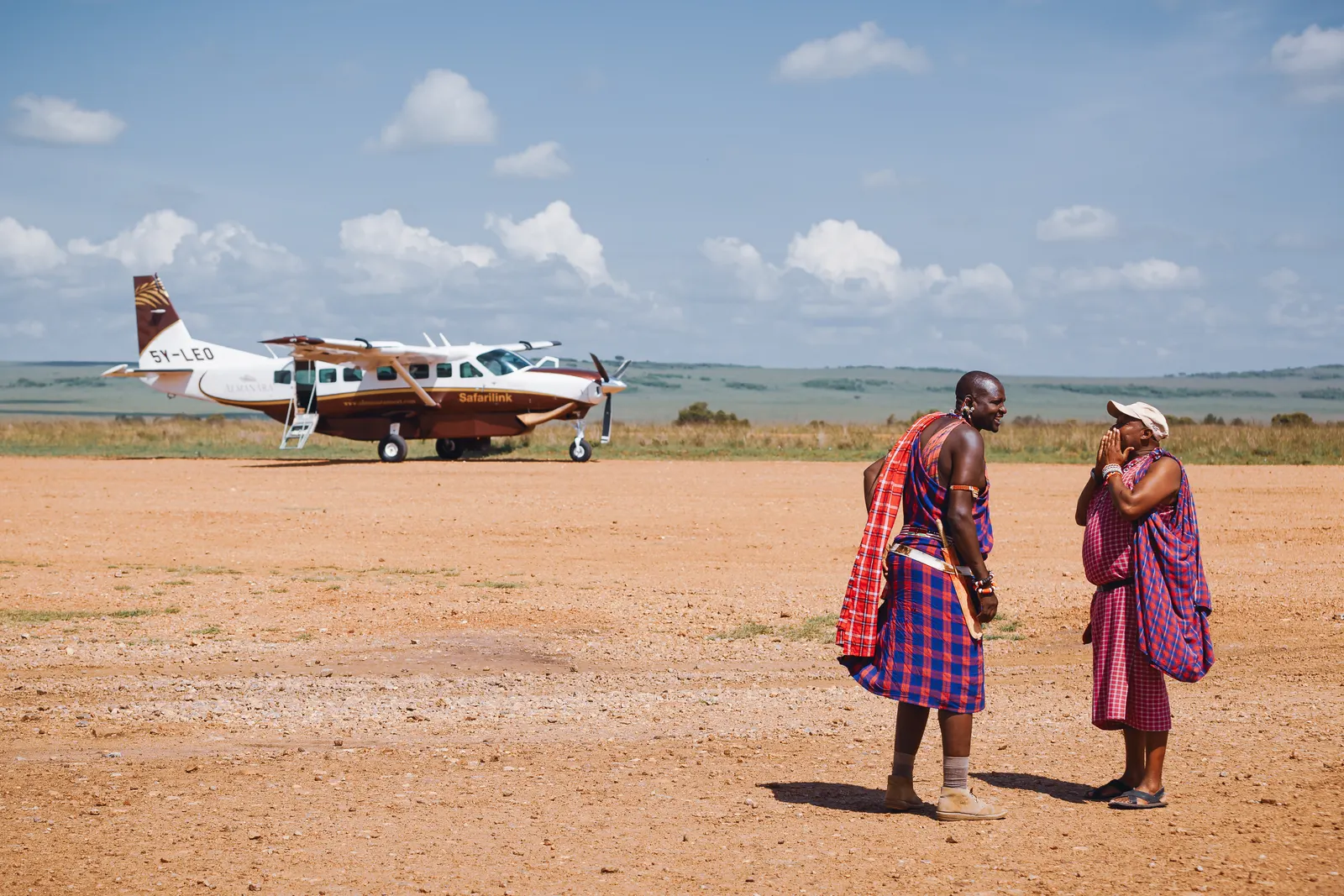
Most of a Tanzania safari is driven, and a vehicle’s boot does not much care how many bags you bring. The exception is any itinerary that includes a light-aircraft transfer — into the northern Serengeti’s airstrips, or out to Mahale, Ruaha or the far south — where the weight limit is real, it is weighed at check-in, and it is enforced.
What follows is not a generic list. It is what actually earns its space in the bag: the weight limit and why it exists, the layers that cover a swing of 15–20°C between dawn and midday, the optics worth carrying, and the health kit people forget. The last section is what to leave at home, and some of it is a legal requirement, not a style note.
The short answer
Pack one soft-sided bag of 15–20kg (check your specific transfer), neutral-coloured layers for a temperature swing of 15–20°C between dawn and midday, a decent pair of binoculars, high-factor sun protection and your prescriptions in their original packaging. Leave the hard suitcase, the camouflage print and the plastic bags at home.
What actually limits your luggage| How you travel | Typical limit | What it means |
|---|
| International flight to Tanzania | 23kg checked (economy, typical) | Confirm with your airline; not Tanzania-specific |
|---|
| Domestic light-aircraft transfer | 15–20kg per person, soft bag only | Coastal Aviation 15kg, Auric Air 20kg — ask your operator for your route |
|---|
| Vehicle-only itinerary | No published limit | Pack light anyway — daily loading and boot space still matter |
|---|
The weight limit: what a light aircraft actually allows
Domestic light-aircraft operators serving the northern and southern circuits set their own limits, and they differ: Coastal Aviation allows 15kg per person including hand luggage, Auric Air allows 20kg. Both require a soft duffel bag rather than a rigid suitcase — the hold on a twelve-seat Cessna Caravan has no room for hard corners, and a case that does not fit does not fly with you.
If your route is vehicle-only, with no light-aircraft leg, no published limit applies. Pack as if one does anyway. A full vehicle takes longer to load and unload at every lodge change, and a soft bag fits the space under a seat that a hard case never will.
Find a journey and check whether your route flies before you buy a case.
Weigh your packed bag at home rather than guess, and ask your operator for the exact limit on your specific transfer — it varies by carrier and aircraft, and a route like
Mahale or
Ruaha usually means at least one light-aircraft hop. Keep medication, your passport and camera gear in a small daypack that travels as separate cabin weight.
Layers: what you wear every day
A Serengeti morning can be close to 10°C in an open vehicle at sunrise and 28–30°C by midday, and the Ngorongoro Crater rim runs colder still before dawn. Layers you can add and remove matter more than any single warm item: a base layer, a long-sleeved shirt for sun and insects, a fleece or light jacket, and a shell if rain is likely in your season.
Neutral colours — khaki, olive, stone, brown — are the standard, partly because pale and dark colours attract tsetse flies more than mid-tones do, and partly because they do not show dust. Camouflage print is not a style choice here: Tanzania reserves it for the military and police, and it has been confiscated from tourists at the airport.
Footwear can be simple. Closed, comfortable shoes cover a standard game drive; you are rarely out of the vehicle. Sandals earn their place back at camp. If your itinerary adds a walking safari or a night drive, pack sturdier boots for that leg specifically rather than for the whole trip.
Optics and technology: what earns its space
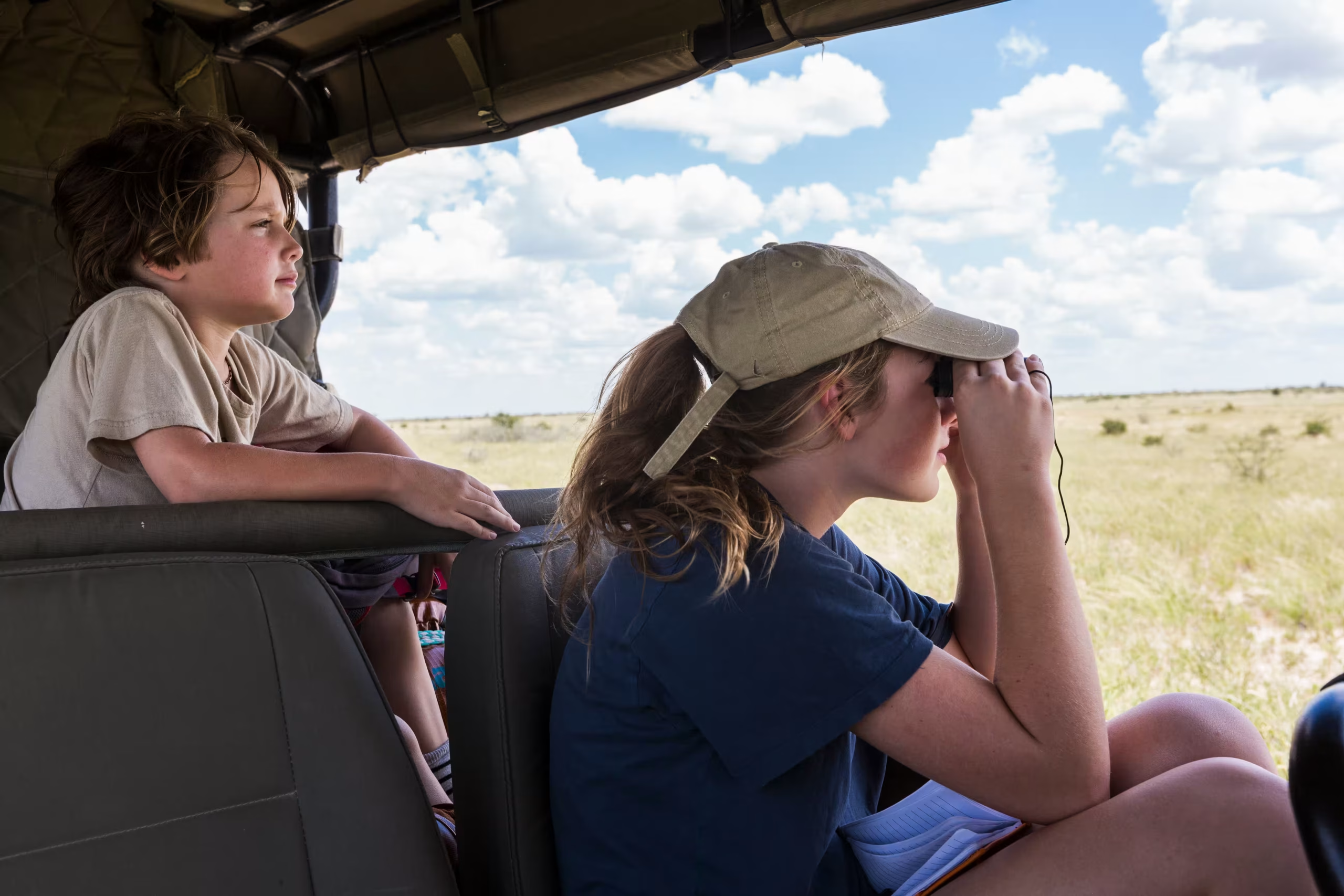
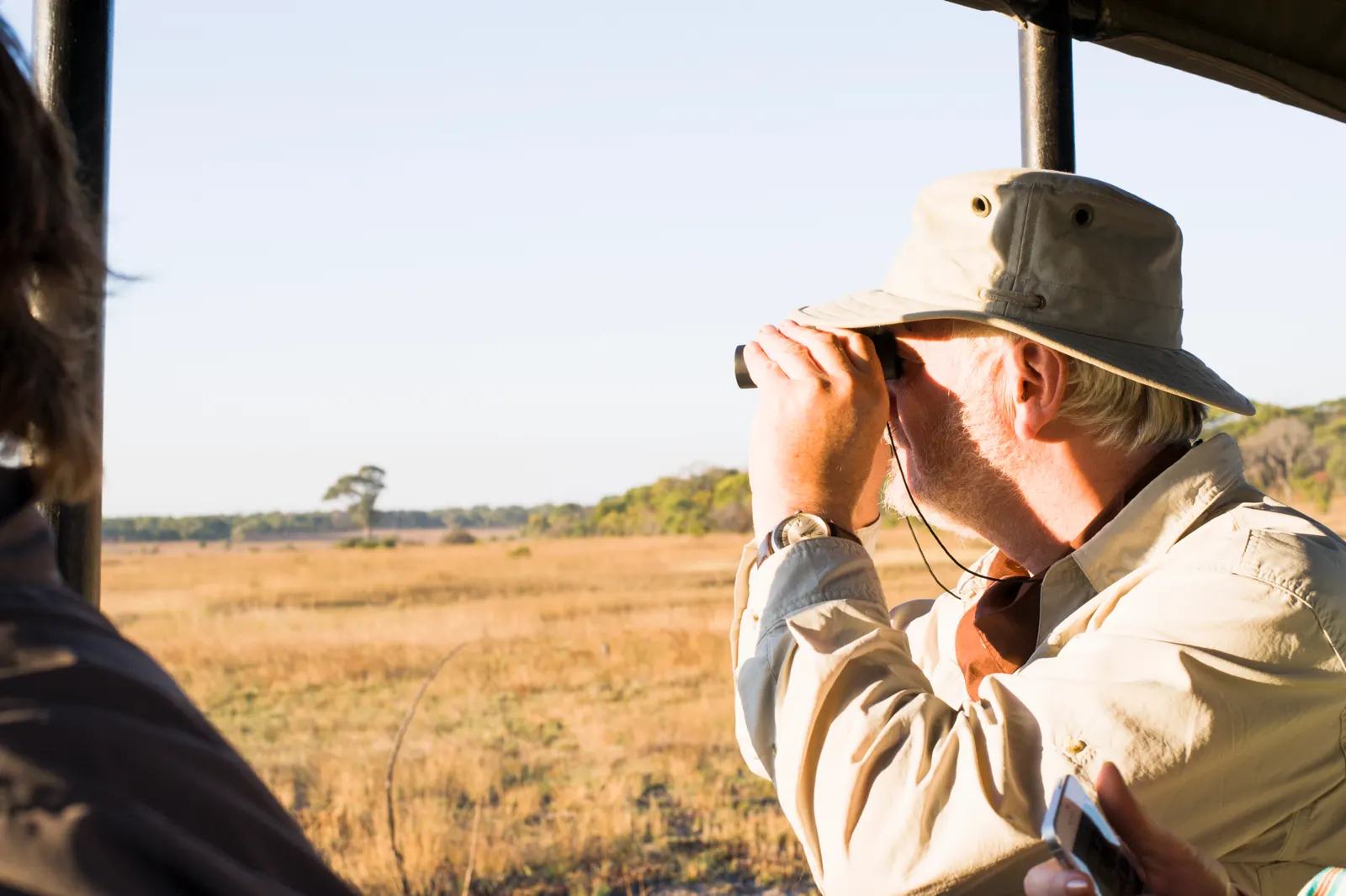
One pair of binoculars per person changes what a game drive is. A guide’s spotting scope is shared across a vehicle; your own binoculars are not, and a mid-range 8×42 pair sees more birds and more distant cats than most first-time buyers expect. This is worth more luggage weight than almost anything else on this list.
For cameras, bring what you will actually use. A telephoto lens matters if photography is the point of the trip; a standard zoom covers most sightings otherwise. Spare batteries and memory cards matter regardless — camps run generators on a schedule, not continuously, and charging time is not guaranteed every night. Tanzania runs on 230V with type D and G sockets, so bring the right adapter.
Download offline maps and any bird or mammal identification app before you leave; signal is patchy to absent in most parks, and camp Wi-Fi, where it exists, is not built for downloads. A physical field guide still works when nothing with a battery does.
Health and sun kit: the five things people forget
The equatorial sun is stronger than it looks from inside a vehicle. A wide-brimmed hat, polarised sunglasses and a high-factor sunscreen used daily, including on cloudy days, matter more than most people budget for, and dust makes lip balm with SPF worth carrying too.
Insect protection is a health item, not a comfort one: DEET-based repellent, and permethrin-treated clothing if you own it, both help against the mosquitoes that carry malaria across most of the country below 1,800m. What prophylaxis to take, and the other vaccinations worth having, are covered in
visas, vaccinations and the six-week rule.
Carry prescription medication in its original packaging with a copy of the prescription, plus the basics a camp clinic will not have to hand: blister plasters, rehydration salts and any medication you take regularly. Confirm your travel insurance covers medical evacuation before you fly, not after.
What to leave behind
Camouflage clothing does not travel well here, for the reason above. Neither does a wardrobe of new, stiff safari-branded cotton — it is heavier, slower to dry and more likely to chafe than clothes you already own in the right colours. Leave the hard-shell suitcase at home too; it will not fit a light aircraft’s hold and it takes up disproportionate space in a safari vehicle.
Leave plastic carrier bags out of the packing entirely. Tanzania has banned single-use plastic bags since June 2019, and customs checks for them at the airport; a bag found in good faith is usually confiscated rather than fined, but it still costs you time at arrival. Clear zip-lock bags for liquids through security are the one exception, and a reusable water bottle is worth packing instead.
Beyond that, pack lighter than feels comfortable. Most camps offer same-day laundry, so the wardrobe you actually need is smaller than the one you are tempted to bring. When you have the weight limit and the layers right, the rest of the list looks after itself —
find a journey and pack for the route, not the guidebook.
Questions people ask
What is the luggage weight limit on a Tanzania safari?
It depends on how you travel. Domestic light-aircraft operators typically cap checked luggage at 15–20kg per person, hand luggage included, and require a soft bag. A vehicle-only itinerary has no published limit, but pack as if it does — a full vehicle is slower to load every morning.
Do I need a soft bag for a Tanzania safari?
Yes, for any itinerary with a light-aircraft leg. The hold on a light aircraft has no room for a rigid suitcase’s corners, and most carriers will not load one. A duffel bag or soft-sided holdall is standard.
What clothes should I pack for a Tanzania safari?
Lightweight, neutral-coloured layers: long sleeves and trousers for early mornings and insect protection, a fleece or light jacket for dawn game drives, and something warmer still if the Ngorongoro Crater rim is on your route. Avoid camouflage print.
Can I bring plastic bags to Tanzania?
No. Tanzania has banned single-use plastic bags since June 2019, and customs checks for them on arrival. Clear zip-lock bags for liquids are allowed through security. If a bag is confiscated in good faith you are not fined, but it saves a delay to leave them at home.
Is camouflage clothing allowed in Tanzania?
No, not for civilians. Camouflage-pattern clothing is reserved for the military and police, and airport staff have been known to confiscate it. Stick to khaki, olive and brown.
How many bags can I take on safari?
One main soft bag per person, plus a small daypack for a camera, medication and your passport, which usually flies as separate cabin weight on light-aircraft legs. Ask your operator for the exact cabin allowance on your route.
What camera equipment is worth bringing on a Tanzania safari?
A pair of binoculars per person is worth more than most camera gear. Beyond that, a telephoto lens if photography is the point, spare batteries and memory cards, and a UK/EU two-round-pin adapter — Tanzania runs on 230V, type D and G sockets.
Do I need warm clothing for a Tanzania safari?
Yes. Game drives start before sunrise, when it can be close to freezing on the Ngorongoro Crater rim and cool everywhere else, and the same day can reach 28–30°C by midday. Layers you can add and remove matter more than any single warm item.
Travel it
Journeys built around this
Last updated 13 September 2026