Places of Africa Safaris

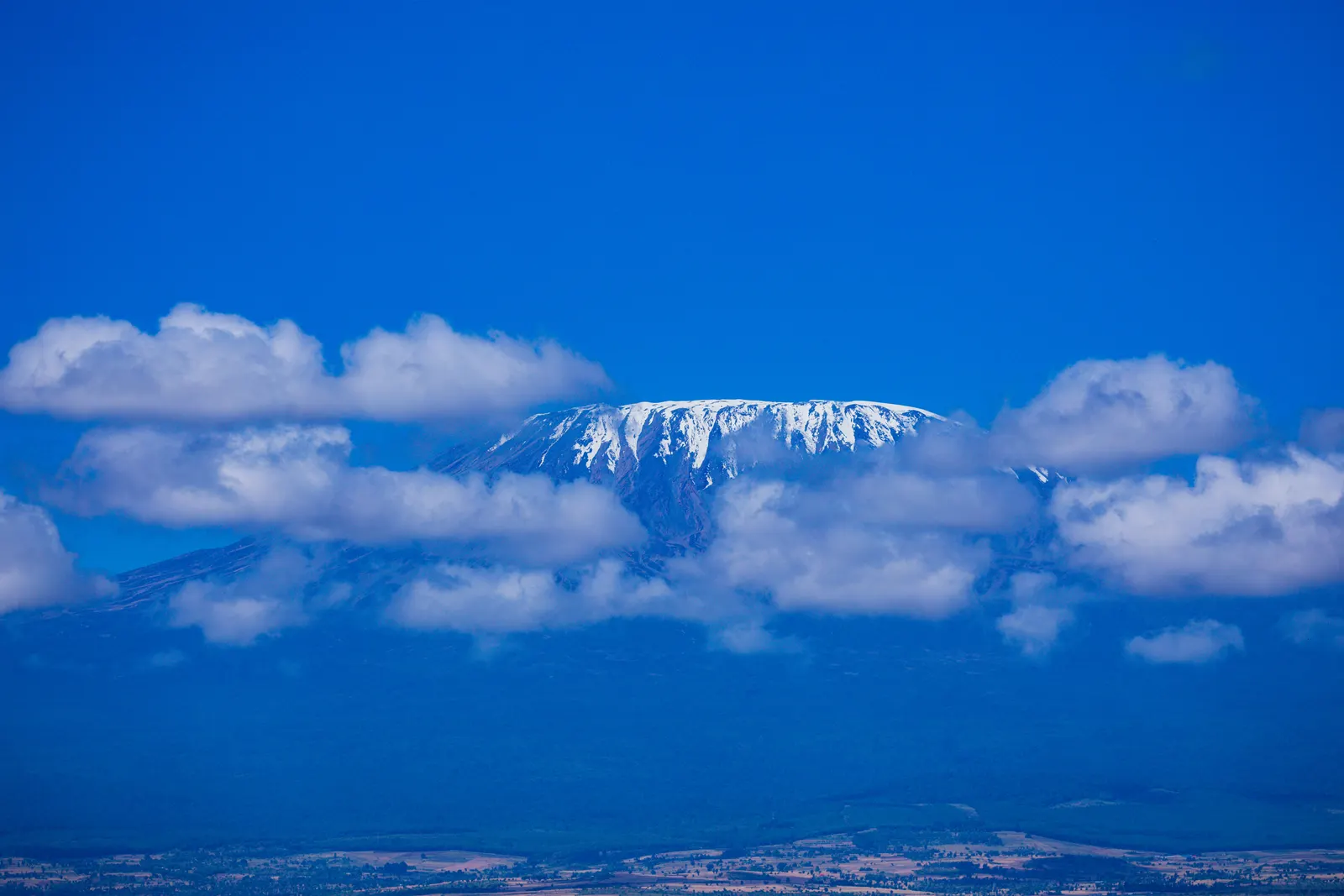
The snowfields of Kibo, Kilimanjaro's summit cone
Kilimanjaro · Eight Days

Seven days on the mountain, by the Machame route

The most walked way up Kilimanjaro, and rightly so — it climbs high and sleeps low, and this version carries the extra night at Karanga that the six-day climb leaves out.
8
Days
5,895 m
Summit
62 km
Walked
Full
Board on the mountain
I · Overview

The route, and why this shape

One mountain, one route, your own crew. Moshi to Moshi in eight days.
Machame is the route most people climb Kilimanjaro by, and the reason is not fashion. It approaches from the south-west, crosses the Shira plateau, and then traverses under Kibo’s southern glaciers so that on day four you walk up to 4,630 metres and come back down to sleep at 3,960. That is the climb-high, sleep-low pattern that gets people to the summit, and Machame builds it in rather than bolting it on.
This is the seven-day version: six nights camped on the mountain, with the extra night at Karanga between the Barranco Wall and Barafu. The six-day version summits the same night it scrambles the Wall, and we do not sell it. Every camp is a public campsite with a name — Machame, Shira, Barranco, Karanga, Barafu, Mweka — and there are no huts on this side of the mountain, so this is a camping trip from the gate to the gate.
It is a private climb. You choose the date, the crew is yours, and the pace is set for you rather than for a group. The trade is company: on summit night there is no line of strangers keeping you walking, only your guide, which suits some people better and others worse. If you would rather climb with a group on a fixed date, the joining climb walks exactly this route.
Length
8 days / 7 nights
Country
Tanzania
Start / end
Moshi → Moshi
Tour type
Private climb, Machame route, camping
Group size
Private — from one climber upwards
Meal plan
Full board, cooked by the crew on the mountain
Best months
January – February, and June – October
Activity level
Strenuous — 14 to 16 hours on summit day
Guides
One guide for every two climbers, plus a lead guide
II · The days

Day by day, all eight

Every day opens. One night in Moshi, six on the mountain, the summit on day seven. See every lodge and camp we use
Day
01
The snowfields of Kibo, Kilimanjaro's summit cone
Arrival

Moshi, and the gear check

03°21′S 37°20′E
Dinner
The snowfields of Kibo, Kilimanjaro's summit cone
Moshi, and the gear check
03°21′S 37°20′E
You land at Kilimanjaro International and are driven the forty-five kilometres east to Moshi, a little under an hour. The mountain sits to the north the whole way and is usually hidden in cloud by the afternoon; the reliable first sight of the summit is from the hotel garden at six the next morning, before the day’s cloud builds.
This is a private climb, so the evening belongs to you and your lead guide. After dinner the guide runs the briefing at your table — the camps, the daily hours, how the pace works, and what the plan is if anyone in your party has to turn round. Then the gear check, laid out item by item: boots worn in, a sleeping bag rated to at least minus ten, a down jacket, a headtorch with spare batteries. Anything you are missing can be hired in Moshi in the morning before the gate.
Your duffel for the porters is weighed tonight. The limit is 15 kilograms; the park weighs porter loads at the gate and the guides will hold you to it. Sleep at about 890 metres, the lowest bed of the week.
Meals
Dinner
Travel
Kilimanjaro International to Moshi · ~45 km · about 1 hr
Highlight
Your lead guide goes through every item of kit on the bed
Gear check
Private briefing
Duffel weighed to 15 kg
Where you sleep
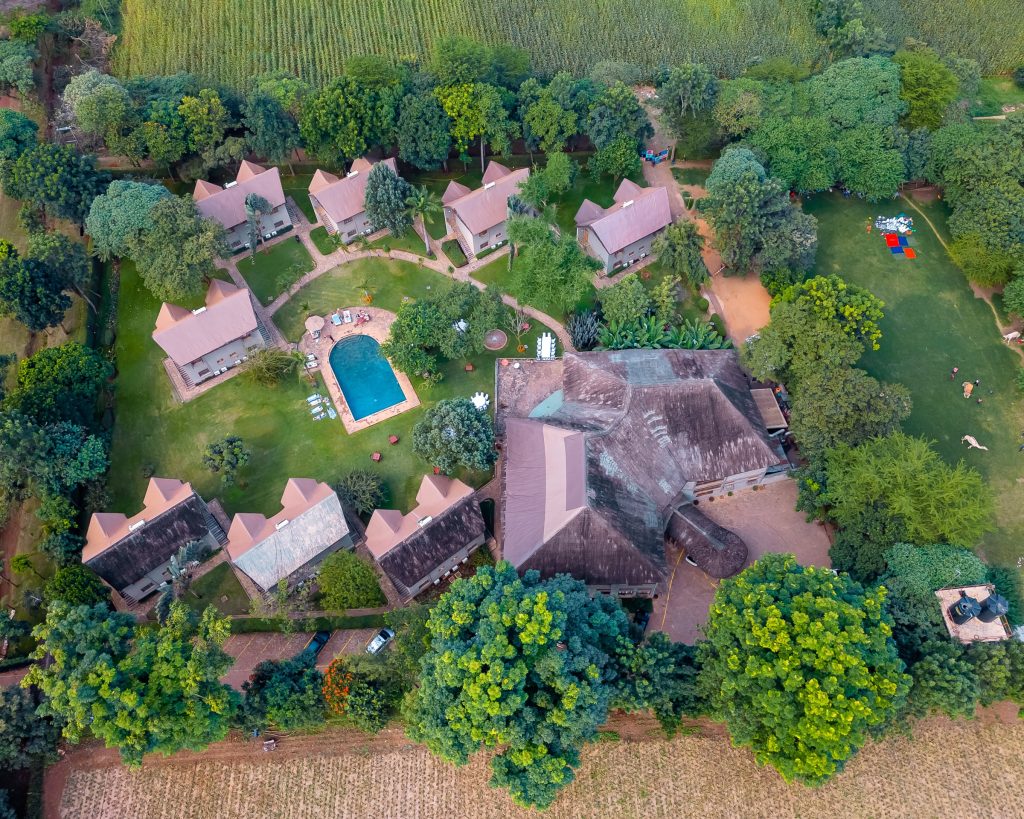
Aerial view of Weruweru River Lodge
COMFORT

Weruweru River Lodge

★★★★☆
Moshi, garden hotel below the mountain
En-suite room, a proper bed, and a hot shower — the last until day 8. Breakfast before the drive to Machame Gate.
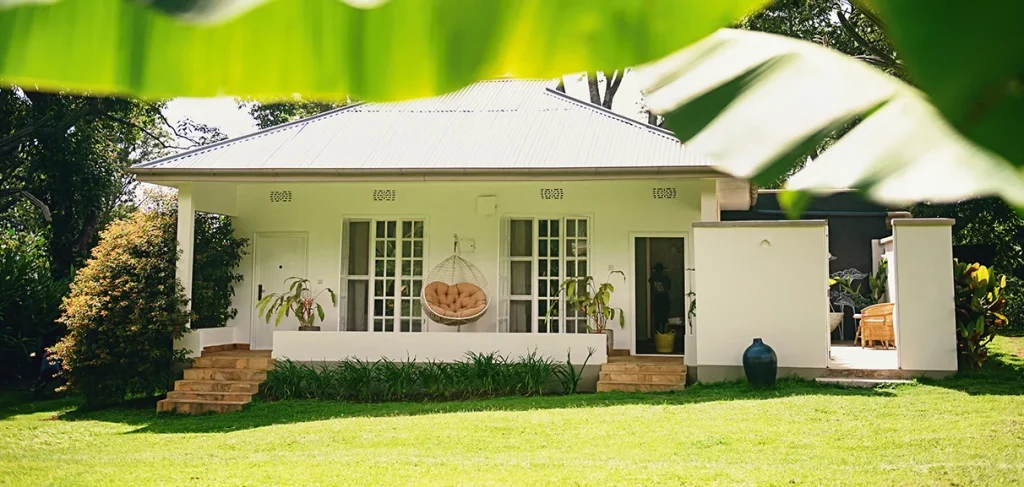
Kilimanjaro Coffee Lodge: The lodge
LUXURY

Kilimanjaro Coffee Lodge

★★★★★
Moshi, lodge on the coffee slopes above town
Higher, cooler and quieter, with the summit above the terrace on a clear morning. Same guide, same gear check.
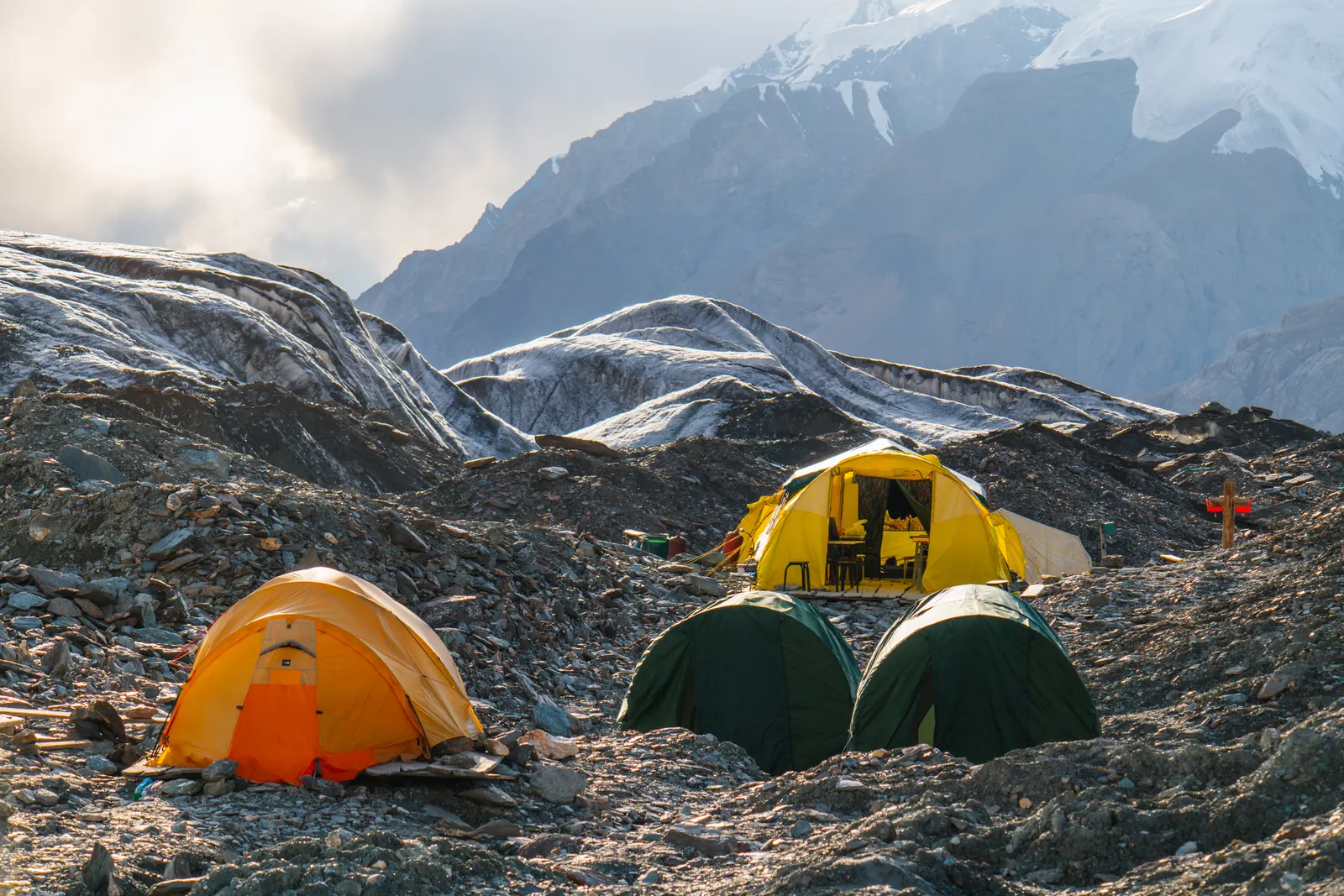
Tents in the rocky alpine desert
Machame Gate to Machame Camp
03°06′S 37°16′E
An hour’s drive to Machame Gate, then an hour of registration while the park signs you in and weighs the porter loads. Your crew sorts itself on the grass — for two climbers there are usually somewhere near ten people carrying tents, food, water and the mess tent up ahead of you, and they will be at camp before you are.
The path climbs through montane rainforest for the whole day. It is muddy in every month, dark under the canopy and steep in short pulls; blue monkeys and black-and-white colobus are common in the first two hours. The trail widens, the trees thin and the giant heathers begin near the top. The gradient is steady rather than severe. Your guide walks it slower than you want to — that is deliberate, and it will not change all week.
Machame Camp is at 3,010 metres, just above the treeline, and on a clear evening Kibo’s summit cone is visible for the first time through the heather. The tents are up when you arrive, there is tea and popcorn in the mess tent, and the first pulse and oxygen saturation readings are taken before dinner. They are taken every evening from now on.
Meals
Breakfast · Lunch · Dinner
Travel
Machame Gate 1,800 m → Machame Camp 3,010 m · 11 km · 5–7 hrs · +1,210 m
Highlight
Eleven kilometres of rainforest and 1,200 metres of height
Forest zone
Porter loads weighed
First health check
Where you sleep
Tents in the rocky alpine desert
COMFORT

Machame Camp

★★★★☆
Machame Camp, 3,010 m — public campsite
Three-season mountain tent, a foam sleeping mat and a mess tent for meals. The long-drop toilets are the park’s.
Tents in the rocky alpine desert
LUXURY

Machame Camp

★★★★★
Machame Camp, 3,010 m — public campsite
The same camp with a private toilet tent, a thicker sleeping mat and a camp chair with a back.
Trekkers on a mountain path above the clouds
Up the ridge to the Shira plateau
03°03′S 37°17′E
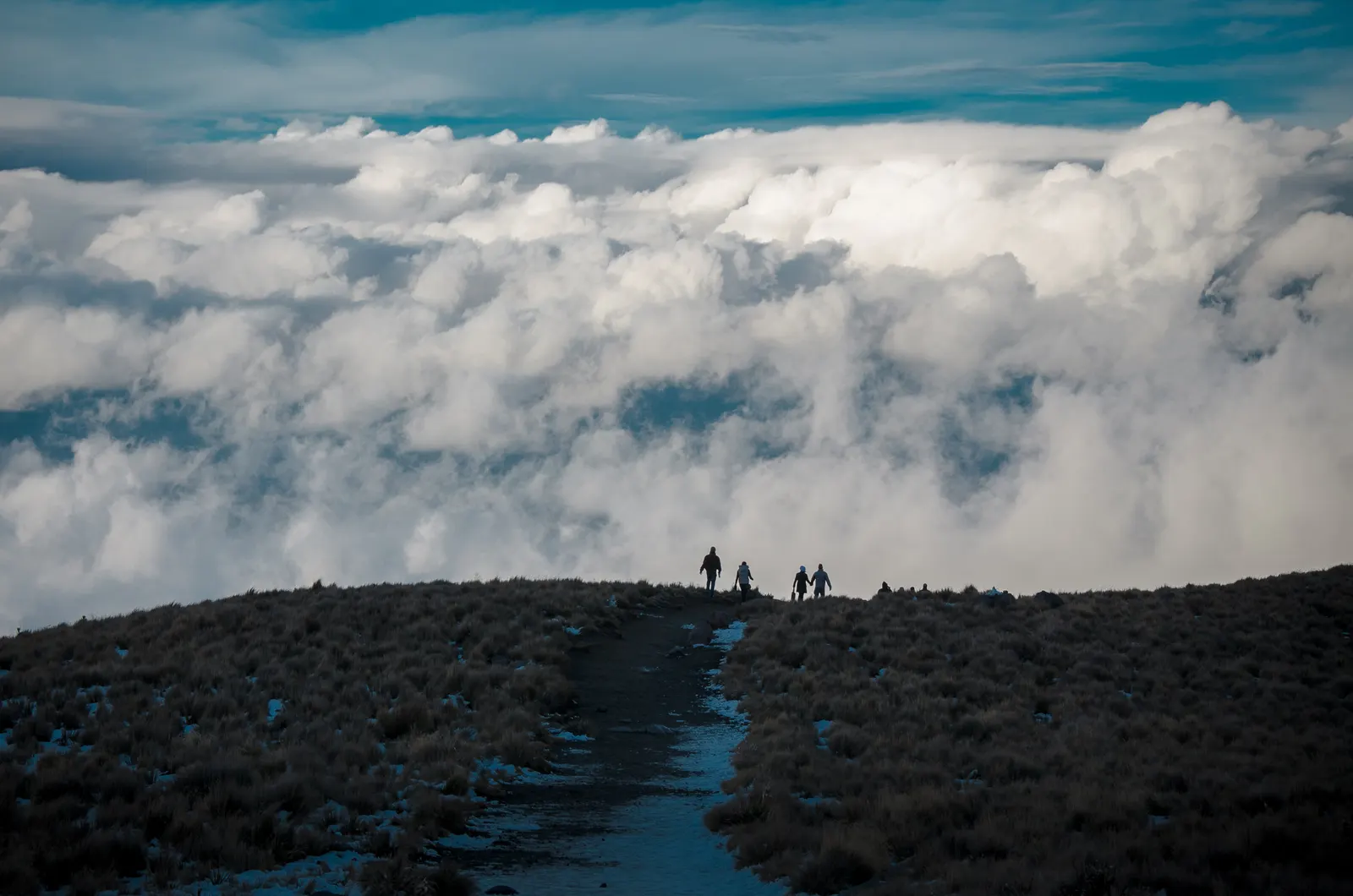
Short in distance, long in effort. The trail leaves the heather along a rocky ridge, with steps worn into the lava, and the first hour is the steepest walking on the route before summit night. Behind you the forest drops away and Moshi becomes a grey smudge on the plain; on a clear morning Mount Meru stands up seventy kilometres to the west.
The ridge tops out on the Shira plateau, the remains of the oldest of Kilimanjaro’s three volcanic cones, which collapsed long before Kibo grew beside it. It is open moorland at 3,800 metres — giant groundsel, lobelia, everlasting flowers — with the summit cone in full view to the east. You reach camp by early afternoon on purpose: the rest of the day is for sitting still at altitude, which is the cheapest acclimatisation there is.
It is cold from here on. Frost on the tents at Shira is normal in any month, and this is the night your sleeping bag earns its rating. After tea your guide will offer a short walk uphill for anyone who wants it — a hundred metres of height for the body to notice before it sleeps lower.
Meals
Breakfast · Lunch · Dinner
Travel
Machame Camp 3,010 m → Shira Camp 3,840 m · 5 km · 4–6 hrs · +830 m
Highlight
Out of the heather and onto the collapsed Shira volcano
Shira plateau
Kibo in view
Sit still and acclimatise
Where you sleep
Tents in the rocky alpine desert
COMFORT

Shira Camp

★★★★☆
Shira Camp, 3,840 m — public campsite
Open and exposed; the plateau catches the wind. Hot water in a bowl for washing each evening and morning.
Tents in the rocky alpine desert
LUXURY

Shira Camp

★★★★★
Shira Camp, 3,840 m — public campsite
Private toilet tent pitched beside yours, the thicker mat, and the mess tent lit and warmed for the evening briefing.
Tents in the rocky alpine desert
Lava Tower, then down to Barranco
03°06′S 37°20′E
This is the day that makes the Machame route work. You gain nearly 800 metres across the alpine desert to the Lava Tower, a 90-metre volcanic plug at 4,630 metres, eat lunch under it, and then give almost all of the height back on the descent into the Barranco valley. The net gain is 120 metres. The point is not the camp; it is the hours your body spends above 4,000 metres and the lower bed it recovers in afterwards.
Most people feel the altitude for the first time somewhere below the Tower — a headache, no appetite, a pace slower than the morning’s. That is expected, and it is why the day exists. Your guide will ask how you feel at the Tower and again at camp, and the honest answer is the useful one. On a private climb the pace at the top of this day can be set for exactly one person, and often is.
The descent drops under the south face of Kibo, past the largest giant groundsels on the mountain, into the camp most climbers rate the best on the route. The Barranco Wall rises straight out of the far side of it. You will look at it over dinner, because you climb it first thing tomorrow.
Meals
Breakfast · Lunch · Dinner
Travel
Shira 3,840 m → Lava Tower 4,630 m → Barranco 3,960 m · 10 km · 6–8 hrs · +790 m / −670 m
Highlight
Climb high, sleep low — the day the whole climb depends on
Lava Tower 4,630 m
Net gain 120 m
Barranco valley
Where you sleep
Tents in the rocky alpine desert
COMFORT

Barranco Camp

★★★★☆
Barranco Camp, 3,960 m — public campsite
Sheltered under the Breach Wall and warmer than Shira. Same tents, same crew, pitched before you arrive.
Tents in the rocky alpine desert
LUXURY

Barranco Camp

★★★★★
Barranco Camp, 3,960 m — public campsite
Private toilet tent, thicker mats, and a pulse-oximeter reading recorded for each climber at the evening check.
Trekkers on a mountain path above the clouds
The Wall, then the short walk to Karanga
03°07′S 37°21′E
The Barranco Wall is the part of the route people worry about beforehand and the part they talk about afterwards. It is a scramble, not a climb — hands on rock, no ropes — up a 257-metre lava face on a path polished smooth by porters carrying twenty kilograms on their heads. There is one spot, the Kissing Rock, where you press your face to the wall and shuffle past; it is the only moment of exposure on the whole route.
Every climber at Barranco leaves within the same hour and the Wall takes them single file, so the first ninety minutes are slow. On a private climb your guide can start you ahead of the crowd or behind it, and will tell you which the night before. From the top the path rolls across two more valleys, down and up, into Karanga.
Karanga is 35 metres higher than Barranco, and the day is short on purpose. This is where the seven-day Machame climb differs from the six-day version: the shorter route pushes on to Barafu this afternoon and summits tonight on legs that scrambled the Wall this morning. Stopping at Karanga buys a rest, a second night near 4,000 metres, and a body that arrives at Barafu tomorrow with something left.
Meals
Breakfast · Lunch · Dinner
Travel
Barranco 3,960 m → Karanga 3,995 m · 5 km · 4–5 hrs · +35 m net
Highlight
A 257-metre scramble, then a deliberately short afternoon
Scramble, not a climb
Karanga valley
The extra night that matters
Where you sleep
Tents in the rocky alpine desert
COMFORT

Karanga Camp

★★★★☆
Karanga Camp, 3,995 m — public campsite
The last camp with water, carried up from the stream below. An afternoon off and the last full night’s sleep before Barafu.
Tents in the rocky alpine desert
LUXURY

Karanga Camp

★★★★★
Karanga Camp, 3,995 m — public campsite
Private toilet tent and the warmer mat, which matters here; Karanga is exposed and the wind gets up after dark.
Trekkers on a mountain path above the clouds
Karanga to Barafu, and an early bed
03°06′S 37°23′E
A short, steep morning up a ridge of scree and broken rock to Barafu — the word means ice in Swahili — the Machame route’s summit camp at 4,673 metres. Nothing grows here. Water comes up from Karanga on the porters’ heads, the wind does not stop, and the tents are pitched on whatever flat rock the crew can find. You arrive by early afternoon and the rest of the day is for getting ready and for lying down.
Your guide runs the summit briefing after an early dinner: layers laid out in the order you will put them on, water bottles filled warm and stowed inside jackets so they do not freeze, headtorch batteries checked, snacks in the pockets you can reach with gloves on. Departure is usually around midnight. On a private climb the exact hour is set for your pace on the previous five days, not for a timetable.
Sleep is hard at 4,673 metres and three or four hours is a good result. That is enough. Wake-up is at about eleven, with tea and biscuits, and you leave camp with the tents standing behind you for the descent.
Meals
Breakfast · Lunch · Dinner
Travel
Karanga 3,995 m → Barafu 4,673 m · 4 km · 3–5 hrs · +680 m
Highlight
Base camp on a bare ridge; dinner at five, in your bag by seven
Barafu 4,673 m
Summit briefing
Leave around midnight
Where you sleep
Tents in the rocky alpine desert
COMFORT

Barafu Camp

★★★★☆
Barafu Camp, 4,673 m — public campsite
A few hours in the tent rather than a night. The crew wake you with hot drinks; the tents stay up for your return.
Tents in the rocky alpine desert
LUXURY

Barafu Camp

★★★★★
Barafu Camp, 4,673 m — public campsite
Private toilet tent, which at this altitude at this hour is the upgrade climbers say they were most glad of.
Trekkers on a mountain path above the clouds
Uhuru Peak, and the long way down to Mweka
03°05′S 37°21′E
You leave Barafu around midnight, a headtorch in front of you and one behind. The route zigzags up frozen scree between the Rebmann and Ratzel glaciers for six hours or more, and your guide sets a pace that feels absurdly slow at the bottom and exactly right near the top. Stops are short, because stopping means getting cold. This is the longest day of the trip, and the hours between two and five in the morning are the ones people remember.
Stella Point, 5,756 metres, is on the crater rim, and it is where the sun usually comes up. From there the path runs a further hour along the rim, past the southern icefield, to Uhuru Peak at 5,895 metres — the highest point in Africa. Nobody can promise you the summit. Your guide checks your oxygen saturation and watches your footing and your speech, and will turn you round if the readings or the signs say so. A climber who stops at Stella Point has still stood on the rim of Kibo at sunrise.
Ten minutes on top, then down. The scree that took seven hours to climb takes three to descend, back to Barafu for a rest and a hot meal, and then a further four hours down through the moorland to Mweka Camp at 3,100 metres, where the air feels thick and the tents feel like a hotel.
Meals
Breakfast · Lunch · Dinner
Travel
Barafu 4,673 m → Uhuru Peak 5,895 m → Mweka 3,100 m · 5 km up, 12 km down · 14–16 hrs · +1,222 m / −2,795 m
Highlight
1,222 metres up in the dark, then 2,800 metres down by daylight
Stella Point 5,756 m
Uhuru Peak 5,895 m
Down to Mweka 3,100 m
Where you sleep
Tents in the rocky alpine desert
COMFORT

Mweka Camp

★★★★☆
Mweka Camp, 3,100 m — public campsite
Back among the heather and the first trees. The crew have carried camp down ahead of you; dinner is early and long.
Tents in the rocky alpine desert
LUXURY

Mweka Camp

★★★★★
Mweka Camp, 3,100 m — public campsite
Last night on the mountain, private toilet tent, and the evening the crew sing — tradition rather than a show.
The snowfields of Kibo, Kilimanjaro's summit cone
Mweka Gate, certificates, and Moshi
03°13′S 37°20′E
Breakfast at Mweka, then the tipping ceremony, held here rather than at the gate because the porters go straight from the gate to their next climb. You hand the tips to your lead guide in front of the whole crew, who reads out what each person receives. The per-crew-member figures are under Other costs; read them before you climb, not after.
The path down to Mweka Gate is 10 kilometres of forest trail, muddy and slippery, and hard on knees that have already come down 2,800 metres since yesterday’s summit. Trekking poles matter more today than on any other day. At the gate you sign out of the park and the summit certificates are issued — green for Stella Point, gold for Uhuru Peak.
A vehicle takes you the hour back to Moshi for lunch and, at last, a shower. If you are flying out tonight you are driven to Kilimanjaro International in the evening; if you are going on safari or to Zanzibar, you stay in Moshi and leave in the morning.
Meals
Breakfast · Lunch
Travel
Mweka 3,100 m → Mweka Gate 1,640 m · 10 km · 3–4 hrs · −1,460 m, then ~1 hr drive to Moshi
Highlight
Out through the forest, tips to the crew, and a shower
Tipping ceremony
Summit certificate
Onward to safari or Zanzibar
Where you sleep
Departure day — no overnight
III · Rates

What it costs, by group size

Per-person pricing that falls as the party grows — choose a tier to see the table.
Standard rates by group size, per person and group total
Group sizeRoomsPer personGroup total
1 climberown tent$3,010$3,010
2 climbers1 tent$2,540$5,080
3 climbers2 tents$2,490$7,470
4 climbers2 tents$2,380$9,520
5 climbers3 tents$2,380$11,900
6+ climbers3 tents$2,330$13,980
Single tent supplement
$50
Added when a climber does not share a tent
Sleeping bag hire
USD 45 per climb
Minus-ten-rated bag, hired in Moshi for the climb
Peak-date uplift
None
Full-moon summit nights, and the festive weeks
All figures in US dollars, per person sharing unless stated. Valid for travel until 30 June 2027. Park fees, guiding, vehicle, accommodation and full board are included — see what is and is not covered below.
IV · Included

What is in the price, and what is not

Stated in full, both ways. Park, camping and rescue fees are in; crew tips are not.

What is included

What is not

V · Add-ons

Worth adding, if you have the days

Priced separately and arranged on request.
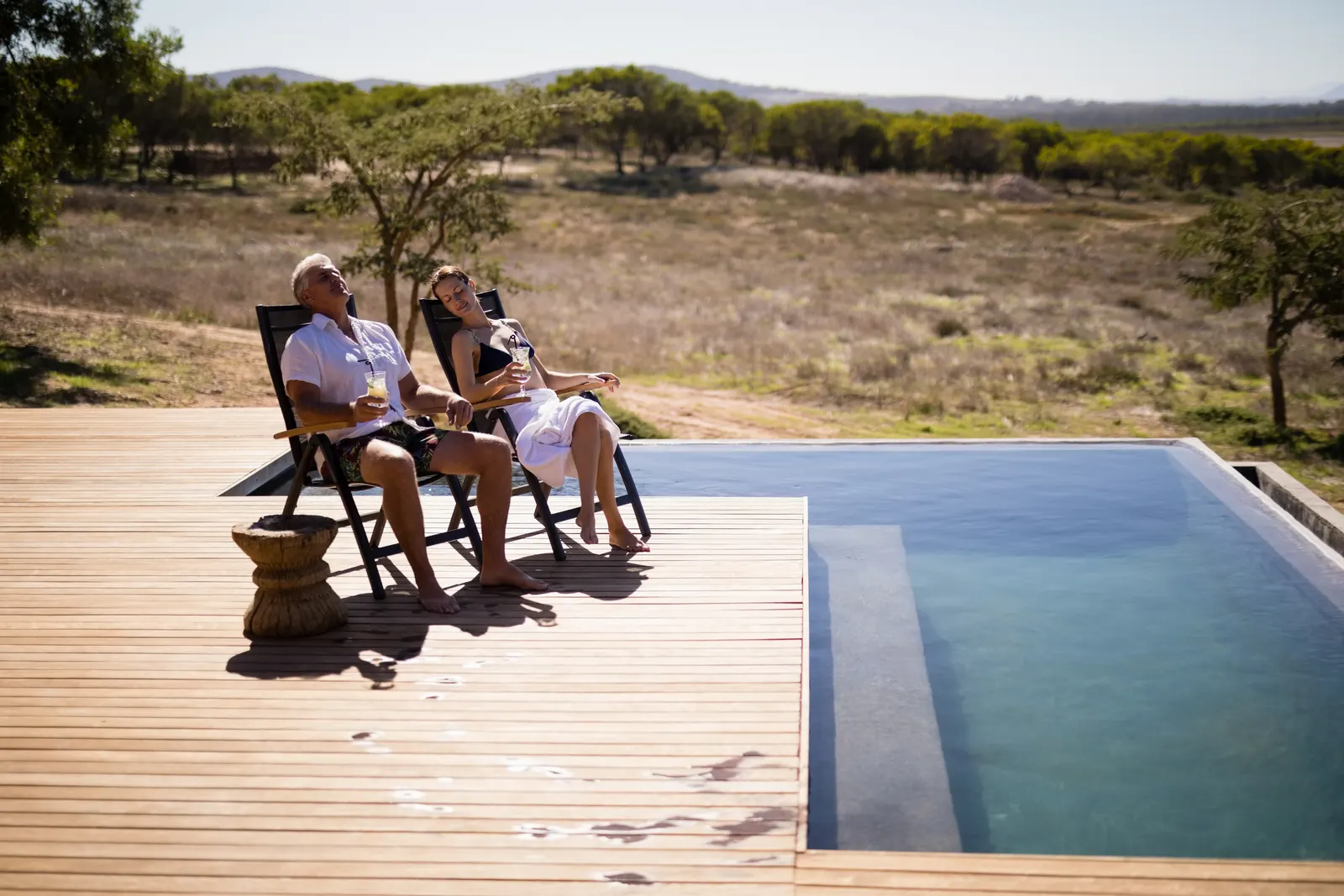
Two guests relaxing by a lodge plunge pool
After day 8

A rest night in Moshi after the climb

The descent finishes early afternoon and most flights leave in the evening. A night in Moshi means a full sleep in a bed before the aircraft, and it protects you if you come off the mountain later than planned.
USD 170 per person, for 2 guests
Two guests relaxing by a lodge plunge pool
Day 1

Kit hire in Moshi

A minus-ten sleeping bag, poles, a down jacket, gaiters — anything you would rather not buy for one week. Hired the evening you arrive, so the gear check happens with the real kit.
USD 130 per person
Two guests relaxing by a lodge plunge pool
After day 8 · 2–3 nights

Three days on safari afterwards

Tarangire and the Ngorongoro Crater are a morning’s drive from Moshi. After a week on foot, a vehicle with a roof hatch and lunch at a table is what your legs want.
USD 1,670 per person, for 2 guests
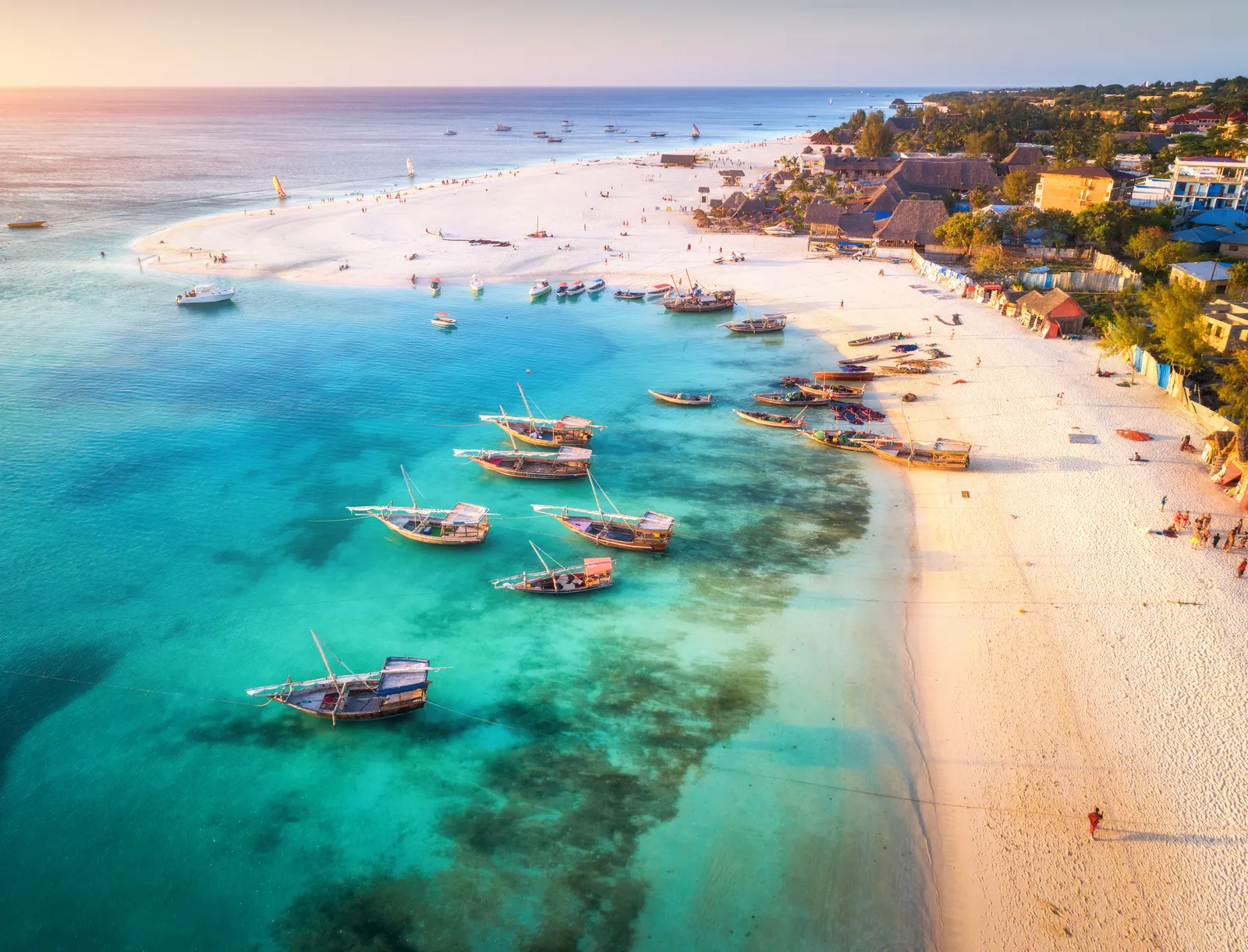
Dhows moored off a white-sand beach on Zanzibar
After day 8 · 3–5 nights

Zanzibar, afterwards

Flights from Kilimanjaro International take about an hour and a quarter. Three or four nights on the east coast is the usual way to recover from the mountain.
From USD 1,340 per person, 3 nights
VI · The mountain

Where this itinerary takes you

One park, one route, one town at the bottom of it.
The snowfields of Kibo, Kilimanjaro's summit cone

Kilimanjaro National Park

1,688 square kilometres around a free-standing volcano that rises from farmland at about 1,000 metres to 5,895 metres at Uhuru Peak. Five climate zones stack up the mountain — cultivated slopes, rainforest, heath and moorland, alpine desert, and the summit ice — and the Machame route walks through every one of them.
The snowfields of Kibo, Kilimanjaro's summit cone

The Machame route

The south-western ascent, roughly 62 kilometres gate to gate. It climbs the forest to the Shira plateau, traverses under Kibo’s southern glaciers by way of Lava Tower and the Barranco Wall, summits from Barafu, and descends the separate Mweka trail. Camping only — there are no huts on this side of the mountain.
The snowfields of Kibo, Kilimanjaro's summit cone

Moshi

The town at the foot of the mountain, at about 890 metres on the southern slopes, an hour east of Kilimanjaro International. The kit-hire shops, the gear check and the first and last showers all happen here.
The question every climber asks

Will I reach the summit?

6 nights
On the mountain — with the Karanga night the six-day climb skips
No honest operator will give you a number for your own chances, because the thing that decides them is how your body handles altitude, and nobody can know that before you go up. Fitness helps you enjoy the walking days; it does not protect you above 4,000 metres. What the evidence across the mountain shows plainly is that longer routes summit more often than shorter ones, and that a route which climbs high and sleeps low, as this one does on day four, does better than one that only goes up.
This page does not quote a success rate. What we will say is that the seven-day Machame climb carries two things that matter: the Lava Tower day, and the night at Karanga before Barafu. On a private climb your guide can also slow the schedule on the day you need it, which a group cannot. If you are turned round, it will be because the guide read the signs — oxygen saturation, coordination, speech — and made the call, and on this mountain that call is the one that matters.
VII · Season

The best time to travel

Two dry windows; the rains are possible but not recommended.
January and February are the warmest and clearest months on the mountain: dry, settled, the summit visible most mornings, and fewer climbers than the northern summer. It is the best time to climb Machame, and a private climb can be dated to a full moon so that the scree above Barafu is lit from camp to the rim.
June to October is the long dry season and the busiest. Cold — minus ten to minus twenty on summit night is normal — but reliably dry, and the queue on the Barranco Wall on an August morning is the price of that reliability. October is quieter and still mostly dry, and is a good month for a private date.
March to May is the long rains. The forest days are a river of mud, the summit cone is often in fresh snow, and the odds of a clear sunrise from Stella Point are poor. We will run a private climb in these months if you ask, and we will tell you what to expect first, but we do not recommend it.
November is the short rains — brief afternoon storms, usually, with the mountain clearing by evening. It is quieter and cheaper and it can be excellent; it is also unpredictable. December sits either side of the festive weeks and is a better bet than November for a first climb.
VIII · Flights

Getting there and back

Fly into Kilimanjaro International. Arrive a day early if you can; fly home a day late.
Fly into Kilimanjaro International (JRO). It is forty-five kilometres from Moshi, and any other airport adds a day. Most European routings connect through Doha, Istanbul, Amsterdam or Addis Ababa and land in the evening.
Arrive the day before your climb starts if you can. The gear check is on the evening of day 1 and you leave for the gate the next morning; a delayed bag with your boots in it is far easier to chase with a day in hand than with none.
Coming home, the climb ends in Moshi on the afternoon of day 8. An evening flight out of JRO the same day is workable but tight — if you are slow off the mountain there is no margin. A night in Moshi and a flight on day 9 is the shape we recommend.
Tanzania requires a visa for most passports — USD 50, or USD 100 for United States citizens, valid up to 90 days. Apply online in advance rather than at the airport after an overnight flight.
IX · Other costs

What else you will spend

Visa, insurance, crew tips and kit hire — set out so there is no surprise at the gate.
Tanzania issues a tourist visa online (eVisa) or on arrival at Kilimanjaro International. Applying in advance is faster and avoids the queue at immigration after an evening arrival.
A yellow fever certificate is required only if you are arriving from a country where yellow fever is endemic. Coming directly from Europe or North America, it is not.
Every climber must hold insurance that explicitly covers trekking to 6,000 metres. Many standard policies stop at 3,000 or 4,000, and the difference only becomes visible when a claim is refused. Read the altitude clause, not the summary.
Medical evacuation cover is the part that matters. Rescue off the mountain begins with the park’s rescue team, which the fees cover, and continues to a hospital in Moshi, which they do not.
Kilimanjaro tips are given per crew member rather than per guest per day, and they are a real part of the crew’s income. You hand them over at Mweka Camp on the last morning and the lead guide distributes them in front of the whole crew.
The figures below are the amounts per crew member for the whole climb, shared across your party. For two climbers with a crew of around ten, each climber’s share usually comes to a few hundred dollars. Bring it in cash, in US dollars, before you leave Moshi.
Boiled drinking water is provided on the mountain and nothing is sold above the gate, so there is nothing to spend up there. In Moshi, hire what you do not own rather than buying it — a sleeping bag rated to minus ten, poles, a down jacket.
Meals in Moshi on the first and last evenings, a beer at the gate, laundry at the hotel, and the coffee everyone buys on the way home. Cash in small US dollar notes is more useful than a card; the crew are paid and tipped in cash.
Notes dated before 2009 are refused across Tanzania. Bring newer ones.
X · Why us

Why book this with us

01

Moshi-based, and Tanzanian-owned

The guides, the crew and the office are ours. When a climber needs to come down early, the decision is made by the people on the path, not by a booking agent in another time zone.
02

Seven days, not six

We do not sell the six-day Machame climb. The Karanga night costs a day and it is the day that sends the most people to the top. Every Machame climb on this page carries it.
03

Your pace, your date

A private climb starts when you want it to and moves at the speed your body sets. If day four goes badly, the schedule bends around you rather than around a timetable.
04

We will turn you round

Your guide checks you every evening, and if the readings say down, you go down. A climb that ends at Stella Point on a guide’s call is a good outcome. We say so before you book, not after.
XI · Questions

Frequently asked

What climbers ask before booking a private date.
A private climb is priced per person and falls as the party grows, because the crew and the mess tent are shared. The table above sets out the Standard and Premium tiers by party size. Our rates for this climb are set out in the table above — ask us for the dates you have in mind and we will quote them plainly, including park fees.
The six-day Machame climb walks the Barranco Wall in the morning, pushes on to Barafu in the afternoon and summits that night. The seven-day version stops at Karanga instead, which gives you a rest, a second night near 4,000 metres and a summit night on legs that have not just done the Wall. Longer routes summit more often; this is the cheapest extra day on the mountain.
This page is a private climb: your date, your crew, your pace. The joining climb walks the same route on fixed dates with a group. Private suits people who want control of the schedule or are climbing as a family; joining suits solo climbers who want company on summit night. See joining or private for the longer answer.
Fit enough to walk five to seven hours a day for six days with a daypack, and then fourteen to sixteen hours on summit day. That is hill-walking fitness, not athletic fitness. Altitude, not strength, is what stops people, and fitness does not protect against it — see how altitude works on Kilimanjaro.
We do not publish one, and we would be wary of any operator who quotes a precise figure. What is known is that longer routes summit more often than shorter ones, and that this route climbs high and sleeps low on day four and carries the extra night at Karanga for that reason. Nobody can promise you the top.
Emergency oxygen and a portable hyperbaric bag are carried on every climb. Either is for getting a sick climber down, not for getting a climber up: the treatment for altitude sickness is descent, and an assistant guide takes you down while the rest of your party continues.
An assistant guide takes you down, and the rest of your party continues with the lead guide. That is what the assistant guides are for. People who turn round at Lava Tower or on the way to Stella Point usually feel well again within hours of descending.
The park sets a minimum of 10 years for climbing above 3,000 metres. On a private climb we will take families with children from 10, with the pace set for the youngest climber and a guide assigned to them.
Standard tier is a three-season two-person tent with a foam mat, a mess tent with table and stools, and the park’s long-drop toilets at each camp. Premium adds a private toilet tent carried and pitched for your party, a thicker mat and a chair with a back. Neither is comfortable in a hotel sense; Premium is noticeably less uncomfortable at Barafu. See what a porter carries for what it takes to get it there.
XII · Your trip

Request your personalised safari proposal

Tell us how you like to travel and we will put together a personalised proposal for this route — dates, camps and a firm price per person. No payment is required at this stage.

No payment is required at this stage. We reply by email and WhatsApp within one working day.

Seven days on the mountain, by the Machame route

8
Days
5,895 m
Summit
62 km
Walked
Full
Board on the mountain
Starts
Moshi, Tanzania
Ends
Moshi, Tanzania
Departures
Any date — private climb
Availability
Daily starts, all year
From
from$2,330/pp
Per person, sharing
Private climb · any date · we reply within one working day
from $2,330 / person
Loading itinerary…
Saved Trips