Places of Africa Safaris

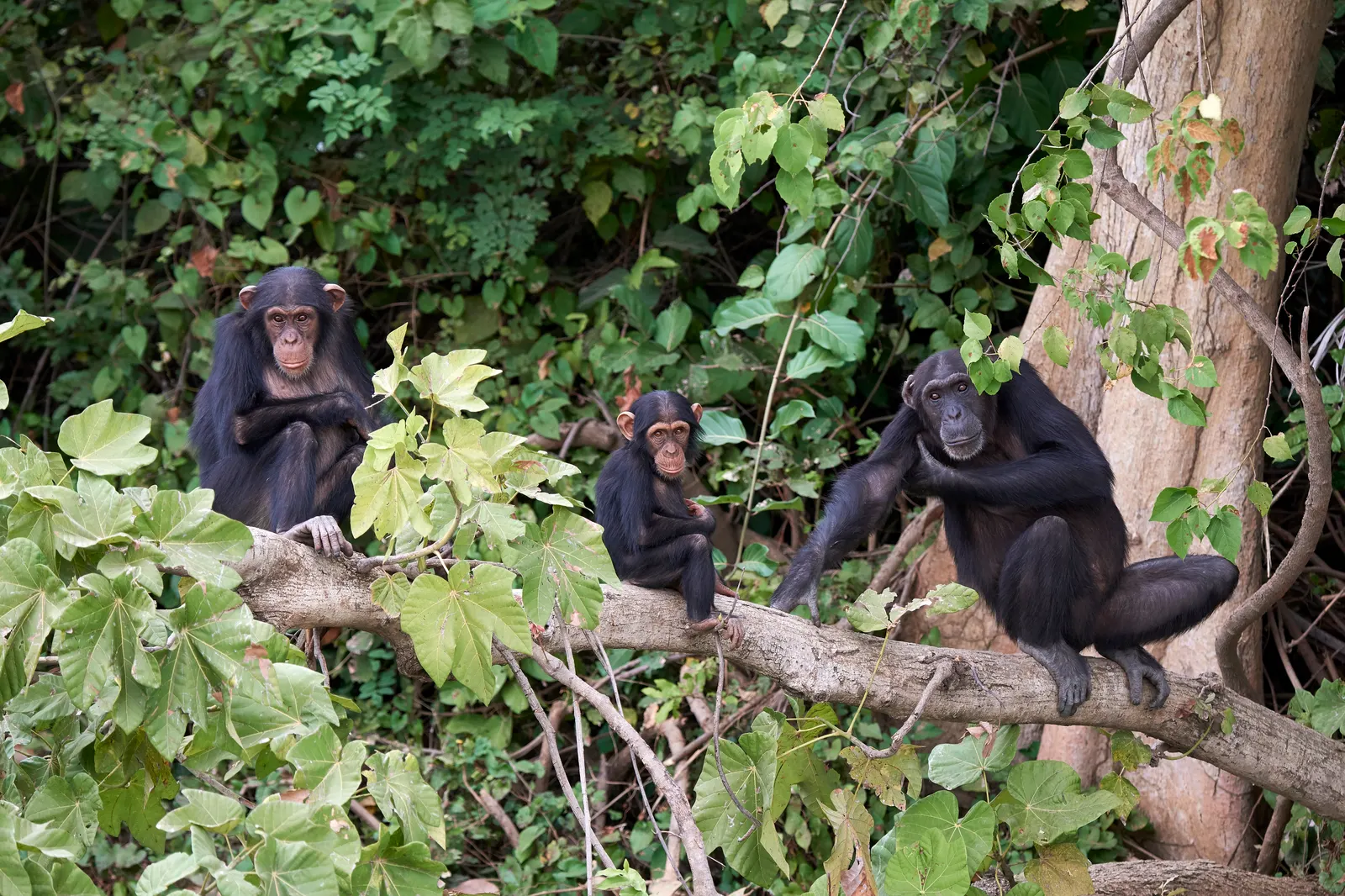
Chimpanzees in a tree
Western Tanzania · Eight Days

Eight days at Mahale, on the lake

One park, reached by charter and by boat: chimpanzee trekking every morning from a beach under the mountains, and the clearest lake in Africa every afternoon.
8
Days
7
Nights
1
Park
12+
Min age
I · Overview

The route, and why this shape

One park, no roads. Two days to get there and back, and four nights that repay them.
Mahale is a national park with no roads. You reach it by a scheduled charter that crosses the whole width of Tanzania and then a boat down the eastern shore of Lake Tanganyika, and once you are there you go nowhere by vehicle for four nights. That is the whole shape of this itinerary, and it is why the trip is eight days for one park: two of them are spent getting in and out, and one is a buffer in Arusha because the charter runs on fixed days.
What the four nights buy is the M-group, a community of chimpanzees that has been studied without a break since 1965 and is as relaxed around people as any wild population on earth. You track them on foot from the beach each morning with park trackers, wearing a mask, for one hour once you find them. The finding is the work: an easy morning is an hour, a hard one is five, and the forest is steep.
The afternoons are the lake, which is deeper than any other in Africa and clear enough to snorkel in among fish found nowhere else. It is a luxury trip by cost and by remoteness rather than by marble, and it is not for children under twelve, by park rule.
Length
8 days / 7 nights
Country
Tanzania
Start / end
Arusha → Arusha
Tour type
Private fly-in safari
Group size
Private — 1 to 6 guests per vehicle
Meal plan
Full board
Best months
June – October
Activity level
Moderate to strenuous — steep forest walking
Minimum age
12 for chimpanzee trekking, by park rule
II · The days

Day by day, all eight

Every day opens. Two nights in Arusha to meet the charter, four on the beach at Mahale, one in Arusha to fly home. See every lodge and camp we use
Day
01
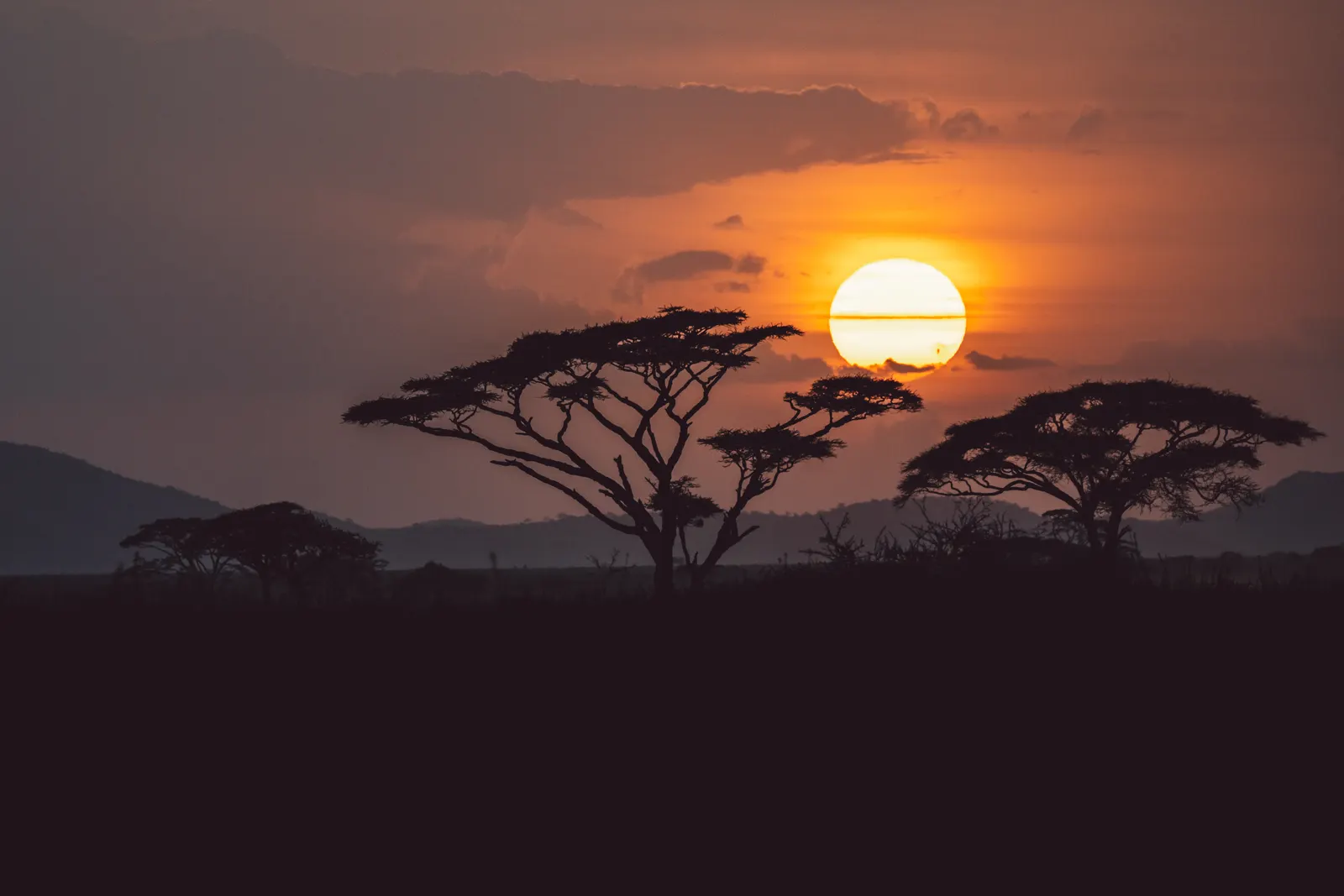
Acacia trees silhouetted against the setting sun
Arrival

Landing, and a night in Arusha

03°22′S 36°41′E
Dinner
Acacia trees silhouetted against the setting sun
Landing, and a night in Arusha
03°22′S 36°41′E
You land at Kilimanjaro International, fifty kilometres east of Arusha, and are driven in through the coffee farms on the lower slopes of Mount Meru. Most long-haul routings put you down between mid-afternoon and late evening, so the only plan for tonight is a meal and a bed at 1,400 metres.
Do one thing before you sleep: repack into a soft bag. The aircraft that takes you west on the charter day has a luggage limit that is strict and weighed, and a hard suitcase will not go in the hold. Fifteen kilos is the usual figure; the exact allowance for your flight is confirmed with your booking. Leave anything else with us in Arusha and collect it on the way home.
There is no vehicle-based safari on this trip and no game drive. That is worth saying plainly on day one. You are going to one place, and it is a long way from everywhere.
Meals
Dinner
Travel
JRO to Arusha · 50 km, about 1 hr
Highlight
A short transfer and nothing scheduled
Meet at Kilimanjaro International
Soft bag, weighed
No game drive today
Where you sleep
Kahawa House: Two-storey main building with terrace and swimming pool in the gardens
COMFORT

Kahawa House

★★★★☆
Arusha, garden lodge on the edge of town
Quiet, en-suite, a short drive from the airstrip you leave from. Dinner and breakfast included.
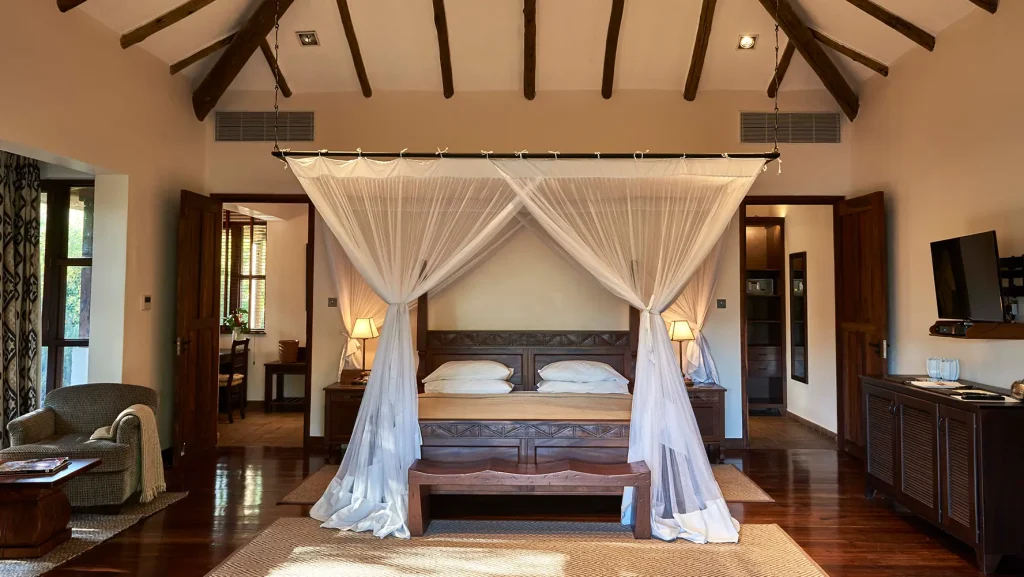
Legendary Lodge: Bedroom with wooden four-poster bed and white sheer curtains, hardwood floors
LUXURY

Legendary Lodge

★★★★★
Arusha, coffee-estate lodge
Older rooms in the grounds of a working coffee farm, with Meru above the trees on a clear morning.
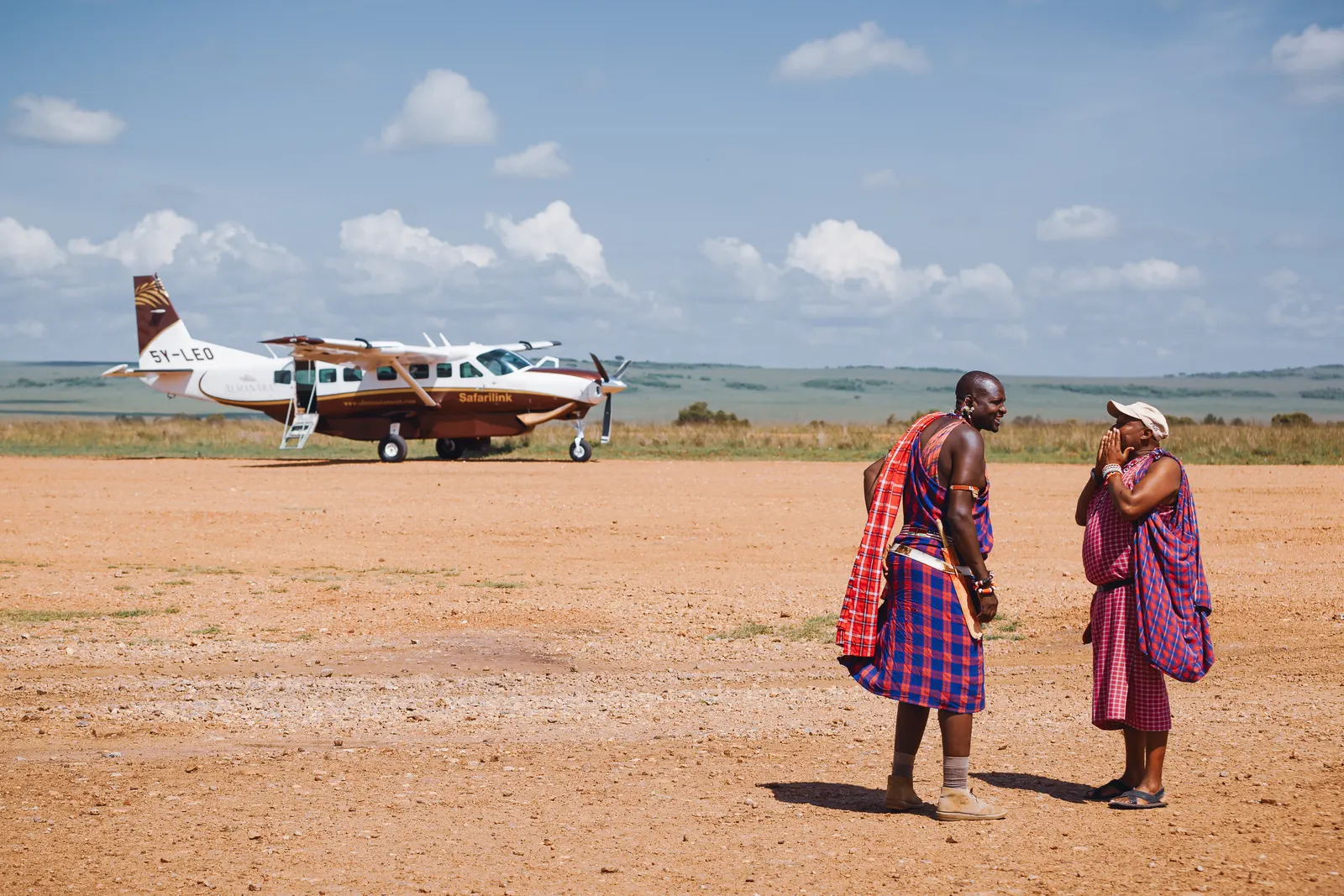
Two Maasai men beside a light aircraft on a bush airstrip
A day in hand before the charter
03°15′S 36°51′E
The flight to Mahale is a scheduled charter and it does not run every day. It usually leaves on two fixed days a week, and your arrival flight rarely lands on the right one. So this day is here because the timetable is, not because Arusha needs a second night. Better to say so than to dress it up.
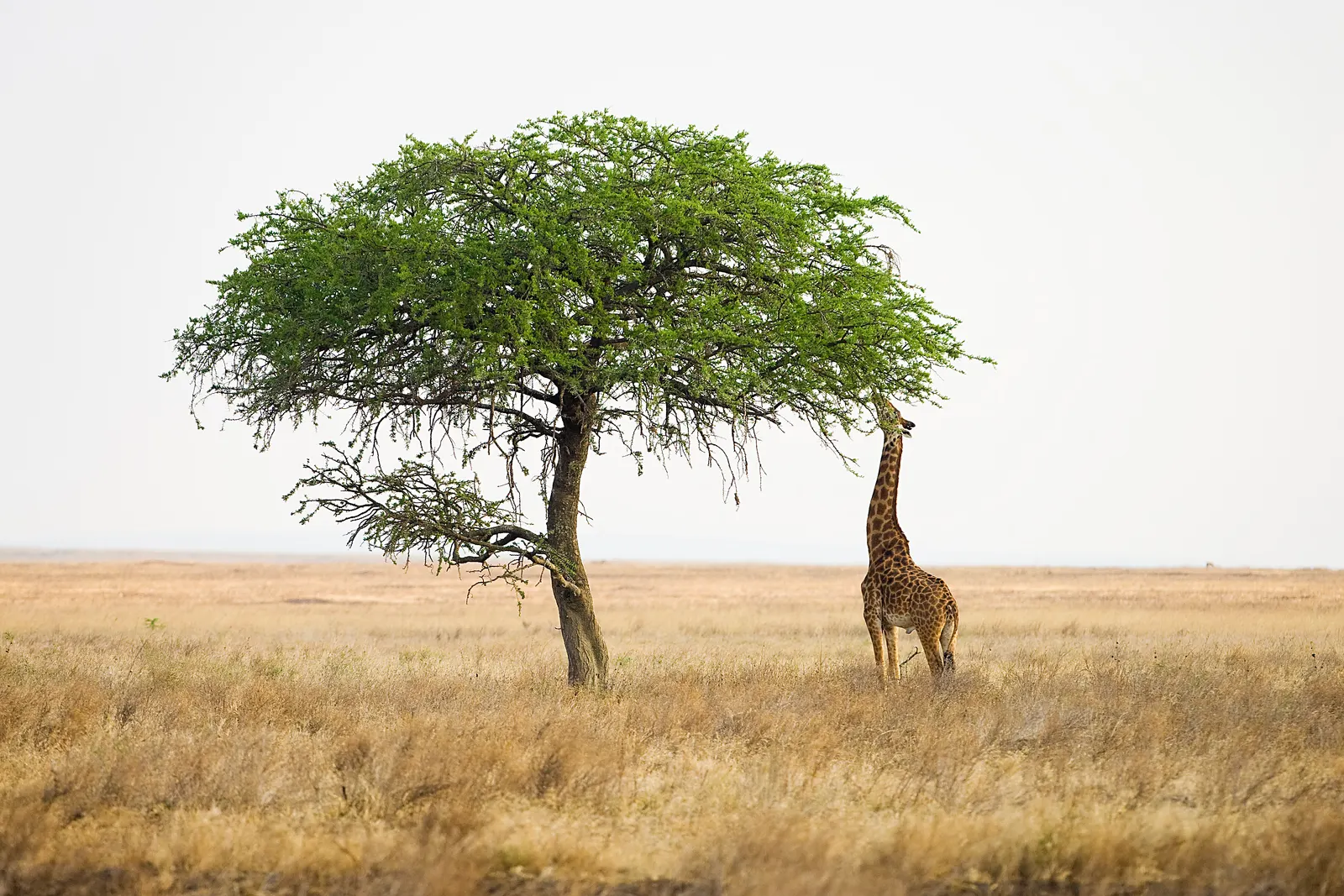
If you want to use it, Arusha National Park is thirty-five kilometres away and small enough for a half day. It is one of the few parks where you can walk with a ranger rather than sit in a vehicle: the Momella lakes hold flamingo when the water is right, there are giraffe and buffalo on the open ground, and black-and-white colobus in the montane forest under Mount Meru, which at 4,566 metres is the fifth-highest mountain in Africa.
If you would rather not, do not. You have flown a long way and tomorrow starts early. A slow morning, a walk into town for the cash you will need for tips, and an early night are a perfectly good use of the day.
Meals
Breakfast · Lunch · Dinner
Travel
Optional half day in Arusha National Park · 35 km
Highlight
Momella lakes, or nothing at all
Charter-day buffer
Optional Arusha NP walk
Colobus forest
Where you sleep
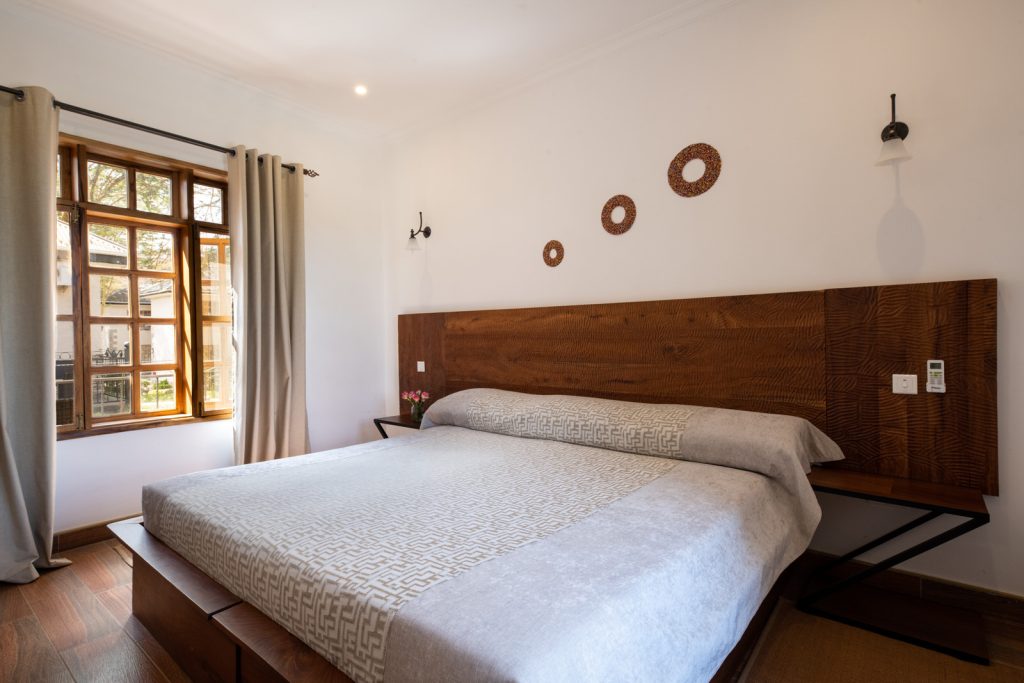
Kahawa House: Standard double room: wooden headboard, white linen, wooden-framed windows
COMFORT

Kahawa House

★★★★☆
Arusha, garden lodge on the edge of town
Second night, same room. No packing until the morning.
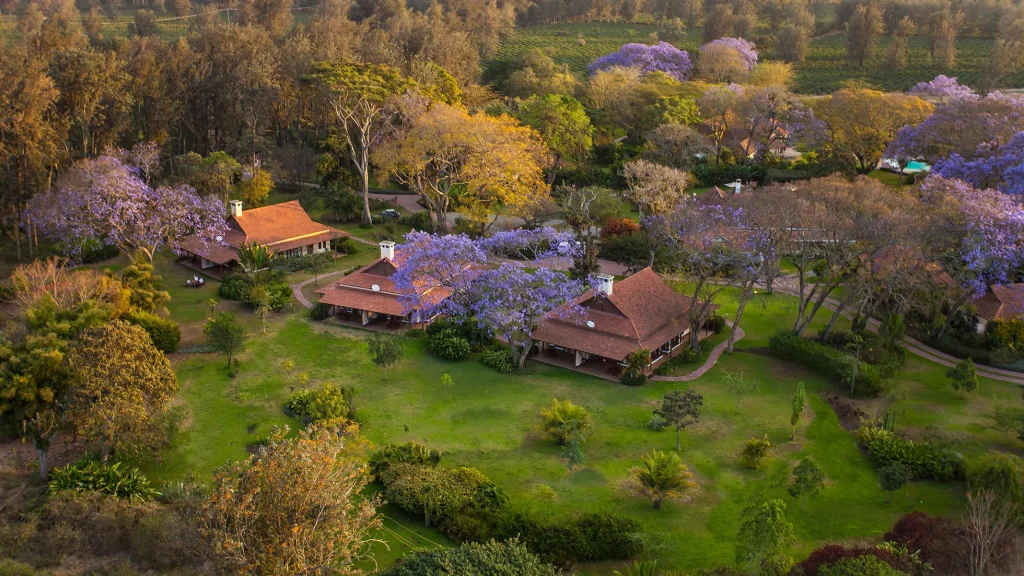
Legendary Lodge: Aerial view of the lodge cottages among green lawns, trees and purple jacarandas
LUXURY

Legendary Lodge

★★★★★
Arusha, coffee-estate lodge
Second night. The estate walk in the late afternoon is a good way to shake off the flight.
A chimpanzee on a branch
West across the country, then down the lake
06°08′S 29°44′E
The charter leaves Arusha in the morning and flies west across the whole width of Tanzania, usually with one stop on the way to drop or collect passengers. Allow about four hours in the air and on the ground. Below you the highlands give way to miombo woodland, and then the land ends abruptly at a lake that looks like a sea.
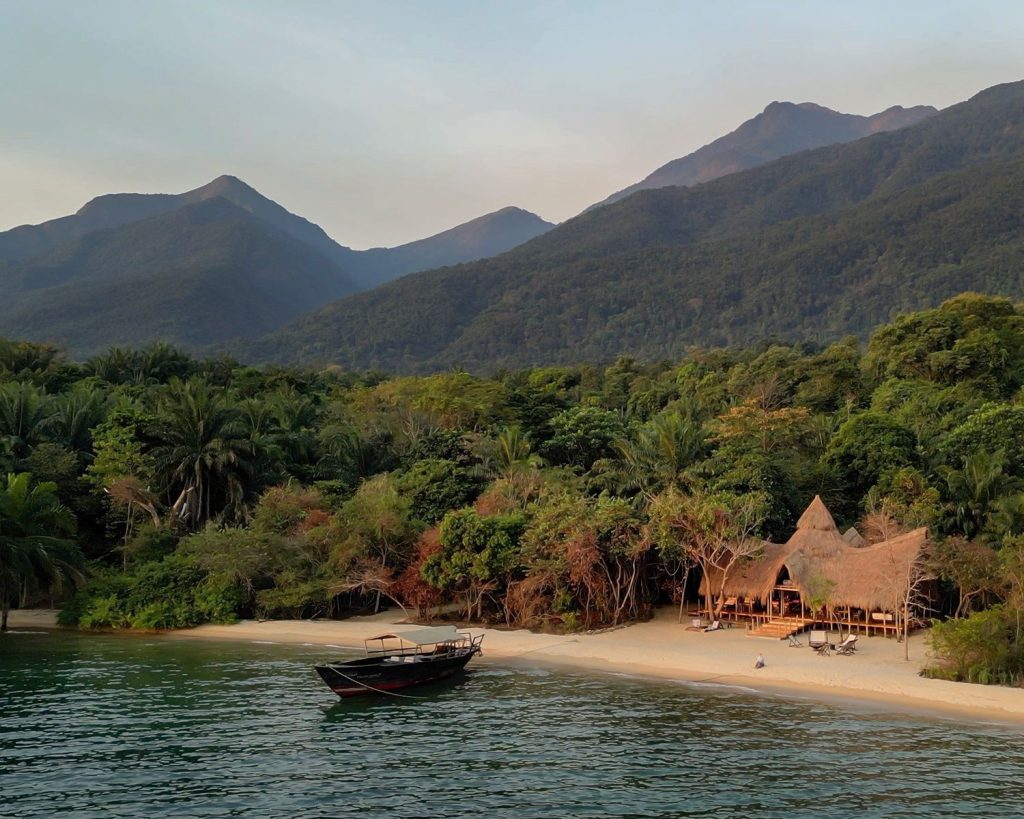
Lake Tanganyika is 673 kilometres long and, at nearly 1,470 metres, the deepest lake in Africa and the second-deepest on earth. It holds around a sixth of the world’s unfrozen fresh water. The Mahale airstrip is on its eastern shore, and there is no road from it to the camp — there is no road to anywhere in the park. A boat meets the aircraft and runs south along the shore for about an hour and a half, the forest rising 2,000 metres straight out of the water.
You step off onto sand. Camp is on the beach, the mountains are behind it, and the chimpanzee briefing is this evening: the rules, the masks, and what to do if one walks straight at you.
Meals
Breakfast · Lunch · Dinner
Travel
Charter about 4 hours with a refuelling stop · boat to camp about 1½ hours
Highlight
Arusha to the shore of Lake Tanganyika in an afternoon
Scheduled charter
Boat down the lake
Chimp briefing
Where you sleep
Greystoke Mahale: View from the shores of Lake Tanganyika to the lodge, with the Mahale Mountains behind
COMFORT

Greystoke Mahale

★★★★☆
Mahale Mountains, on the beach inside the park
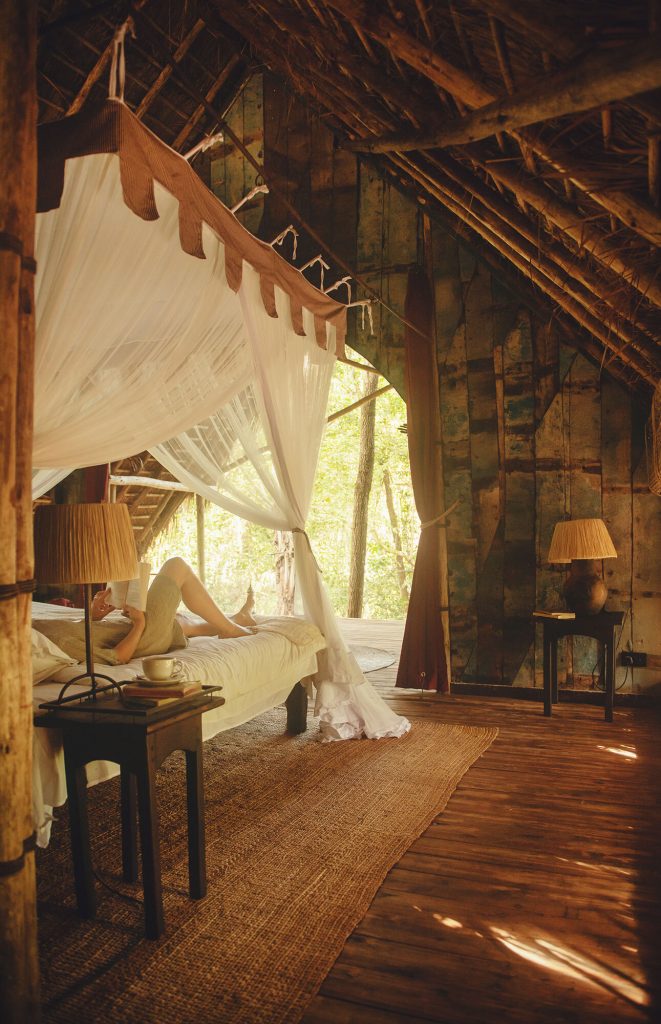
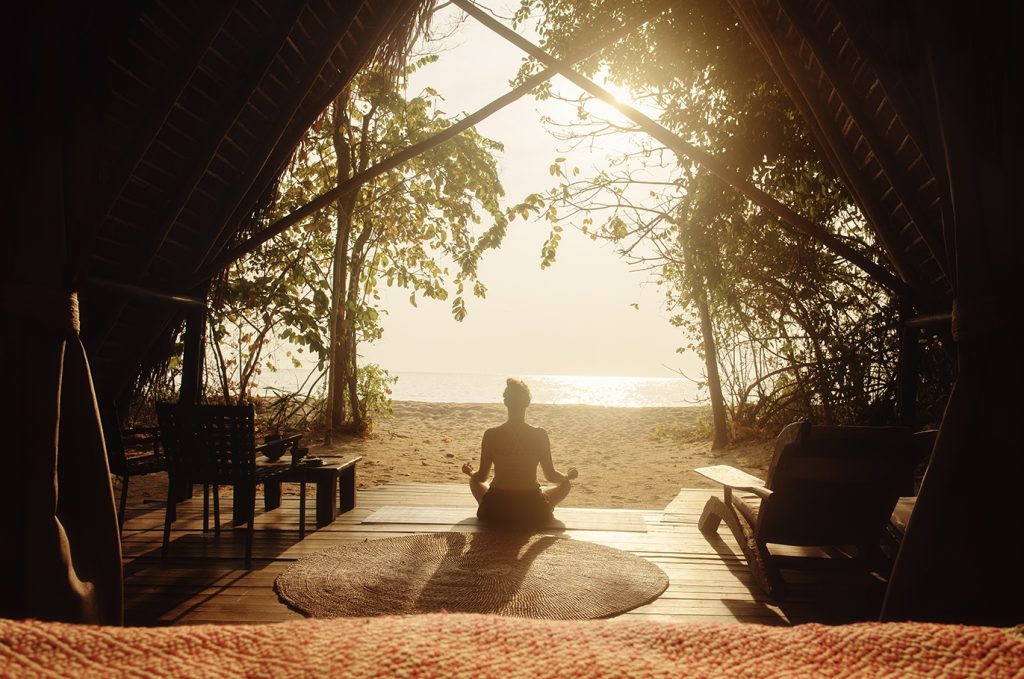
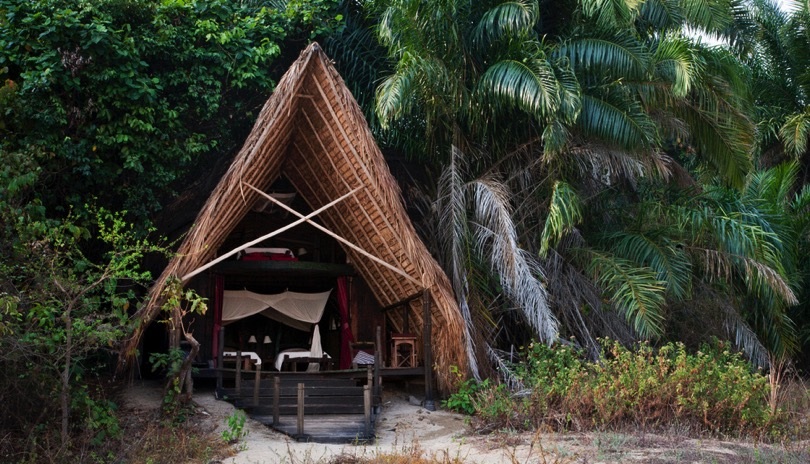
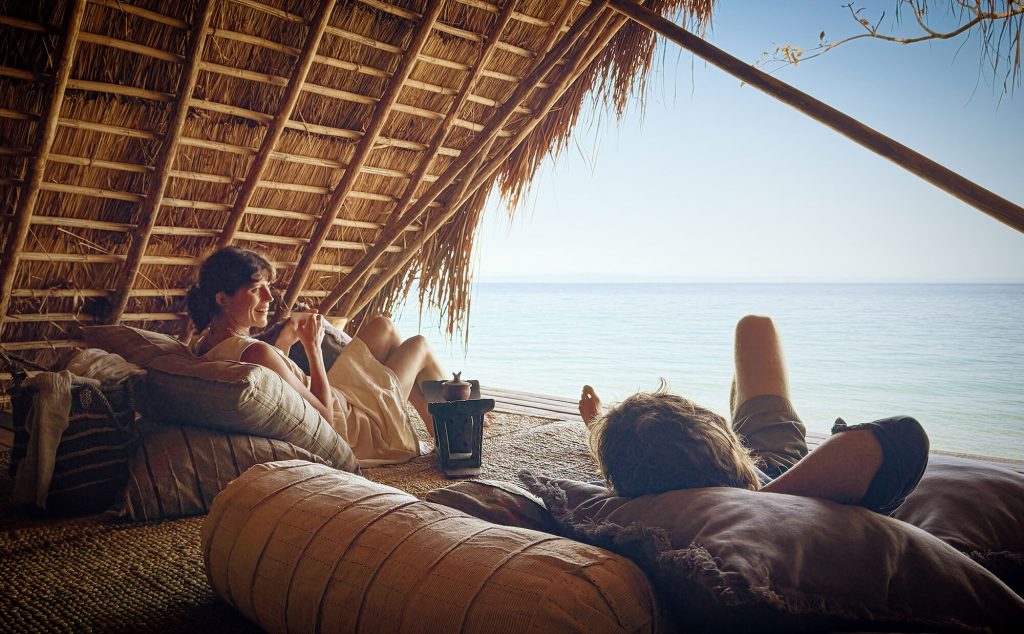
Tented bandas on the sand, open to the lake, full board, kayaks and snorkelling gear at the shore.
Greystoke Mahale: Banda bedroom interior
LUXURY

Greystoke Mahale

★★★★★
Mahale Mountains, on the beach inside the park
Larger open-fronted rooms under thatch, a dhow for the evenings and a small number of guests for the whole beach.
Chimpanzees in a tree
First trek: into the forest for the M-group
06°08′S 29°44′E
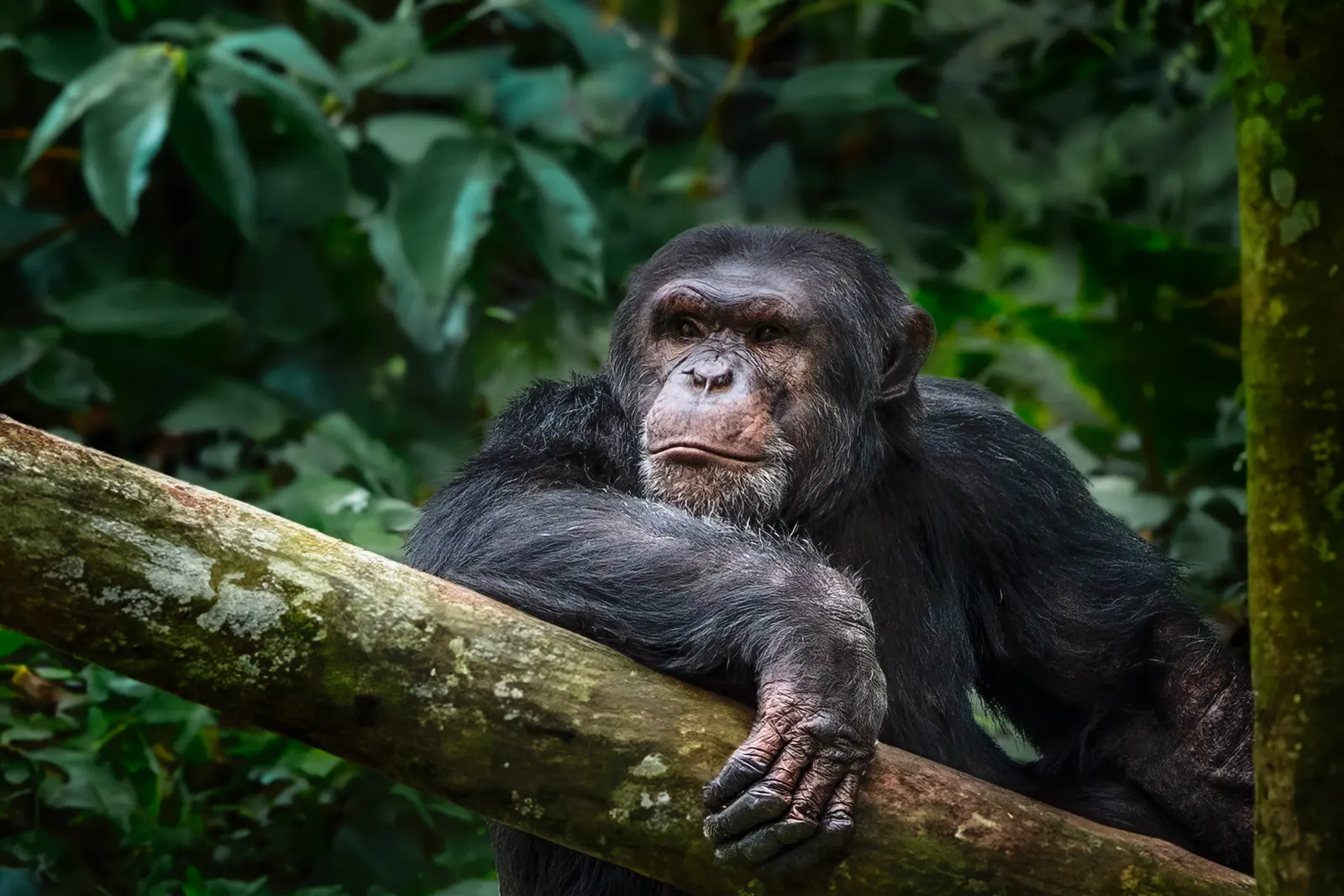
Park trackers go out at first light to find where the chimps nested the night before. When they radio in, you go. The community you are tracking is the M-group, which researchers from Kyoto University have followed continuously since 1965 — one of the longest studies of any wild animal population anywhere — and the animals are entirely used to people standing a few metres away.
The walk is the variable. Some mornings the group is twenty minutes behind the beach and the trek is a stroll. Some mornings it is four hours up a ridge on a wet path, and you come back at two in the afternoon with your legs shaking. The forest is steep, the trails are not built, and you need to be fit enough to go uphill for a couple of hours in heat. Once you are with the chimps you have one hour, by park rule, and you wear a surgical mask for all of it; a human cold can kill a chimpanzee, and it has.
Groups are kept small, usually six people, so a full camp trek in shifts. The afternoon is yours: the lake is a few steps from your bed and the water is warm.
Meals
Breakfast · Lunch · Dinner
Travel
On foot · 1–5 hrs, steep
Highlight
One hour with a habituated chimpanzee community
Chimpanzee trekking
M-group, studied since 1965
Masks, one hour, small groups
Where you sleep
Greystoke Mahale: Open-fronted bandas built from salvaged dhow wood
COMFORT

Greystoke Mahale

★★★★☆
Mahale Mountains, on the beach inside the park
Second night. The trek starts from the beach, so no transfer and no early vehicle.
Greystoke Mahale: Banda exterior tucked into the forest line
LUXURY

Greystoke Mahale

★★★★★
Mahale Mountains, on the beach inside the park
Second night. Lunch under the trees after the trek, then the lake until the light goes.
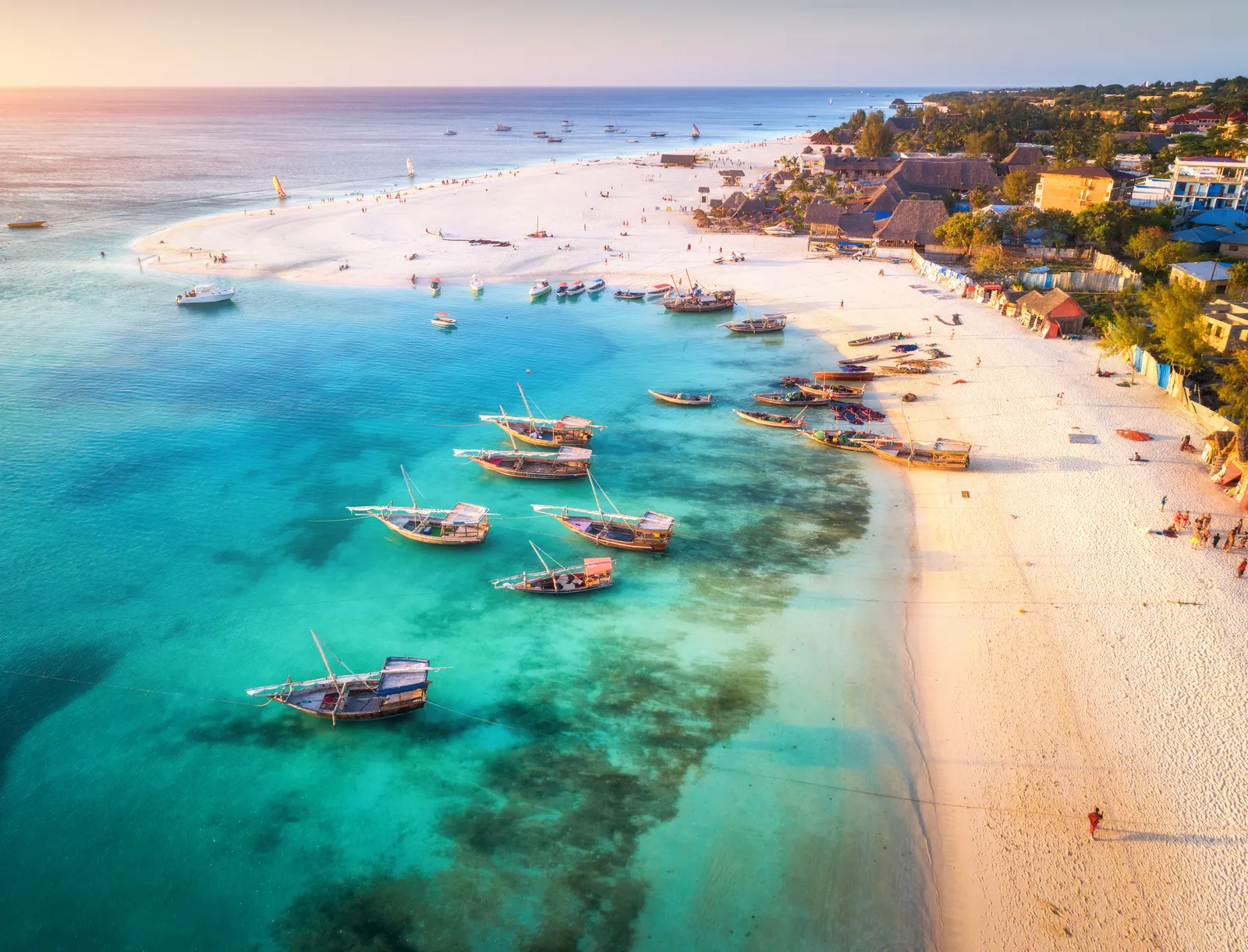
Dhows moored off a white-sand beach on Zanzibar
Second trek, and the clearest water in Africa
06°08′S 29°44′E
You track again. A second morning is the point of staying four nights rather than two: the first hour with the chimps is spent being astonished, and the second is when you start to see who is who. The trackers know every animal by name and rank, and the politics — who grooms whom, who is being avoided this week — are the thing that stays with people.
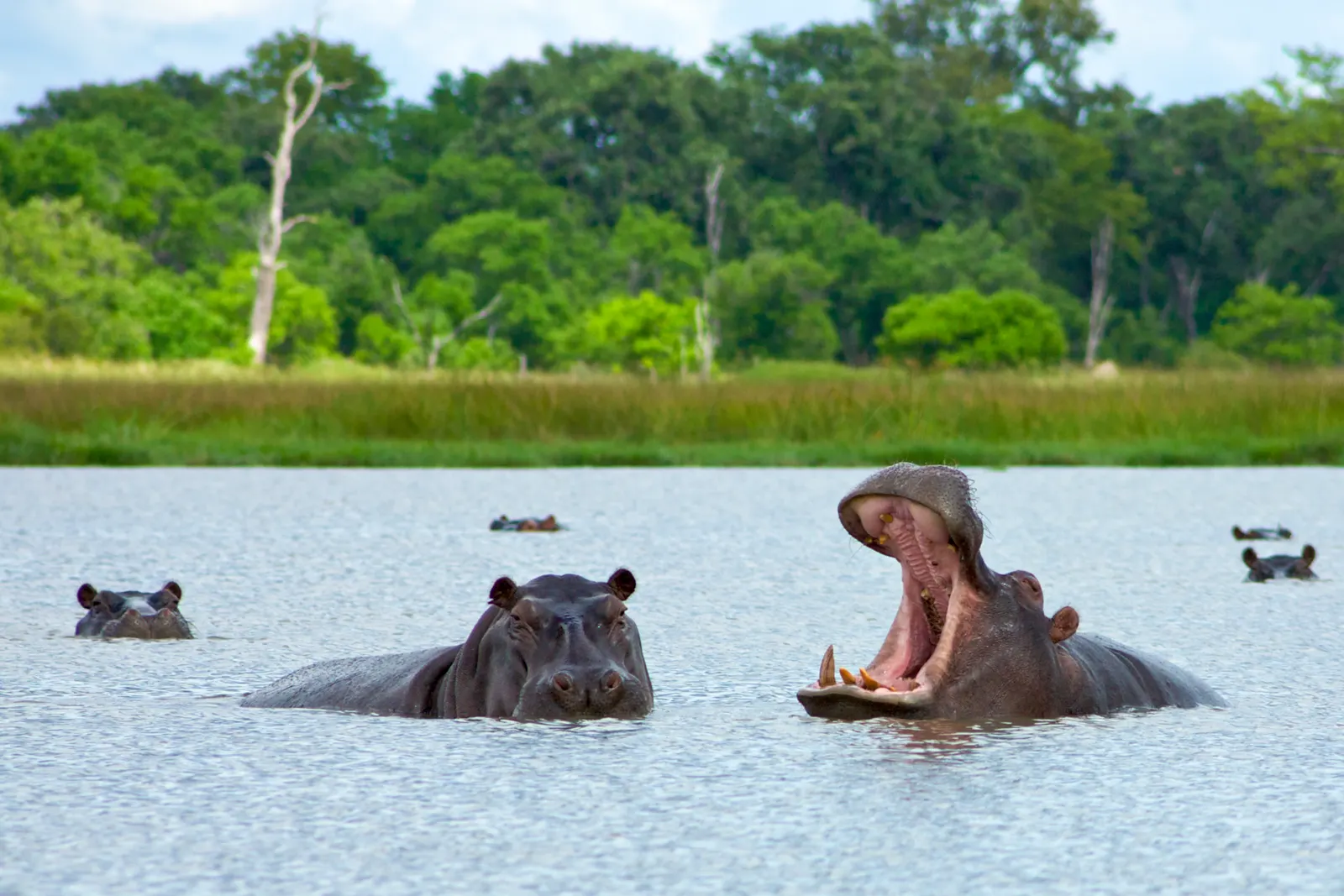
Afternoons are the lake. Tanganyika has more than 250 fish species found nowhere else, most of them cichlids, and the rocky points either side of the beach are where you see them: snorkelling in fresh water so clear you can watch the bottom fall away beneath you. Kayaks are at the shore and the shoreline south of camp is empty for as far as you can paddle. Crocodile and hippo are in the lake but not, as a rule, in front of the camp; ask before you swim anywhere else.
The evening is on a dhow. The camp sails out at five with a cool box, the sun goes down behind the Congo on the far shore, and the hills behind you go orange and then black.
Meals
Breakfast · Lunch · Dinner
Travel
On foot in the morning · kayak or snorkel in the afternoon
Highlight
Cichlids over the rocks, and a dhow at dusk
Second chimp trek
Snorkel with endemic cichlids
Dhow sundowner
Where you sleep
Greystoke Mahale: Upstairs chillout deck of the mess with views across the lake towards the Congo
COMFORT

Greystoke Mahale

★★★★☆
Mahale Mountains, on the beach inside the park
Third night. Time to notice the fishing lights on the water after dark.
Greystoke Mahale: View from the shores of Lake Tanganyika to the lodge, with the Mahale Mountains behind
LUXURY

Greystoke Mahale

★★★★★
Mahale Mountains, on the beach inside the park
Third night. Dinner on the sand if the weather holds, which in the dry months it usually does.
A chimpanzee on a branch
A last morning with the chimps, or the forest without them
06°08′S 29°44′E
Most guests trek a third time. Some do not, and it is worth knowing that you have the choice: a third permit is included, but if your knees have had enough there is a lot in the forest that is not a chimpanzee. Mahale holds red colobus, red-tailed and blue monkeys, and a mix of forest birds that belongs more to the Congo basin than to East Africa — this is the only place in Tanzania you see some of them.
The park is 1,613 square kilometres and the highest point, Nkungwe, is 2,462 metres. There are no roads, no other vehicles and no other camps within sight; the forest that comes down to the sand behind you is the same forest the chimps sleep in. The quiet takes a day or two to register, and this is usually the day it does.
The last afternoon is for whatever you have not done: the kayak, the snorkel, or the beach. Pack tonight, because the boat leaves early and the aircraft does not wait.
Meals
Breakfast · Lunch · Dinner
Travel
On foot · trek or forest walk
Highlight
Red colobus, forest birds, and a valley to yourself
Third trek optional
Red colobus
Last night on the lake
Where you sleep
Greystoke Mahale: Banda bedroom interior
COMFORT

Greystoke Mahale

★★★★☆
Mahale Mountains, on the beach inside the park
Fourth and last night on the lake.
Greystoke Mahale: Open-fronted bandas built from salvaged dhow wood
LUXURY

Greystoke Mahale

★★★★★
Mahale Mountains, on the beach inside the park
Fourth and last night. Ask for the early tea on the deck; the lake is glass before six.
Hippos crowded into a pool
Up the lake, then east to Arusha
03°22′S 36°41′E
The boat runs north after breakfast, the aircraft is waiting on the strip, and by mid-afternoon you are back on the ground in Arusha. The return is timed by the charter, not by us, so there is no chimp trek this morning — the trackers may find the group early, but the boat cannot wait for them.
Tonight is Arusha again, and it is here for a reason. International flights out of Kilimanjaro tend to leave in the evening, and connecting a charter with a stop straight onto a long-haul departure on the same day is a gamble we would rather not take with your ticket. If the timings genuinely work, we can drive you from the Arusha airstrip straight to Kilimanjaro International and drop this night; tell us and we will check.
Collect the bag you left with us, have a proper shower with real water pressure, and eat somewhere with a menu longer than one page.
Meals
Breakfast · Dinner
Travel
Boat about 1½ hours · charter to Arusha about 4 hours
Highlight
The same journey in reverse, with the light behind you
Boat and charter out
Arusha overnight
Direct to JRO possible
Where you sleep
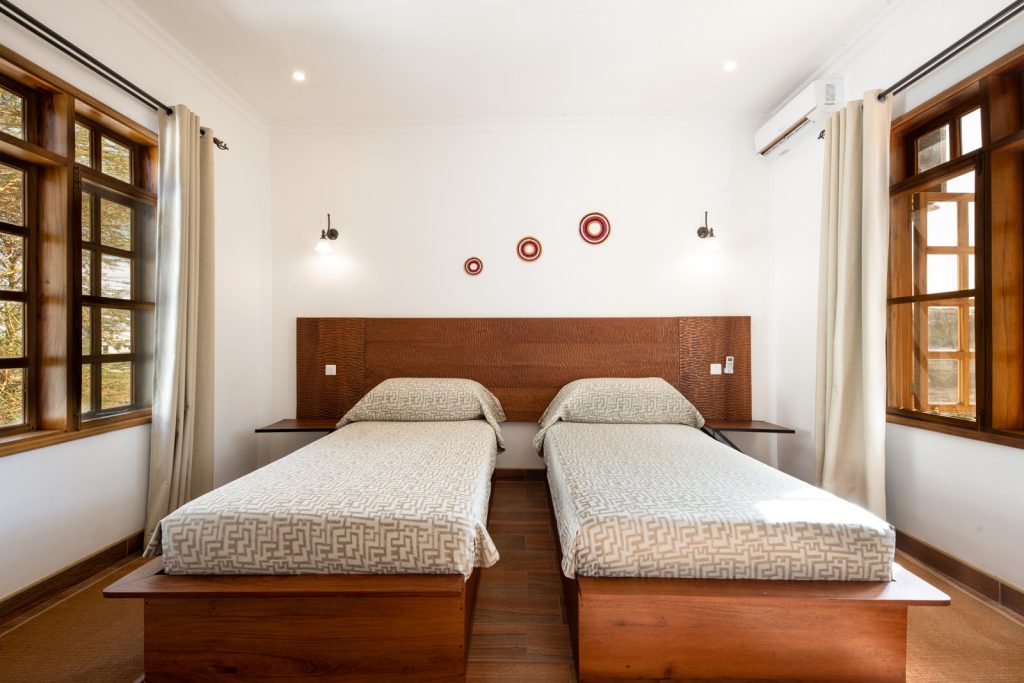
Kahawa House: Twin room: two single beds
COMFORT

Kahawa House

★★★★☆
Arusha, garden lodge on the edge of town
A room for the night and a car in the morning, whatever time the flight is.
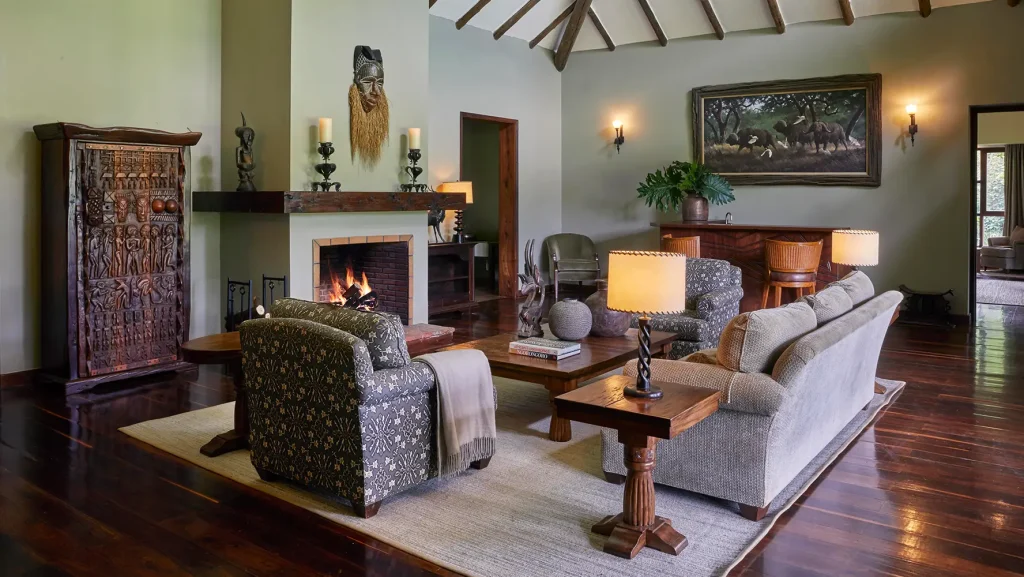
Legendary Lodge: Living room/lounge with lit fireplace, armchairs and sofa
LUXURY

Legendary Lodge

★★★★★
Arusha, coffee-estate lodge
Back to the estate, and a last dinner outdoors if the evening is dry.
Dhows moored off a white-sand beach on Zanzibar
Arusha to Kilimanjaro International
03°25′S 37°04′E
A slow breakfast and the hour east to Kilimanjaro International. If you are flying out in the evening there is time for a morning in town; if you are flying at lunchtime, we leave after breakfast and nothing else is planned.
If Mahale has been the start of something longer rather than the whole trip, the northern parks are on the doorstep — Tarangire is two hours from here by road — and Zanzibar is under two hours by air from either Arusha or Kilimanjaro. Forest and beach, then plains, is a shape that works.
You have been to a place that most visitors to Tanzania never reach and that fewer than a few thousand people a year see at all. That is the trade for the days spent getting there.
Meals
Breakfast
Travel
Arusha to JRO · 50 km, about 1 hr
Highlight
Home, or onward to the coast
Airport transfer
Onward to the north or Zanzibar
No activity today
Where you sleep
Departure day — no overnight
III · Rates

What it costs, by group size

Charter seats and permits are per person, so the curve is flatter than a road safari. Choose a tier to see the table.
Comfort rates by group size, per person and group total
Group sizeRoomsPer personGroup total
1 guest1 room$17,330$17,330
2 guests1 room$13,680$27,360
3 guests2 rooms$14,820$44,460
4 guests2 rooms$13,630$54,520
5 guests3 rooms$14,320$71,600
6+ guests3 rooms$13,610$81,660
Single supplement
$3,540
Added when a guest does not share a room
Child, 12 – 15 years
15% off
Sharing with two adults; no one under 12
Peak season uplift
Included in the rates above
July – October, and the festive weeks
All figures in US dollars, per person sharing unless stated. Valid for travel until 30 June 2027. Park fees, guiding, vehicle, accommodation and full board are included — see what is and is not covered below.
IV · Included

What is in the price, and what is not

Stated in full, both ways.

What is included

What is not

V · Add-ons

Worth adding, if you have the days

Priced separately and arranged on request.
A giraffe browsing an acacia tree on the plains
Day 2 · half day

A walk in Arusha National Park

A ranger-led walk under Mount Meru to the Momella lakes: colobus, giraffe, buffalo and flamingo when the water is right. The one thing on this trip you can do on foot that is not uphill.
USD 250 per person, for 2 guests
A chimpanzee on a branch
Any Mahale morning

A fourth trek

If your legs and the trackers agree, an extra permit for a fourth hour with the M-group. Subject to the park’s daily limits and arranged at camp rather than in advance.
USD 2,540 per person, for 2 guests
A chimpanzee on a branch
3 nights · same charter

Katavi, before Mahale

The charter usually stops at Katavi on the way. Three nights there puts one of the emptiest parks in Africa — hippo in the hundreds in dry-season pools — in front of the chimps.
USD 4,900 per person, for 2 guests
Dhows moored off a white-sand beach on Zanzibar
After day 8 · 3–5 nights

Zanzibar, afterwards

Forest and fresh water, then salt and sand. Flights from Arusha and Kilimanjaro take under two hours; three nights on the east coast or in Stone Town is the usual shape.
From USD 1,340 per person, 3 nights
VI · The ground

Where this itinerary takes you

One park and one lake, on the far western edge of Tanzania.
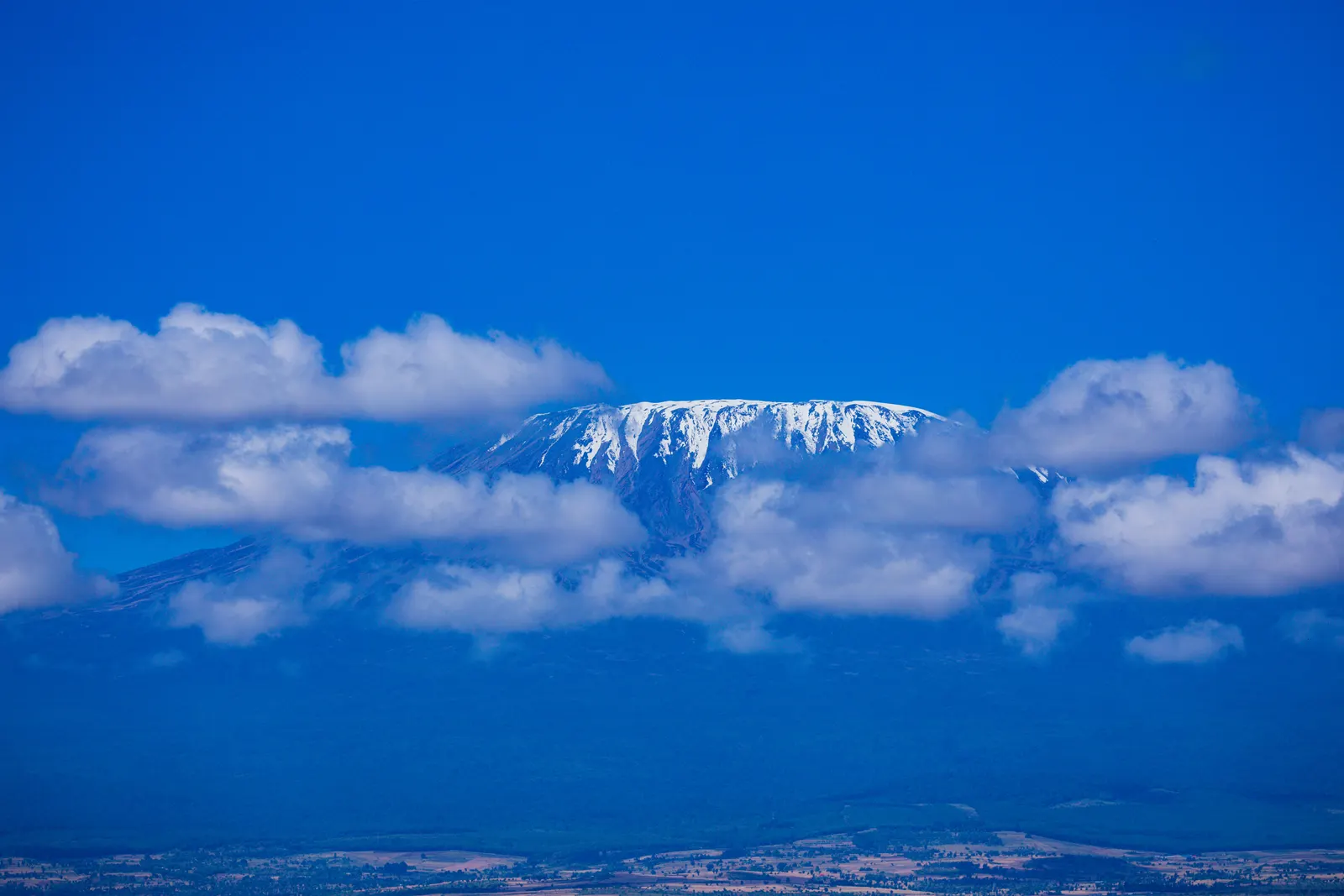
The snowfields of Kibo, Kilimanjaro's summit cone

Mahale Mountains National Park

1,613 square kilometres of forested mountain rising to Nkungwe at 2,462 metres, on the eastern shore of Lake Tanganyika. No roads. Home to around a thousand chimpanzees, of which one community, the M-group, has been studied by Kyoto University since 1965.
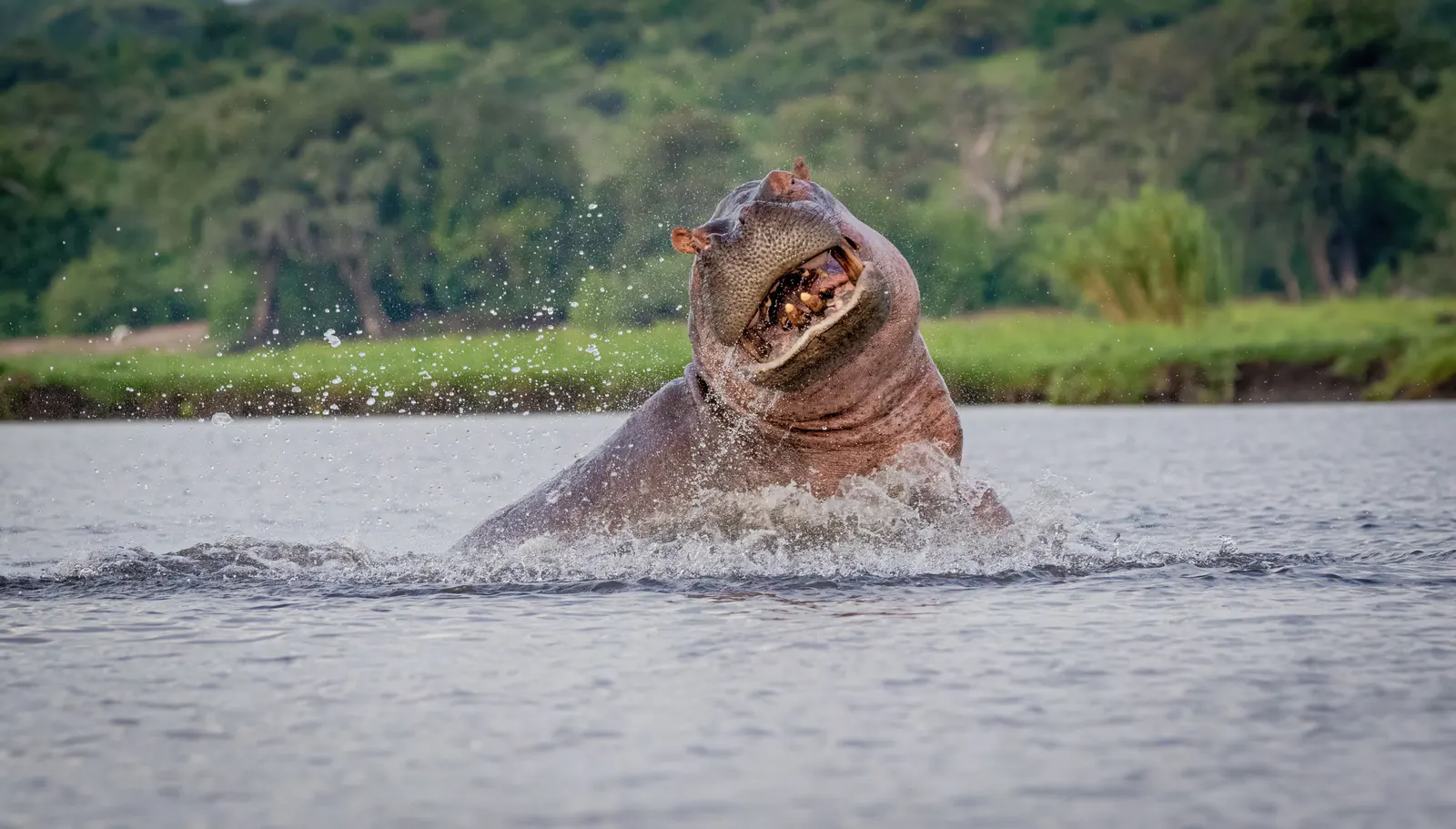
Hippos in the river

Lake Tanganyika

673 kilometres long and almost 1,470 metres deep — the deepest lake in Africa and the second-deepest in the world, holding roughly a sixth of the planet’s unfrozen fresh water. More than 250 fish species live here and nowhere else.
Acacia trees silhouetted against the setting sun

Arusha

The start and end, at 1,400 metres under Mount Meru, and the airstrip the western charter leaves from. Arusha National Park, thirty-five kilometres away, is the walking option for the buffer day.
The question everyone asks

Will you see the chimpanzees?

1 hr
With the M-group per trek, by park rule, masked
Almost certainly, over four nights. The M-group is habituated, the park trackers go out ahead of you every morning, and in the dry months the chimps are usually low in the forest, near the fruiting trees close to the lake. No one can promise a wild animal, and a single day can be blank; three mornings back to back is what makes the odds very good.
What we cannot promise is how far you will walk. The group moves several kilometres a day, up and down slopes that are steep by any standard, and a trek can be an hour or five. Fitness, decent boots and a willingness to sweat matter more here than on any other itinerary we sell. If that is a concern, tell us before you book, not at the beach.
VII · Season

The best time to travel

Including the months the camps close.
June to October is when this itinerary works. It is the dry season in the west, the paths are walkable, and the chimps come down towards the lake to feed, which makes the treks shorter and the sightings more dependable. August and September are the peak: dry, the lake calm enough for the dhow most evenings, and the water at its clearest.
The trade is that everyone else knows this too. There are very few beds at Mahale and the charter has a fixed number of seats, so these months book out months ahead. If you want a July or August date, we need to hear from you early.
November to February is wetter but not closed. The chimps range higher and treks are longer; the forest is green and the light after a storm is very good. The lake can be rougher, which matters for the boat and the dhow. It is a fair second choice if the dry months are gone.
March to May is the long rains, and we will say plainly that the camps on the beach generally close and the charter does not run. We do not sell this route for those months; if they are the only weeks you have, we would rather build you something else.
VIII · Flights

Getting there and back

Fly into Kilimanjaro International. The western charter runs on fixed days, and the trip is built around them.
Fly into Kilimanjaro International (JRO), not Dar es Salaam. The western charter leaves from Arusha, and Dar adds a domestic leg and most of a day in the wrong direction.
The charter to Mahale is a scheduled shared flight, not a private one, and it runs on fixed days — usually twice a week. Your international arrival has to be built around it, which is why there are two nights in Arusha at the start; on some dates one is enough, and we will tell you which.
Coming home, the charter lands in Arusha in the afternoon of day 7. An evening departure from JRO the same day is sometimes possible and we will check it for your dates, but the itinerary as written keeps a night in Arusha so that a delayed aircraft does not cost you a long-haul ticket.
Tanzania requires a visa for most passports — USD 50, or USD 100 for United States citizens, valid up to 90 days. Apply online in advance rather than on arrival.
IX · Other costs

What else you will spend

Visas, insurance, tips and drinks — set out so there is no surprise on the ground.
Tanzania issues a tourist visa online (eVisa) or on arrival at Kilimanjaro. Applying in advance is faster and avoids the queue at immigration after an evening arrival.
A yellow fever certificate is required only if you are arriving from a country where yellow fever is endemic. Coming directly from Europe or North America, it is not.
We ask every guest to travel insured, and at Mahale it matters more than on a road safari. The nearest hospital is a charter flight away and the charter is not daily; medical evacuation cover is the part of the policy that counts.
Check that the policy covers trekking on foot and light-aircraft and boat transfers. A few exclude one or the other.
Tipping is customary in Tanzania and it is genuinely optional. At Mahale the people who matter most are the park trackers who find the chimps and the boat crew, neither of whom you would think to tip on a normal safari. Camp staff tips go into a shared box.
Bring the cash from Arusha. There is nowhere at the lake to get any.
Drinking water is included throughout. Whether the bar is included depends on the camp and the tier; some Mahale camps are fully inclusive of house drinks and some are not, and we will tell you which yours is before you go.
There are no shops, no curio stalls and no signal to speak of at Mahale. Laundry at the camp is the only likely extra. Cash in small US dollar notes covers everything you will need; cards are for Arusha.
Notes dated before 2009 are refused across Tanzania. Bring newer ones.
X · Why us

Why book this with us

01

Arusha-based, where the charter leaves from

The western flight goes from our town. When an aircraft is late, or a bag is over the limit, or the date needs to move by a day, we are at the airstrip rather than on the phone from somewhere else.
02

Four nights, not two

Mahale is sold as a two-night add-on more often than not, and two nights is one trek and a lot of transit. Four nights is three mornings with the chimps and the lake in between, which is the trip the journey is worth.
03

We tell you about the walking

The treks are steep and can be long, the minimum age is twelve, and neither is negotiable. We would rather lose a booking than put someone on that hillside who was told it was a stroll.
04

We will tell you not to come in April

The beach camps close and the charter stops in the long rains. We do not sell this route for those months, and we will say so before you have paid a deposit.
XI · Questions

Frequently asked

What guests ask before booking Mahale.
The rate depends on your group size, the accommodation tier and the season, and a large part of it is the charter flight and the park fees, which are per person. The table above sets out the structure. Our rates for this itinerary are set out in the table above — ask us and we will quote for your exact dates rather than give you a range.
No wild animal is. But the M-group is habituated, the park trackers go out ahead of you every morning, and over three treks in the dry months the odds are very good. What varies is the walk: anything from an hour to five, on steep, unmade forest paths.
Fit enough to walk uphill in heat for two or three hours on a rough path, and then back down. Most healthy adults manage it. If you have knee or heart problems, tell us before booking and we will be honest about whether this route is the right one.
It is a park regulation for chimpanzee trekking, on two grounds: the physical demand of the trek, and the fact that chimpanzees are strong, unpredictable animals. Some camps will take younger children in camp with lake activities while the adults trek; ask and we will check what is possible.
Because the charter to Mahale runs on fixed days — usually Monday and Thursday — and most international arrivals do not land on one. On some dates one night is enough and we will shorten the trip accordingly.
Light aircraft weigh everything. The allowance is 15 kg per person, in soft bags only; hard suitcases do not fit. You can leave a bag with us in Arusha and collect it on the way home.
In front of the camp, yes — the rocky beaches there are kept clear and the camps swim and snorkel from them daily. Crocodile and hippo are present elsewhere on the lake, so swim only where the camp tells you to. Bilharzia is not considered a risk in the deep, clear water off Mahale, but ask your travel clinic.
June to October. It is the dry season in the west, the chimps are lower in the forest, and the lake is calm. November to February works with longer treks; March to May the camps generally close and we do not sell this route. See the Mahale page for the park in more detail.
Yes, and the charter makes it easy. It usually stops at Katavi on the way, so three nights there before Mahale is the natural pairing; the northern parks can be added before or after from Arusha. Rates for extensions are quoted with your safari.
XII · Your trip

Request your personalised safari proposal

Tell us how you like to travel and we will put together a personalised proposal for this route — dates, camps and a firm price per person. No payment is required at this stage.

No payment is required at this stage. We reply by email and WhatsApp within one working day.

Eight days at Mahale, on the lake

8
Days
7
Nights
1
Park
12+
Min age
Starts
Arusha, Tanzania
Ends
Arusha, Tanzania
Departures
Charter days: Monday and Thursday
Availability
Open all year, subject to lodge space
From
from$13,610/pp
Per person, sharing
Private fly-in safari · no booking fee · we reply within one working day
from $13,610 / person
Loading itinerary…
Saved Trips