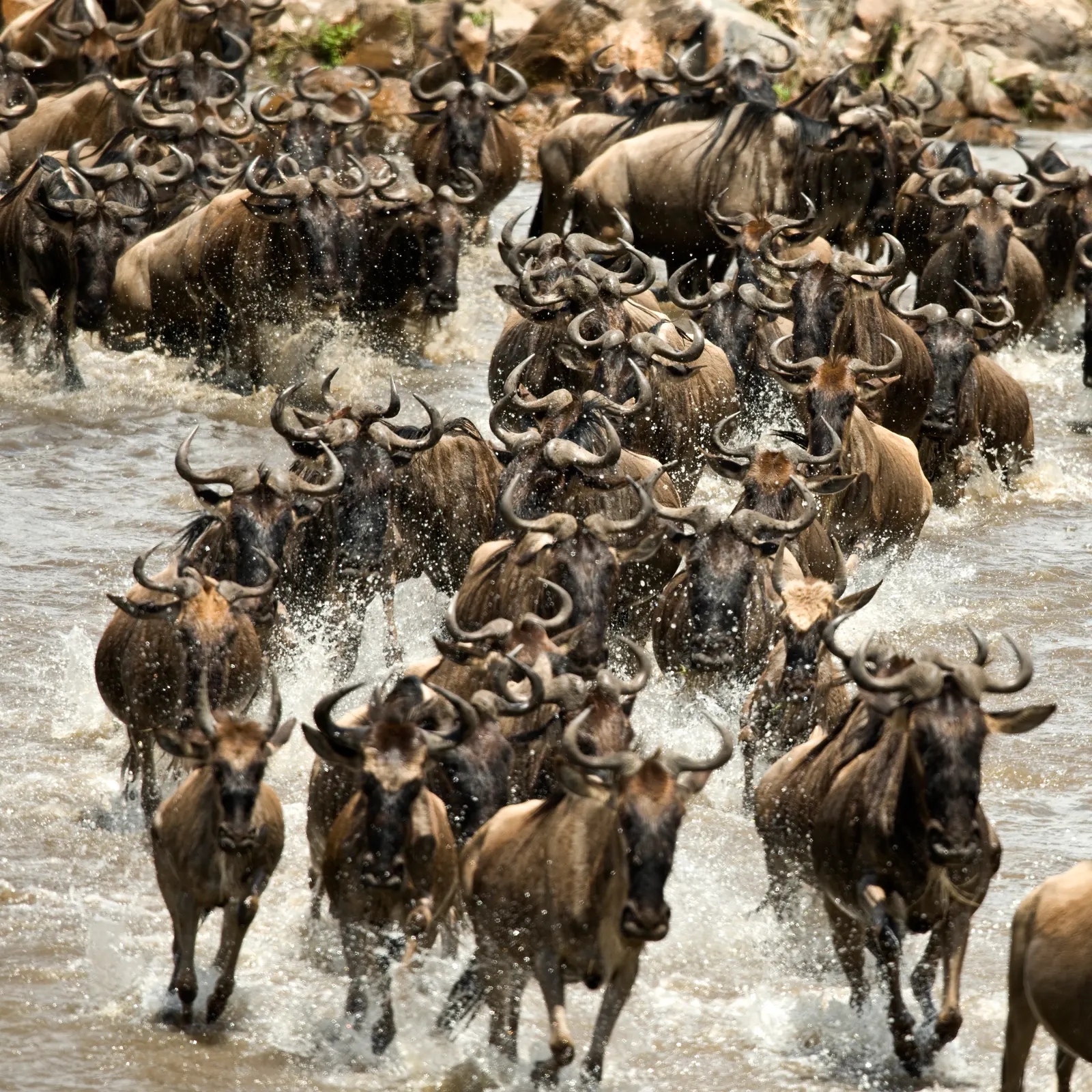
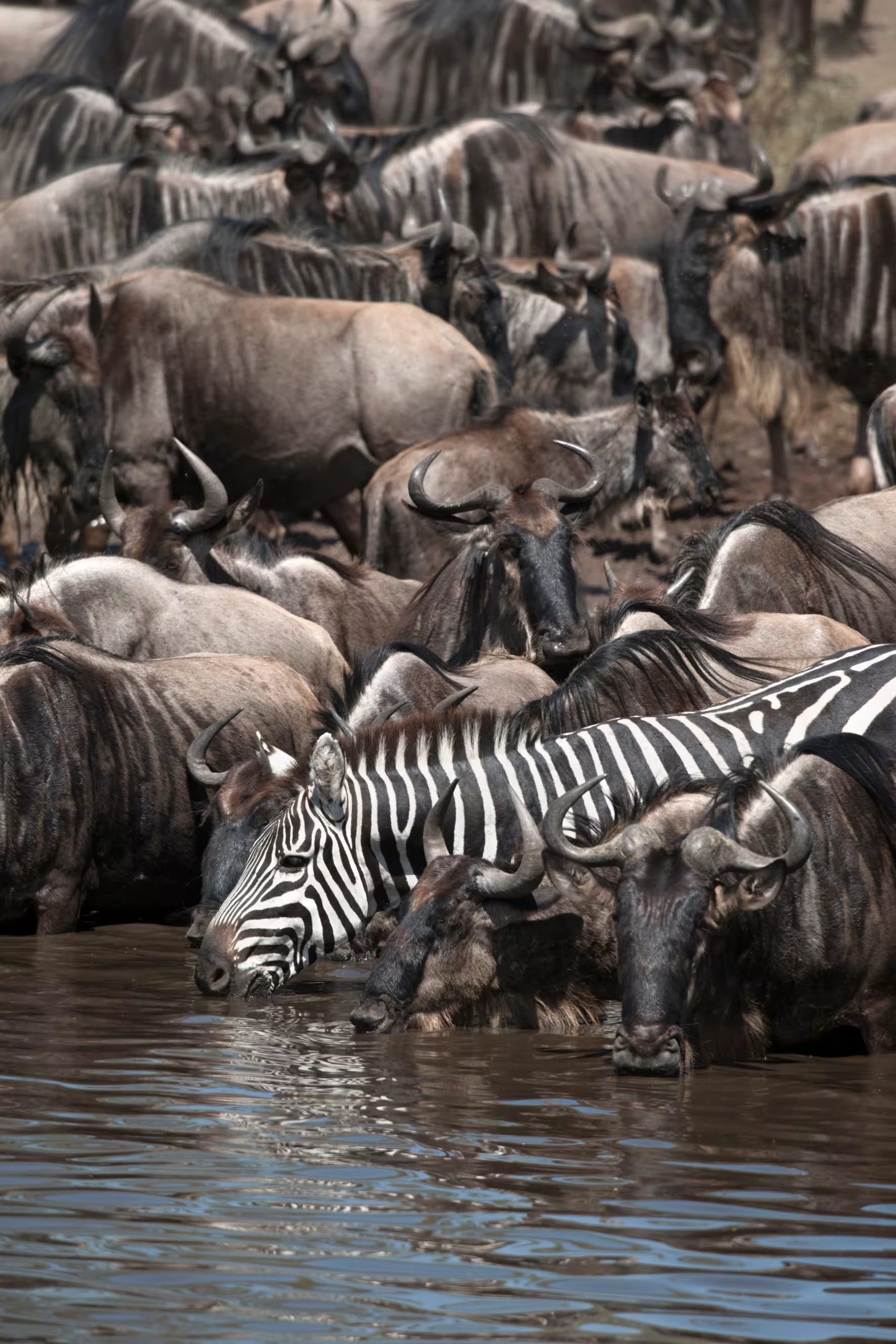
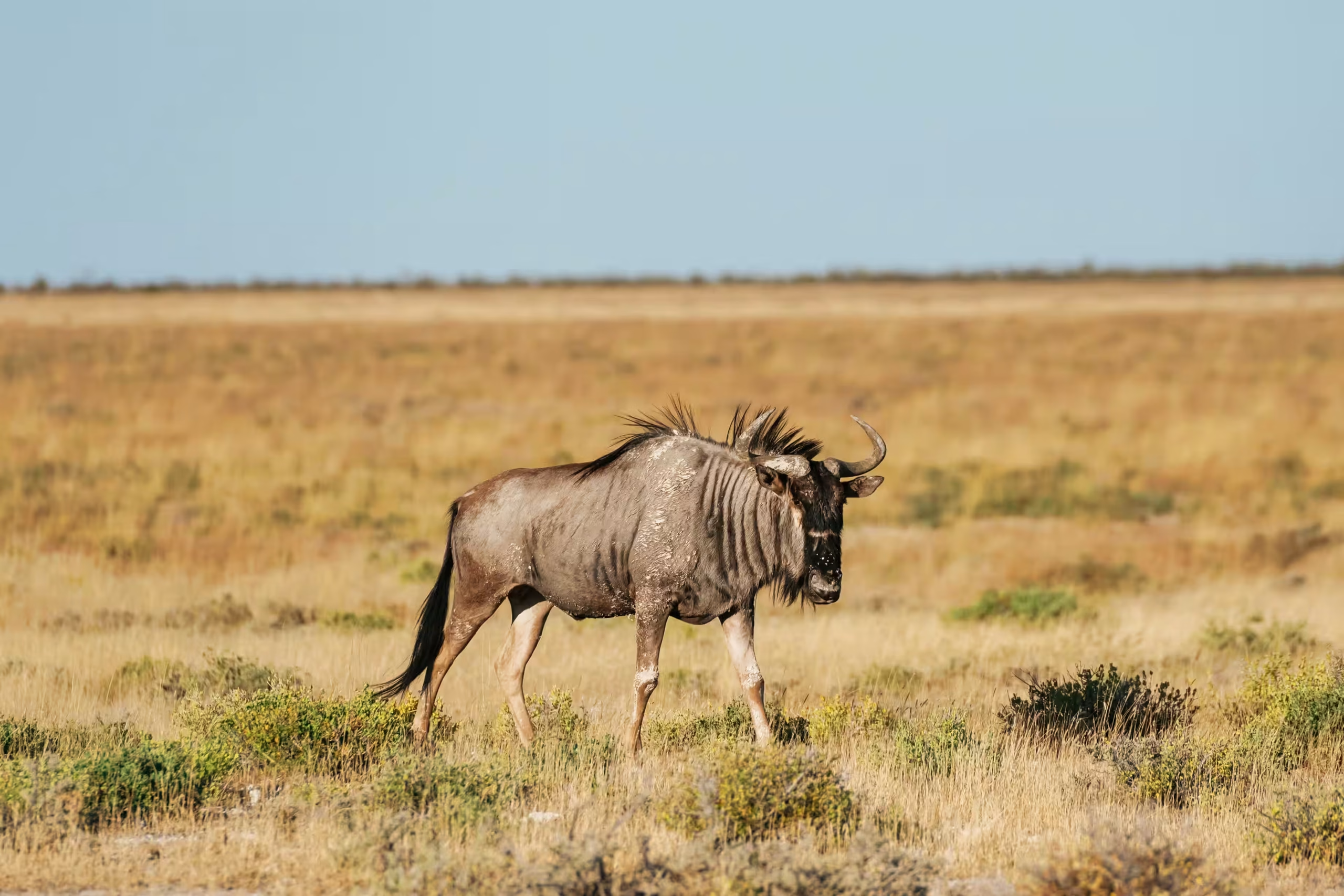
Calving season is not a single dramatic event like a crossing. It is three months of accumulation: roughly half a million calves born onto a stretch of grass a few dozen kilometres across, more prey concentrated in one place than anywhere else the herds go all year. The short-grass plains around Ndutu, split between the southern Serengeti and the Ngorongoro Conservation Area, are where this happens.
What follows is what a morning on those plains actually shows you, which predators come for the births, and why this season sits well below the northern Serengeti’s Mara River crossings in most travellers’ plans, despite offering more predator activity per hour of daylight. For the whole year’s loop, our
migration month by month guide covers where the herds are outside these three months too.
The short answer
Calving season on the Ndutu plains, in the southern Serengeti and the Ngorongoro Conservation Area, runs from late January to March, with most of roughly half a million wildebeest calves born within two to three weeks in February. Lion, hyena and cheetah gather on the same open ground, making this the most concentrated predator activity of the year.
The season at a glance| When | What’s happening | What you see | Journey |
|---|
| Late Dec – early Jan | Herds arrive on the plains | Grass greening after the short rains | — |
|---|
| Mid–late Jan | Births begin | First calves, predators gathering | — |
|---|
| February | Peak calving | Several thousand calves a day, heaviest predator activity | Calving Season |
|---|
| March | Herds start to drift | Numbers thinning as animals move north-west | Green Season |
|---|
The Ndutu plains: short grass and volcanic soil
Ndutu is not a park of its own. It is the area around Lake Ndutu and Lake Masek where the southern
Serengeti and the eastern
Ngorongoro Conservation Area meet, and camps on the ground move guests across that boundary in the same game drive without either side showing on the map. The short-grass plains here sit on ash blown out of the Ngorongoro highlands over hundreds of thousands of years, and that ash is why the grass stays short: too rich in minerals, and too shallow-rooted, to grow tall.
That richness is the point. Calcium and phosphorus in the volcanic soil feed grass that lactating wildebeest need in quantity, and nowhere else on the loop offers it in the same concentration. The plains are flat and largely treeless, so a nursing herd has a clear line of sight in every direction — useful for a mother watching for lion, and useful for whoever is watching from a vehicle.
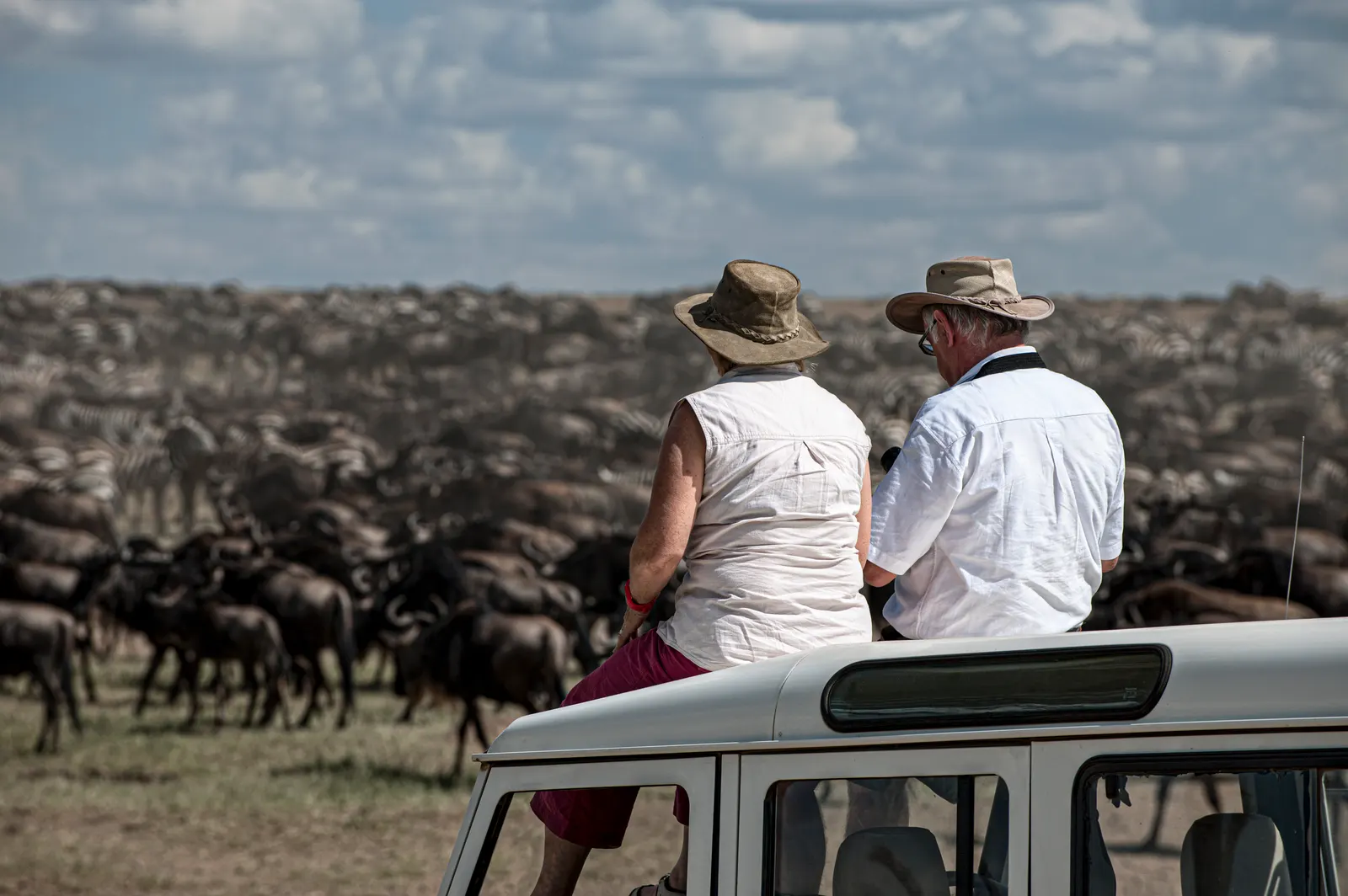
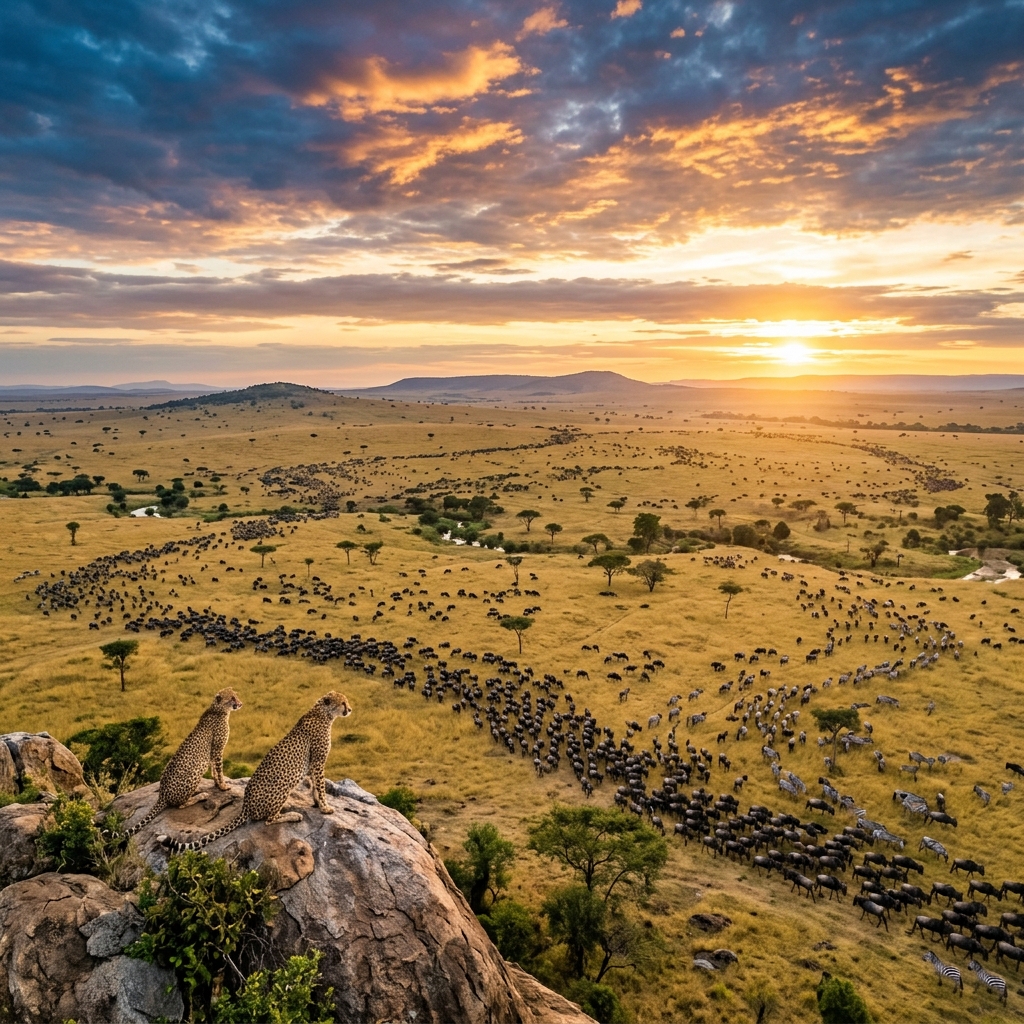
Up to roughly a million and a half wildebeest gather here for the season, more animals on less ground than at any other point in the year. Our
migration month by month guide sets calving in the context of the whole annual loop; this one stays on the plains and goes into what that concentration actually looks and sounds like.
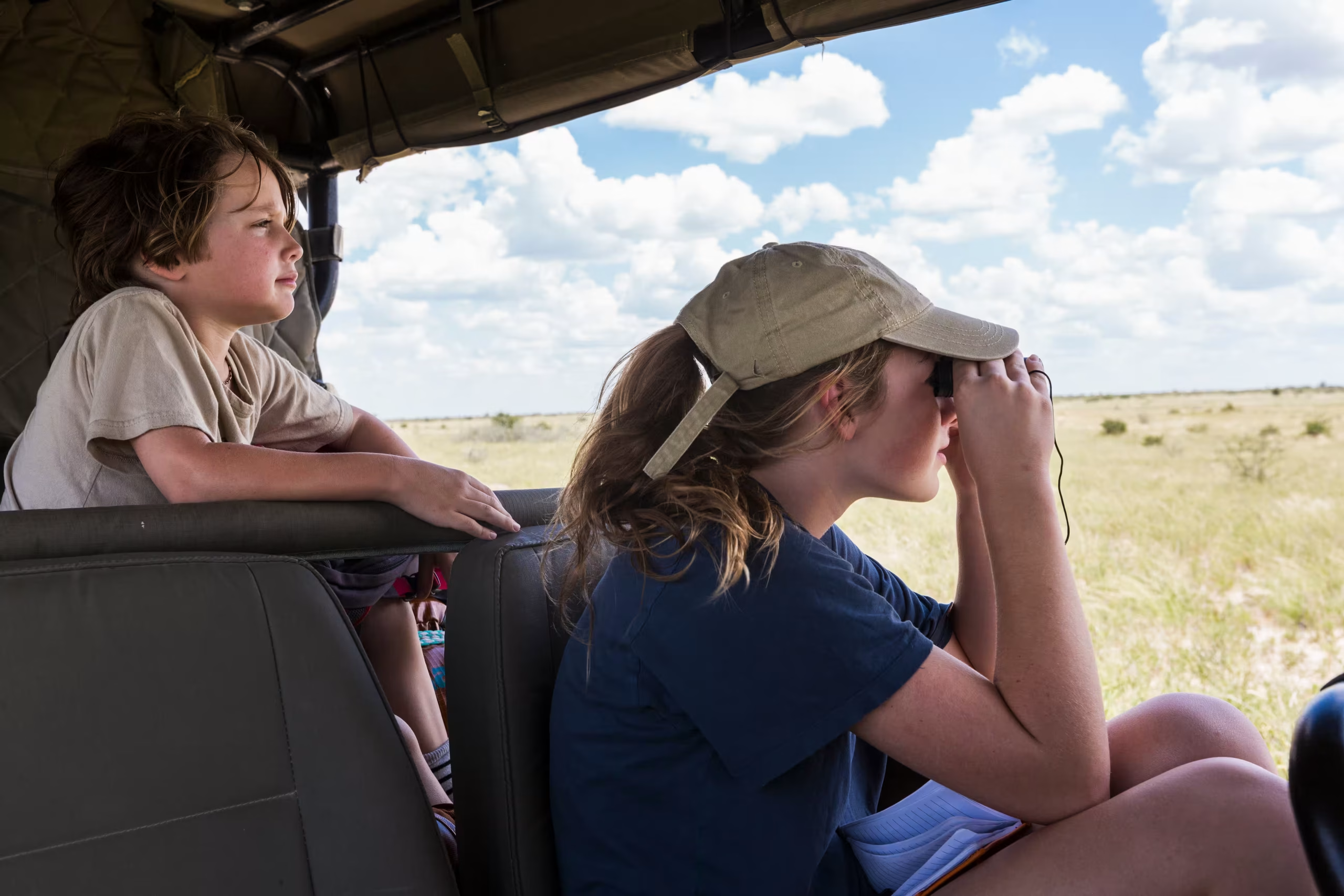
A February morning: what a game drive shows you
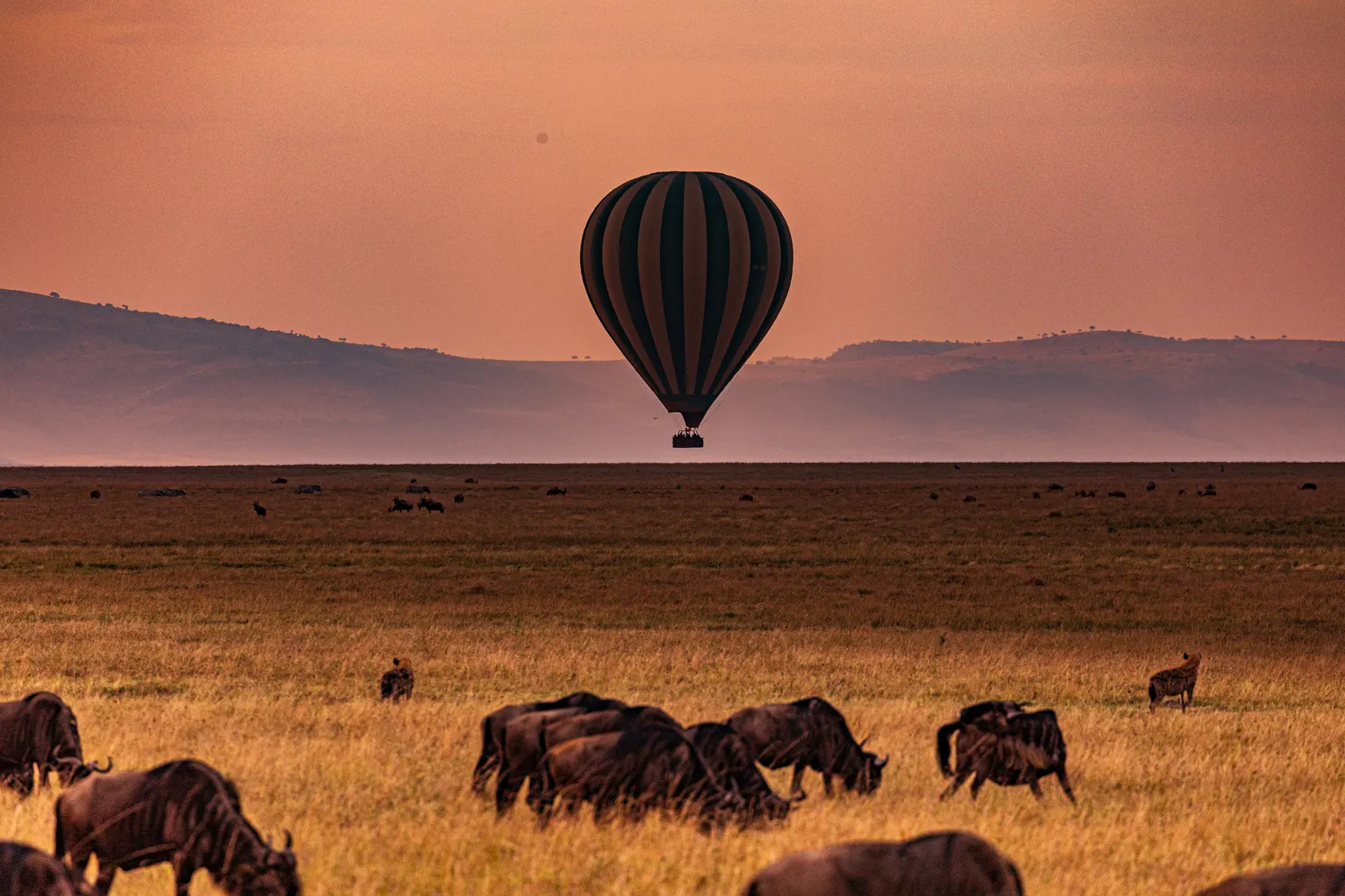
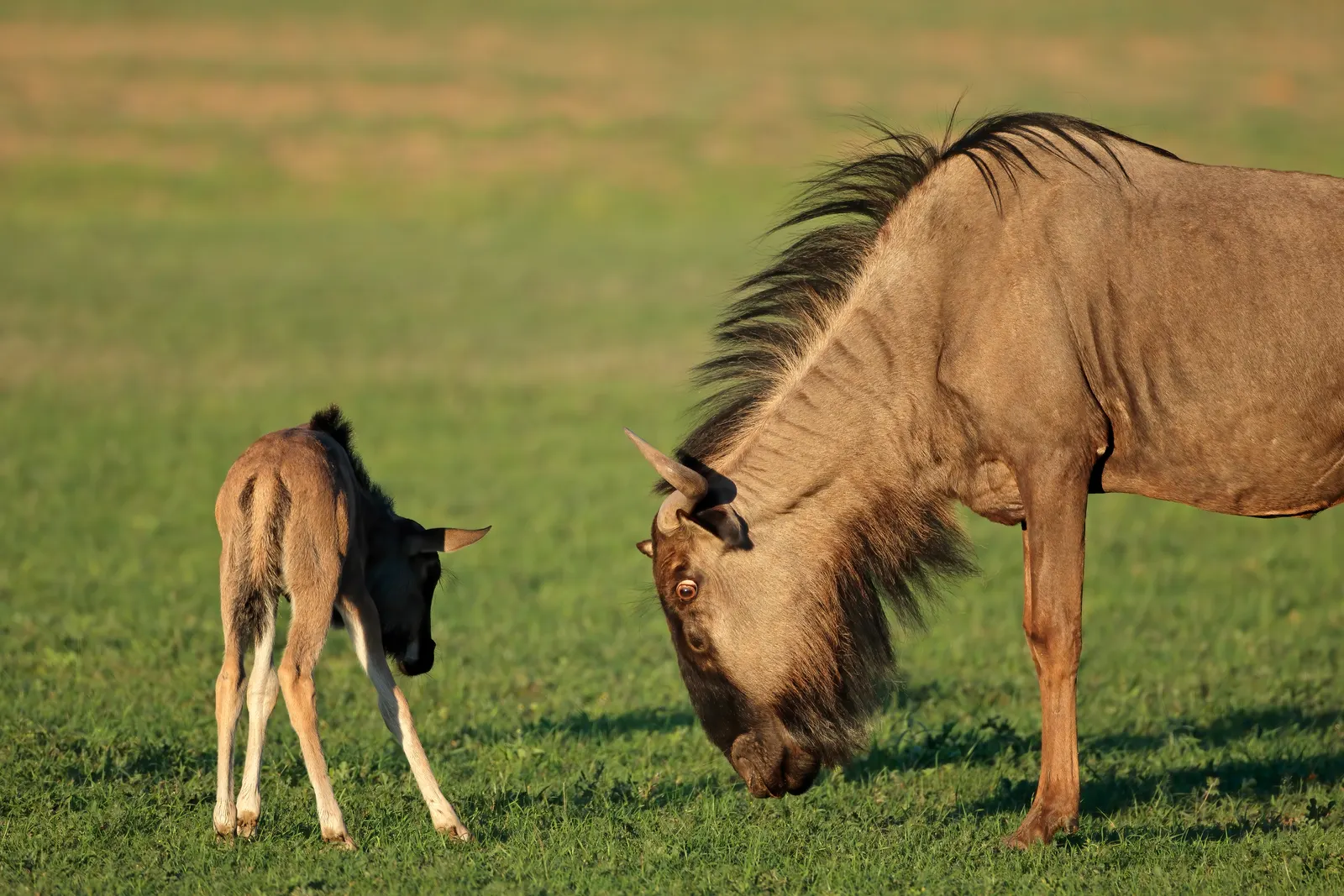
A game drive here in February starts before the sun is properly up, because the light is flattest and the air coolest in the first hour, and because newborn calves are most likely to appear at dawn. Wildebeest cows often give birth standing, in the open, with no attempt to hide — there is nowhere to hide on a plain this flat, and no advantage in trying, since the herd itself is the calf’s only real protection.
Births cluster tightly: most of the season’s calves arrive within two to three weeks, usually in the second half of January and through February, rather than being spread evenly across the three months. A calf stands within minutes of birth and can run with the herd inside the hour, and the timing works in the herd’s favour — when thousands are born on the same days, no predator population can eat more than a fraction of them.
The plains are not only wildebeest. Zebra breed year-round rather than seasonally, so foals turn up throughout the year rather than in this one window. Thomson’s and Grant’s gazelle fawns lie flat in the grass while their mothers graze at a distance, and ostrich chicks trail their parents in groups that sometimes combine several broods into one. Look down as much as across — a February morning is as much about what is hidden in the grass as what is running across it.
The predators: who works the plains
Cheetah do some of their best work here. They hunt by sight in daylight, which suits a flat, open plain better than the woodland further north, and calving season brings the highest concentration of vulnerable young of the year. Coalitions of brothers hunt cooperatively, and a mother teaching cubs to hunt will sometimes catch a calf alive and let the cubs practise on it — hard to watch, and exactly what the season is for from a cheetah’s point of view.
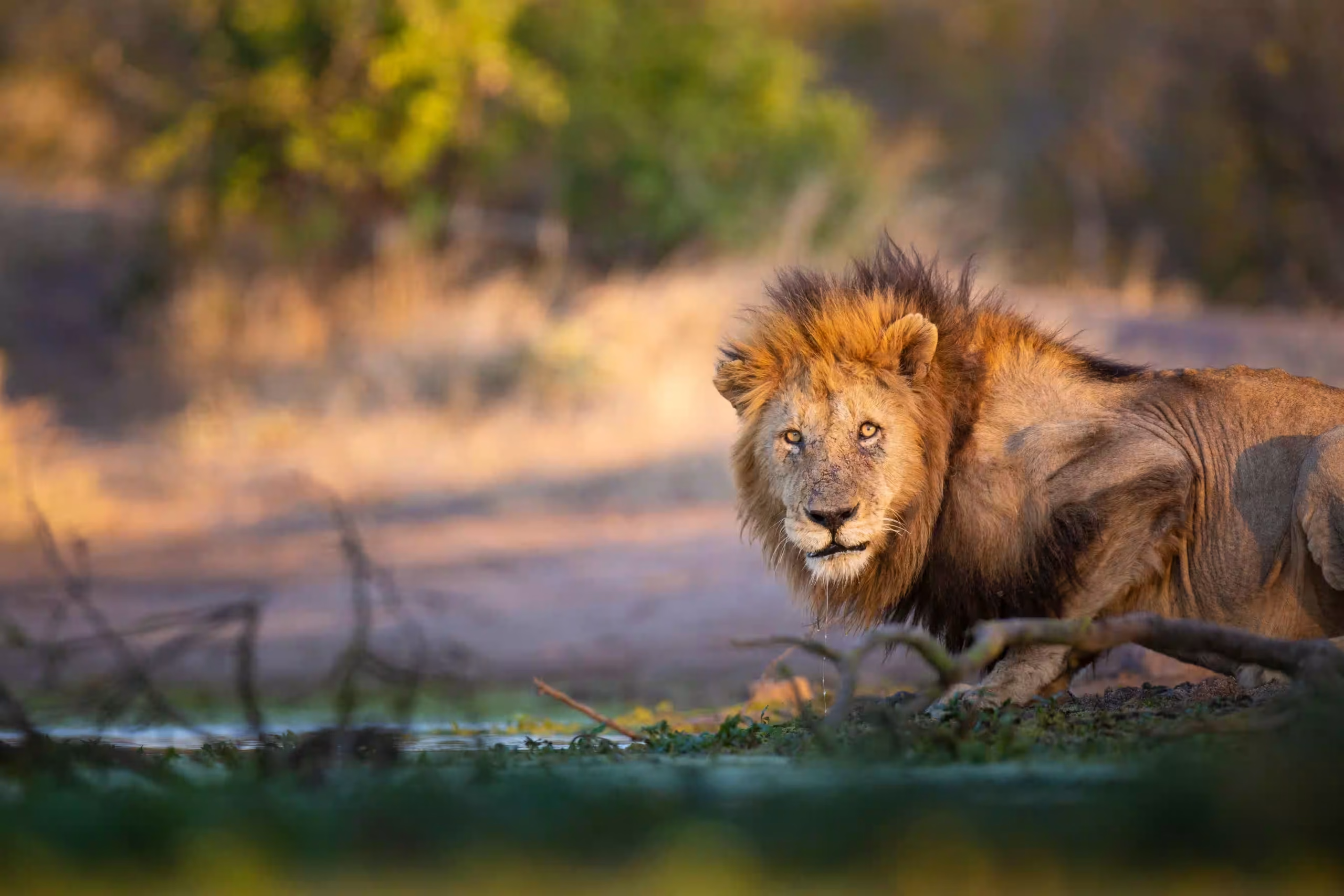
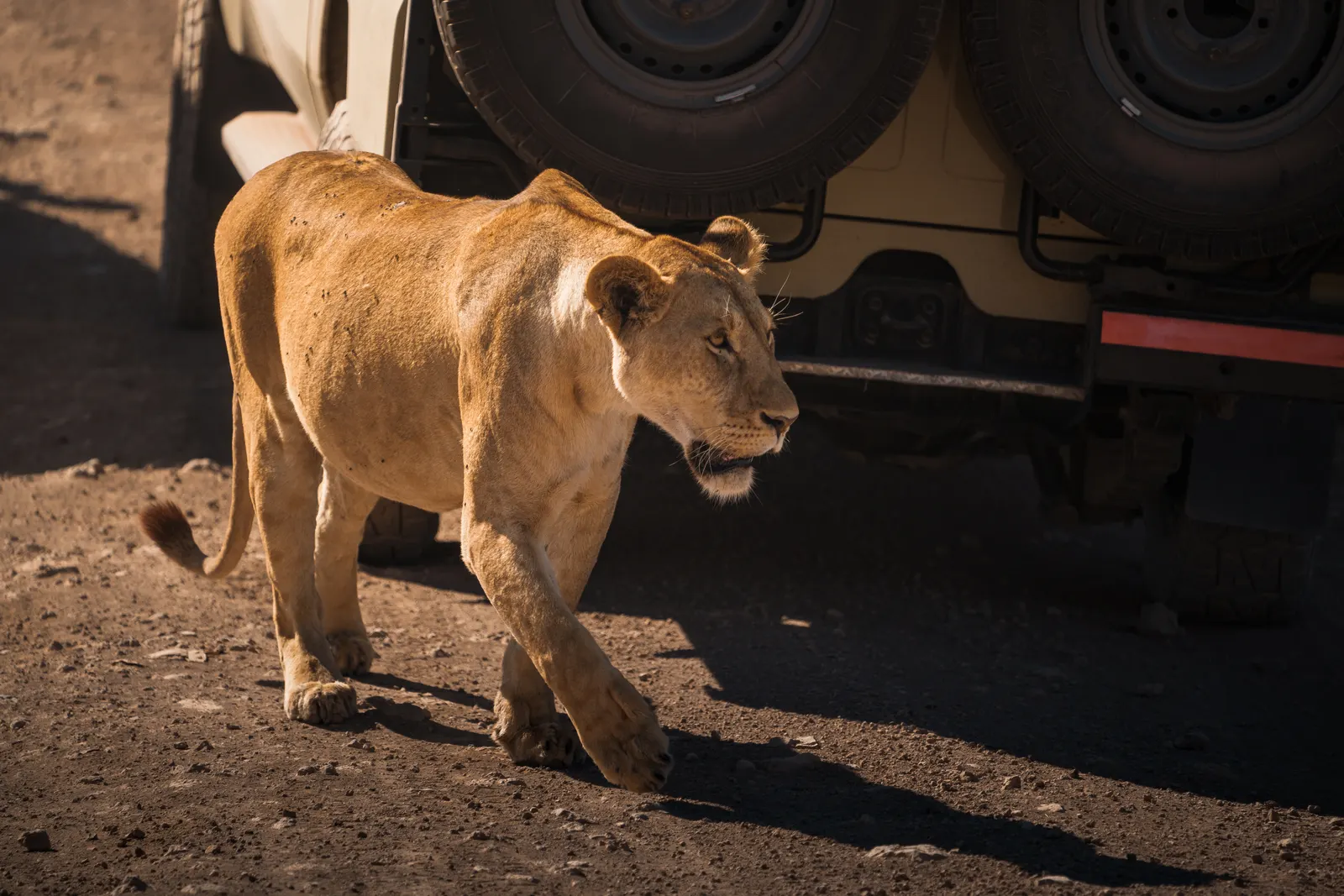
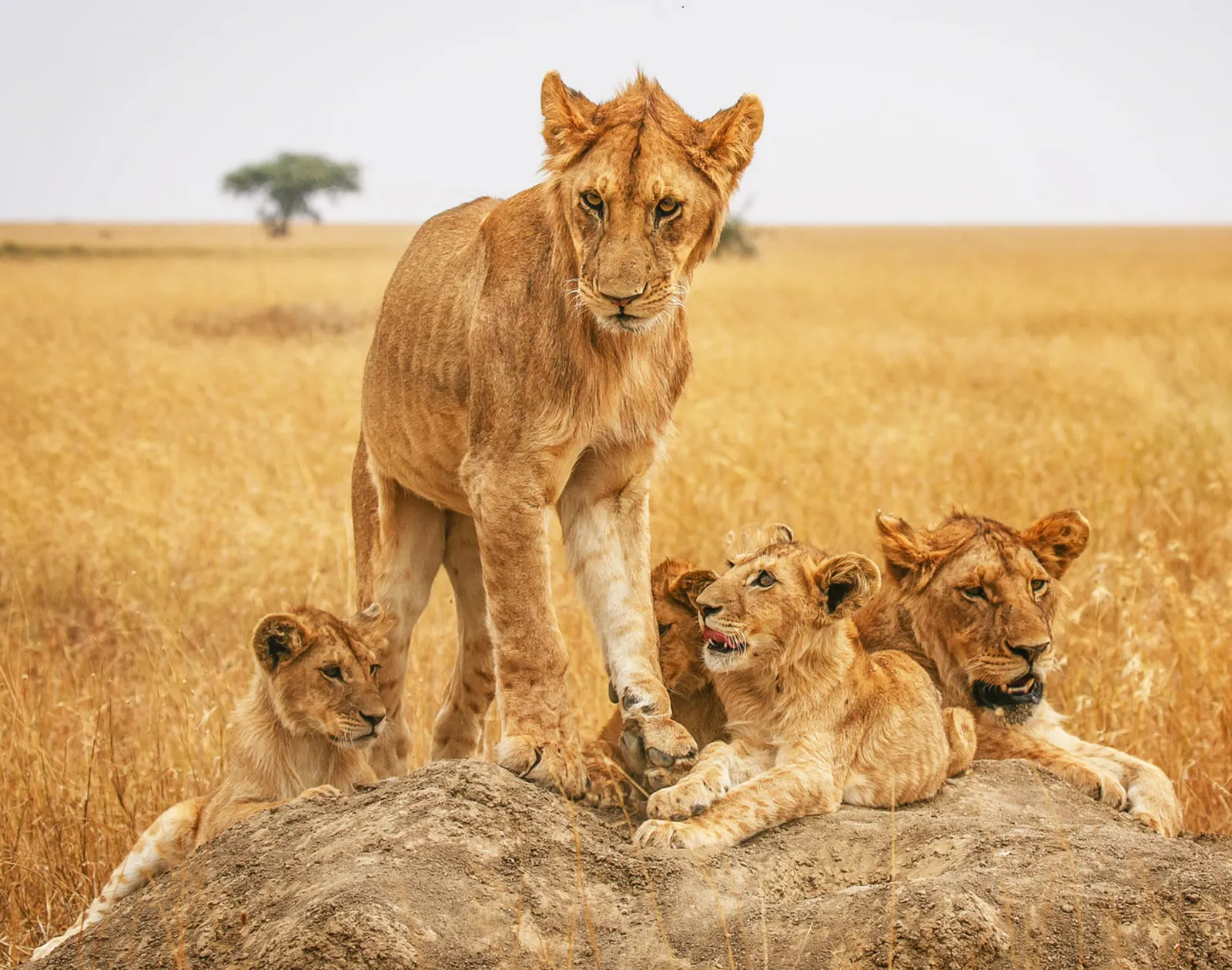
Lion prides that spend the rest of the year spread through Serengeti woodland and kopjes move onto the plains for the season, and spotted hyena clans follow the same logic — go where the prey is. Both hunt mostly around dawn and dusk rather than through the heat of the day, so the rhythm of a plains game drive tends to follow theirs: quiet through the middle of the morning, then activity again as the light softens.
None of this predation dents the population. With several thousand calves born on the plains on the busiest days, predators are full long before the herd runs out of calves, and most calves survive their first weeks for that reason rather than through any individual escape. It is the arithmetic of timing, not luck, and it is why the plains support so many predators without the wildebeest population falling.
Why Ndutu is underbooked: the case for calving season
Most first enquiries ask about the Mara River
crossings, because a wildebeest leaping into a river of crocodiles is the image that gets shared. Calving season gets asked for far less, despite more predators actively hunting per hour of daylight and none of the crossings’ central problem — nothing here needs to be scheduled and gambled on, because the herds are already on the ground for three months rather than passing through in an afternoon.
The rates reflect the calendar too. Park fees do not fall until 15 March, so most of the season is billed at the Serengeti’s peak rate; only a trip that runs into the back half of March catches the lower one. At the time of writing (September 2026), that is USD 82.60 per adult per 24 hours in the Serengeti, dropping to USD 70.80 from 15 March, with Ngorongoro Conservation Area fees flat at USD 70.80 all year, plus USD 295 per vehicle if a crater descent is added — current figures from the TANAPA and NCAA tariffs.
None of that changes what is on the ground. Three or four nights in the southern plains in February gives a fair chance at several predator hunts, a great many calves, and none of the crowding that gathers at a single crossing point in September. The
Calving Season on the Ndutu Plains journey is built around exactly this window, and next year’s exact dates are on the
2027 calving season page.
Questions people ask
When does calving season start at Ndutu?
Births begin in mid to late January and peak through February, with most of the season’s calves born in a two- to three-week window. Numbers thin out through March as the herds start drifting north-west.
Where exactly is Ndutu?
Ndutu is the area around Lake Ndutu and Lake Masek where the southern Serengeti and the eastern Ngorongoro Conservation Area meet. It is not a park in its own right, and a single game drive can cross both without a fence in sight.
How many wildebeest are born during calving season?
Roughly half a million calves are born on the southern plains in total, with several thousand a day at the peak. The number varies year to year with rainfall and herd size.
What predators do you see during calving season?
Cheetah, which hunt by sight and favour open ground, do some of their best work here. Lion prides and spotted hyena clans move onto the plains from the surrounding woodland for the season, following the concentration of prey.
Is calving season better than the Mara River crossings?
It is a different kind of sighting. Crossings are a single unpredictable event that cannot be scheduled; calving season is three months of near-constant predator activity on open ground, with none of the crossing’s all-or-nothing wait.
How many days do you need for calving season?
Three to four nights on the southern plains gives a fair spread of predator sightings. Fewer than that and a single quiet morning can dominate the trip.
What are the park fees at Ndutu during calving season?
At the time of writing (September 2026), the Serengeti side charges USD 82.60 per adult per 24 hours until 15 March, then USD 70.80. Ngorongoro Conservation Area fees are flat at USD 70.80 all year, plus USD 295 per vehicle for a crater descent.
Is Ndutu inside the Serengeti or the Ngorongoro Conservation Area?
Both. The plains straddle the boundary, and most camps in the area sit on one side or the other while game drives cross freely between them.
Travel it
Journeys built around this
Last updated 13 September 2026