Every operator on the northern Serengeti circuit has heard the same request: guarantee us a crossing. None of them can, and the honest ones say so before you book rather than after you have paid. A crossing is not scheduled by anyone — not a park authority, not a guide, not the wildebeest themselves in any way that can be read a day ahead.
This is what actually decides whether a crossing happens, what a guide can and cannot do about it, and how many days you should give the river to see one at all. Our
migration month by month guide covers when the herds are on the Mara in the first place; this one covers what happens once they get there.
The short answer
No operator can guarantee a Mara River crossing. A crossing happens when enough wildebeest commit to entering the water at once, driven by grazing pressure, thirst and the herds pushing from behind — nothing a guide controls. A good operator gives you several full days on the river and moves between crossing points as the herds do.
What actually improves your odds| Helps | Does not help |
|---|
| Three or more full days on the river | Booking a specific crossing date months ahead |
|---|
| A guide free to move between crossing points | Paying a premium for a ‘guaranteed’ package |
|---|
| Visiting August or September, when crossings are most frequent | A promise from any operator |
|---|
| Patience through a quiet morning | A fixed hour written into the itinerary |
|---|
Mara River crossings: what actually triggers one
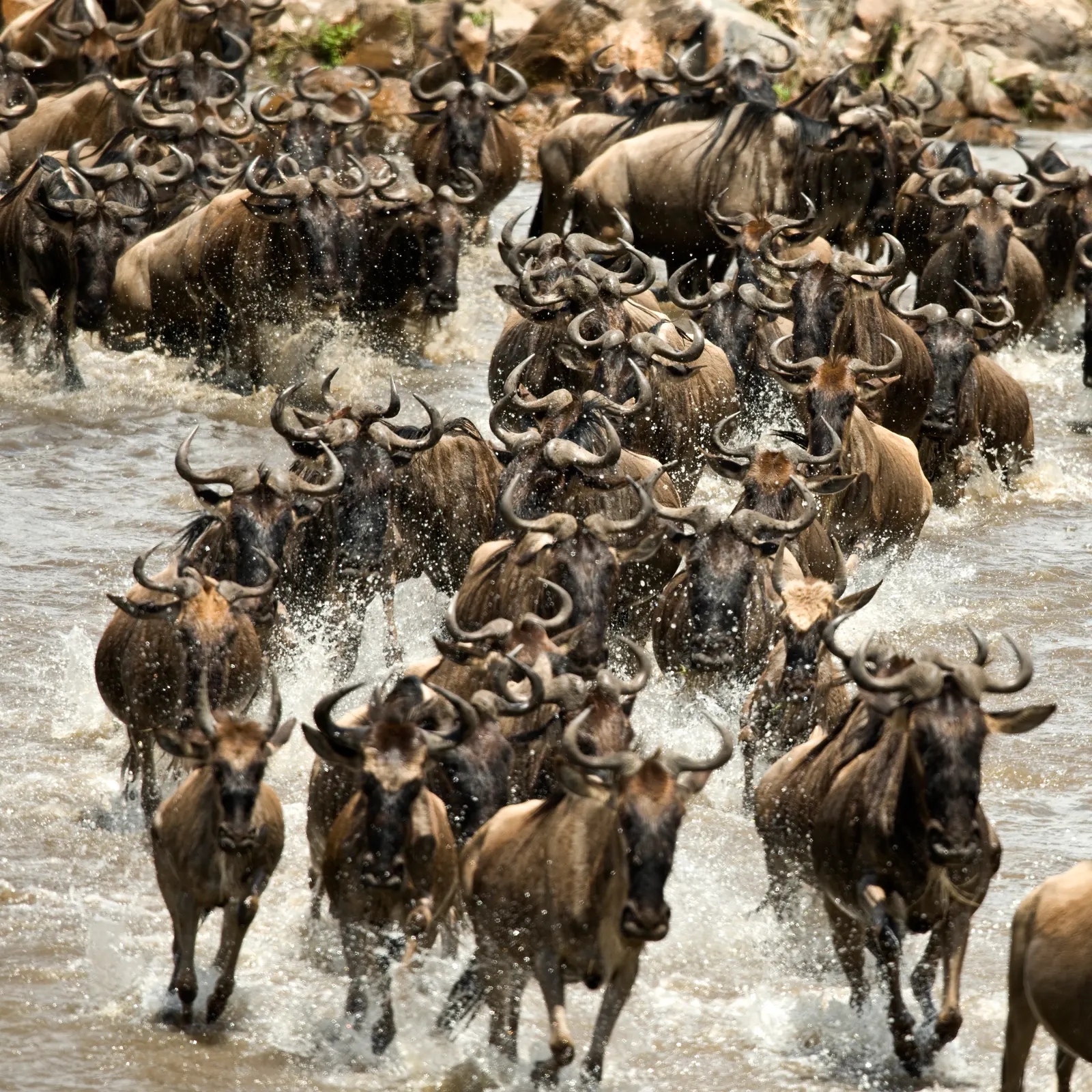
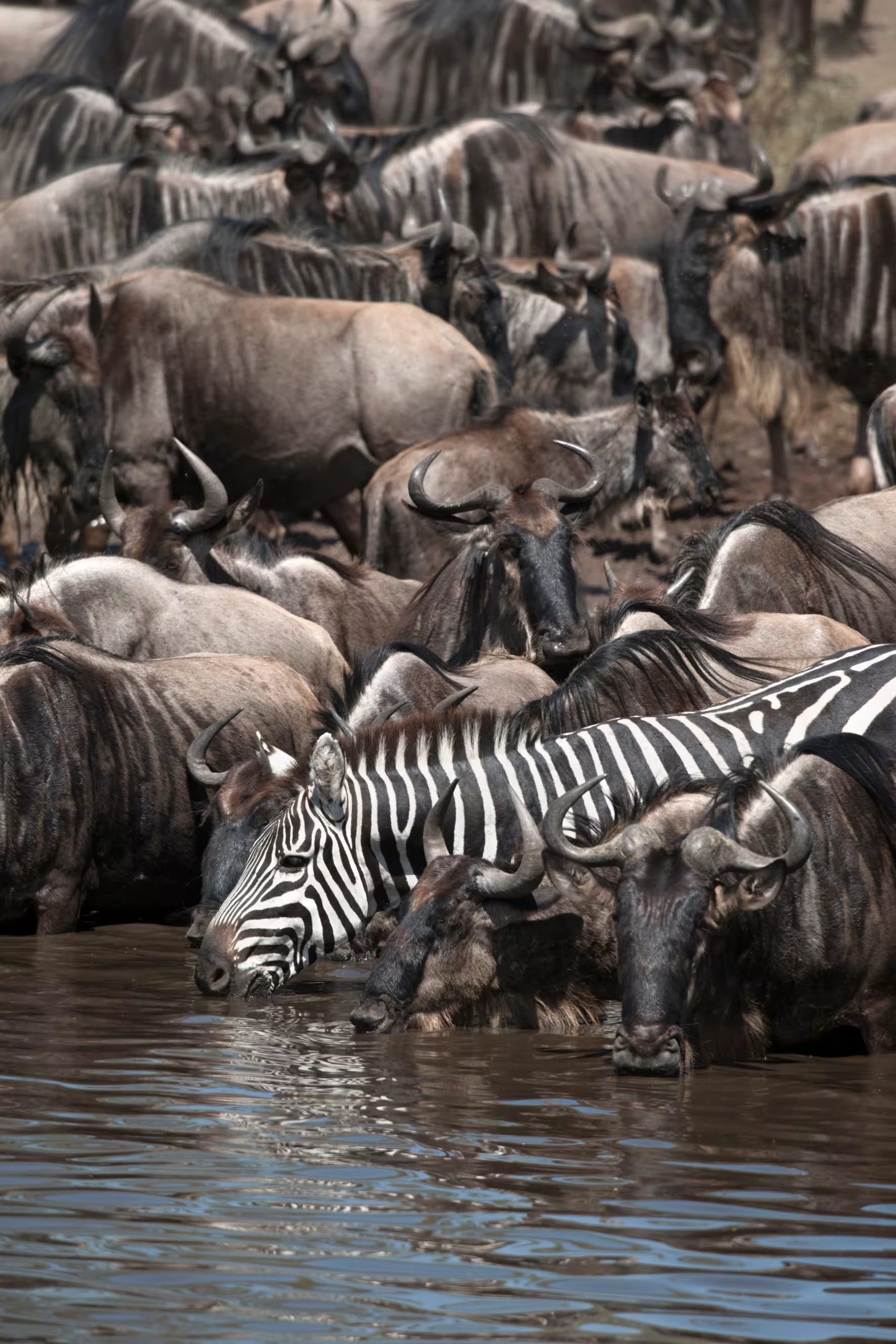
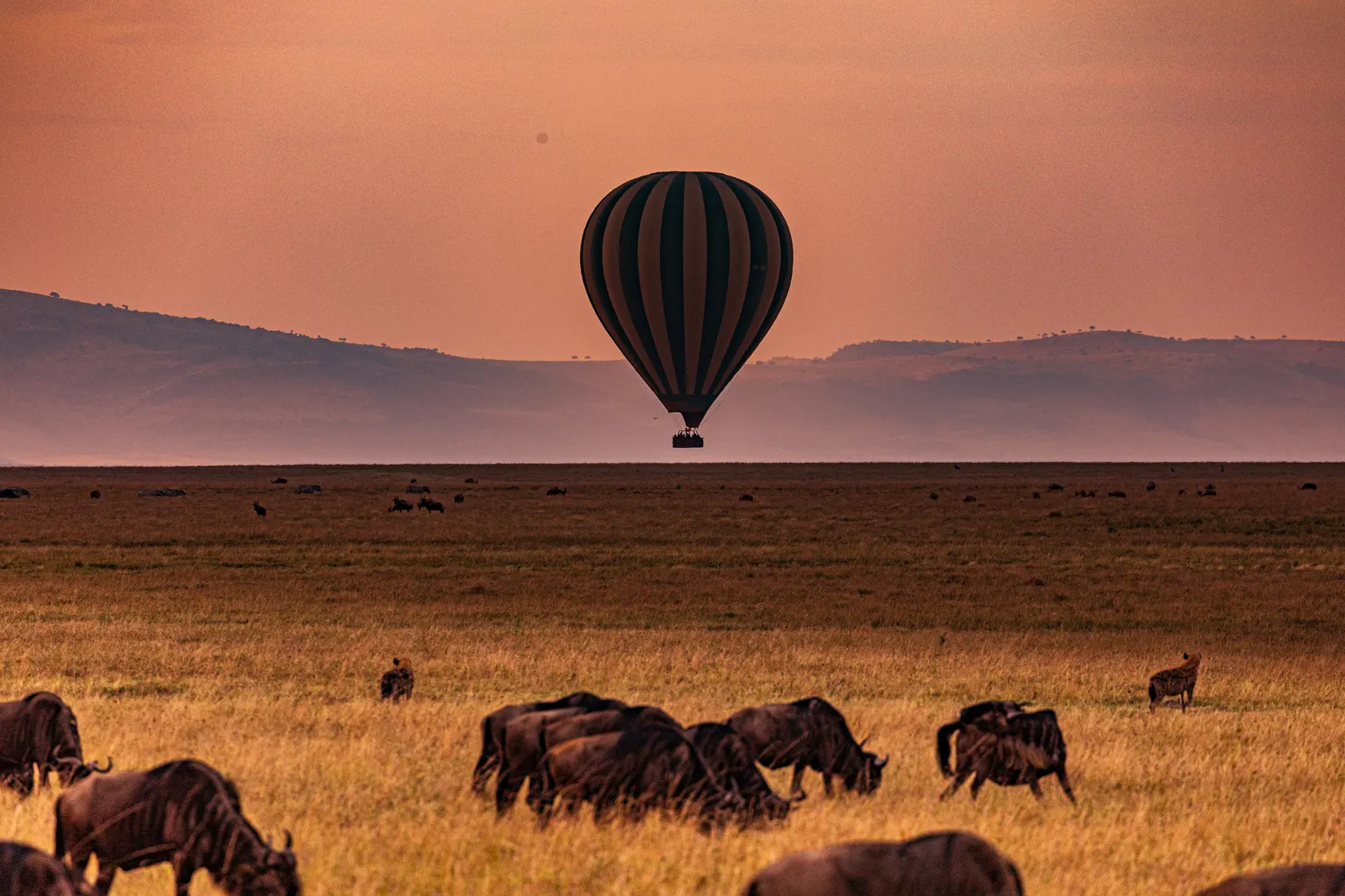
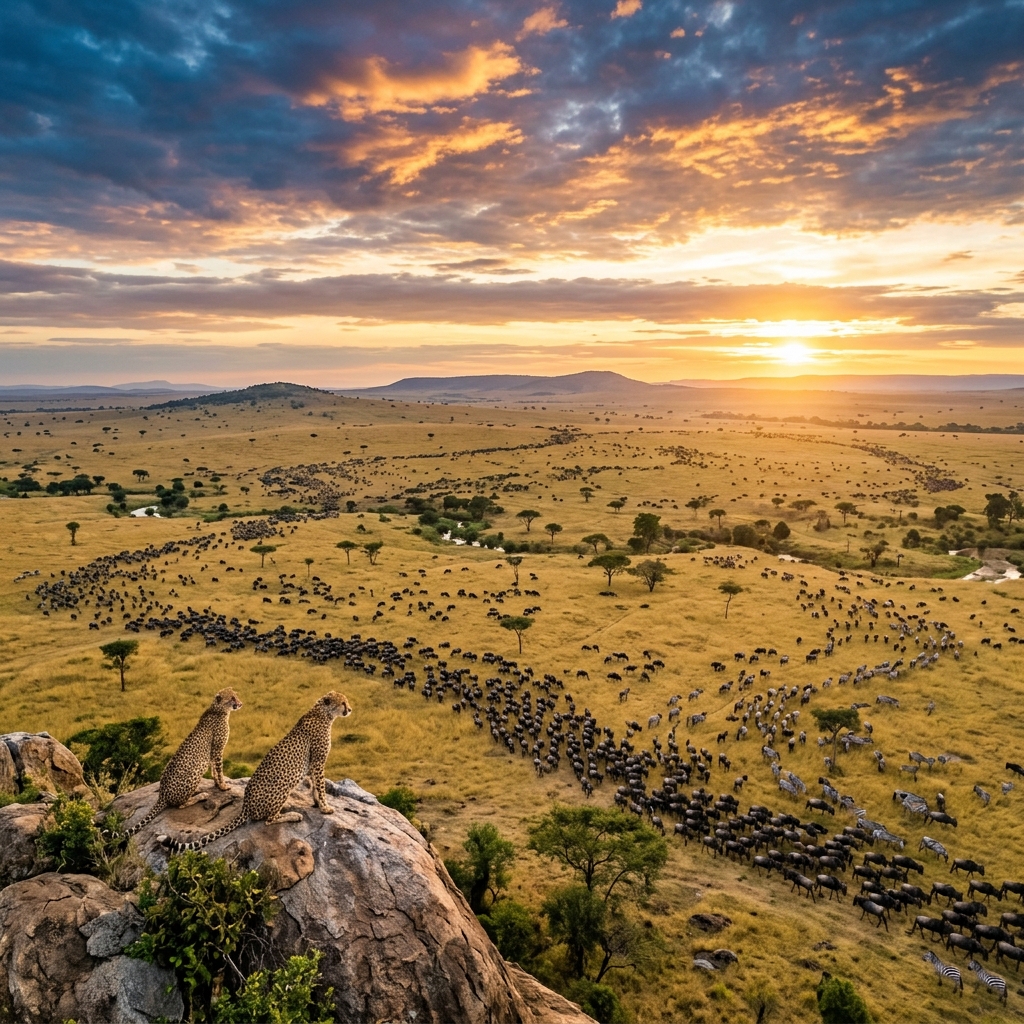
A crossing starts with pressure, not a decision. Herds arrive at the river in thousands over hours or days, grazing down the bank they are on while the grass across the water stays untouched. Thirst builds, the animals behind keep arriving and pushing the front ranks toward the water, and at some point the pressure outweighs the hesitation. A handful of animals step in. If the rest follow within seconds, it is a crossing; if they do not, the herd scatters and the whole build-up starts again, sometimes within the hour, sometimes not until the next day.
What tips the balance is mostly out of sight of anyone watching from the bank: the depth and flow of the river that week, which depends on rain that fell days earlier and far upstream; whether a crocodile has already taken an animal at that point recently, which can either panic a crossing or scatter the herd for hours; and which bank still has grass worth crossing for. Wind plays its part too — a shift that carries the scent of a waiting predator across the water can hold a massing herd back for an hour that would otherwise have produced a crossing. None of it is visible from a vehicle until after the fact.
A guide who knows the ground can read the signs that a crossing is becoming more likely — herds massing rather than moving through, agitation at the front of the group, dust rising as more animals arrive from behind — but reading a higher probability is not the same as predicting an hour. Nobody manages that, at the Mara or anywhere else the herds cross water.
Vehicle etiquette: what a guide can actually control
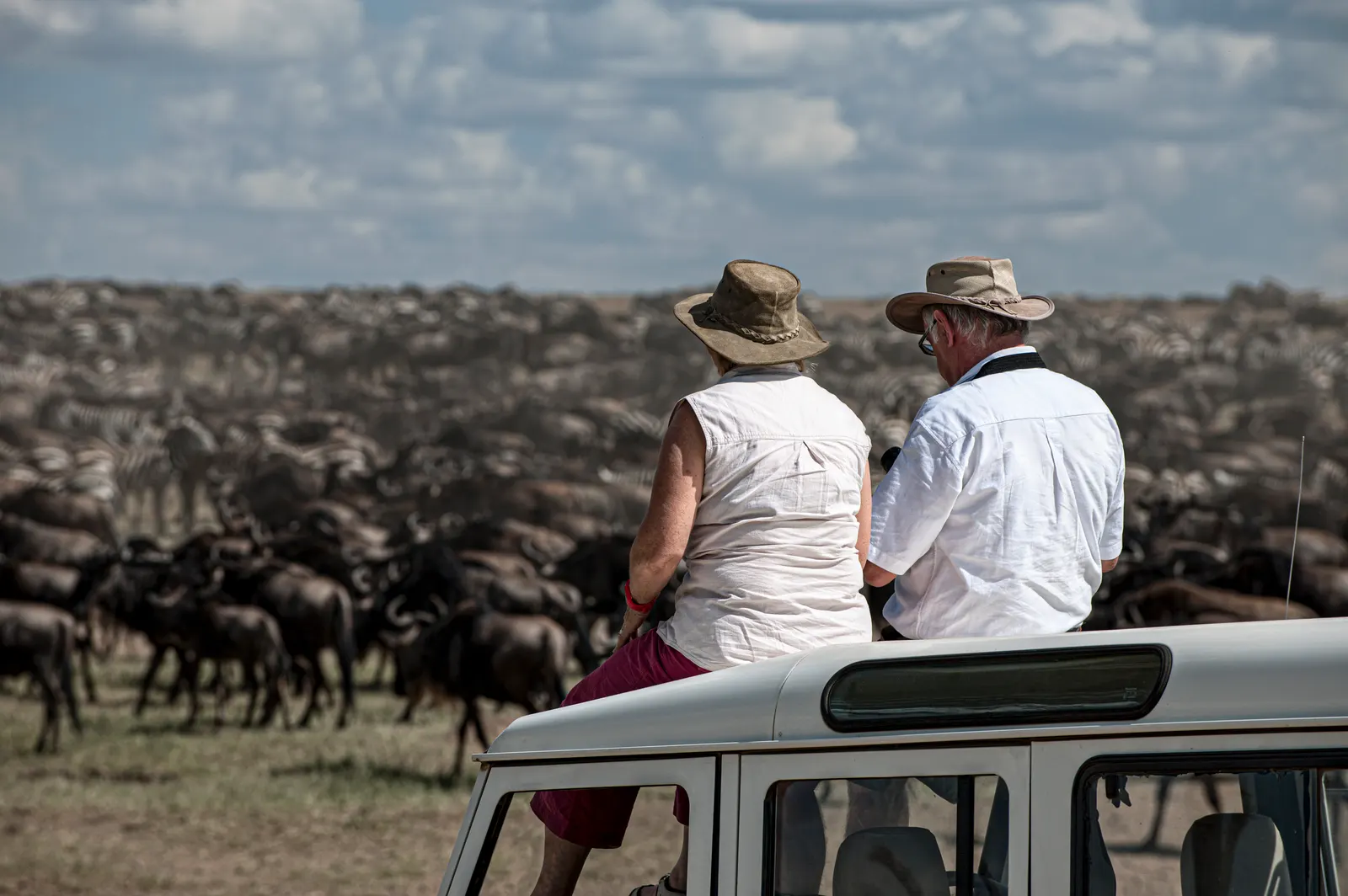
What a guide controls is where the vehicle sits, not what the herd does. Vehicles stay back from the water’s edge and out of the herd’s likely path to it, both because getting close enough to influence a crossing would also be close enough to spoil it for everyone else watching, and because a herd that feels crowded is a herd that turns away. That discipline matters most on the busiest mornings, when a dozen vehicles might be watching the same stretch of bank and a single one edging closer can undo everyone else’s wait as well as its own.
Guides on the river talk to each other by radio, sharing which point a herd is massing at and how it looks, so a vehicle can move ahead of a crossing rather than into the middle of one already under way. That coordination spreads vehicles across several known points instead of stacking them all at whichever bank looked busiest an hour ago, which also means a quieter view for whoever is watching.
Beyond that, a guide is choosing between points based on which bank has grass worth crossing for that week and where herds have been building over the past few days — an informed guess built on local knowledge, not a certainty. The skill is in narrowing the odds, not removing them.
Three days, not one: how long to give the river
With one day, a quiet morning is the whole trip. Herds might not move near the river at all that day, or might mass and turn back twice before you leave. A single long wait at one point, however well chosen, is still a gamble on that particular bank on that particular day.
Three days changes the arithmetic. It gives a guide room to try more than one crossing point, to come back to a bank that looked promising the day before, and to work around a quiet morning rather than have it define the whole visit. The
Mara River Crossings journey is built around exactly that margin.
If three days on the river is more than a fixed itinerary allows, it is worth asking whether a different stretch of the migration suits the trip better —
calving season at Ndutu and
the Grumeti’s own, quieter crossings both offer a wildlife spectacle that does not hinge on a single unpredictable event.
Guarantees: what to ask instead
No honest operator promises a crossing on a given day, because no operator controls one. Marketing that implies otherwise — a fixed date sold as a crossing safari, a package that names the day you will see it — is worth treating with more scepticism the more specific the promise gets.
Better questions get better answers. Ask how many full days are allocated to the river rather than how many nights the itinerary includes in total, since a nine-night trip that spends two of those on the road elsewhere is not the same as one that gives the river three clear days. Ask whether the guide and vehicle are free to move between crossing points as conditions change, or fixed to a set route. Ask what the plan is if no crossing happens in the time you have — a good operator has an answer beyond hoping, even if that answer is simply more time on the water the next morning.
None of that turns a probability into a certainty, and it should not. What it does is put the odds where they belong: on the number of days, the flexibility of the guide, and the month, not on a promise.
Find a journey filters by month if the timing itself is still open.
Questions people ask
Can a river crossing be guaranteed?
No. A crossing depends on where the herds gather, the grazing on each bank and the river on that particular day. Any operator who promises one is selling something nobody controls.
What actually triggers a wildebeest to cross the Mara River?
Pressure builds until a few animals commit — usually because thirst, grazing on the far bank or the weight of the herd arriving from behind outweighs the hesitation at the water’s edge. Once a handful cross, the rest often follow within seconds.
How long do you wait for a crossing?
There is no fixed wait. Herds can mass on a bank for hours and turn away, or a crossing can begin within minutes of arriving. A morning with nothing is normal, not a failure.
How many days should I spend at the Mara River?
Three full days gives a fair chance. One day is a gamble, and two still leaves you exposed to a single quiet stretch — three lets a guide try more than one crossing point.
What time of day do crossings usually happen?
Most start in the late morning or early afternoon, once the day has warmed and thirst has built, but crossings at any hour of daylight are recorded. None run to a schedule.
Do crossings really happen more in August and September?
Yes, on average — more of the herd is concentrated in the northern Serengeti by then. But some years shift a month earlier or later depending on when the rains fell.
Why do herds sometimes turn back from the river without crossing?
A crocodile taking one animal, a vehicle too close to the bank, a change in the wind, or simply the front animals losing their nerve can scatter a massing herd for hours.
Does paying more get you a better chance of seeing a crossing?
It buys you a guide free to reposition and enough nights to try more than one point — not a crossing itself. No price buys certainty.
Travel it
Journeys built around this
Last updated 13 September 2026