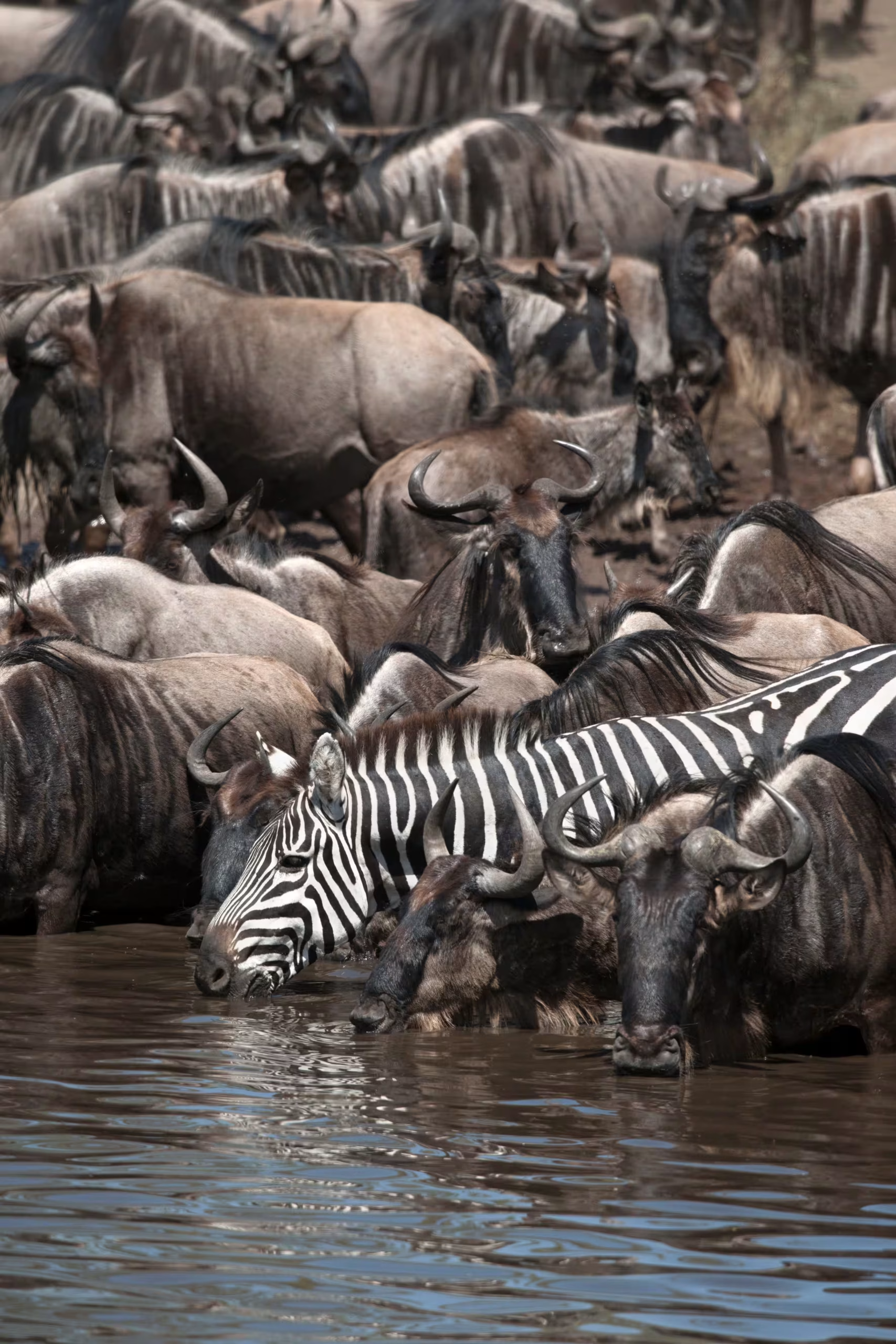
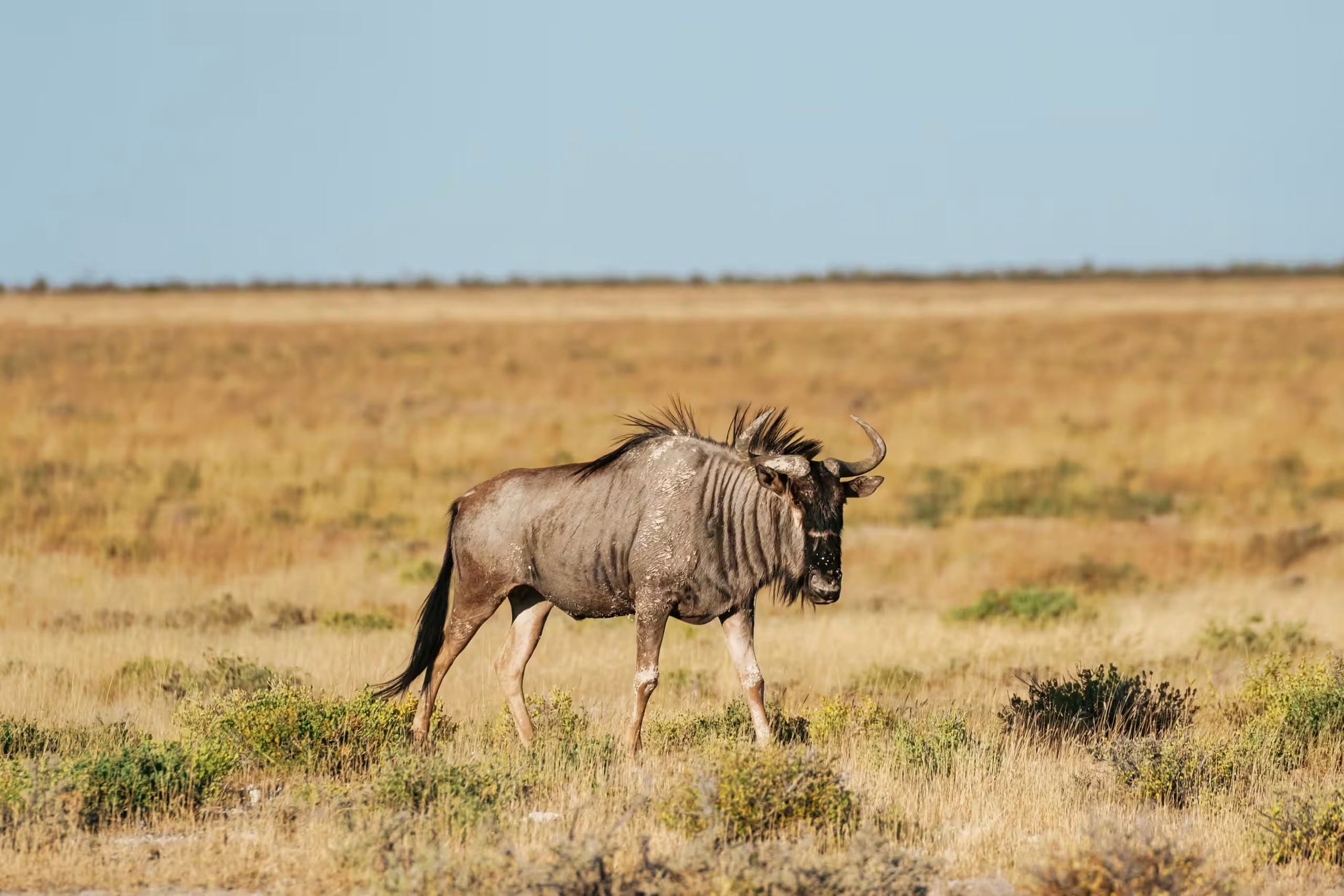
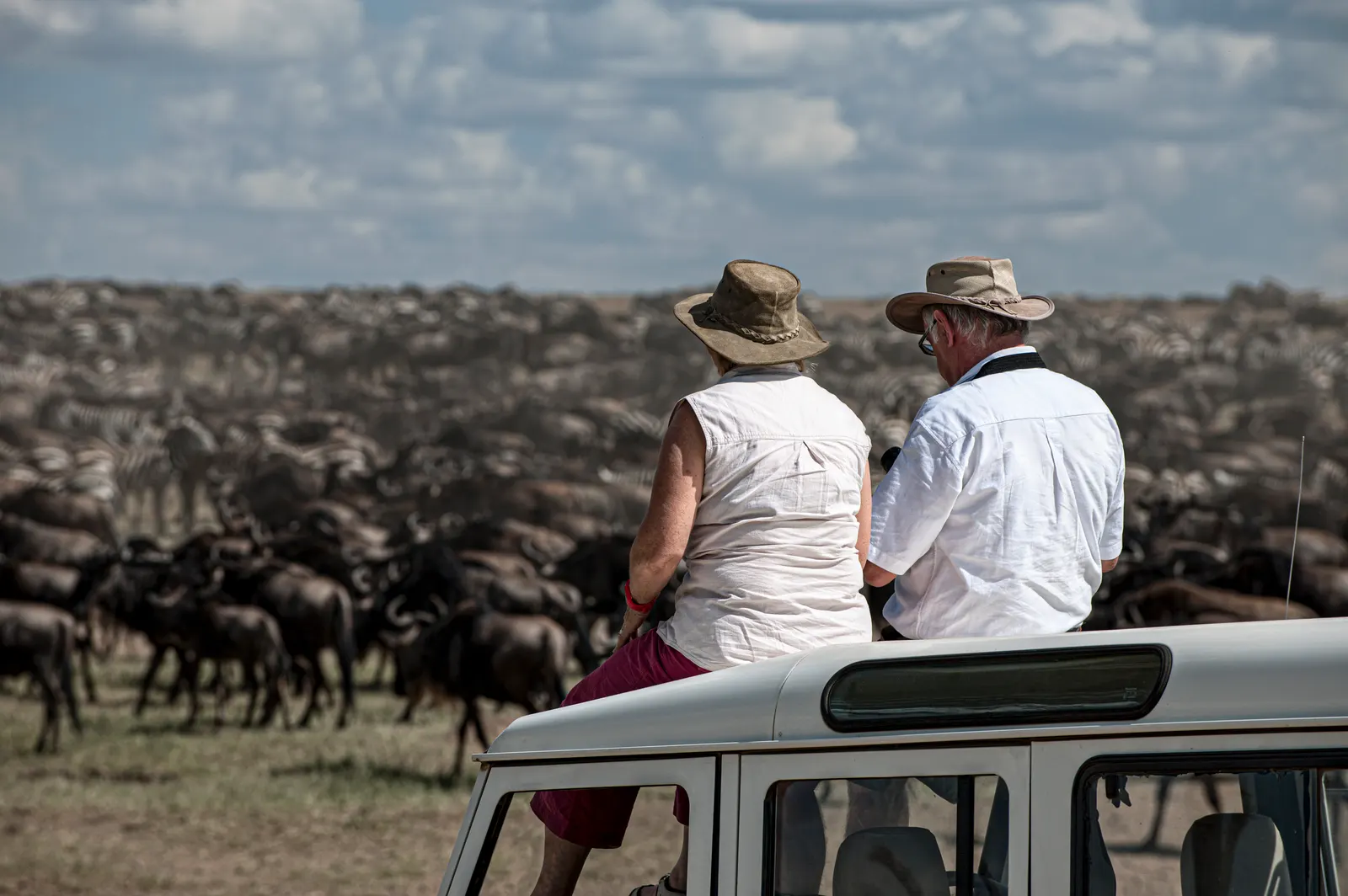
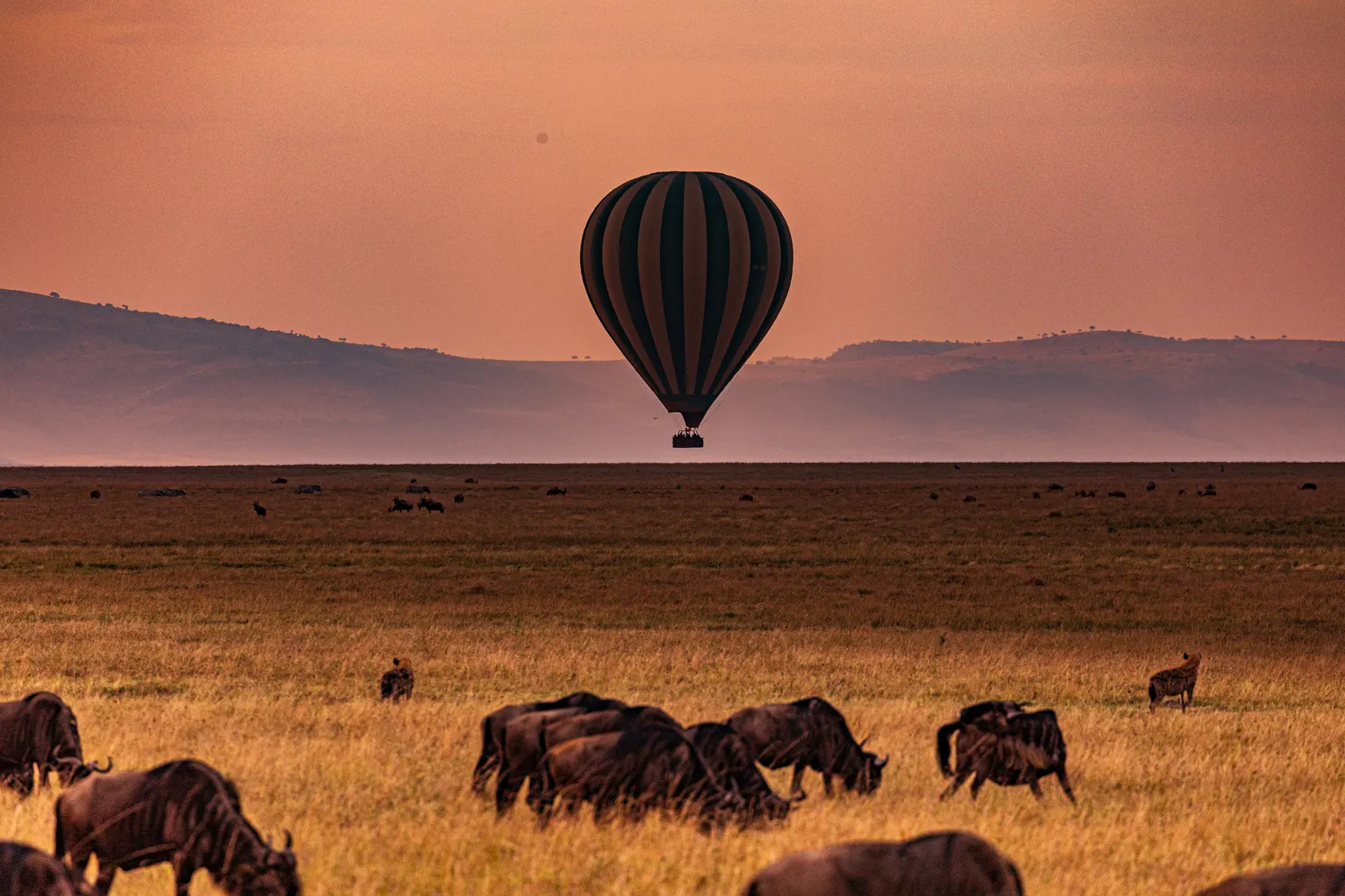
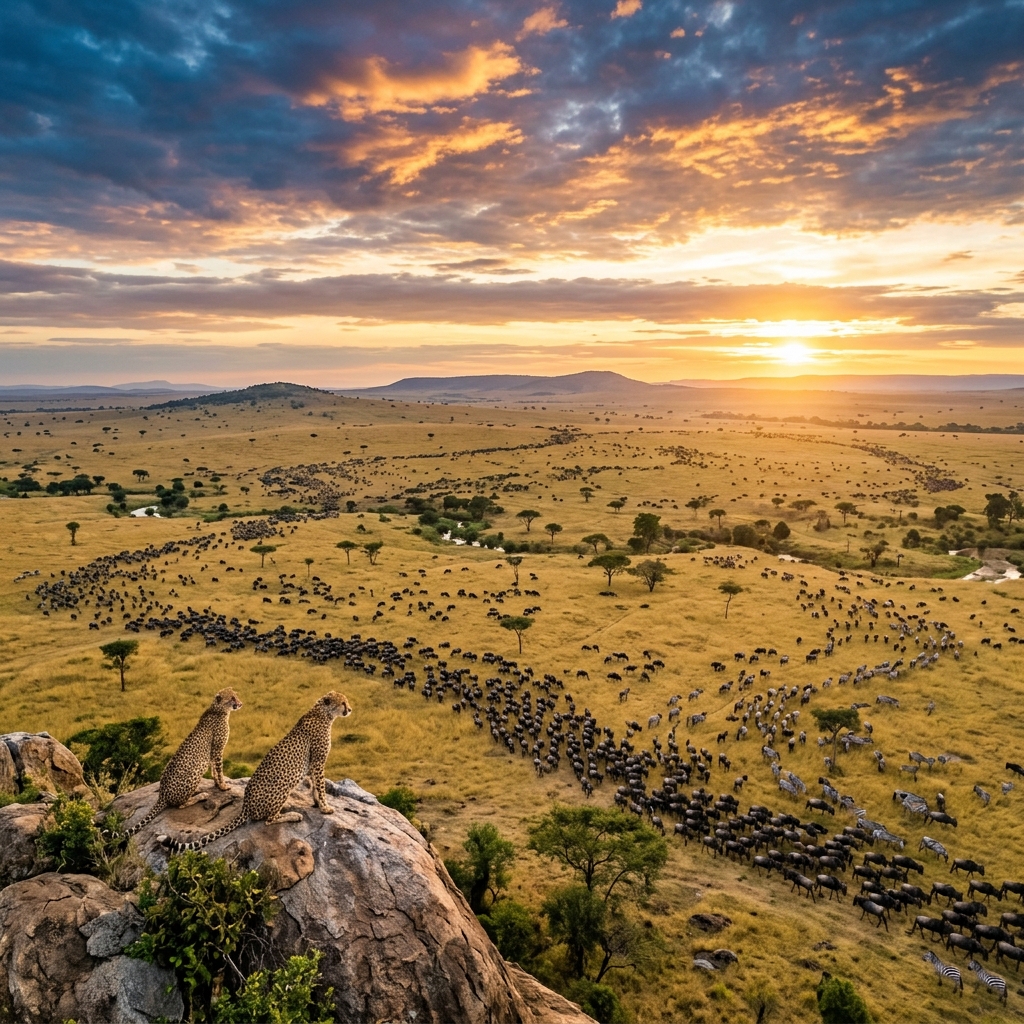
The Great Migration is not an event with a date. It is a loop of roughly a million and a half wildebeest, travelling with zebra and gazelle, that turns clockwise through the Serengeti and into Kenya’s Masai Mara and back again, following rain and the grass that comes after it. At any point in the year the herds are somewhere. The question is never whether to go, only where to be.
What follows is the loop month by month, what each stretch is like on the ground, and which of our journeys is built around it. The months are a guide, not a timetable — the last section says why.
The short answer
The best time to see the Great Migration in Tanzania depends on what you want to see. For calving, go to the southern Serengeti between late January and March; for river crossings, go to the northern Serengeti between July and October, when August and September are usually the busiest months.
The year at a glance| Months | Where the herds usually are | What you see | Journey |
|---|
| Jan – Mar | Southern plains, Ndutu | Calving, predators on open ground | Calving Season |
|---|
| Apr – May | Central Serengeti | Scattered herds, long rains, empty roads | — |
|---|
| Jun – Jul | Western Corridor, Grumeti | The rut, Grumeti crossings | Under Canvas |
|---|
| Jul – Oct | Northern Serengeti, Mara River | Mara River crossings | Mara Crossings |
|---|
| Nov – Dec | Eastern Serengeti, heading south | Herds on the move, storm light | Green Season |
|---|
January to March: calving season on the southern plains
From January the herds are on the short-grass plains of the southern Serengeti and the Ndutu area, which straddles the park and the Ngorongoro Conservation Area. The grass here grows on volcanic soil that is unusually rich in minerals, and that is why the females give birth here rather than anywhere else.
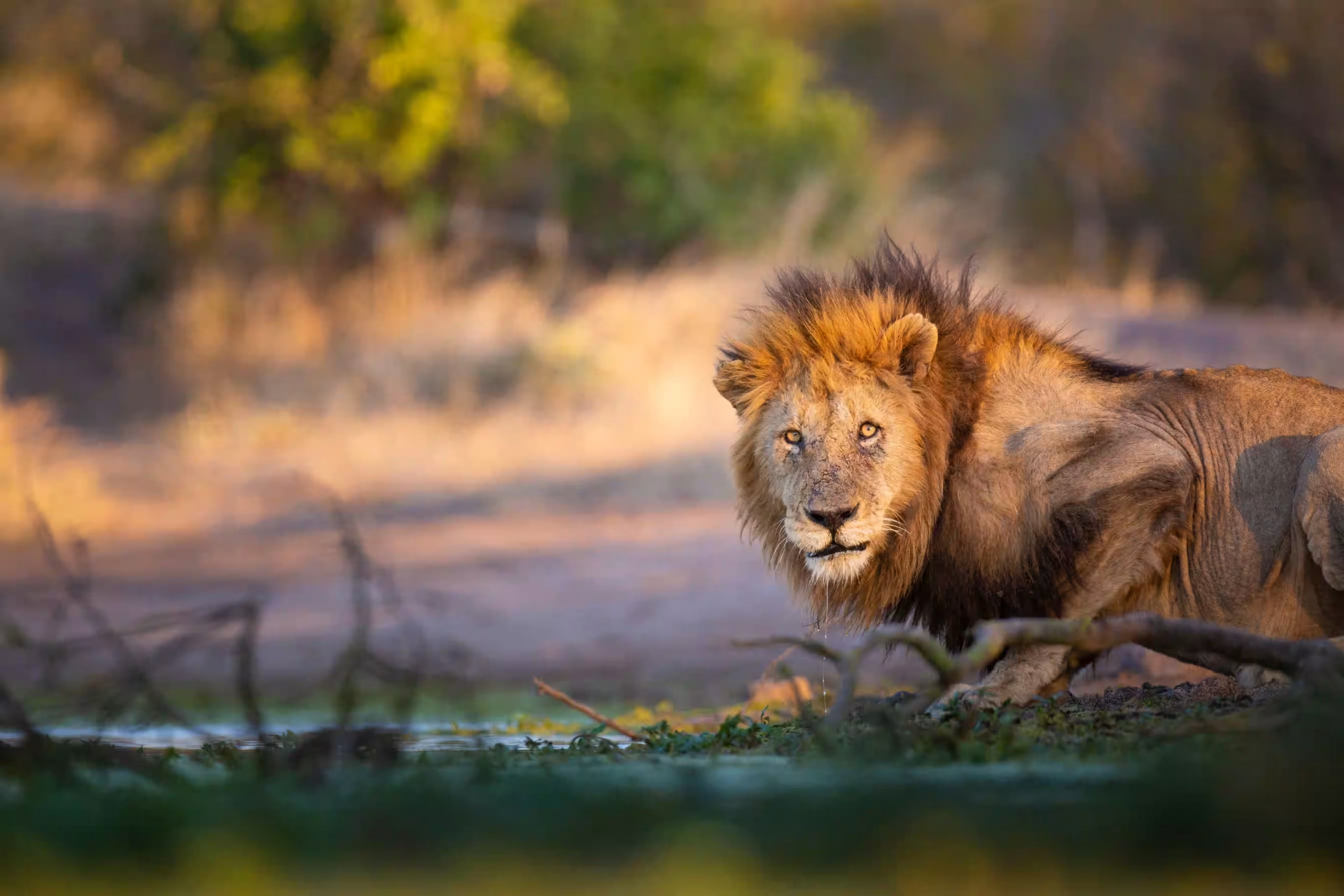
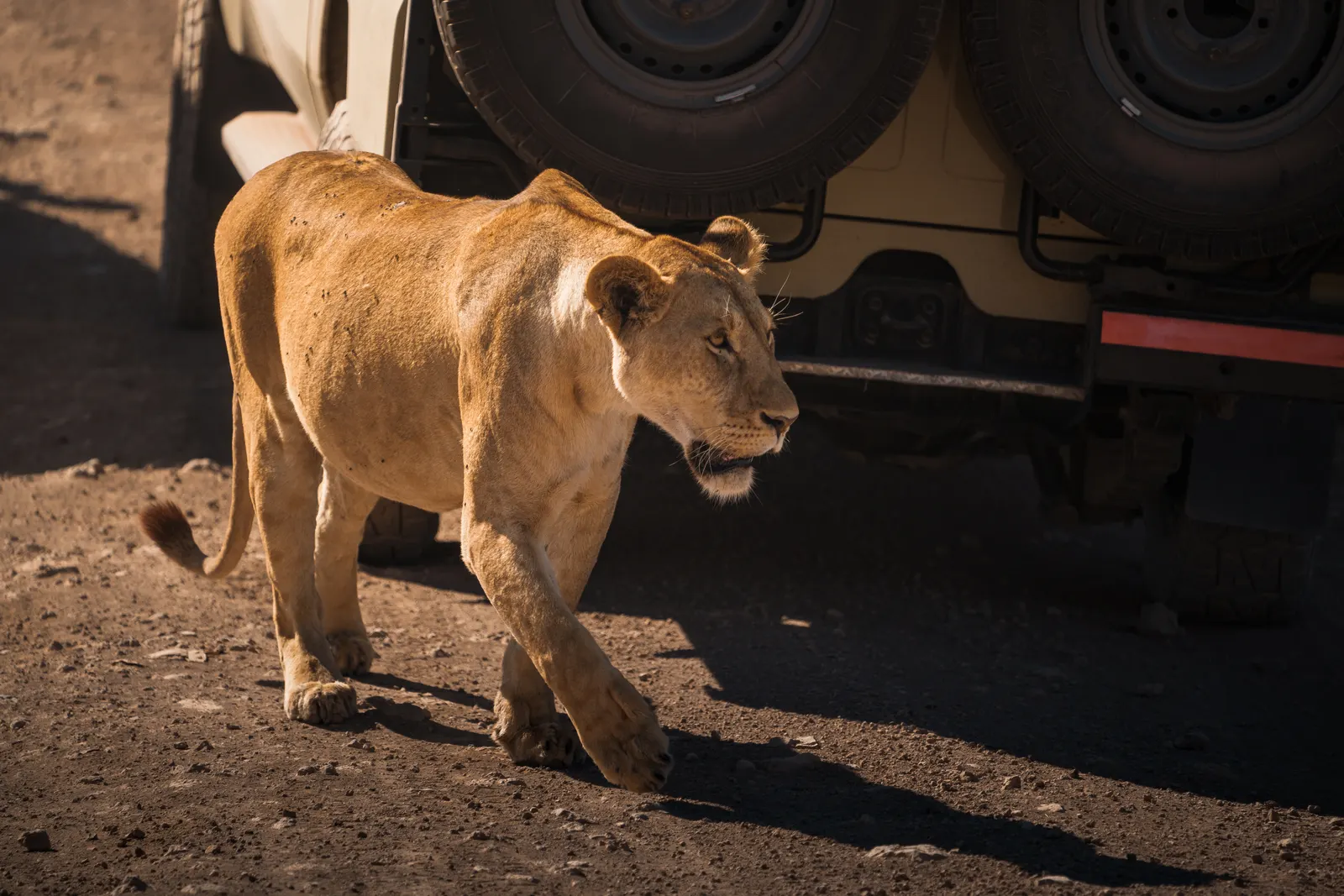
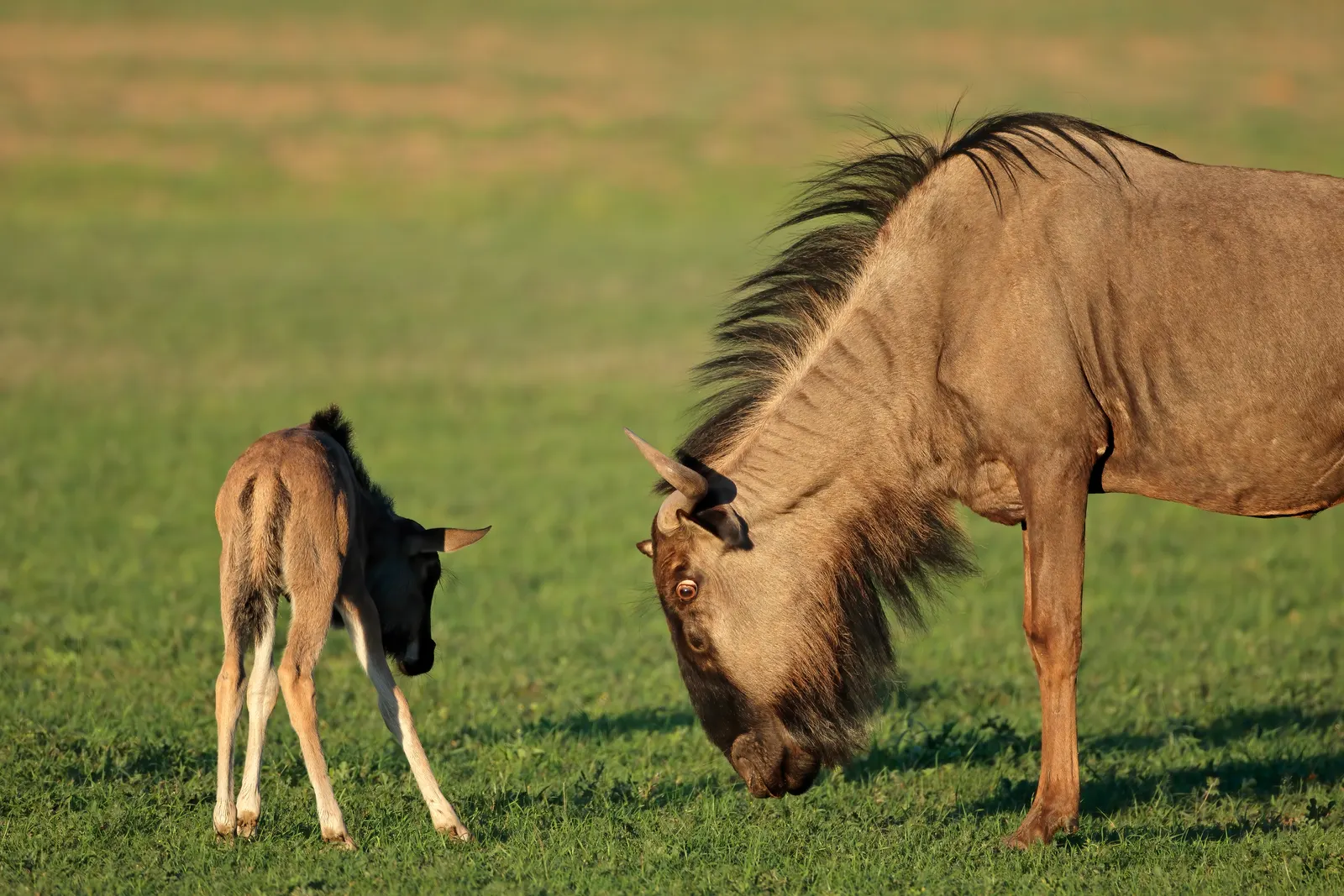
Most calves are born within a few weeks, usually from late January into February — several thousand a day at the peak. A calf is on its feet within minutes and running with the herd within the hour. Lion, spotted hyena and cheetah all work these open plains, and few places in Africa gather so many predators around so much easy prey.
April and May: the long rains in the central Serengeti
In April the long rains arrive, the southern plains start to dry out behind them, and the herds spread north-west through the central Serengeti around Seronera and the Moru kopjes. They are no longer one mass but many groups, sometimes kilometres apart.
This is the hardest stretch of the year to travel. The black-cotton soil turns roads to mud, several seasonal camps close for the rains, and a heavy afternoon can end a game drive early. It is also the emptiest the park gets, and the rates reflect it.
None of our journeys is built around April and May, and we would rather say so than sell you the migration at its most scattered. If these are your only dates,
tell us and we will be honest about what the park will give you that week.
June and July: the Western Corridor and the Grumeti River
By late May and June the herds gather in the western Serengeti, and the rut is under way — bulls holding small territories, fighting, and calling through the night. The Western Corridor runs out towards Lake Victoria, and the Grumeti River cuts across it.
In the dry season the Grumeti is a string of deep pools rather than a flowing river, and some of the largest Nile crocodiles in the ecosystem wait in them. The crossings here are smaller and less predictable than on the Mara, and far fewer vehicles come to watch.
July to October: Mara River crossings in the northern Serengeti
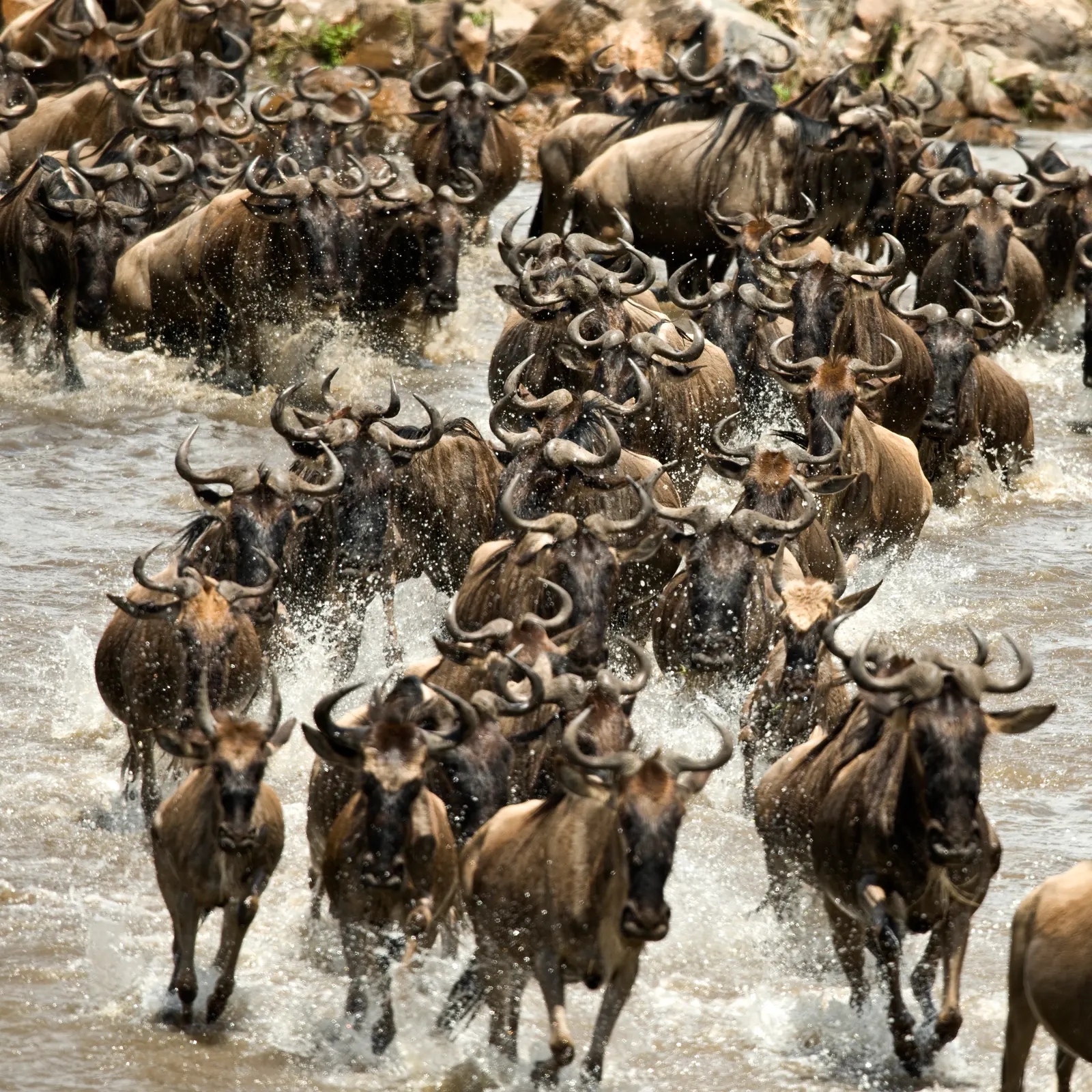
From July the herds push into the far north of the Serengeti, around Kogatende and the Lamai wedge, and along the Mara River. Part of them carries on into Kenya’s Masai Mara, and through August and September many groups cross the river more than once, in both directions.
A crossing starts when enough animals commit at one point, and nothing about the time or the place can be predicted in advance. Herds can mass on the bank for hours and turn away. Then a crossing can run for twenty minutes or most of an afternoon, and it is loud, fast and brutal.
This is the busiest the northern Serengeti gets, and the vehicles gather at the known crossing points. Our
Mara River Crossings journey gives you three full days on the river for that reason — one day is a gamble, three is a fair chance.
November and December: the herds turn south
The short rains usually begin in November. The grass in the north has been eaten down, and the herds turn south along the eastern side of the park, past Lobo, back towards the southern plains. By December most of them are close to where the year began.
The movement is fast and spread out, so this is a month for a guide who knows where the rain fell last week rather than a fixed route. The storm light is some of the best of the year, which is why the
Green Season photographic safari starts in November.
Christmas and New Year are the one exception to the quiet. Camps fill a year ahead for those weeks, and our
Festive Season safari exists for guests who plan that far out.
What the migration calendar cannot tell you
Every month above can shift by two or three weeks. A late short rain holds the herds in the north into December; an early one pulls them south in October. The calendar describes an average year, and most years are not average.
The herds are also never in one place. Some groups stay behind in the central Serengeti all year, and in any month you can find wildebeest somewhere in the park. What changes is density — whether you see a few hundred animals or a plain covered to the horizon.
So choose by the stretch you want, not by the date. Give yourself at least three nights in the area the herds are expected to be, and prefer a camp that can move or a guide who can travel. If you want to see where each of our journeys sits in the year,
Find a journey filters them by month, and the
Serengeti guide covers the park itself.
Questions people ask
When is the best time to see the Great Migration in Tanzania?
It depends on what you want to see. Calving happens on the southern plains around Ndutu from late January to March. River crossings happen on the Mara River in the northern Serengeti from July to October. June and early July bring the herds through the Western Corridor and across the Grumeti.
Which month is best for Mara River crossings?
August and September usually see the most crossings, with July and October possible in most years. No crossing can be scheduled, so give yourself three full days in the northern Serengeti rather than one.
Where is the Great Migration in December?
In December most of the herds are moving south through the eastern Serengeti towards the short-grass plains, where calving begins in late January. Exactly where depends on when the short rains fell.
Is the Great Migration in Tanzania or Kenya?
Both, but most of the year it is in Tanzania. From roughly January to July the herds stay within the Serengeti ecosystem, and from about August to October part of them crosses into Kenya’s Masai Mara before turning south again.
How many animals take part in the Great Migration?
Roughly a million and a half wildebeest, travelling with a few hundred thousand zebra and gazelle. Counts vary from year to year and between surveys.
How many days do you need to see the Great Migration?
Plan at least three nights in the area where the herds are expected, and six to eight nights for a trip that also includes the Ngorongoro Crater or a second park.
Can a river crossing be guaranteed?
No. A crossing depends on where the herds gather, the grazing and the river on that day. Any operator who promises one is selling something nobody controls.
Is April or May a good time for a migration safari?
It is the hardest time. The long rains make roads muddy, several seasonal camps close and the herds are spread out. It is also the quietest and least expensive time in the park, which suits some travellers.
Travel it
Journeys built around this
Last updated 13 September 2026