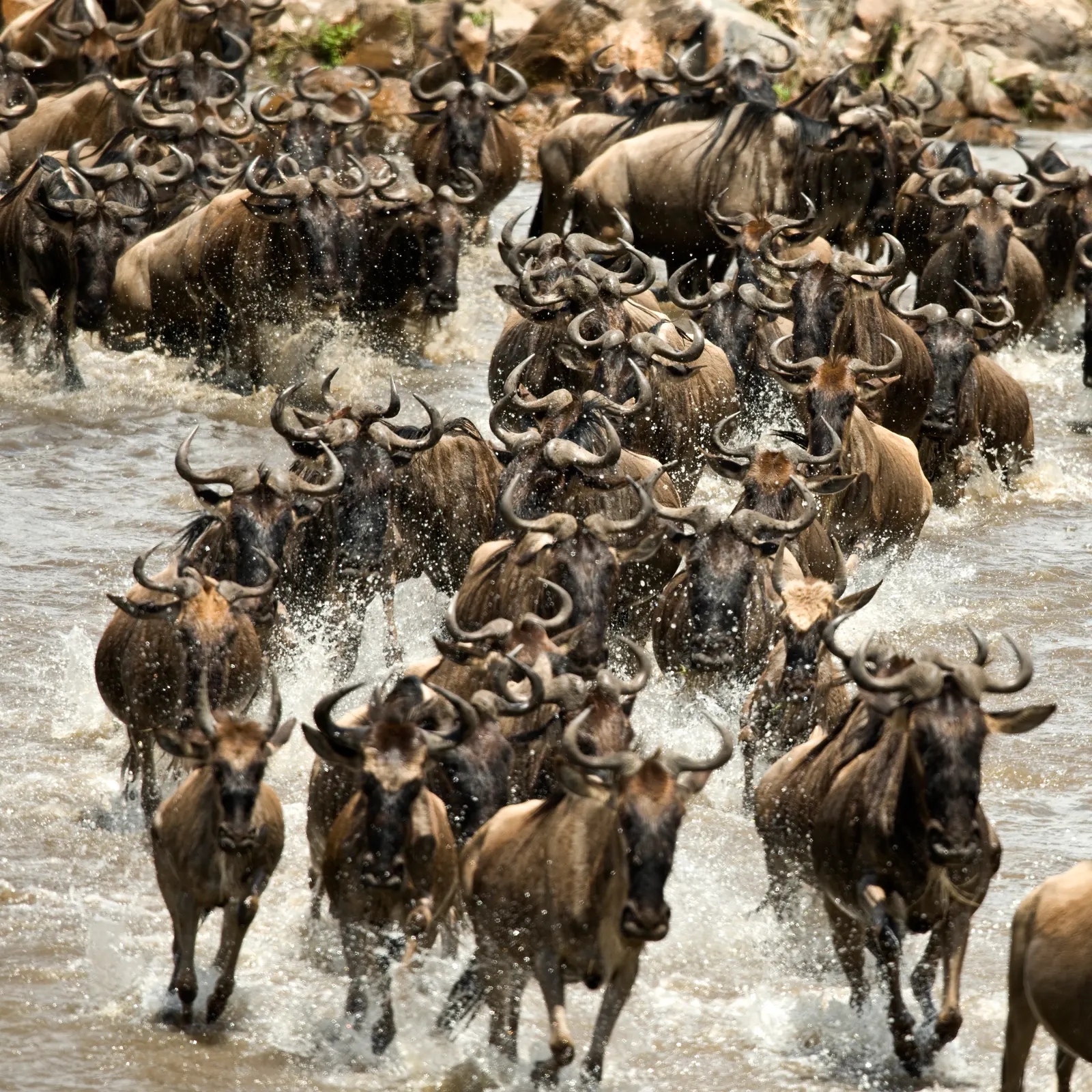
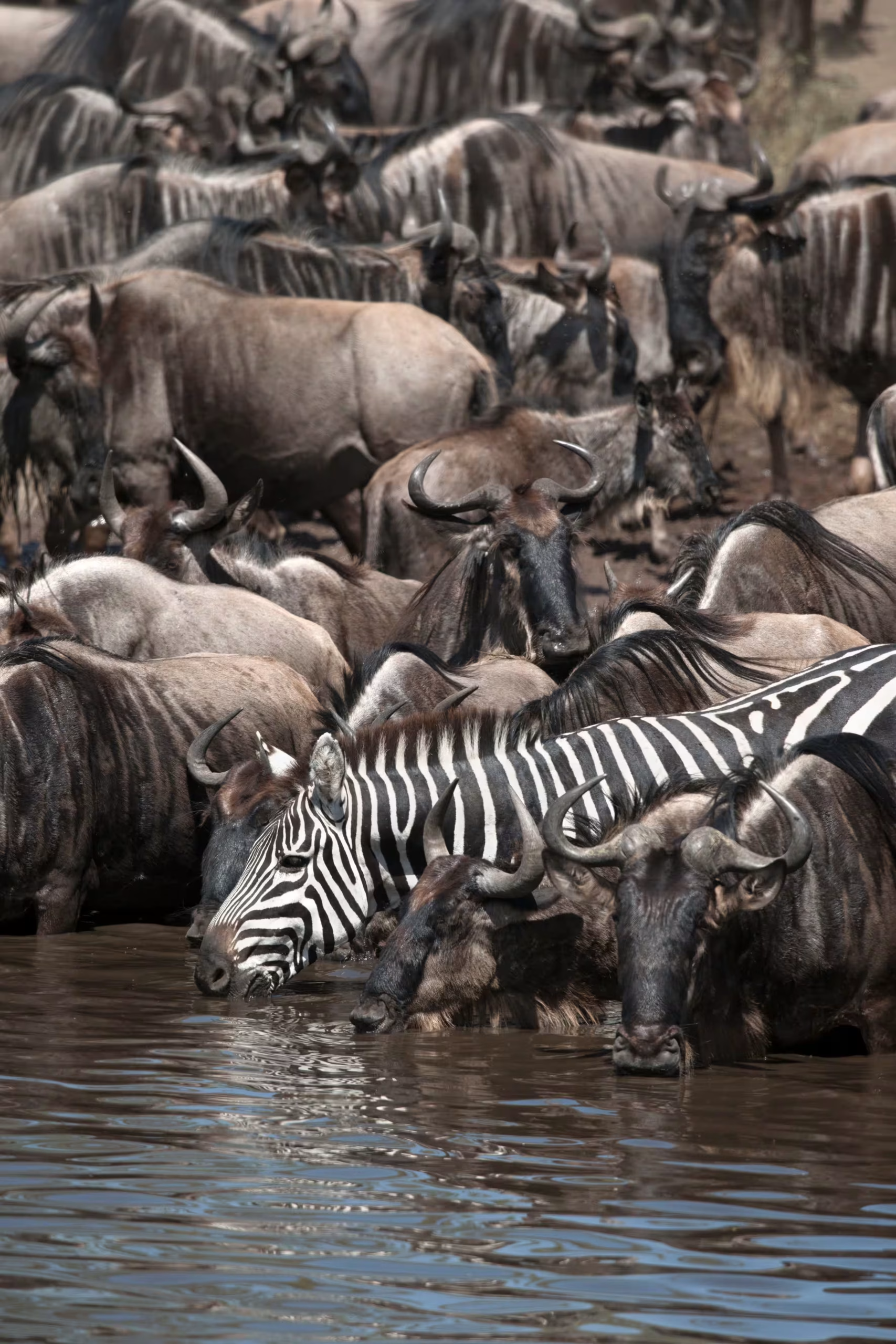
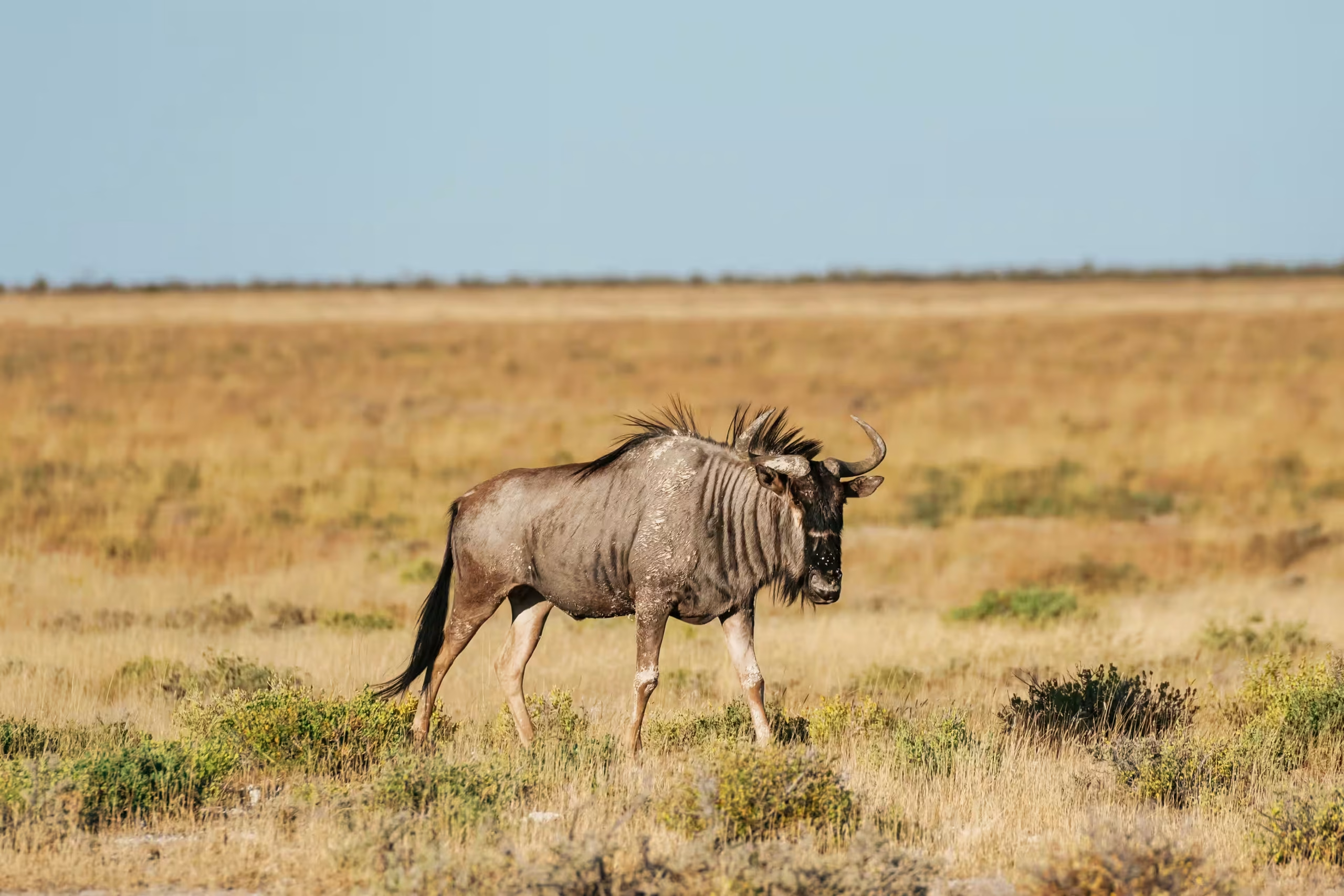
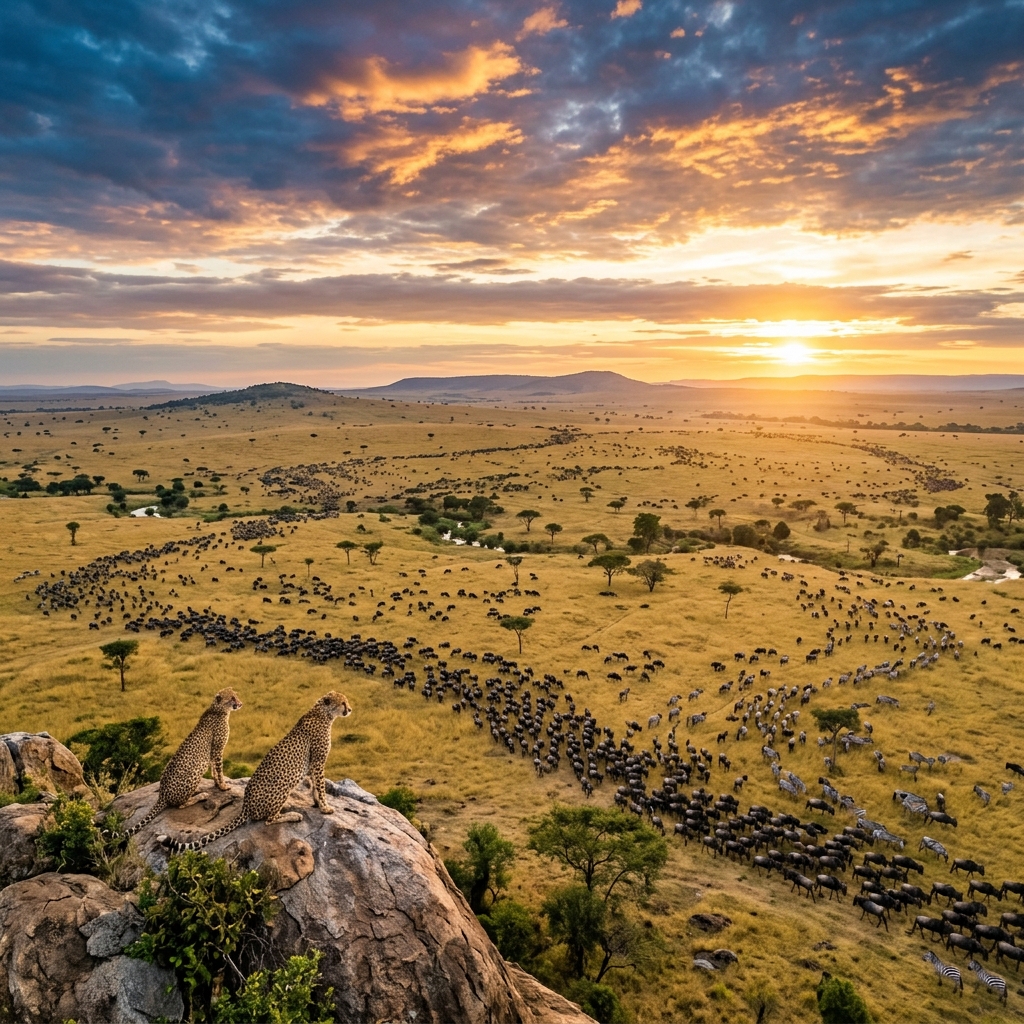
The Mara River gets the photographs. The Grumeti gets crossings of its own, roughly a month or two earlier, in a narrower channel through wooded country far fewer vehicles reach. It is not a substitute for the Mara — it is a different stretch of the same migration, with its own river, its own crocodiles and its own, much quieter, crowd.
This piece covers where the Western Corridor actually is, how a Grumeti crossing differs from a Mara one, why so few vehicles come to watch, and when to plan for it. Our
migration month by month guide sets the Grumeti in the context of the whole year’s loop; this one stays on the river.
The short answer
The Grumeti River, in the Serengeti’s Western Corridor, has its own wildebeest crossings from roughly late May to July, months before the better-known Mara crossings further north. The river narrows to a string of pools guarded by some of the largest Nile crocodiles in the ecosystem, and because fewer camps sit nearby, far fewer vehicles come to watch.
The Grumeti or the Mara| Compared | The Grumeti (Jun – Jul) | The Mara (Jul – Oct) |
|---|
| Crossing length | Often under a minute | Twenty minutes or longer |
|---|
| Vehicles at a crossing | A handful, often none | Ten or more at a known point |
|---|
| Setting | Wooded riverine corridor | Open plains on both banks |
|---|
| Predators | Very large, older Nile crocodiles | Crocodiles, plus lion and hyena at the exit banks |
|---|
The Western Corridor: where the Grumeti sits
The Western Corridor runs for roughly 100 km from central
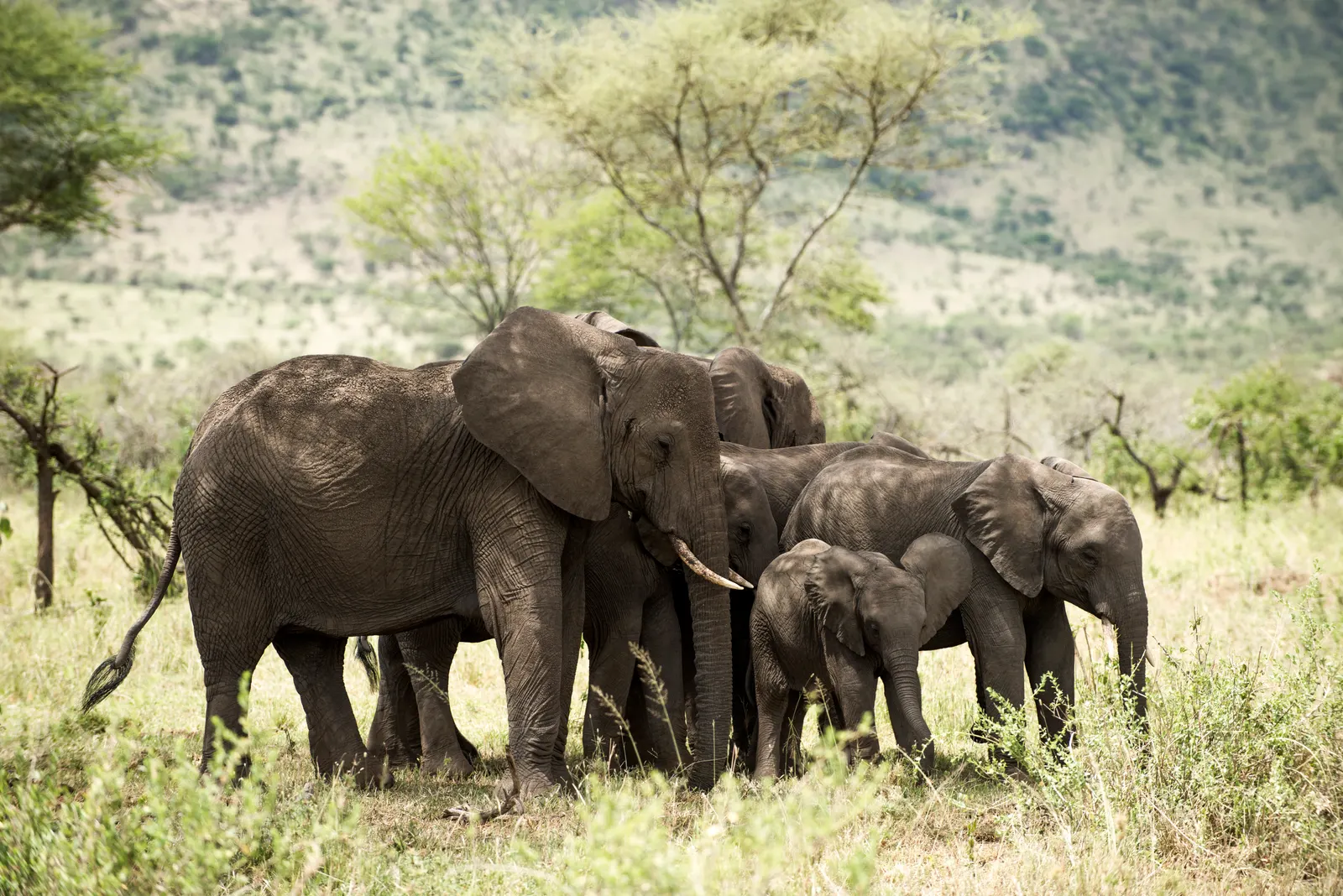
Serengeti, near Seronera, out towards Lake Victoria, following the course of the Grumeti River until it empties into the lake’s Speke Gulf. It is a different landscape from the open plains further east and south: riverine forest and acacia woodland rather than short grass, with sightlines that close in around the water rather than opening out across a plain. Elephant, giraffe and buffalo move along the riverbanks year-round, migration or not, and the vegetation supports species the open plains do not, including colobus monkeys in the forest patches nearest the water.
Two kinds of protected land sit alongside each other here. The national park itself runs standard park rules — no night drives, no off-road driving. Bordering it, the Grumeti and Ikorongo reserves are managed as private, low-density concessions with their own regulations, permitting walking safaris, night drives and off-road access the park does not, in exchange for capping the number of guests who can be on the ground at any time. Both reserves have also run sustained anti-poaching and habitat restoration work over the past two decades, which is part of why wildlife numbers along this stretch of the corridor have recovered as far as they have.
That mix of dense woodland and low visitor numbers is what makes the corridor feel different from the rest of the Serengeti circuit, migration or not. Our
migration month by month guide covers when the herds pass through against the rest of the year’s loop.
Grumeti versus Mara: how the crossings differ
In the dry season the Grumeti shrinks to a string of pools rather than a continuous flow, and a crossing point here can be narrow enough — tens of metres rather than the Mara’s wider channel — that a herd is across before a camera has focused. A Mara crossing can run for twenty minutes or longer; a Grumeti one is often over in under a minute, which changes how you watch it as much as what you see.
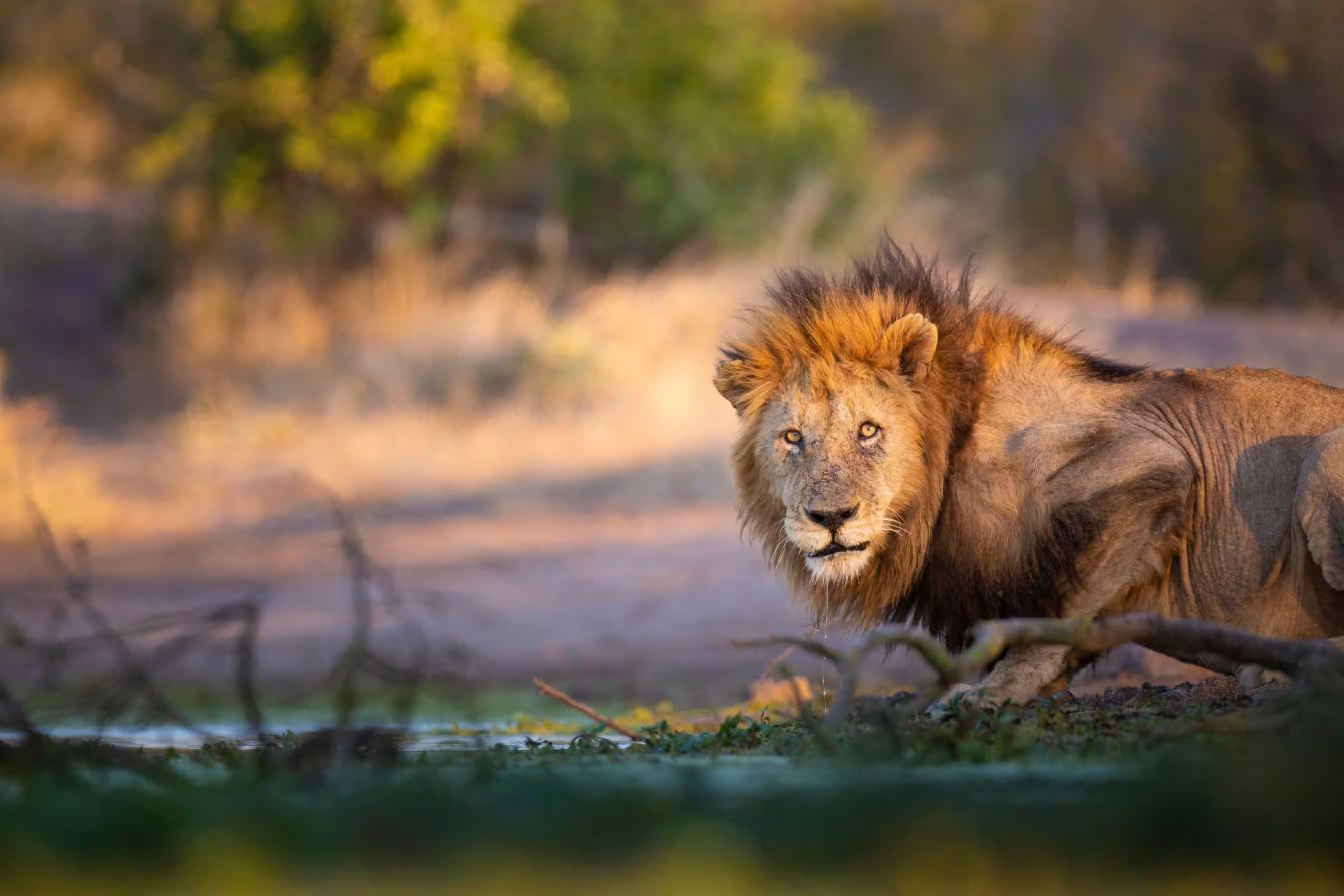
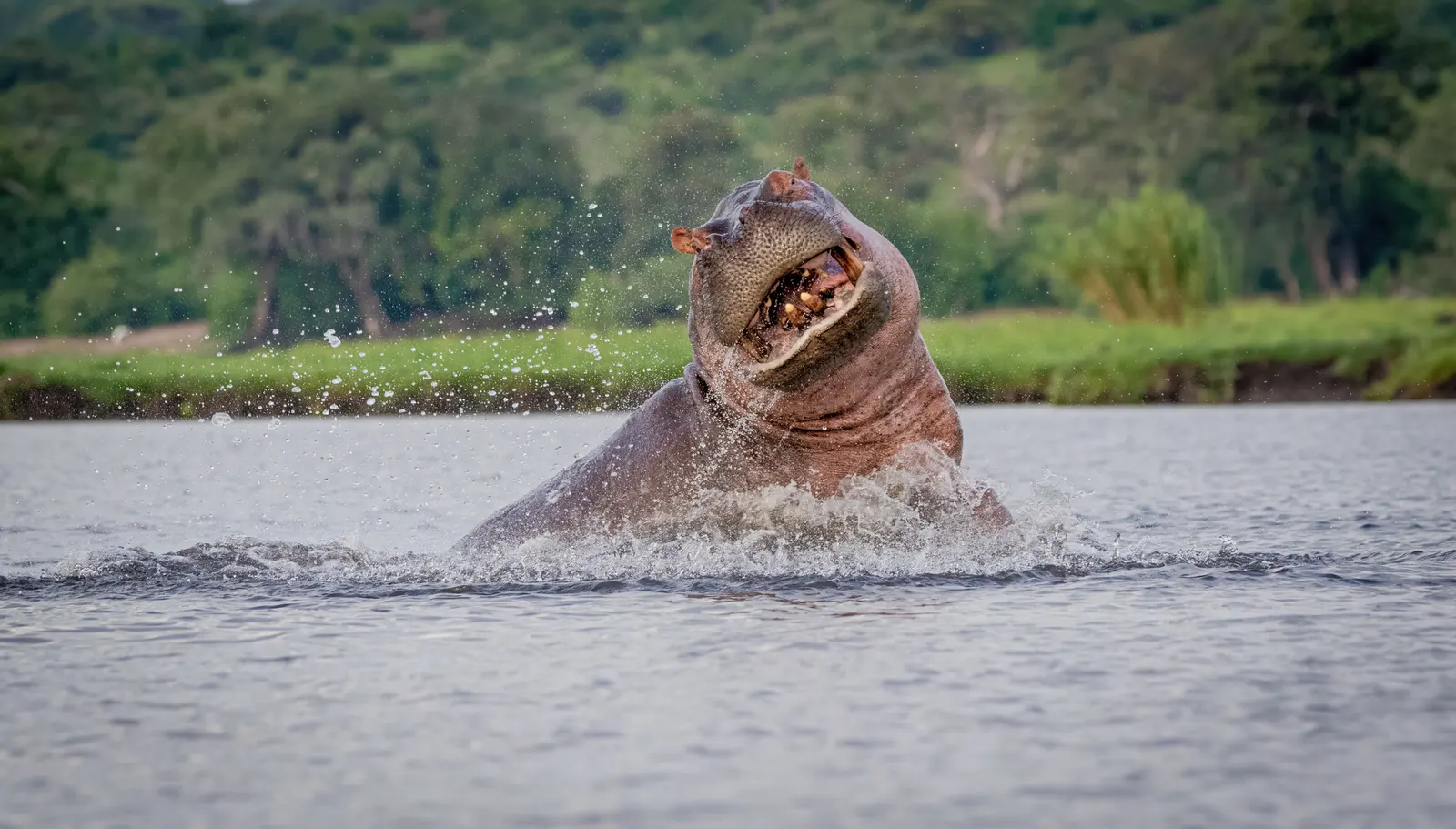
The crocodiles make up for the brevity. Some individuals in the Grumeti’s pools are recorded over five metres, among the largest Nile crocodiles in the ecosystem, having had a calmer, less contested stretch of water to themselves for decades rather than competing with the larger crocodile population further north on the Mara. A single crossing here can bring several of these animals into view at once, working a stretch of water they know intimately after so long with so little competition.
Because the corridor is wooded rather than open plain, a crossing can be happening a few hundred metres away and hidden by riverine forest — you find out from the guide’s radio, not from what is visible where you are parked. That is a real trade-off against the wide, panoramic view a Mara crossing offers from the opposite bank, and it makes a longer lens and more patience worth as much here as a good vantage point does on the Mara.
Vehicle numbers: why the Grumeti stays quiet
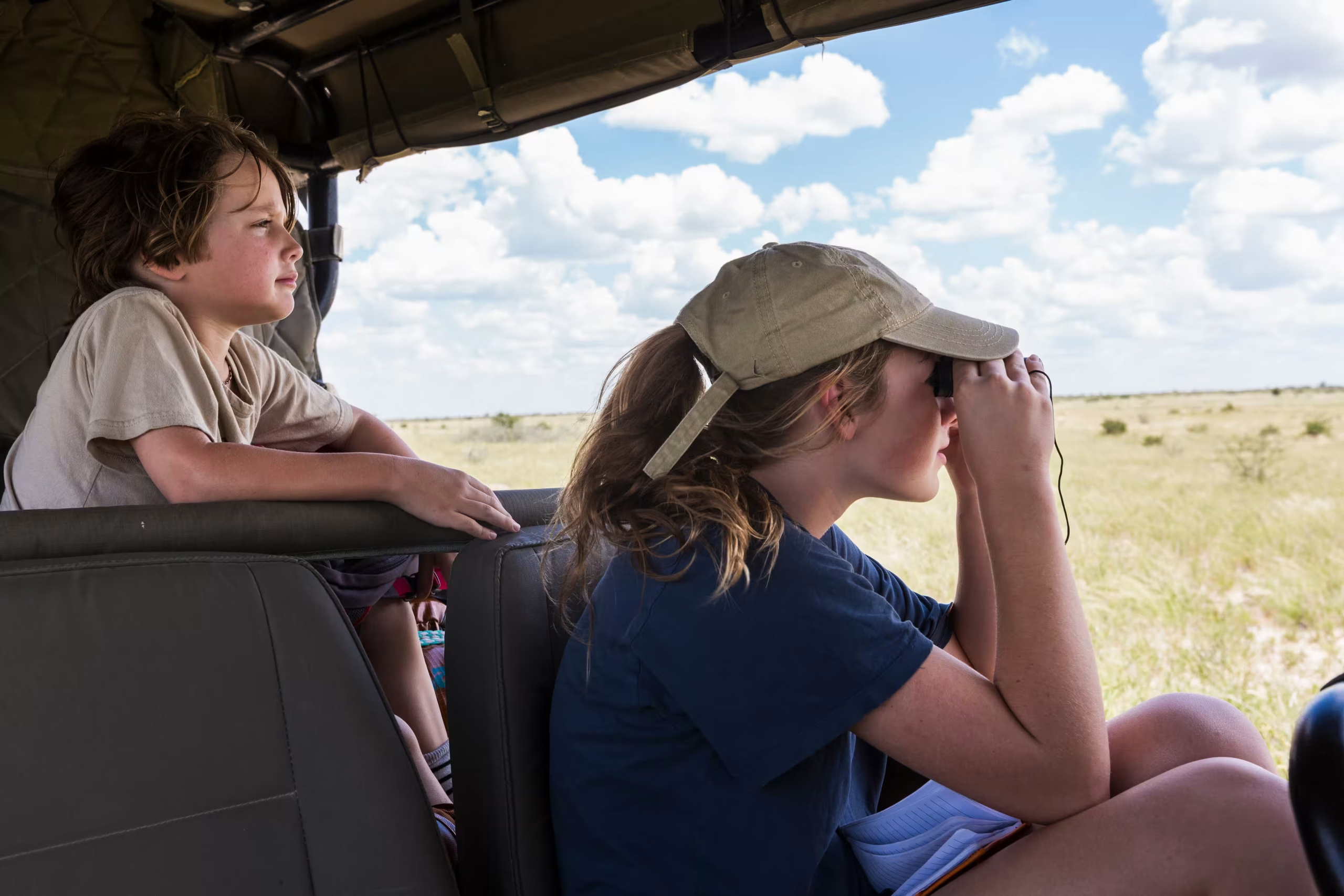
The private reserves bordering the park on this stretch cap their own guest numbers in the low dozens across a handful of small camps, with vehicle limits of their own, and that scarcity carries over into how many vehicles reach a crossing point at all. Where the Mara’s crossing points sit within reach of dozens of camps on both sides of the Tanzania-Kenya border, the Grumeti has a fraction of that accommodation nearby.
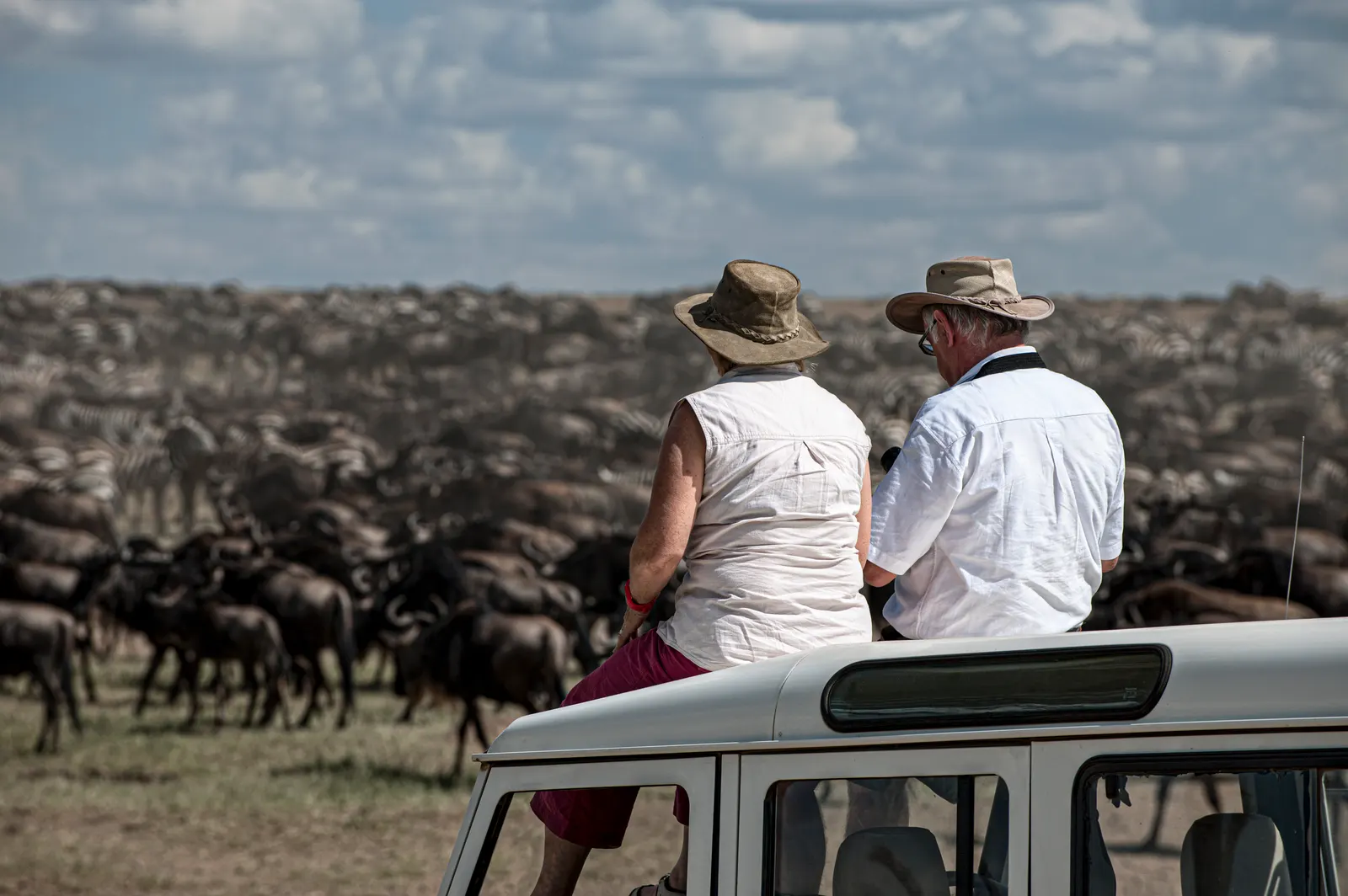
A well-known Mara crossing point in September can draw twenty or more vehicles queued along the bank. The Grumeti more commonly has a handful, sometimes none — fewer camps sit close enough to reach a crossing quickly, and the reserves that do limit their own numbers rather than compete for volume. A vehicle you do see on this stretch is more likely to be from the same handful of camps as your own, rather than one of dozens converging from across the wider circuit.
The trade-off is honest rather than one-sided: fewer vehicles also means fewer eyes watching the water and less radio traffic warning that something is starting. Quiet comes at the cost of a smaller chance that anyone catches a given crossing before it is over, and a guide here is working with less shared information than one on the busier river further north.
When to go: June and July, mostly
Late May into July is the main window, as the herds move through the corridor before turning north toward the Mara — though, as with every stretch of the loop, exact timing shifts a few weeks either way depending on when the rains fell that year. The same weeks bring the rut, with wildebeest bulls holding small territories and fighting through the corridor, so the crossings are one part of a wider spectacle rather than the whole of it.
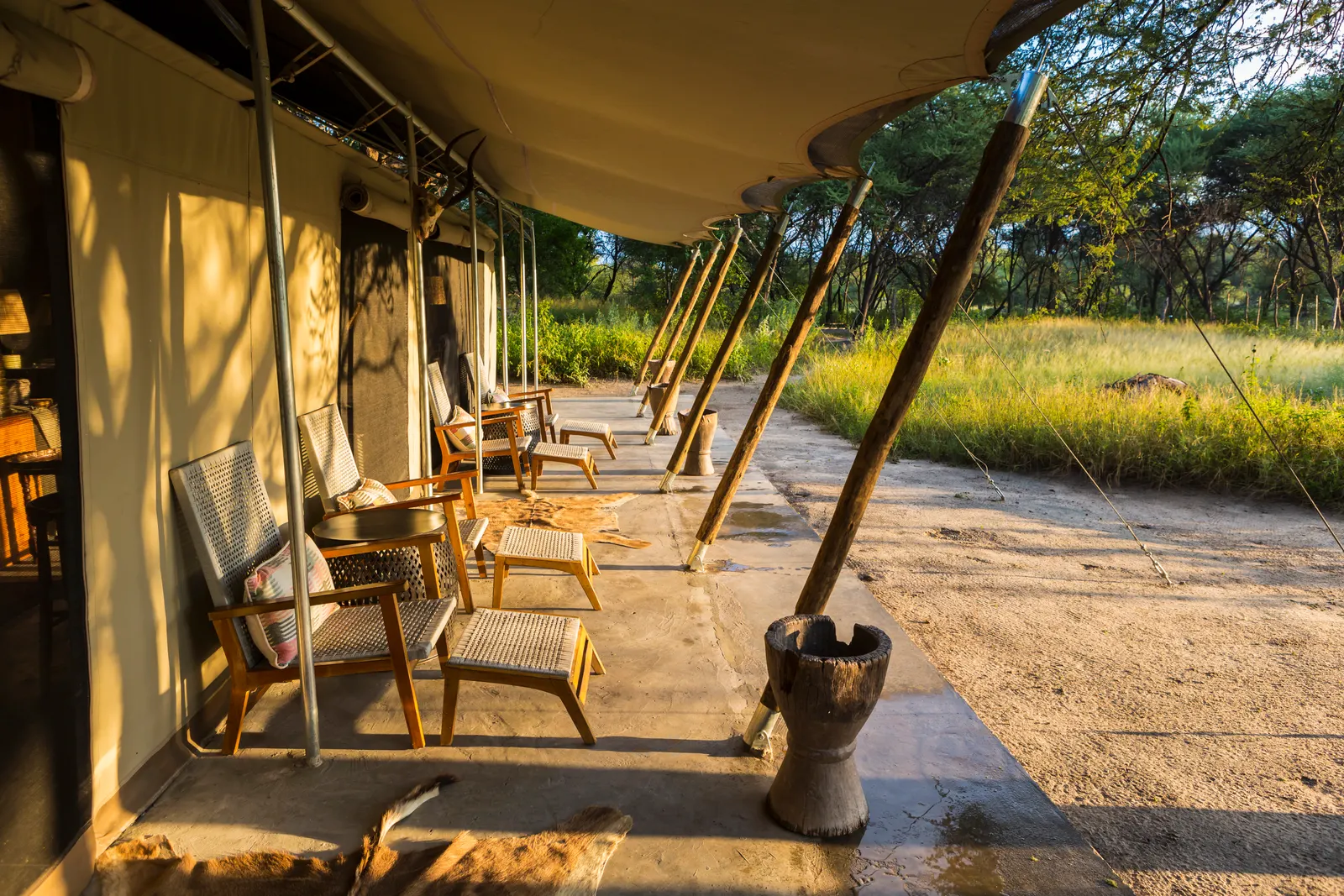
A camp that can move with the herds suits this stretch well.
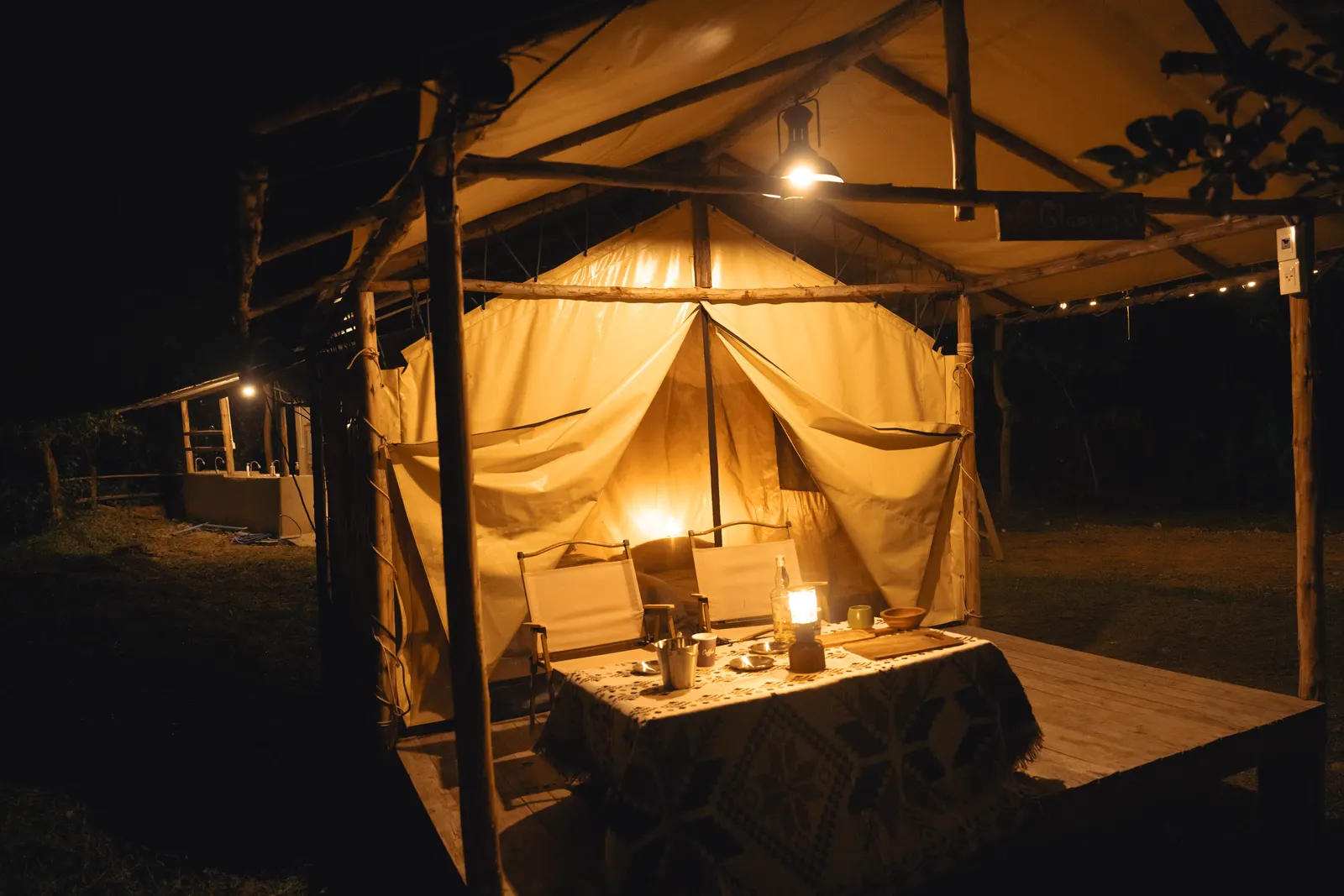
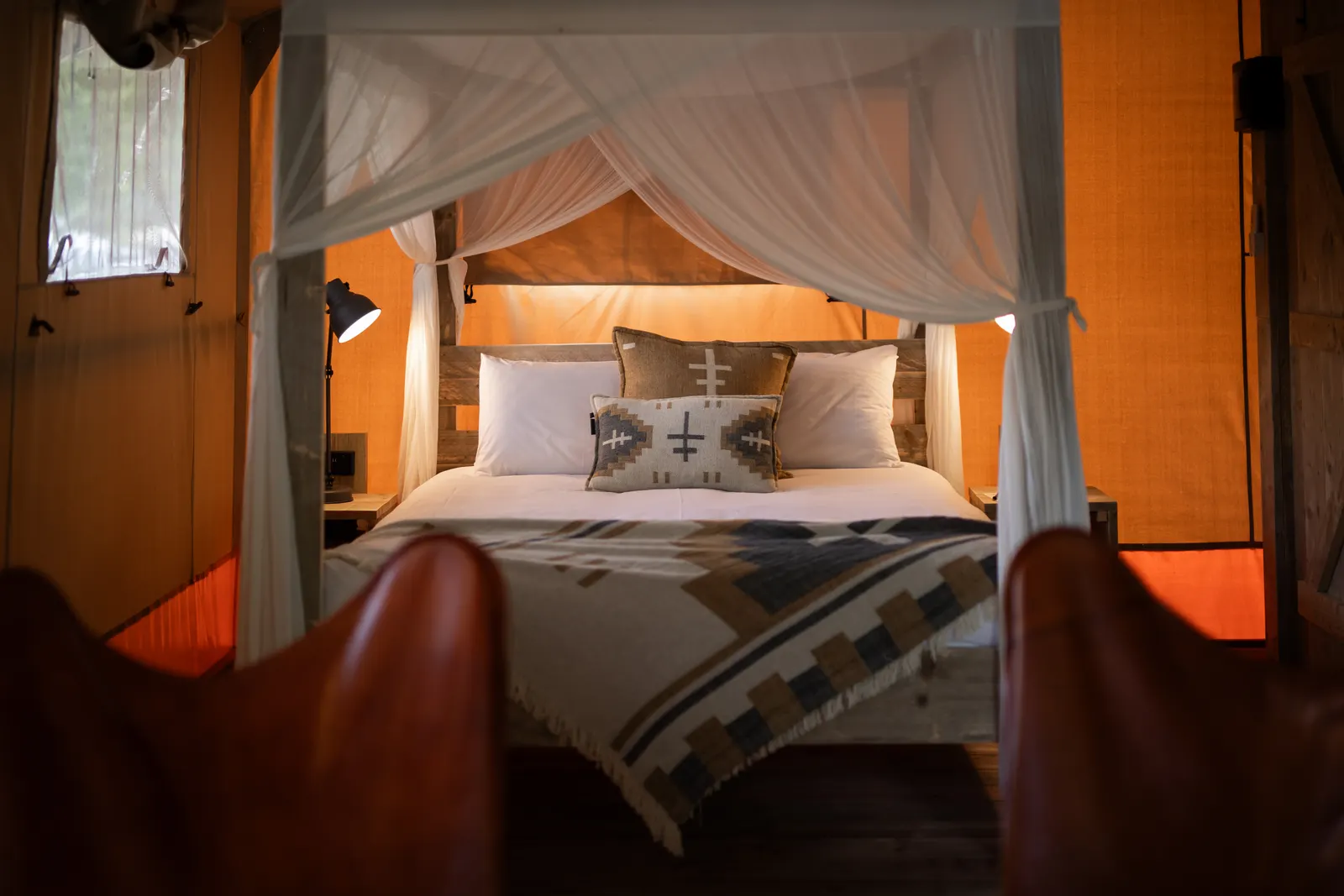
Serengeti Under Canvas relocates to follow them, and our
Private Guided Serengeti Wilderness gives you a guide and vehicle without a fixed route, which matters more here than almost anywhere else on the circuit given how little of a Grumeti crossing is visible from a fixed position.
If a crossing sighting specifically is the priority rather than the quiet, the
Mara from July still gives better odds — more crossings, more often, at known points. The Grumeti suits travellers who want fewer vehicles more than they want the single highest chance of seeing one, and who are content with the woodland and its resident wildlife filling the time between.
Questions people ask
When do wildebeest cross the Grumeti River?
Mostly from late May into July, as the herds move through the Western Corridor before turning north. Exact timing shifts with the rains, the same as every other stretch of the migration.
Is the Grumeti crossing as good as the Mara?
It is a different sighting rather than a lesser one. Grumeti crossings are often shorter and less predictable, in a wooded setting with far fewer vehicles; the Mara offers longer, more frequent crossings on open ground with more company watching.
How big are the crocodiles in the Grumeti River?
Some individuals are recorded over five metres, among the largest Nile crocodiles in the migration ecosystem. The river’s calmer, less contested pools let them live and grow for decades undisturbed by competition from a wider population.
Where is the Grumeti River?
It runs through the Serengeti’s Western Corridor, roughly 100 km from central Serengeti out towards Lake Victoria, and empties into the lake’s Speke Gulf.
How many vehicles are at a Grumeti crossing?
Often a handful, sometimes none, compared with a well-known Mara crossing point in September that can draw twenty or more. Fewer camps sit close enough, and the private reserves bordering the park here cap their own visitor numbers.
Can I combine the Grumeti and the Mara in one trip?
Yes, if the trip runs long enough to follow the herds north — the Grumeti in June and July, then the Mara from July onward. A mobile or private-guided itinerary suits this better than a fixed lodge-based route.
Why are there fewer vehicles at the Grumeti than the Mara?
The corridor is narrower and more wooded, with fewer camps close enough to reach a crossing point quickly, and the private reserves bordering the park limit their own guest and vehicle numbers.
Travel it
Journeys built around this
Last updated 13 September 2026