Places of Africa Safaris

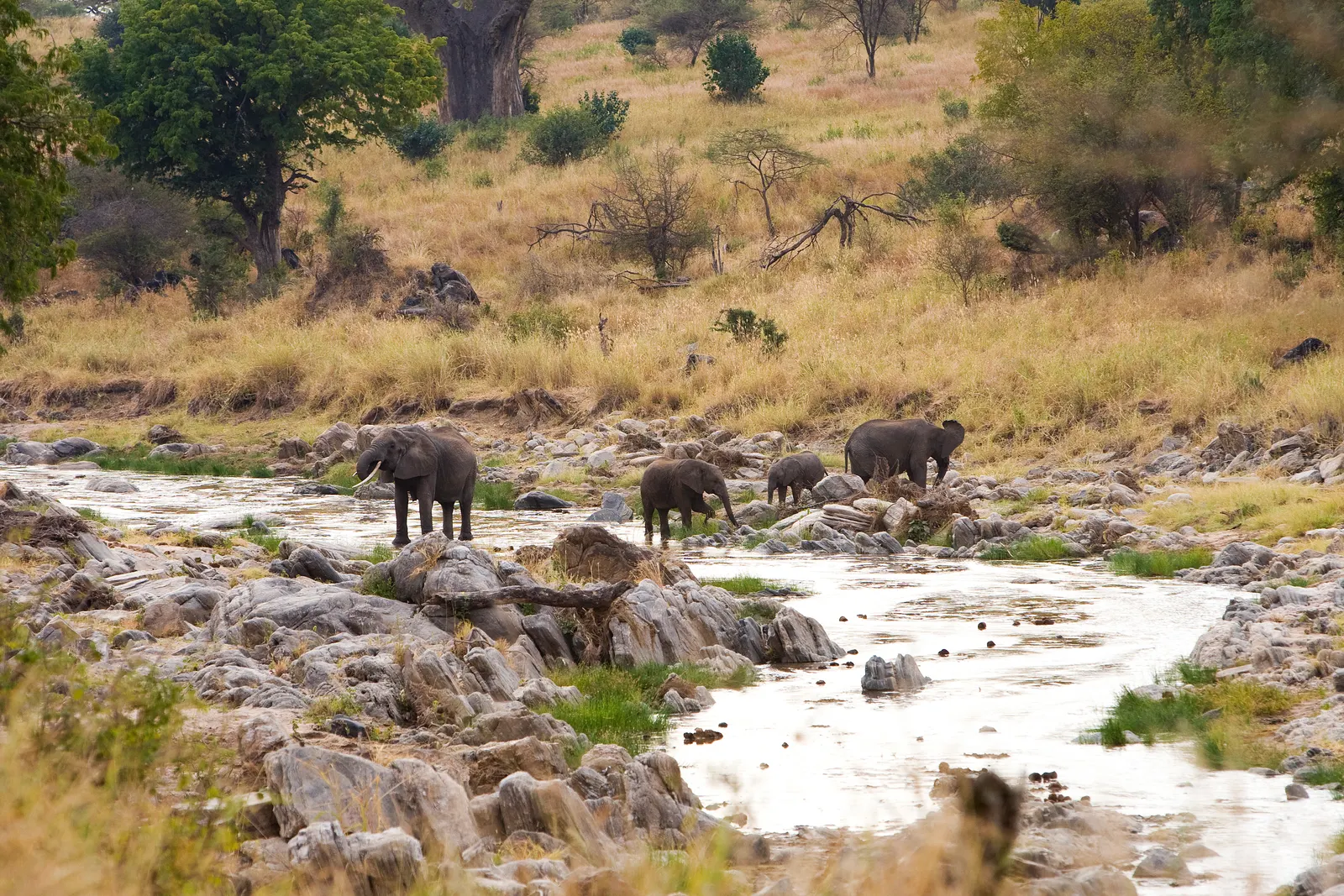
Elephants crossing the Great Ruaha River
North, South & Coast · Seventeen Days

Seventeen days across the whole of Tanzania

The northern circuit driven properly, three nights in Ruaha with walking and night drives, and four nights on Zanzibar — the one itinerary we run that reaches both circuits and the coast without rushing any of them.
17
Days
16
Nights
5
Parks & places
Full
Board
I · Overview

The route, and why this shape

The northern circuit, the southern wilderness and the coast in one journey. Nothing rushed.
Tanzania has two safari circuits and a coast, and almost every itinerary sold picks one. The northern circuit is where the crater and the migration are. The south — Ruaha, above all — is where the vehicles are not. Zanzibar is an hour’s flight from either. Joining all three takes about seventeen days, and this is the shape that does it without a single park being reduced to a drive-through.
The north comes first and is driven: two nights in Tarangire, a night on the Ngorongoro rim with a dawn descent, two nights at Seronera, and two more wherever the herds are in your month. Then the one day we describe with particular care — a long day in light aircraft, usually through Arusha and Dar es Salaam, with a night on the coast so the morning flight into Ruaha is not a gamble.
Ruaha gets three nights, because it is the largest park in Tanzania and because it is one of the few where you can walk and drive at night. Zanzibar gets four, because after twelve days of early starts the coast should be rest rather than another schedule. The trade is plain: this costs more than any other route we run, and it is worth it only if you want all of it.
Length
17 days / 16 nights
Country
Tanzania
Start / end
Arusha → Zanzibar
Tour type
Private safari, with flights
Group size
Private — 1 to 6 guests per vehicle
Meal plan
Full board on safari; half board on Zanzibar
Best months
June – October
Activity level
Easy to moderate — vehicle-based, with optional walking in Ruaha
Vehicle
Toyota Land Cruiser 4×4 with a pop-up roof, a window seat for every guest, charging points and a cool box
II · The days

Day by day, all seventeen

Every day opens. Two nights in Tarangire, two at Seronera, two with the herds, three in Ruaha, four on Zanzibar. See every lodge and camp we use
Day
01
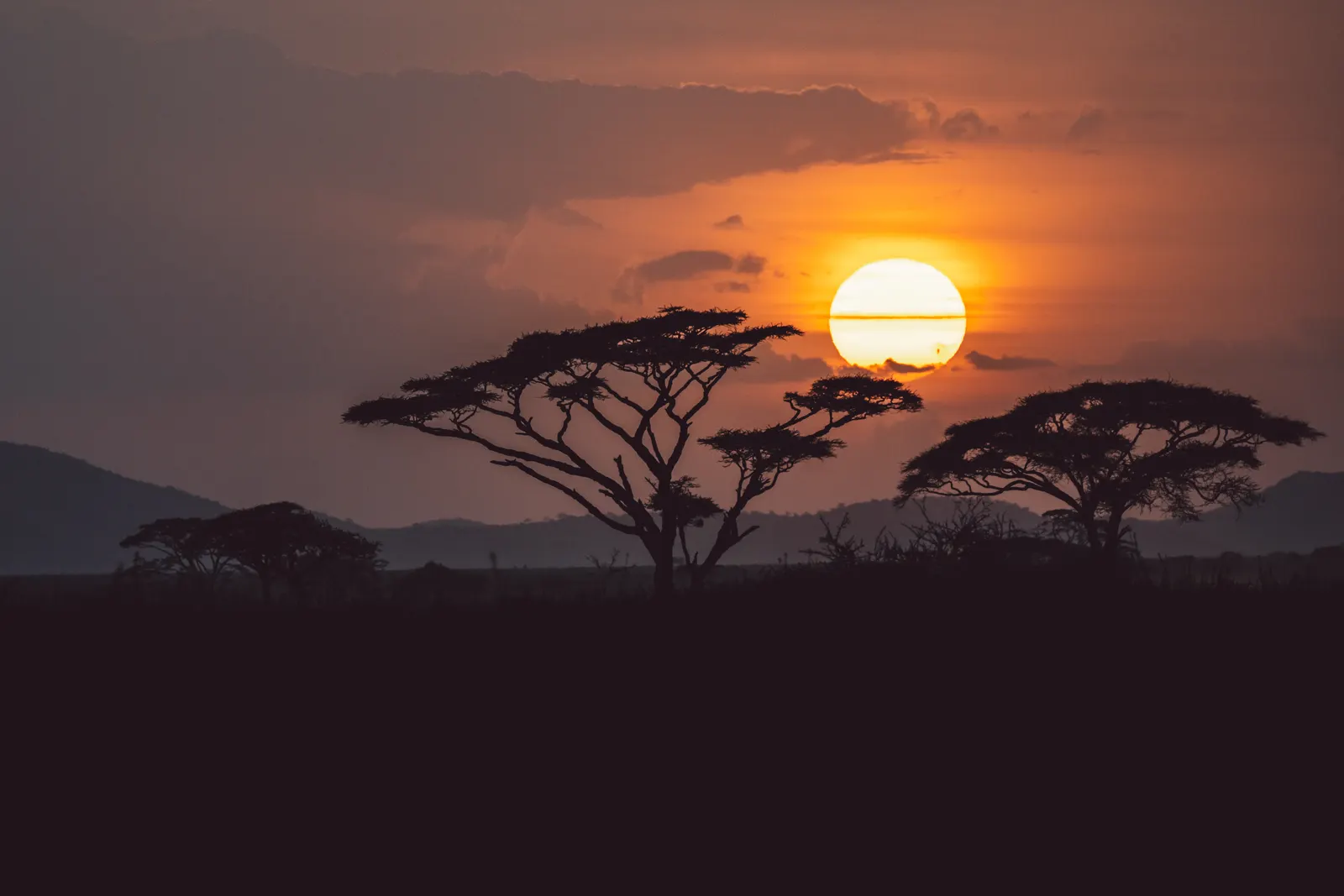
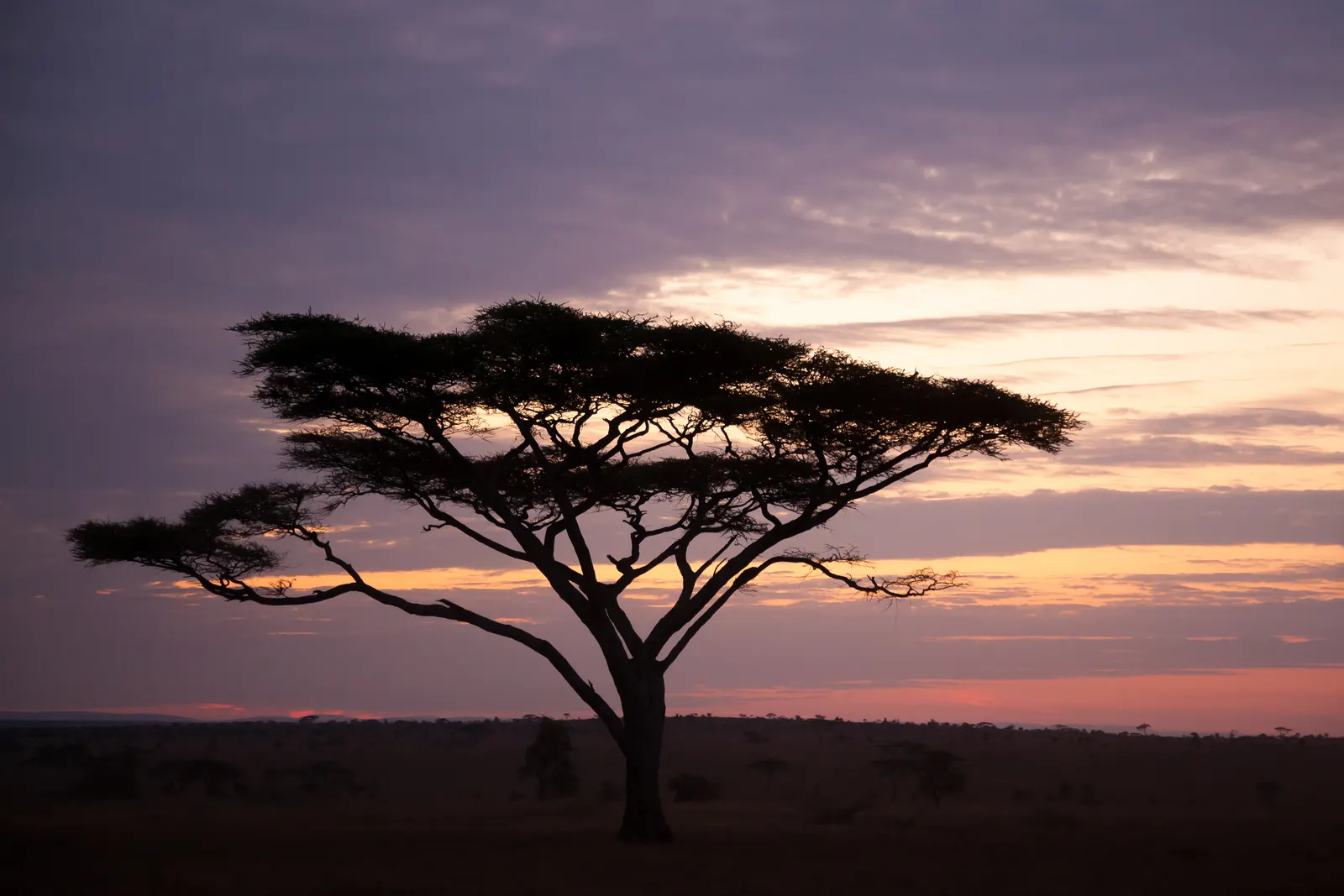
Acacia trees silhouetted against the setting sun
Arrival

Kilimanjaro International, and a night in Arusha

03°22′S 36°41′E
Dinner
Acacia trees silhouetted against the setting sun
Kilimanjaro International, and a night in Arusha
03°22′S 36°41′E
You land at Kilimanjaro International, most likely in the afternoon or evening, because that is when the long-haul routings from Doha, Istanbul, Amsterdam and Addis put down. Your guide meets you at the door with your name on a board. The drive to Arusha is fifty kilometres west, an hour, through coffee shambas under Mount Meru.
Nothing is scheduled tonight. On a seventeen-day trip there is no reason to start tired, and Arusha sits at 1,400 metres, which is enough to make a first evening feel longer than it is. Eat early. Repack into a soft bag — hard cases do not fit under the bench seats of a safari vehicle, and they do not fit in a light aircraft either, which matters more on this route than on most. The airlines that fly you south to Ruaha and on to Zanzibar apply a luggage limit, and your guide will tell you tonight what it is.
Over dinner, if you want it, he will walk you through the shape of the next sixteen days: nine on the northern circuit, three in the south, four on the coast. Agree the tipping arrangement now and change money for it. It removes the one awkward conversation of the trip before the trip has started.
Meals
Dinner
Travel
JRO to Arusha · 50 km · about 1 hour
Highlight
Nothing scheduled, on purpose
Meet at Kilimanjaro International
Arusha at 1,400 m
No game drive today
Where you sleep
Kahawa House: Two-storey main building with terrace and swimming pool in the gardens
COMFORT

Kahawa House

★★★★☆
Arusha, garden lodge on the edge of town
Quiet grounds, a proper bed, and an early breakfast before the road south.
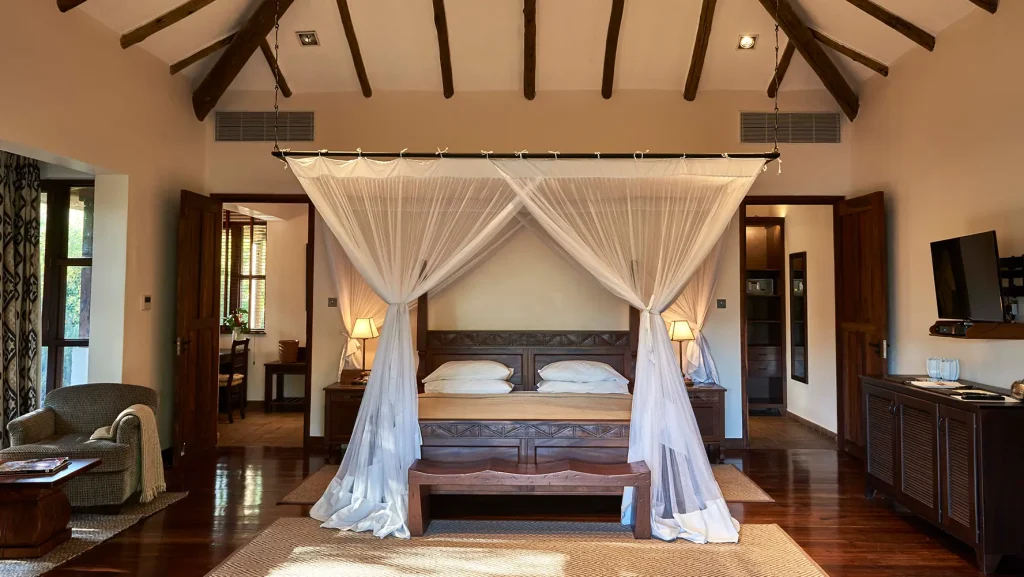
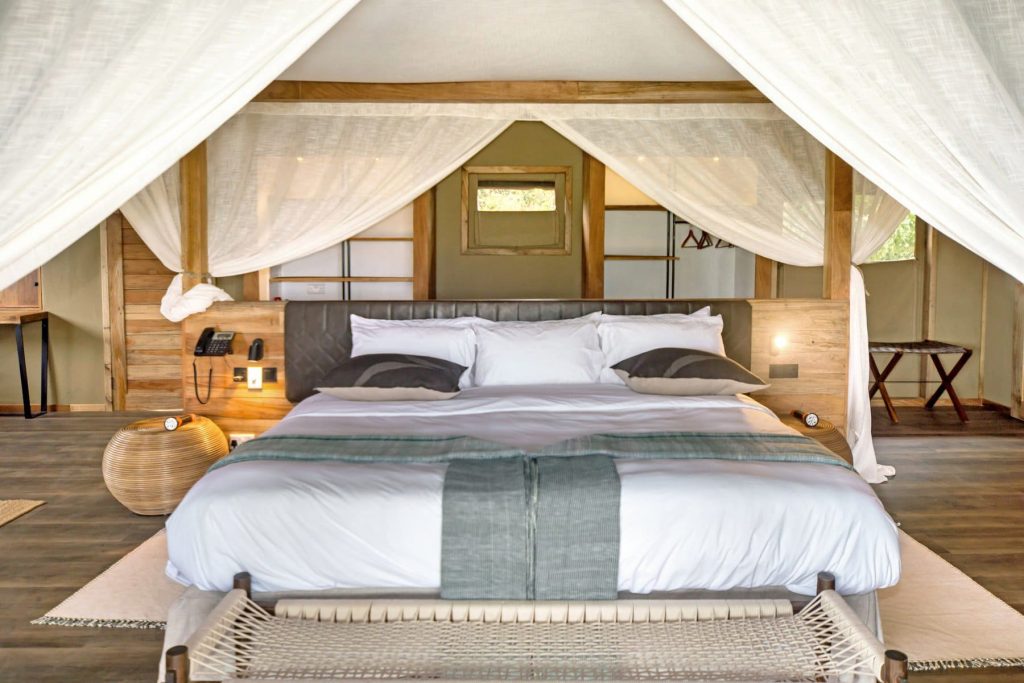
Legendary Lodge: Bedroom with wooden four-poster bed and white sheer curtains, hardwood floors
LUXURY

Legendary Lodge

★★★★★
Arusha, coffee-estate lodge
Cottages set among the coffee, a pool, and dinner served outside if the evening is warm.
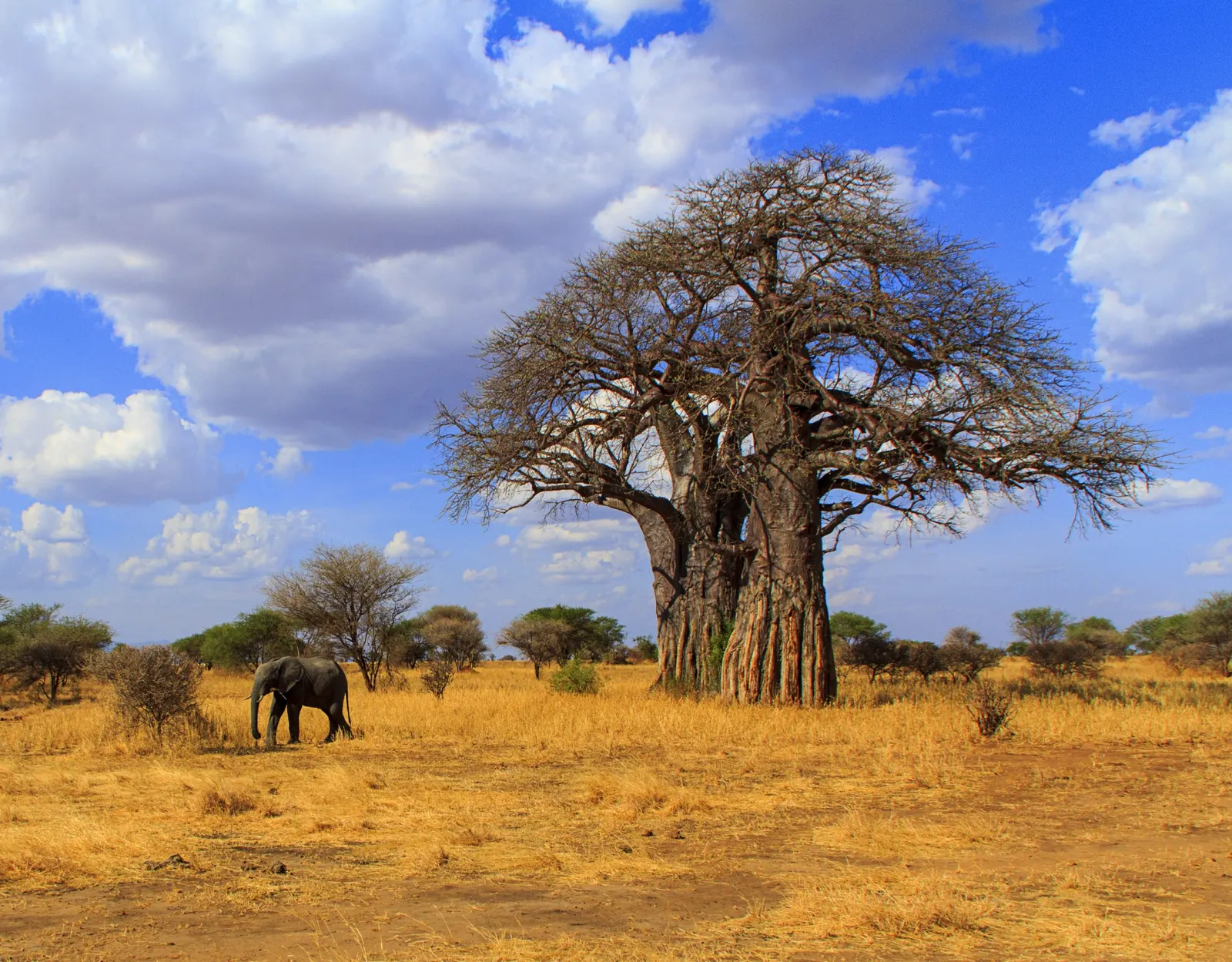
An elephant beside a baobab in Tarangire
South to the baobabs and the river
03°50′S 36°00′E
Out of Arusha after breakfast and south-west on the Great North Road, then east onto the floor of the Rift. The landscape changes twice in ninety minutes — cultivated highland, then Maasai grazing country, then baobab — and you will see your first giraffe from the tarmac, before the gate.
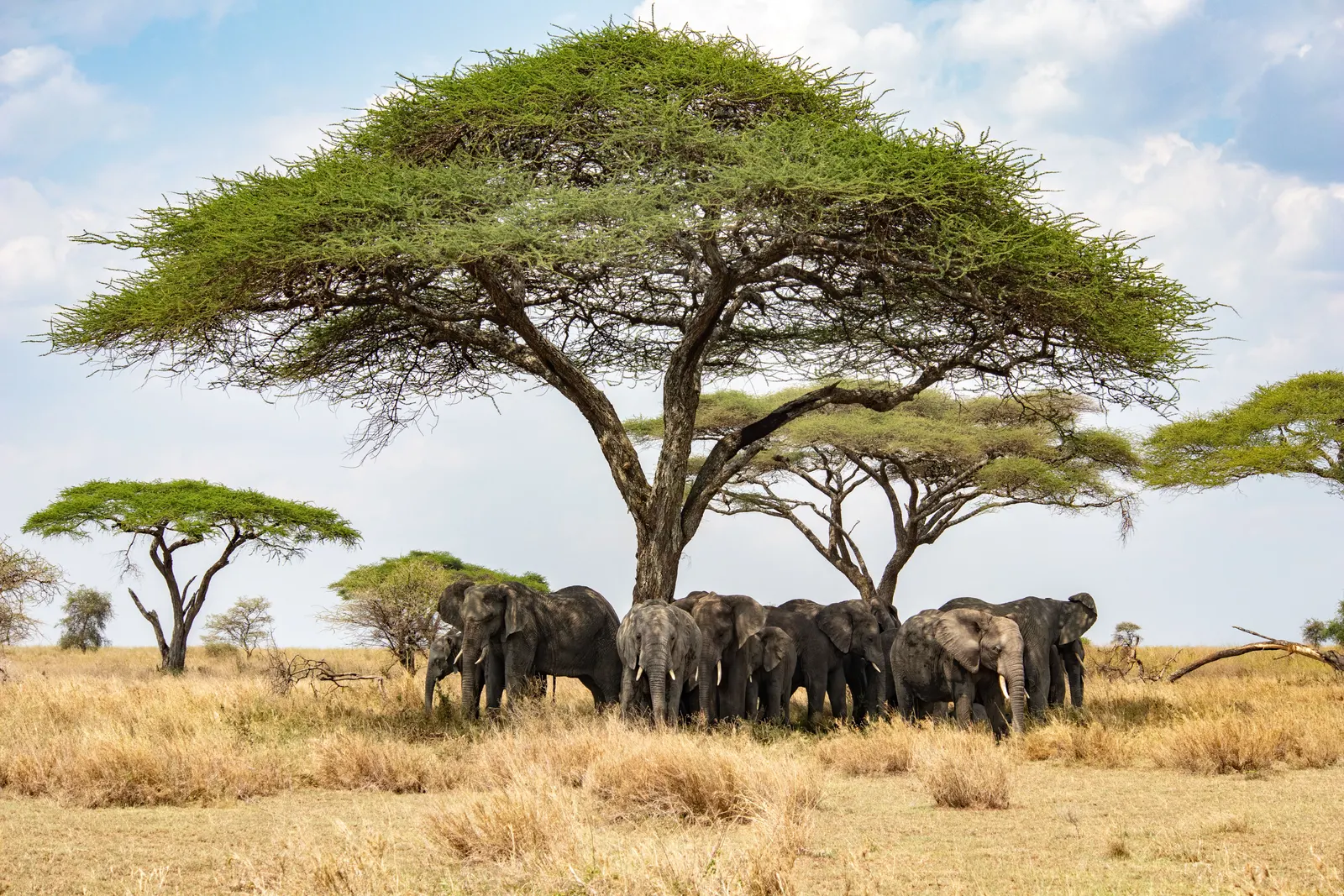
Tarangire is 2,850 square kilometres arranged around a single river, and between June and October that river is the only reliable water for a long way in any direction. The elephant herds converge on it. You will not see one elephant; you will see forty in a line crossing the track at a walk, and your guide will turn the engine off so you can hear them. Family groups of fifteen and twenty are normal. Aggregations of several hundred on one stretch of riverbed happen late in the dry season.
The afternoon drive runs the river circuit south of the gate. The baobabs are the oldest living things you will see on this trip — the large ones are somewhere between six hundred and a thousand years old — and most carry scars at exactly elephant height, where the bark has been stripped for its moisture in hard years. Camp before dark. You have a full day here tomorrow, which is why there are two nights.
Meals
Breakfast · Lunch · Dinner
Travel
Arusha to Tarangire gate · about 120 km · about 2 hours
Highlight
The densest elephant population in northern Tanzania
Big elephant herds
Baobab country
River circuit
Where you sleep
Mbali Mbali Tarangire River Camp: Luxury Guest Tent: thatched tent on a raised deck under a baobab with outdoor bathtub
COMFORT

Mbali Mbali Tarangire River Camp

★★★★☆
Tarangire, tented camp near the park boundary
En-suite tents, full board, and close enough to the gate for an early start without a pre-dawn drive.
Lemala Mpingo Ridge Lodge: Suite deck with outdoor bathtub and seating overlooking Tarangire at sunset
LUXURY

Lemala Mpingo Ridge Lodge

★★★★★
Tarangire, lodge on the escarpment above the river
Larger tents with a view down the river valley and a deck facing the elephant crossings at sundown.
Elephants beneath acacia trees
A full day, the southern swamps, and a night drive
03°58′S 36°05′E
You leave at first light with breakfast in a box and drive south towards the Silale swamps. The southern half of Tarangire sees a fraction of the traffic the northern circuit does, because most vehicles are on a day trip from Arusha and must be out of the gate by mid-afternoon. You are not. The swamps hold buffalo in numbers, the lions that follow them, and in the dry season a density of game that surprises people who thought yesterday was Tarangire.
Leopard are here and genuinely findable — the acacia along the watercourses is the right habitat and the guides know the individual trees. Do not expect it. If it happens it will be because your guide stopped for no reason you could see, and waited. Look up as well as out: Tarangire holds more breeding bird species than any single habitat of its size, and the dry riverbed pulls them into one place.
Tarangire is one of the few national parks where night drives are permitted, and this is the night to do one. After dinner you go out with a ranger and a filtered spotlight for two hours. Genet, bush baby, spring hare, porcupine, and the lions that were asleep under a tree at four o’clock now walking with purpose. The permit is charged on top of park fees — <span class=”it-todo”>night-drive permit to confirm</span> — and the usual minimum age is sixteen.
Meals
Breakfast · Lunch · Dinner
Travel
Full day in the park
Highlight
Silale swamps by day, a spotlight after dark
Full day, no transfer
Night drive permitted
Leopard possible
Where you sleep
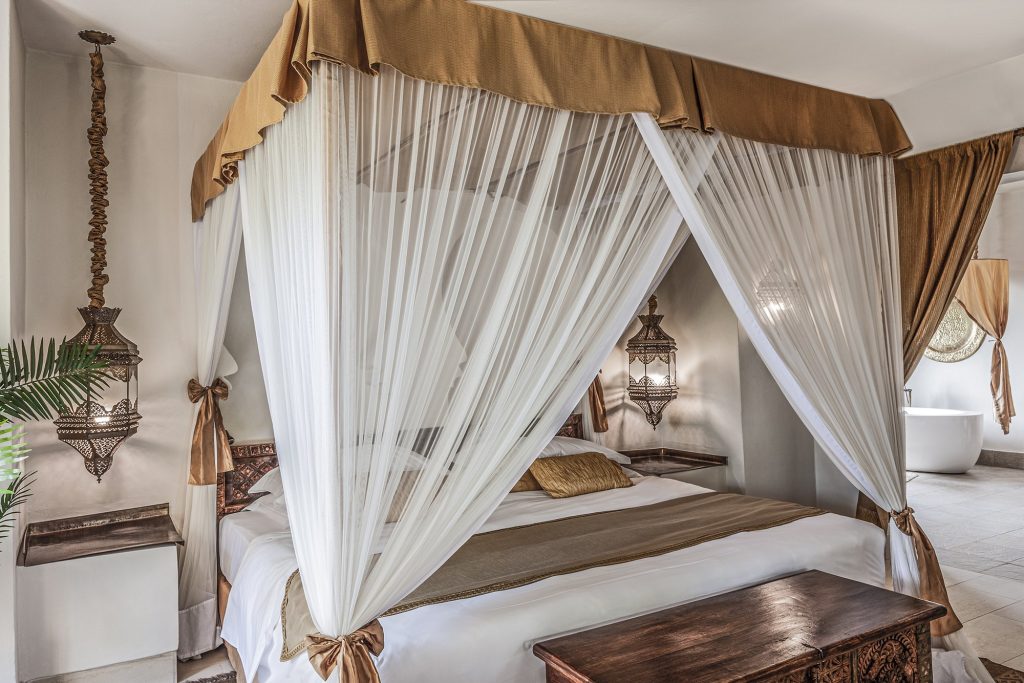
Mbali Mbali Tarangire River Camp: Safari Tent: bedroom with canopy bed and mosquito nets
COMFORT

Mbali Mbali Tarangire River Camp

★★★★☆
Tarangire, tented camp near the park boundary
Second night. No packing, no transfer, and a late return from the night drive to a fire already lit.
Lemala Mpingo Ridge Lodge: Suite bedroom with white canopy bed
LUXURY

Lemala Mpingo Ridge Lodge

★★★★★
Tarangire, lodge on the escarpment above the river
Second night, same tent. The night drive returns you to dinner rather than to an alarm.
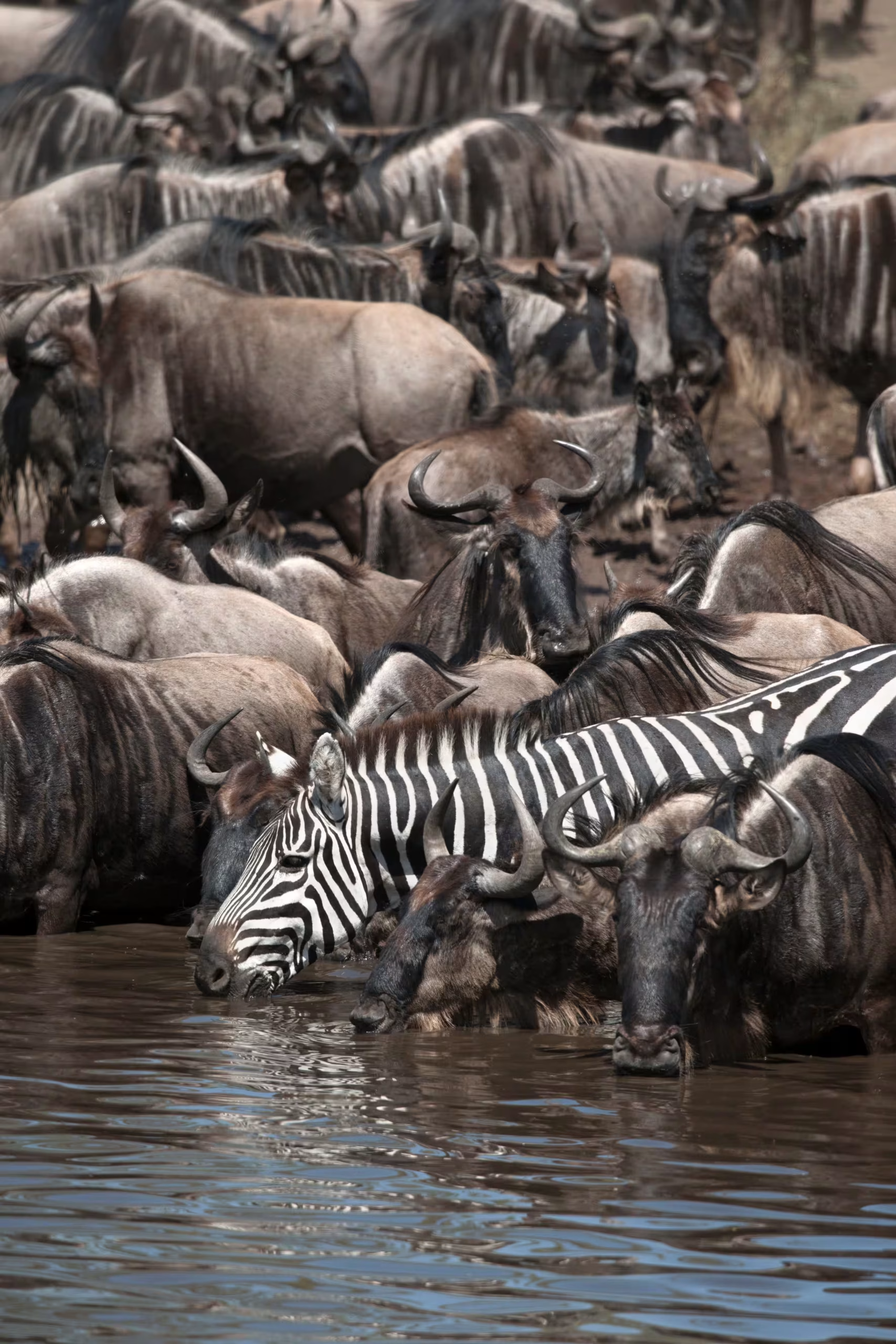
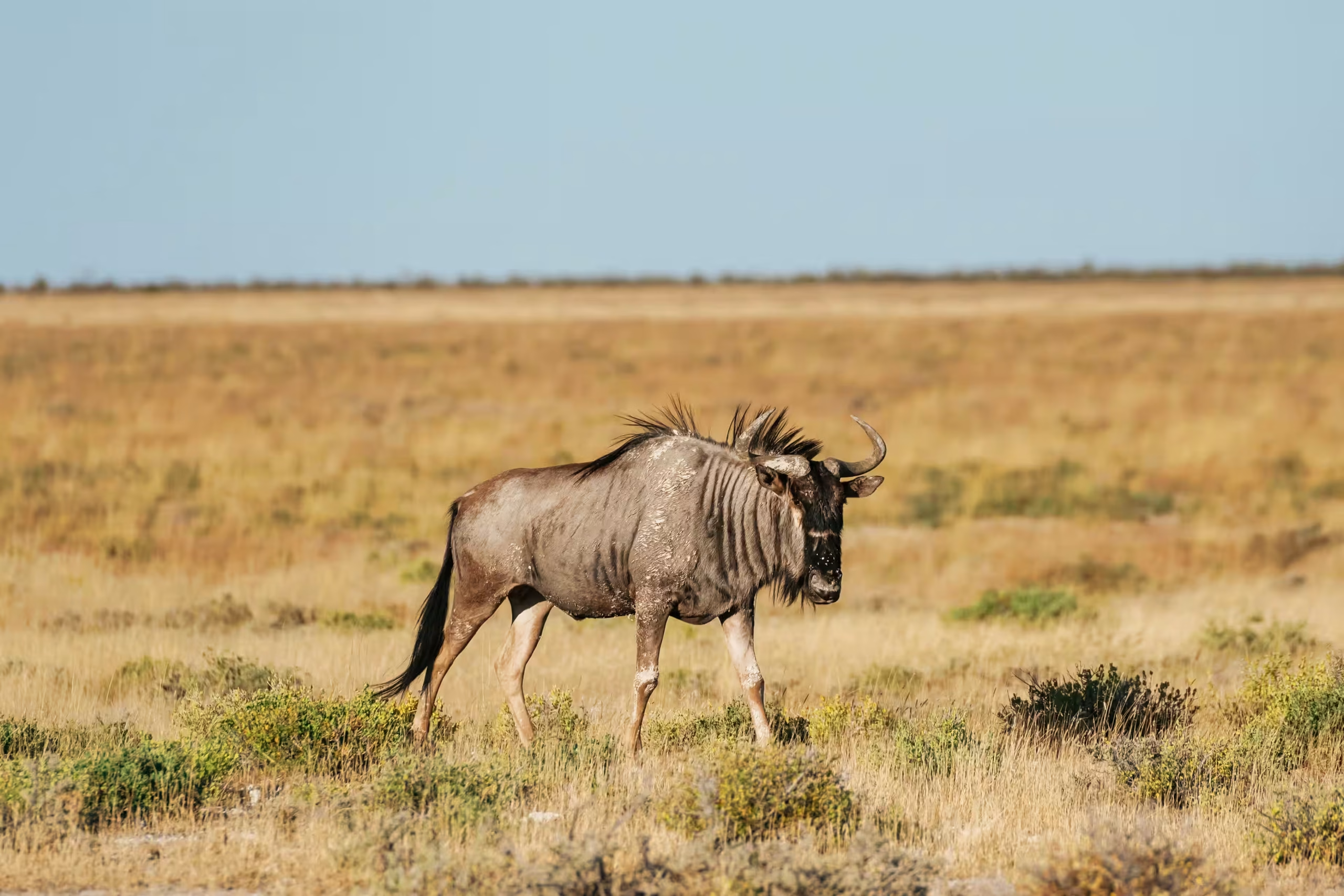
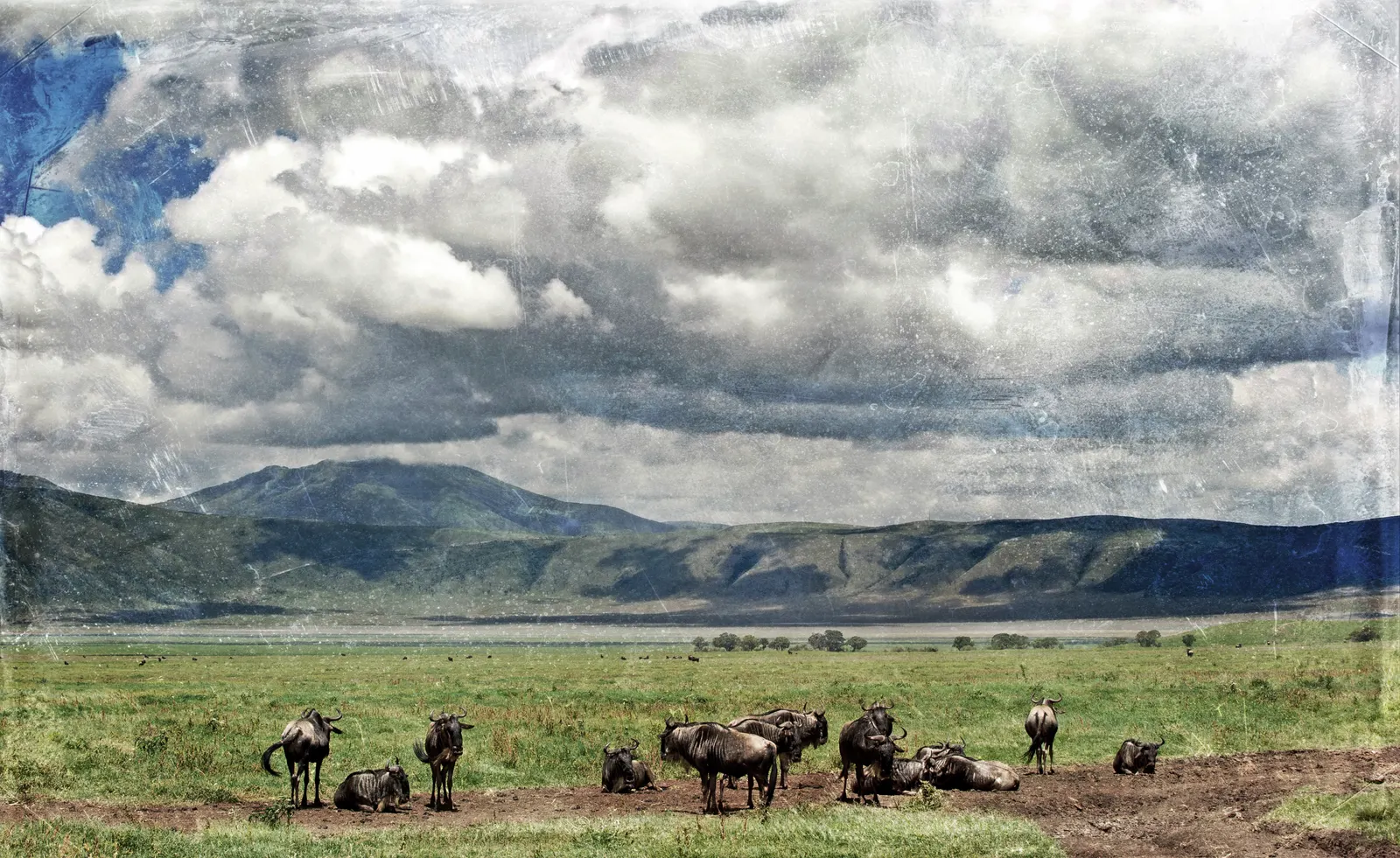
Wildebeest in the Ngorongoro Crater
Manyara from the escarpment, then up to the rim
03°14′S 35°30′E
North out of Tarangire, then west onto the road that climbs the Rift wall. Lake Manyara lies below you on the left for most of the ascent — a shallow soda lake in a trough, with a strip of groundwater forest along its western edge. On this route you drive past it rather than into it. There is a viewpoint at the top of the escarpment where you stop, and with the Serengeti and Ruaha ahead of you, that is the honest amount of Manyara for this trip.
Karatu is highlands farming country at 1,900 metres, noticeably cooler than anywhere you have been so far, and you keep climbing past it through the conservation area gate to the rim at about 2,300 metres. The first sight of the crater from the top is the one moment on the northern circuit that consistently outperforms the photographs: a caldera nineteen kilometres across with its own weather, often with cloud pouring over the western wall while the floor stays clear.
You sleep on the rim tonight rather than down in Karatu, and that is worth the premium. It puts you at the descent road at dawn rather than an hour behind the vehicles that stayed below. It is properly cold after dark — bring something warm out of your bag.
Meals
Breakfast · Lunch · Dinner
Travel
Tarangire to the Ngorongoro rim · about 160 km · about 3 hours
Highlight
The Rift wall, and the first sight of the crater
Rift escarpment viewpoint
Crater rim at 2,300 m
Cold at night
Where you sleep
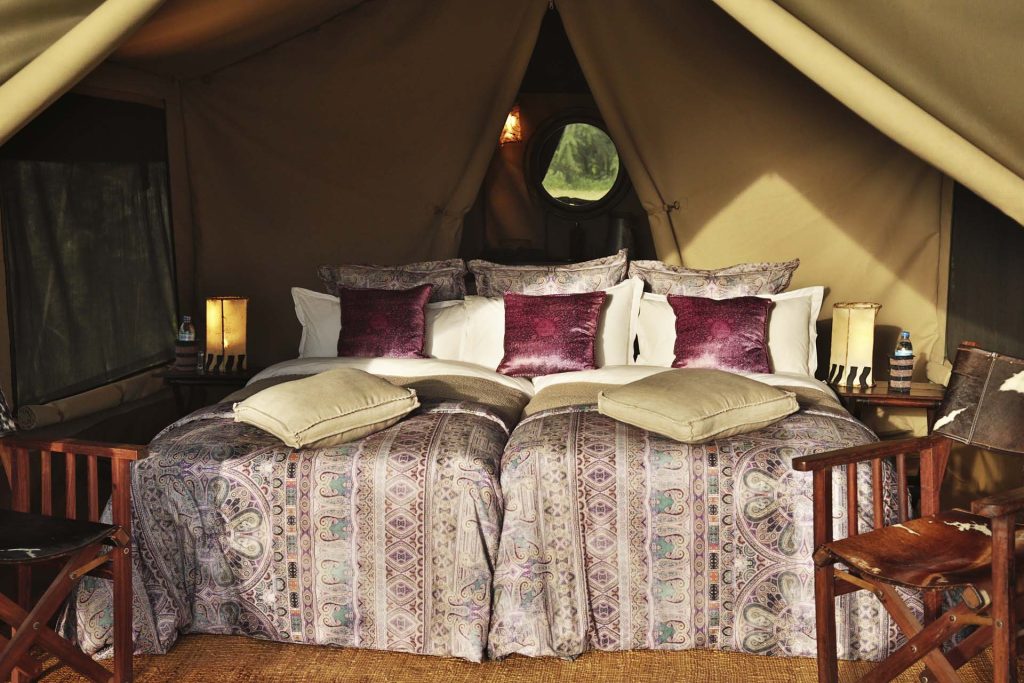
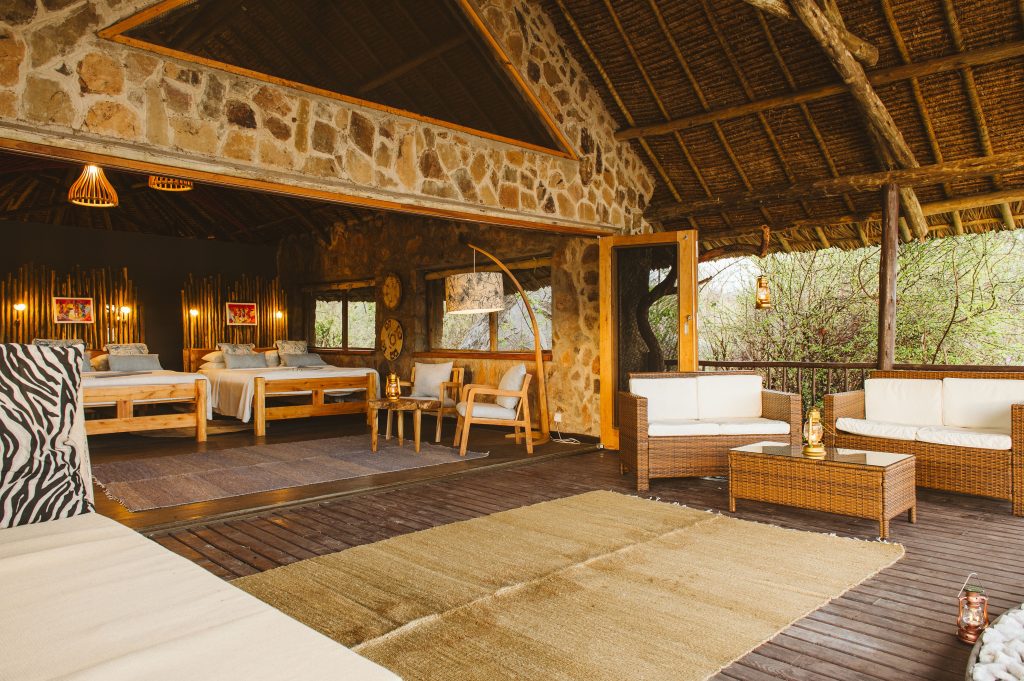
Pakulala Safari Camp: Tent interior with two queen beds, patterned throws and bedside lanterns
COMFORT

Pakulala Safari Camp

★★★★☆
Ngorongoro Conservation Area, on the rim
On the rim itself, so the morning starts at the descent road rather than on the way to it. Bring a fleece.
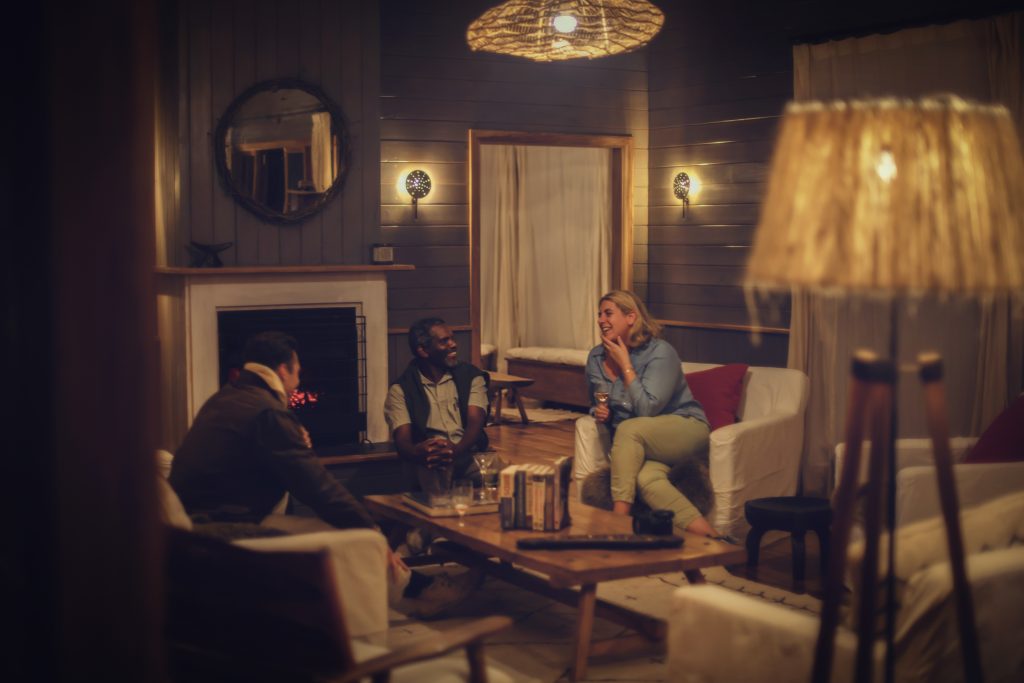
Entamanu Ngorongoro: Main lounge: guests by the fireplace
LUXURY

Entamanu Ngorongoro

★★★★★
Ngorongoro Conservation Area, on the rim
Rim-facing rooms with the crater floor below the window and fires lit in the evening.
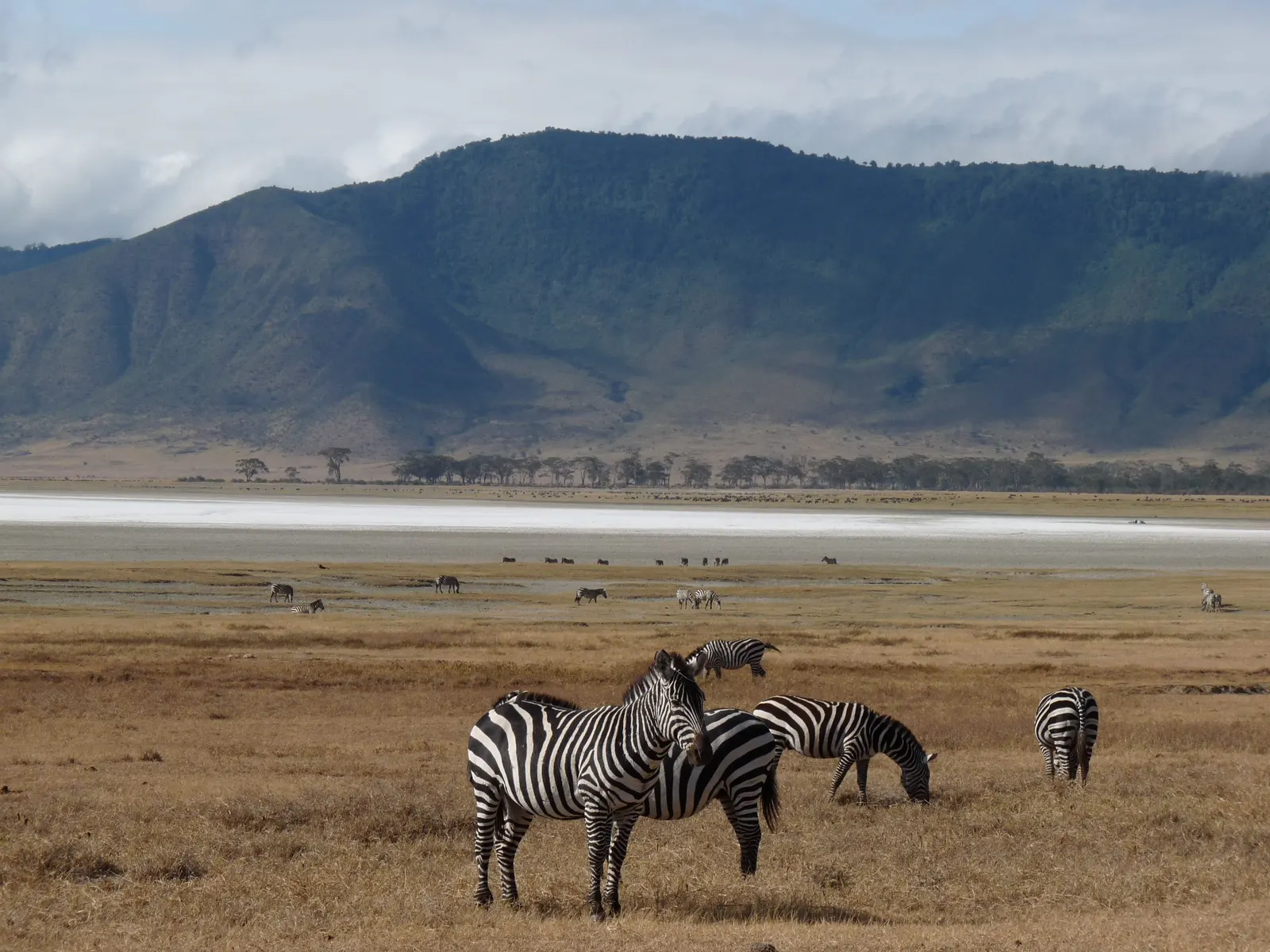
Zebras on the Ngorongoro Crater floor
Down into the crater, then west to Seronera
03°10′S 35°35′E
You descend at first light, because the crater floor holds cloud until mid-morning and the first hour after it lifts is the best game viewing of the day — and because by ten there will be a great many vehicles down there with you. Ngorongoro is a collapsed caldera with walls six hundred metres high, and the animals inside largely do not leave. Roughly 25,000 large animals live on 260 square kilometres of floor.
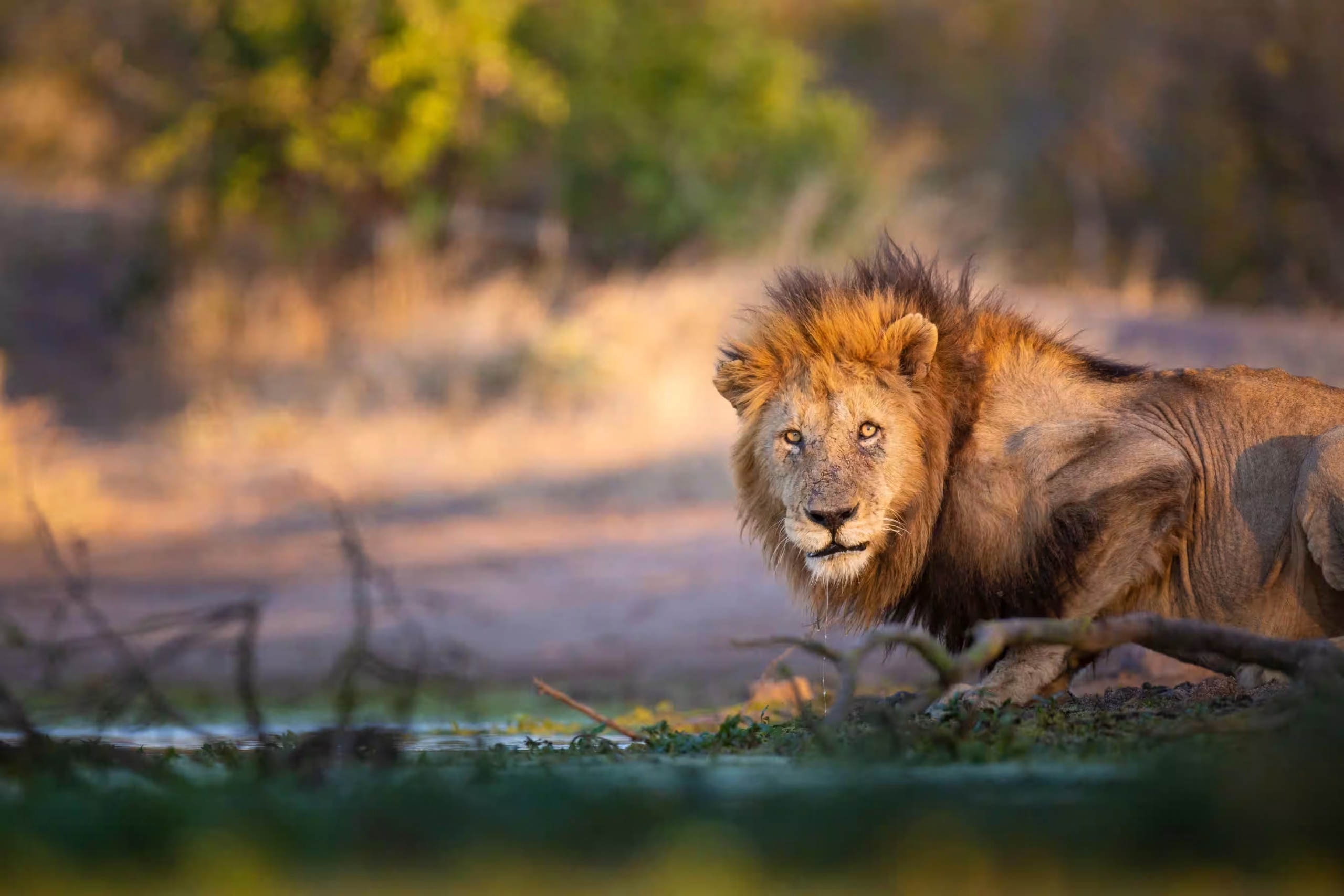
It is the most reliable place in Tanzania to see black rhino. There are only a few dozen and they are usually distant, so bring the binoculars and manage the expectation. Lion here are habituated to vehicles to a degree that is almost uncomfortable. Buffalo, hyena, flamingo on Lake Magadi, and the crater’s old elephant bulls, which carry some of the heaviest ivory left in East Africa. Vehicles are limited to six hours on the floor, so this is a half-day by regulation.
Up the ascent road around midday, then west across the conservation area and onto the short-grass plains. Olduvai Gorge is on the way if you want the stop. You enter the Serengeti at Naabi Hill, where the plains give way to the kopjes and acacia of the Seronera valley, and the last two hours are a game drive whether or not anyone calls them one.
Meals
Breakfast · Lunch · Dinner
Travel
600 m descent · rim to Seronera about 145 km · 3–4 hours
Highlight
Black rhino at dawn, the plains by evening
Black rhino
Six-hour limit on the floor
Naabi Hill gate
Where you sleep
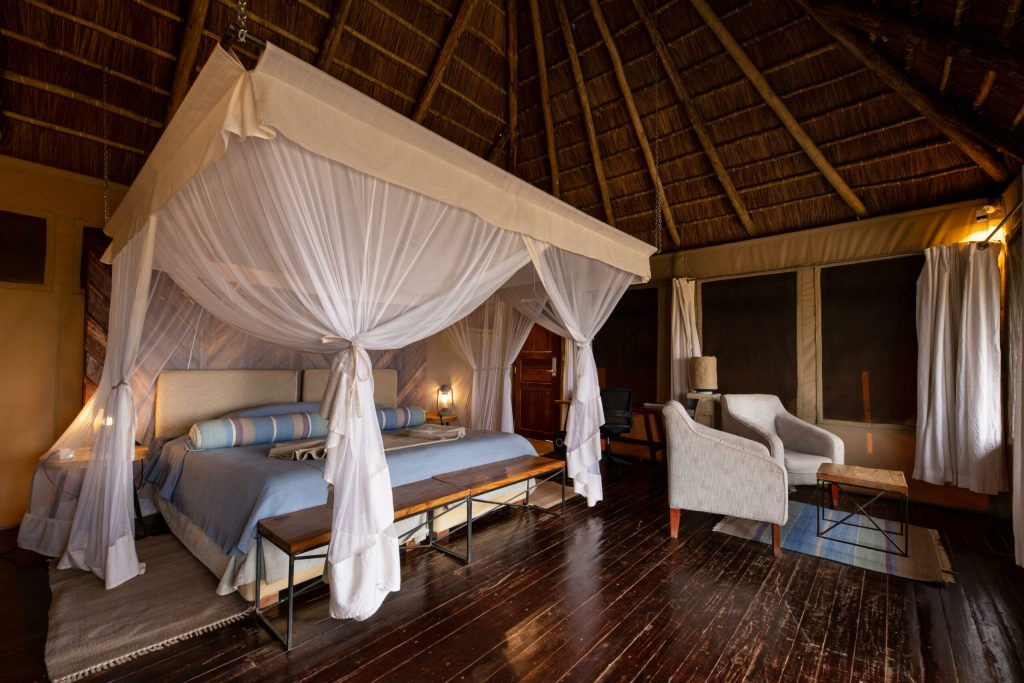
Kubu Kubu Tented Lodge: Tent interior with mosquito-net canopy bed under a thatched roof
COMFORT

Kubu Kubu Tented Lodge

★★★★☆
Central Serengeti, Seronera valley
Seronera is the year-round core of the park — permanent water and the highest concentration of big cats in the Serengeti.
Lemala Ewanjan Tented Camp: Camp exterior: guest tents with verandas under acacia trees, lantern in foreground
LUXURY

Lemala Ewanjan Tented Camp

★★★★★
Central Serengeti, Seronera valley
Fewer tents, further from the main track, and a private vehicle for the late drives.
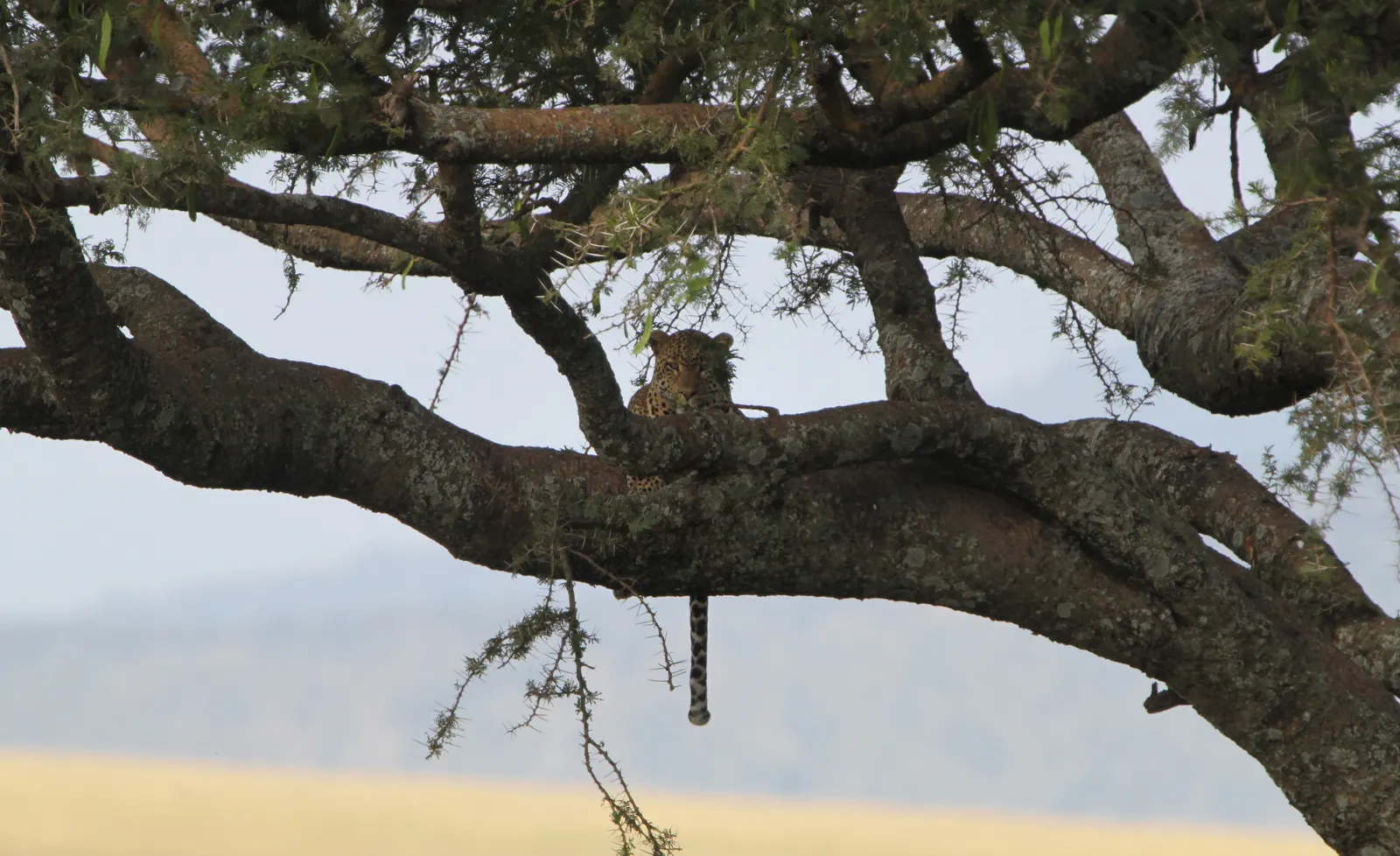
A leopard in a tree
A full day in the Seronera valley
02°26′S 34°49′E
A full day with no transfer, out at six with breakfast in the vehicle. The Seronera river holds water all year, and the fig and sausage trees along it are the most dependable leopard habitat in Tanzania. Lion are close to certain. Leopard are likely if your guide knows the individual trees, which is a real skill and the main thing separating a good guide from an adequate one. Cheetah hunt the open ground south and east of the river in the early morning before the heat.
The granite kopjes standing out of the grass are lion furniture — shade, a vantage point, safe ground for cubs. Where the migration is on this day depends on the month, and any operator who tells you otherwise in advance is guessing. What is reliable at Seronera is resident game: lion, leopard, cheetah, elephant, buffalo, hippo, and giraffe in the acacia.
Balloon flights leave from near here at first light and can be added. It is a serious expense, weather-dependent, and worth it once; the minimum age is <span class=”it-todo”>balloon minimum age to confirm</span>. If you are not flying, the alternative is to push further out than most vehicles go, towards the Moru kopjes, where there is a resident black rhino population and rock paintings that predate the park by centuries.
Meals
Breakfast · Lunch · Dinner
Travel
Full day in the park
Highlight
Leopard in the sausage trees, lion on the kopjes
Leopard country
No transfer today
Optional balloon
Where you sleep
Kubu Kubu Tented Lodge: Restaurant under a high thatched roof with set tables
COMFORT

Kubu Kubu Tented Lodge

★★★★☆
Central Serengeti, Seronera valley
Second night. The value of two nights here is the early morning — you are already inside the park when the cats are moving.
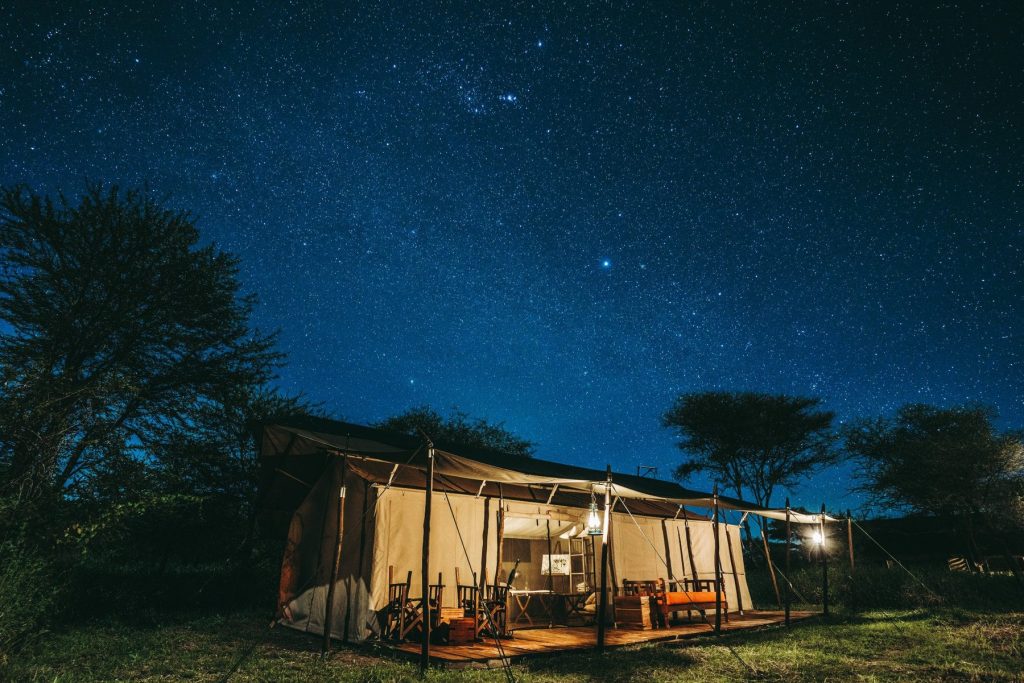
Lemala Ewanjan Tented Camp: Guest tent with furnished wooden deck lit up at night under a starry sky
LUXURY

Lemala Ewanjan Tented Camp

★★★★★
Central Serengeti, Seronera valley
Second night, with a dawn start and breakfast taken in the field.
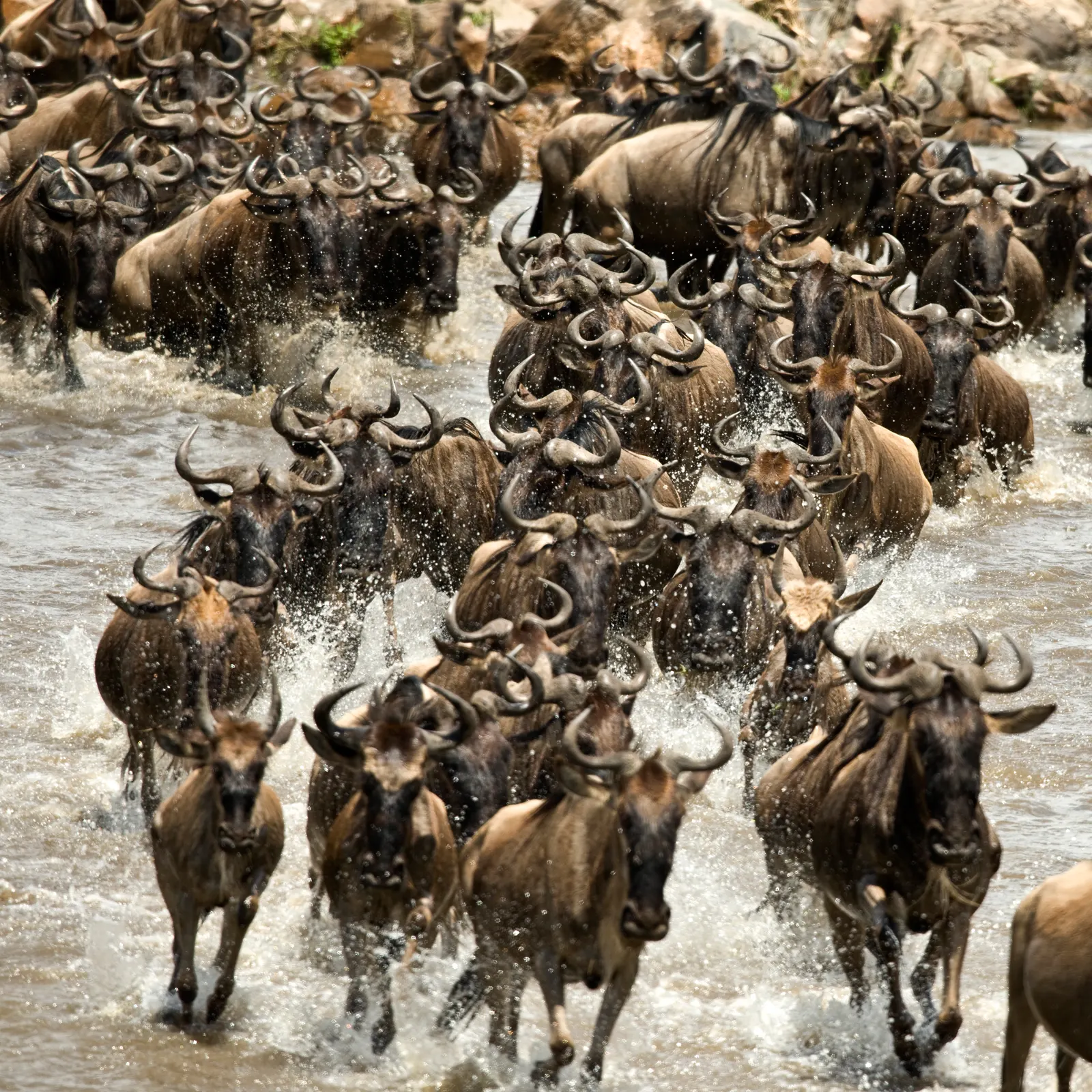
Wildebeest crossing the Mara River
North to the Mara River — or south to Ndutu
01°34′S 34°53′E
This is the day the route bends to the calendar. The Serengeti ecosystem is nearly 15,000 square kilometres and the migration uses all of it, so the second Serengeti camp is placed by month rather than by habit. Between July and October you go north, to the Kogatende and Lamai side of the Mara River, where the crossings happen. Between December and March you go south, to the short-grass plains around Ndutu, where the herds calve.
Going north is the longer drive and it is a game drive the whole way — up through the Lobo hills, past the Grumeti tributaries, and into a landscape of rolling grass and rocky ridges that is greener and emptier than the centre. You reach the river country by mid-afternoon. Going south is shorter, back through Naabi and out onto open plain, where the sky is most of the view.
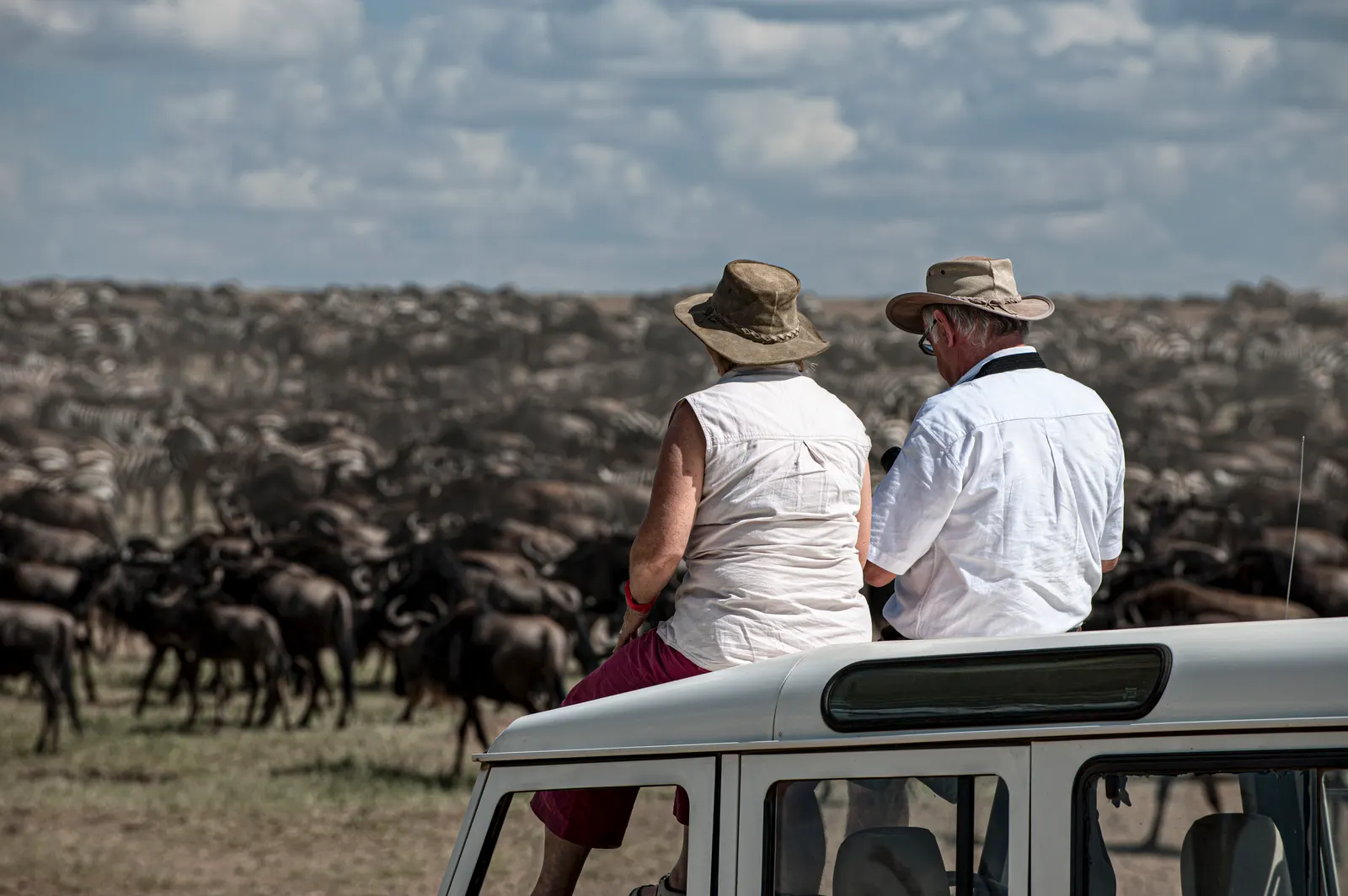
A crossing cannot be booked. The herds gather on a bank for hours and sometimes days, and turn back for no reason anyone has ever explained. Two nights here is the minimum that gives you a reasonable chance, and it is still a chance. What two nights guarantees is the herds themselves — hundreds of thousands of animals in one valley, and the predators that live off them.
Meals
Breakfast · Lunch · Dinner
Travel
Seronera to Kogatende about 150 km, or to Ndutu about 70 km · 5–6 hours north, about 2 hours south
Highlight
Wherever the herds are in your month
Placed by month
Mara River or Ndutu
Crossings not promised
Where you sleep
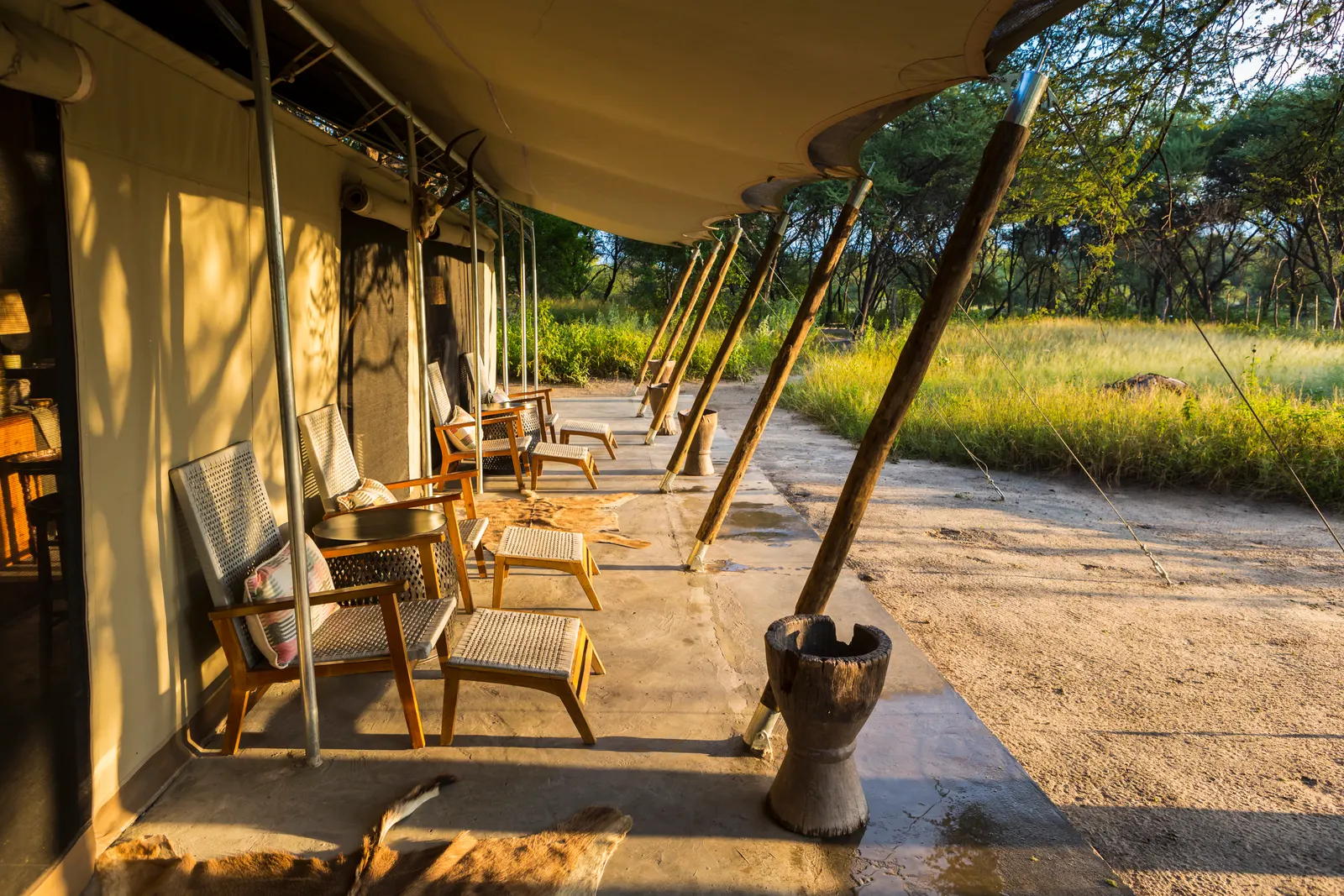
Nasikia Mobile Migration Camp: Guest tent with the front rolled open: canopy bed, chairs and side tables on the veranda
COMFORT

Nasikia Mobile Migration Camp

★★★★☆
Northern or southern Serengeti, mobile camp following the herds
A camp that moves two or three times a year to stay near the migration. Canvas, bucket showers with hot water on request, and the herds audible at night.
Olakira Migration Camp: The mobile camp: canvas tents among golden grassland and acacias overlooking the plains and distant hills
LUXURY

Olakira Migration Camp

★★★★★
Northern or southern Serengeti, seasonal camp
A smaller camp in the same country, with the river or the plains in front of the tent and a private vehicle throughout.
A safari vehicle among the migrating herds
A full day with the herds
01°34′S 34°53′E
A full day at the migration end of the park, and the last full day of the northern circuit. In the north, that means the Mara River. The vehicle takes up a position on a bank where the herds are gathering and waits, and the waiting is the point — the crossing, when it comes, is over in twenty minutes, and the hours before it are lion on the ridges, hippo and crocodile in the pools, and wildebeest in a column reaching the horizon.
In the south, between December and March, the full day is spent on the plains around Ndutu and the Hidden Valley, where half a million calves are born inside about three weeks and the predator activity that follows is the most concentrated of the year. Cheetah do well here because the ground is open; hyena clans work the edges of the herd in daylight.
You return to camp for lunch in the middle of the day, when the light is flat and everything is under a tree, and go out again at four. Tomorrow is the long flying day south, so the packing is done tonight and the soft bag is weighed. Anything you will not need in Ruaha or on the coast can be left with your guide, who drives back to Arusha, and collected when you fly through.
Meals
Breakfast · Lunch · Dinner
Travel
Full day in the park
Highlight
The river bank, or the calving grounds, all day
Full day, no transfer
Mara crossings possible
Pack for the aircraft
Where you sleep
Nasikia Mobile Migration Camp: Mess tent interior with long dining tables laid
COMFORT

Nasikia Mobile Migration Camp

★★★★☆
Northern or southern Serengeti, mobile camp following the herds
Second night in the same camp. The herds move; the camp is already where they are.
Olakira Migration Camp: Inside a guest tent: bed and chairs
LUXURY

Olakira Migration Camp

★★★★★
Northern or southern Serengeti, seasonal camp
Second night. Dinner is earlier tonight, because the flight out tomorrow is early.
Elephants and wildebeest among the trees
Serengeti to Dar es Salaam, by way of Arusha
06°49′S 39°17′E
This is the day that joins the two halves of Tanzania, and it is the day we are most careful to describe honestly. The Serengeti and Ruaha are about 550 kilometres apart in a straight line and there is no road between them that a sane person would drive. You fly. The usual routing is a light aircraft from the Serengeti airstrip to Arusha, a second aircraft from Arusha to Dar es Salaam, and a third from Dar into Ruaha the next morning — often via Arusha and Dar, in other words, and it fills a day.
Some seasonal direct links have run between the Serengeti or Arusha and Ruaha, and when one operates on your dates it removes a leg and gives a night back to the south. Whether one exists for your departure is <span class=”it-todo”>routing to confirm at booking</span>. The itinerary is priced on the routing that always works, not on the one that sometimes does.
A morning drive to the airstrip, then Arusha by late morning, where your guide meets the aircraft with anything you left with him. Dar es Salaam by afternoon. You sleep on the coast tonight, at sea level for the first time in nine days, and the warm air off the Indian Ocean is the first sign of where the trip is going to end.
Meals
Breakfast · Lunch · Dinner
Travel
Two or three light-aircraft legs · about 3–4 hours in total
Highlight
A long day in small aircraft, said plainly
Serengeti to Arusha by air
Arusha to Dar by air
Overnight in Dar
Where you sleep
Hotel Blue Sapphire: Hotel exterior
COMFORT

Hotel Blue Sapphire

★★★★☆
Dar es Salaam, hotel near the airport or on the peninsula
One night, chosen for a short transfer to the morning flight rather than for the view.
Outside view of Sea Cliff Hotel with ocean views
LUXURY

Sea Cliff Hotel

★★★★★
Dar es Salaam, seafront hotel on the Msasani peninsula
One night, with the ocean outside and dinner by the water; the airport is thirty to forty minutes away.
Elephants crossing the Great Ruaha River
Into the south: the Great Ruaha River
07°41′S 34°55′E
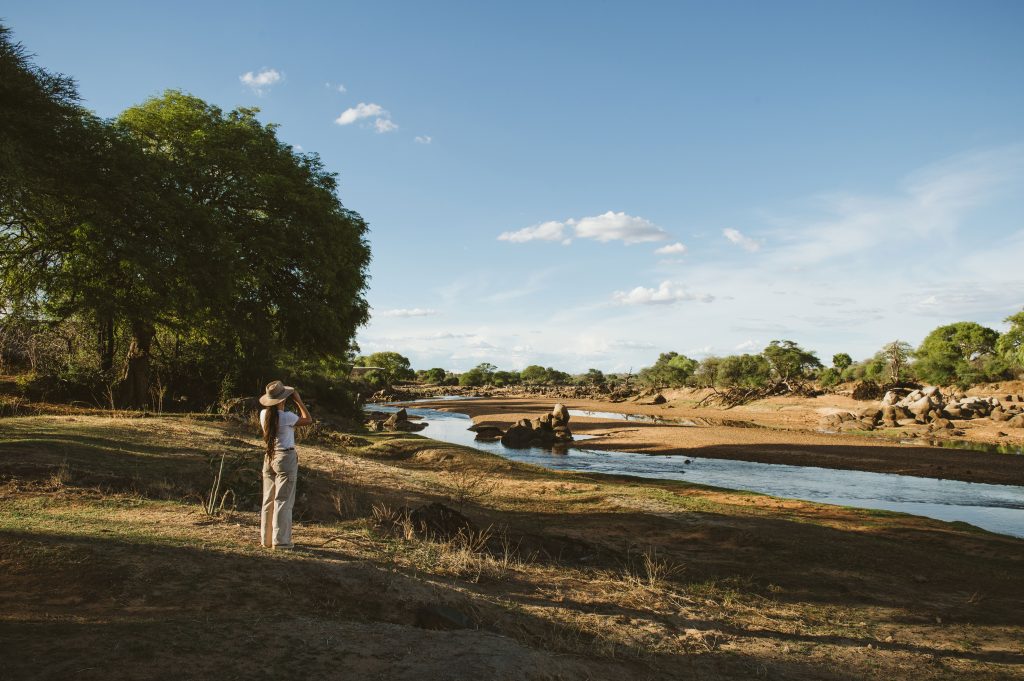
A morning flight out of Dar, south-west across the Uluguru mountains and the Mikumi flats, and down onto the Msembe airstrip beside the Great Ruaha River. Ruaha is a little over 20,000 square kilometres, the largest national park in Tanzania, and it receives a small fraction of the Serengeti’s visitors. You will go whole mornings without seeing another vehicle, and that is the reason the long flying day was worth it.
The country is different from the north in ways you notice from the aircraft: hotter, drier, hillier, with baobab on every rise and the river winding through sand and rock below the escarpment. The Great Ruaha is the park’s spine. In the dry season it shrinks to a chain of pools, and everything — elephant, buffalo, giraffe, the big lion prides — comes down to them.
An afternoon drive along the river from camp, and the first thing most people say is that the elephants look bigger. They are not; there are simply no fences and no crowds, and a bull crossing a dry sand river with nothing else in the frame reads differently. Ruaha is also where the ranges of East and southern African species overlap: greater and lesser kudu in the same park, sable and roan on the miombo edges, and both are worth asking your guide to look for.
Meals
Breakfast · Lunch · Dinner
Travel
Dar to Ruaha by light aircraft · about 2–3 hours with stops · morning departure from Dar
Highlight
Tanzania’s largest national park, and almost no vehicles
Fly in from Dar
Great Ruaha River
Few vehicles
Where you sleep
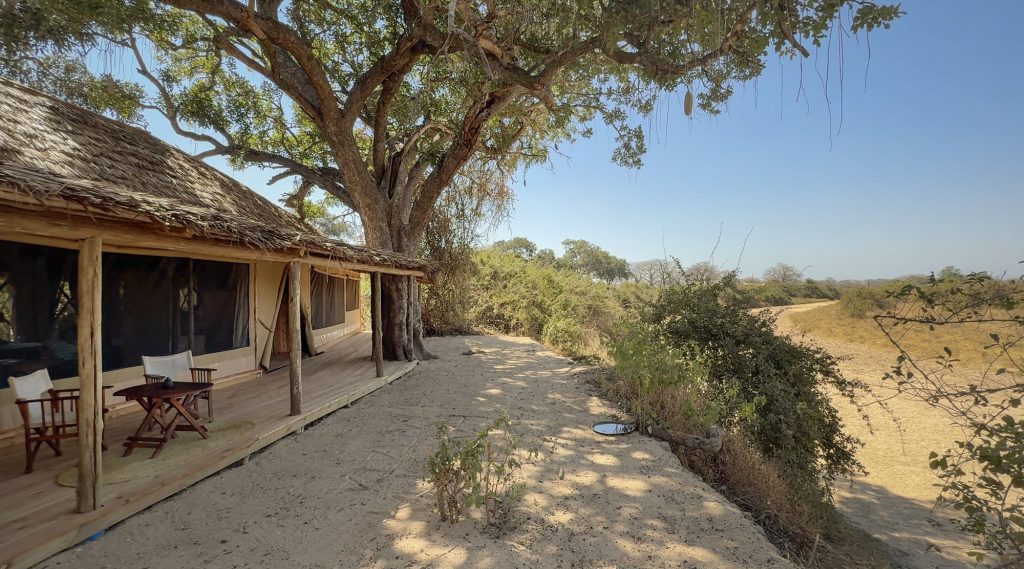
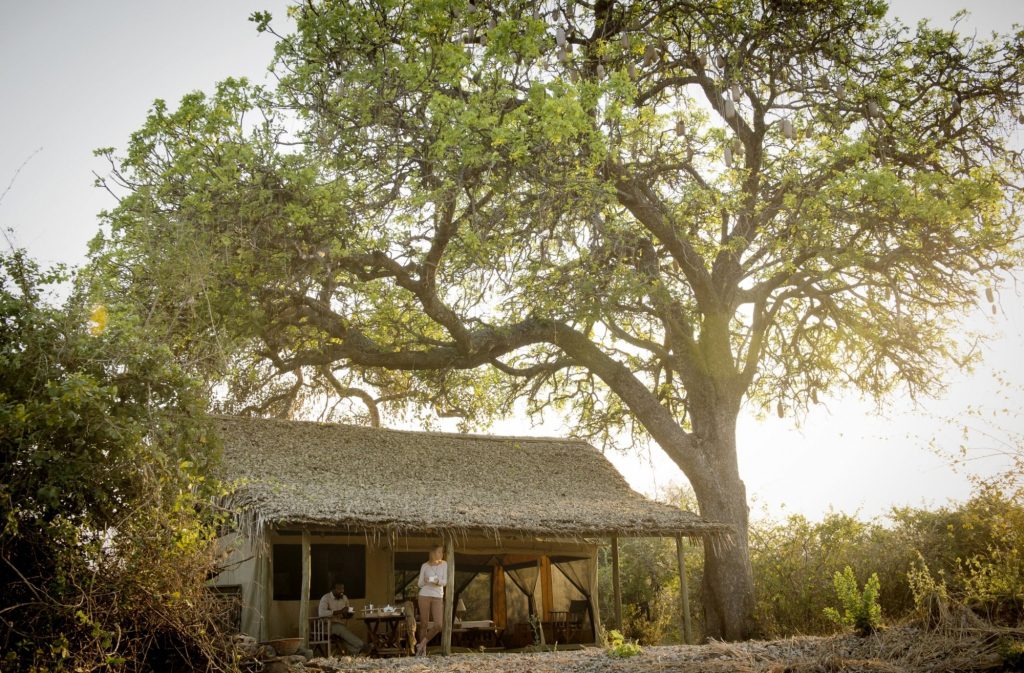
Riverside bandas at Ruaha River Lodge
COMFORT

Ruaha River Lodge

★★★★☆
Ruaha, tented camp on the Great Ruaha River
Canvas on the river bank, en-suite, full board, and elephant in the sand river in front of the tent most afternoons.
Kigelia Ruaha, Tanzania
LUXURY

Kigelia Ruaha

★★★★★
Ruaha, small camp on a river bend below the escarpment
A handful of tents, a private vehicle and guide, and the option of walking straight out of camp with a ranger.
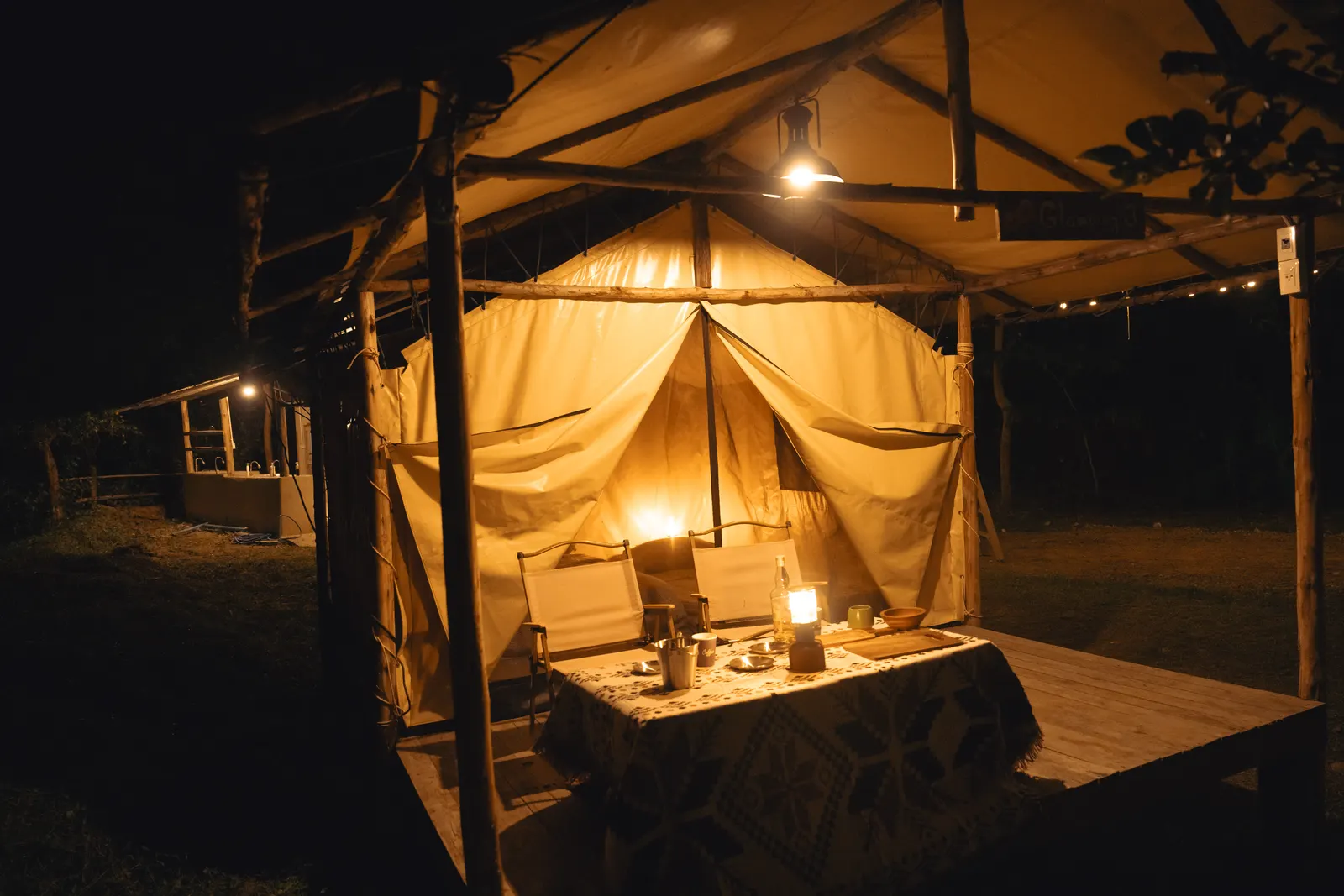
A safari tent at night
On foot in the morning, a spotlight at night
07°41′S 34°55′E
Ruaha is one of the parks where walking and night drives are both permitted, and this is the day built around them. In the morning you leave the vehicle and walk with your guide and an armed park ranger for two or three hours along the river. The point of walking is not to get close to big animals; it is to understand the ground — tracks in the sand, the way elephant have dug for water, a hyena den under a fallen baobab, and the silence when you stop. The usual minimum age is sixteen, and the walking fee is charged on top of park fees: <span class=”it-todo”>walking safari fee to confirm</span>.
The middle of the day is hot here — hotter than anywhere in the north — and camp is the right place for it. Ruaha’s lion prides are among the largest in East Africa; a pride of twenty is not unusual, and they hunt buffalo, which means they are often found in the open along the river in the late afternoon.
After dinner, the night drive. Ruaha at night is a different park: leopard on the road, honey badger, civet, the eyes of impala lit up in the grass, and lion hunting when it is cool. Two hours with a filtered spotlight and a ranger. The permit is <span class=”it-todo”>night-drive permit to confirm</span>, and the itinerary can swap this for a second game drive if you would rather.
Meals
Breakfast · Lunch · Dinner
Travel
Full day in the park
Highlight
Walking with an armed ranger, and a night drive
Walking safari
Night drive permitted
Big lion prides
Where you sleep
Ruaha River Lodge: The lodge
COMFORT

Ruaha River Lodge

★★★★☆
Ruaha, tented camp on the Great Ruaha River
Second night. Walking leaves from camp on foot, which is the best argument for staying on the river.
Kigelia Ruaha, Tanzania
LUXURY

Kigelia Ruaha

★★★★★
Ruaha, small camp on a river bend below the escarpment
Second night. A late return from the night drive to a fire and a plate kept warm.
Elephants crossing the Great Ruaha River
A full day into the far side of the park
07°30′S 34°40′E
The third night in Ruaha buys a full day away from the main river, which is where the park stops being a river and starts being a country. You leave early with a packed breakfast and lunch and drive north-west along the Mwagusi, a sand river that holds water under its bed long after the surface has gone. Elephant dig for it with their feet and trunks, and the holes they leave are used by everything else.
This is the best baobab country in Tanzania, and in the dry season it is bare: grey trees, gold grass, black rock, and a sky that is cloudless from June to October. It is also the country of the elusive things — wild dog, whose packs range across the park and cannot be predicted from one week to the next; leopard in the rocky gullies; cheetah on the few open flats. None of these is promised. Ruaha rewards people who accept that.
You come back to the river in the late afternoon, with the light going orange on the escarpment and the elephants already down at the pools. Pack tonight for the coast. Tomorrow you fly to Zanzibar by way of Dar es Salaam, and the safari half of the journey — twelve days, five parks — is finished.
Meals
Breakfast · Lunch · Dinner
Travel
Full day in the park
Highlight
The Mwagusi sand river and the baobab country
Full day, no transfer
Wild dog country
Last safari day
Where you sleep
Ruaha River Lodge: The lodge
COMFORT

Ruaha River Lodge

★★★★☆
Ruaha, tented camp on the Great Ruaha River
Third night. Three nights is what turns Ruaha from a long trip to a river into a park you have actually seen.
Kigelia Ruaha, Tanzania
LUXURY

Kigelia Ruaha

★★★★★
Ruaha, small camp on a river bend below the escarpment
Third night, and the last one under canvas. Dinner in the riverbed if the camp does that, and many do.
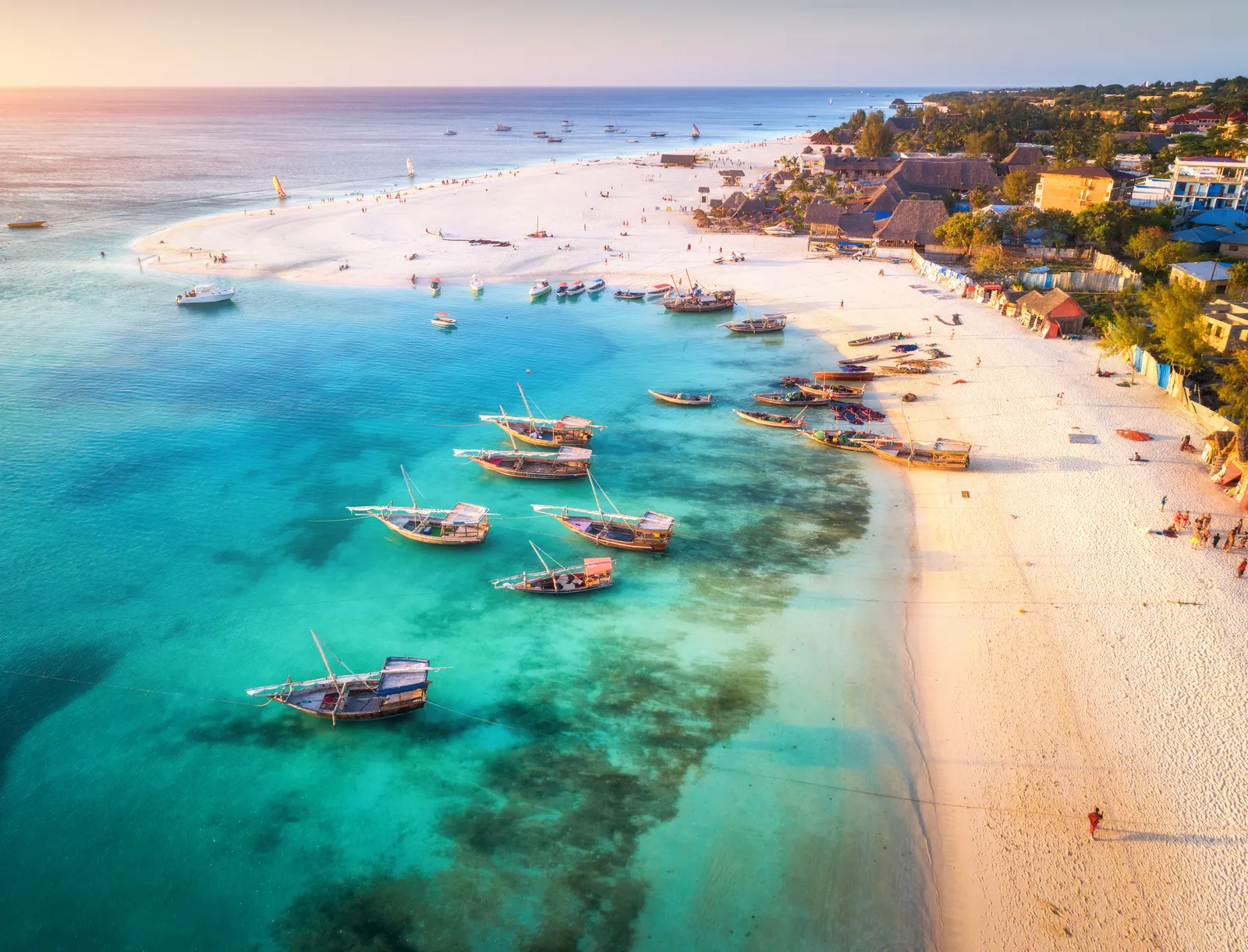
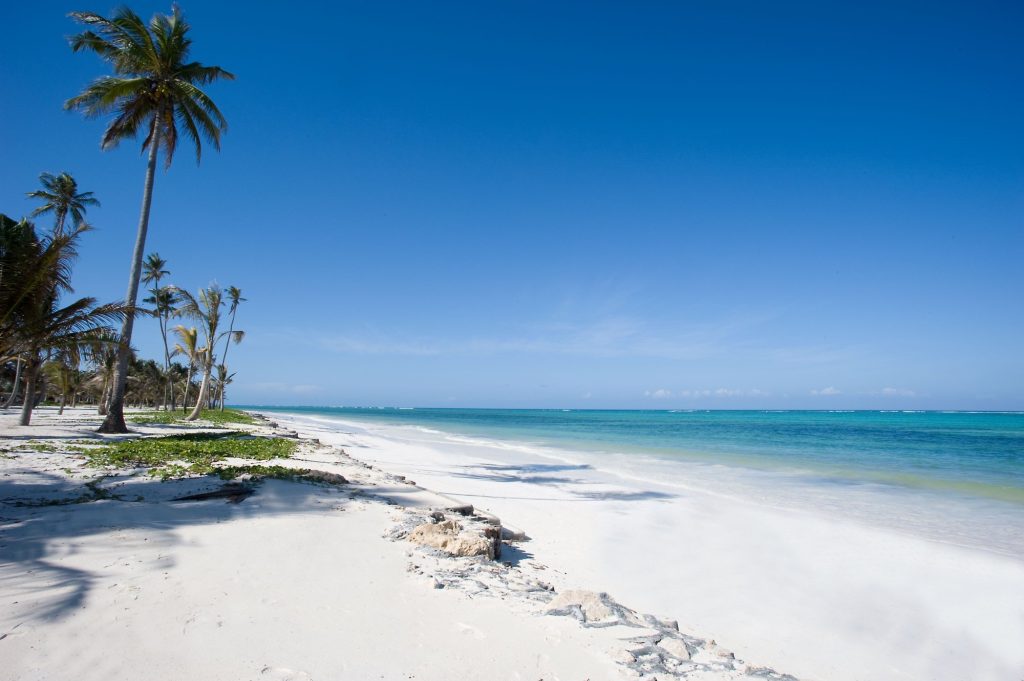
Dhows moored off a white-sand beach on Zanzibar
Ruaha to Zanzibar, by way of Dar
06°10′S 39°11′E
A short drive to the airstrip after breakfast, with a last look at the river on the way, and the aircraft north-east to Dar es Salaam. The Ruaha flight usually stops at other airstrips en route, so allow two to three hours. At Dar you change to the Zanzibar shuttle, which is twenty minutes across the channel and lands you on Unguja, the main island of Zanzibar, in the early afternoon.
There is a routing question here that you should answer before we book. Zanzibar is two places: Stone Town, the old Swahili trading port on the western shore, and the beaches, most of them an hour east or north by road. Four nights lets you do both — one night in the town and three on the coast, or all four on the coast with a day trip to the town. This itinerary is written for the first version, because Stone Town is better slept in than visited.
So tonight is the town. Coral-stone houses, carved doors, and lanes too narrow for a car; the Forodhani night market on the seafront, where the grilled fish and the Zanzibar pizza are exactly what they look like. After eleven days of six o’clock starts, nothing is scheduled and no one is waking you.
Meals
Breakfast · Dinner
Travel
Ruaha to Dar about 2–3 hours by air, Dar to Zanzibar about 20 minutes · arriving on Zanzibar by late afternoon
Highlight
From the bush to the Indian Ocean in a day
Two flights via Dar
Stone Town
Sea level at last
Where you sleep
Emerson Spice Hotel: Tea House rooftop restaurant
COMFORT

Emerson Spice Hotel

★★★★☆
Stone Town, boutique hotel in a restored merchant’s house
Carved doors, a courtyard, and a rooftop for the evening breeze off the harbour.
Zanzibar Serena Hotel, Tanzania
LUXURY

Zanzibar Serena Hotel

★★★★★
Stone Town, seafront hotel on the old harbour
Rooms facing the dhows, a pool, and dinner on the terrace over the water.
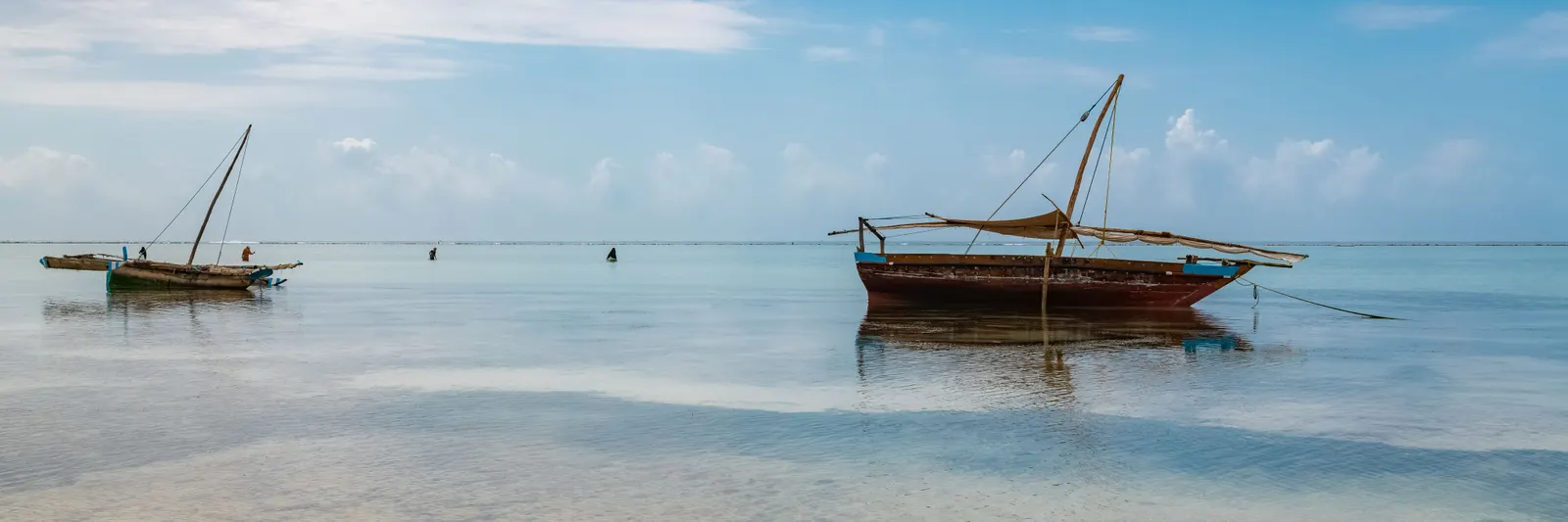
A dhow on the Indian Ocean at low tide
Stone Town in the morning, the east coast by afternoon
06°16′S 39°32′E
A morning walking the town with a local guide, before the heat. Stone Town is a UNESCO World Heritage Site because it is where Africa, Arabia, Persia and India met on one small peninsula and built with the same coral stone. The old slave market and the Anglican cathedral built over it; the House of Wonders on the seafront; the spice-scented lanes behind the Darajani market. Two or three hours is right. It is a living town, not a museum, and your guide will tell you where the photographs are welcome and where they are not.
Then the road east across the island, through clove and coconut country, to the coast. The east coast of Unguja faces the open ocean across a barrier reef about a kilometre out, and the tide goes a long way out twice a day — at low tide you can walk hundreds of metres across the flats to the reef edge, and at high tide the water is at the sand. Neither is a fault. It is how this coast works, and the hotels are built for it.
The afternoon is yours. Swim when the tide is in, walk the flats when it is out, and watch the seaweed farmers working the shallows at the end of the day. Dinner is fish, coconut and rice, and it is very good.
Meals
Breakfast · Dinner
Travel
Stone Town to the east coast · about 55 km · about 1 hour by road
Highlight
The old town on foot, then the reef
Stone Town on foot
Clove and coconut country
Tidal coast
Where you sleep
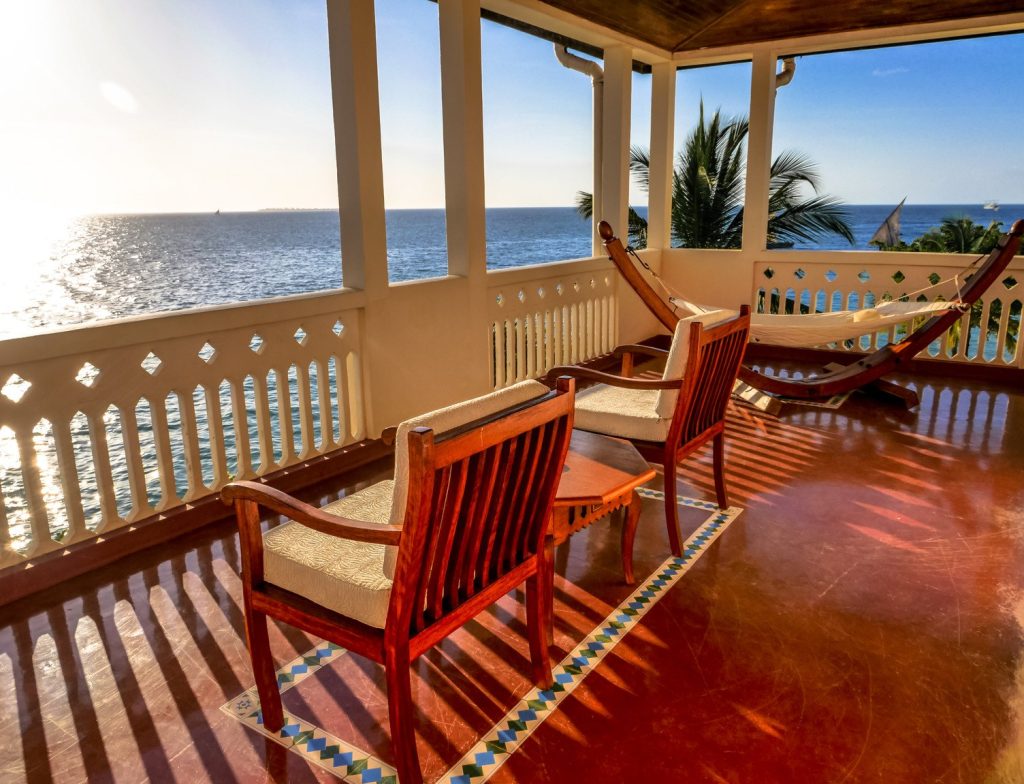
Pongwe Beach Hotel: View from the suites
COMFORT

Pongwe Beach Hotel

★★★★☆
East coast, small beach hotel on the sand
Rooms opening straight onto the beach, a pool for the low tide, and a kitchen that cooks what the boats bring in.
Baraza Resort & Spa Zanzibar, Tanzania
LUXURY

Baraza Resort & Spa Zanzibar

★★★★★
East coast, resort with private villas on the beach
Villas with their own pools, a spa, and staff who know the tide table better than you will.
Dhows moored off a white-sand beach on Zanzibar
The reef, the forest, or nothing at all
06°16′S 39°32′E
A free day, and the first of two. The point of four nights on the coast is that you are not obliged to do anything, and after thirteen days of moving most guests do very little on the first one. That is the correct use of the day.
If you want to go out, the best snorkelling on the island is off the small islands and sandbanks on the reef — a boat trip of half a day from the north-east coast, with visibility that depends on the wind and the tide rather than on anyone’s promise. Between June and October the south-east monsoon, the kusi, blows steadily and the sea on the east coast is livelier; the north and west of the island are calmer in those months, which is worth knowing when you choose a hotel.
The other half-day worth doing is Jozani forest, in the south-east of the island, which is the only place in the world with wild Zanzibar red colobus. They are habituated, they sit at eye level, and the forest walk and the mangrove boardwalk take about two hours. Either excursion is arranged on request and priced separately: <span class=”it-todo”>excursion prices to confirm</span>.
Meals
Breakfast · Dinner
Travel
No transfer
Highlight
Snorkelling, red colobus, or a long lunch
Free day
Reef snorkelling optional
Jozani red colobus optional
Where you sleep
Pongwe Beach Hotel: Sea View Suite
COMFORT

Pongwe Beach Hotel

★★★★☆
East coast, small beach hotel on the sand
Second night. The rooms are the same; the tide is different.
Baraza Resort & Spa Zanzibar, Tanzania
LUXURY

Baraza Resort & Spa Zanzibar

★★★★★
East coast, resort with private villas on the beach
Second night, with a spa afternoon if the reef does not appeal.
A dhow on the Indian Ocean at low tide
A last full day on the coast
06°16′S 39°32′E
The last full day, and again nothing is required of you. Two excursions suit it if you want them. The first is a spice farm in the middle of the island, which sounds like a tourist obligation and is better than that — clove, cinnamon, cardamom, vanilla and pepper growing in the same acre, and you taste all of them. It is the reason Zanzibar was rich, and the reason Stone Town exists.
The second is a dhow at the end of the day. The traditional sailing boats still work these waters, and an hour or two under sail as the light goes is the last image most guests take home. On the east coast this depends on the tide and the wind, and the hotel will tell you honestly whether the afternoon is right for it.
Otherwise the beach. Reconfirm your flights tonight and check the luggage weight one last time — international flights out of Zanzibar are direct on some carriers and via Dar on others, and your guide or the hotel will arrange the transfer time to match. Dinner is the last of the trip, and sixteen nights in it is worth counting back through: the elephants, the crater, the river, the walk, this.
Meals
Breakfast · Dinner
Travel
No transfer
Highlight
Spice farm, dhow at sunset, or the beach again
Free day
Spice farm optional
Sunset dhow optional
Where you sleep
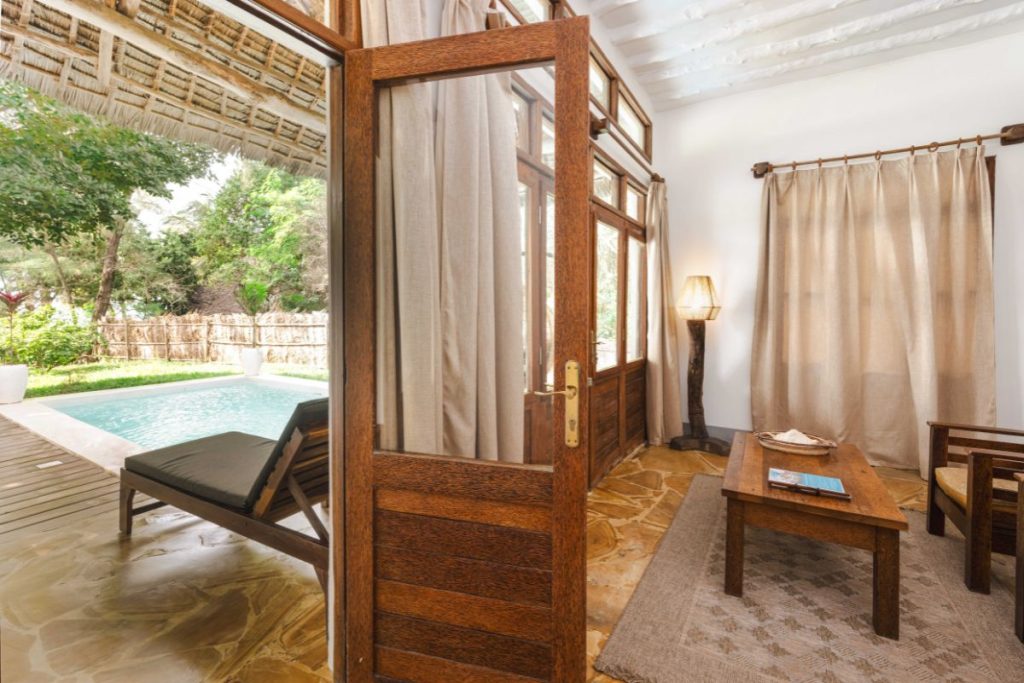
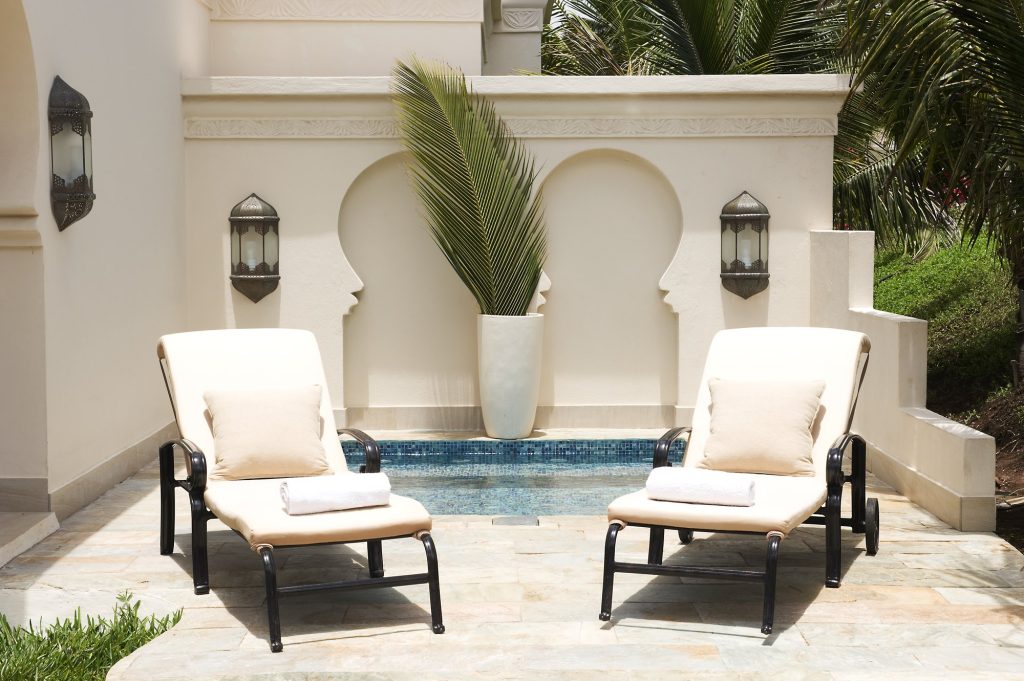
Sea-view pool at Pongwe Beach Hotel
COMFORT

Pongwe Beach Hotel

★★★★☆
East coast, small beach hotel on the sand
Third and last night on the sand.
Baraza Resort & Spa Zanzibar, Tanzania
LUXURY

Baraza Resort & Spa Zanzibar

★★★★★
East coast, resort with private villas on the beach
Third and last night, with an unhurried breakfast tomorrow before the airport.
Dhows moored off a white-sand beach on Zanzibar
Zanzibar, and home
06°13′S 39°13′E
The end of the journey. Zanzibar’s airport is about an hour from the east coast and your transfer is timed to your flight — direct international departures from the island exist on several carriers, and where yours goes through Dar es Salaam the connection is a twenty-minute hop across the channel, which we will book with sensible time in hand.
If your flight is in the evening, the hotel will usually hold your room or give you somewhere to change, and the day is yours until mid-afternoon. If it is in the morning, breakfast is early and nothing else happens. Tell us the flight time before we book the last hotel and we will choose one that makes this day easy rather than one that makes it long.
Seventeen days, sixteen nights, five parks and places, from the Rift Valley to the Indian Ocean. It is the longest itinerary we run, and the only one that reaches the northern circuit, the southern wilderness and the coast without shortening any of them. If any part of it should be longer — and guests most often say Ruaha — we can build that version too.
Meals
Breakfast
Travel
East coast to Zanzibar airport · about 1 hour by road
Highlight
A late breakfast, then the airport
Airport transfer
Direct or via Dar
End of journey
Where you sleep
Departure day — no overnight
III · Rates

What it costs, by group size

A safari gets cheaper per person as the vehicle fills. Flights are per seat. Choose a tier to see the table.
Comfort rates by group size, per person and group total
Group sizeRoomsPer personGroup total
1 guest1 room$15,850$15,850
2 guests1 room$11,830$23,660
3 guests2 rooms$12,030$36,090
4 guests2 rooms$10,980$43,920
5 guests3 rooms$11,270$56,350
6+ guests3 rooms$10,690$64,140
Single supplement
$2,330
Added when a guest does not share a room
Child, 3 – 11 years
30% off
Sharing with two adults; walking and night drives are 16+
Peak season uplift
Included in the rates above
July – October, and the festive weeks
All figures in US dollars, per person sharing unless stated. Valid for travel until 30 June 2027. Park fees, guiding, vehicle, accommodation and full board are included — see what is and is not covered below.
IV · Included

What is in the price, and what is not

Stated in full, both ways — including which flights.

What is included

What is not

V · Add-ons

Worth adding, if you have the days

Priced separately and arranged on request.
A balloon above the migrating herds
Seronera · at dawn

Balloon over the Serengeti

An hour over the plains at first light, landing to a breakfast set out in the grass. Weather-dependent and booked well ahead — balloons sell out months before the high season.
USD 750 per person
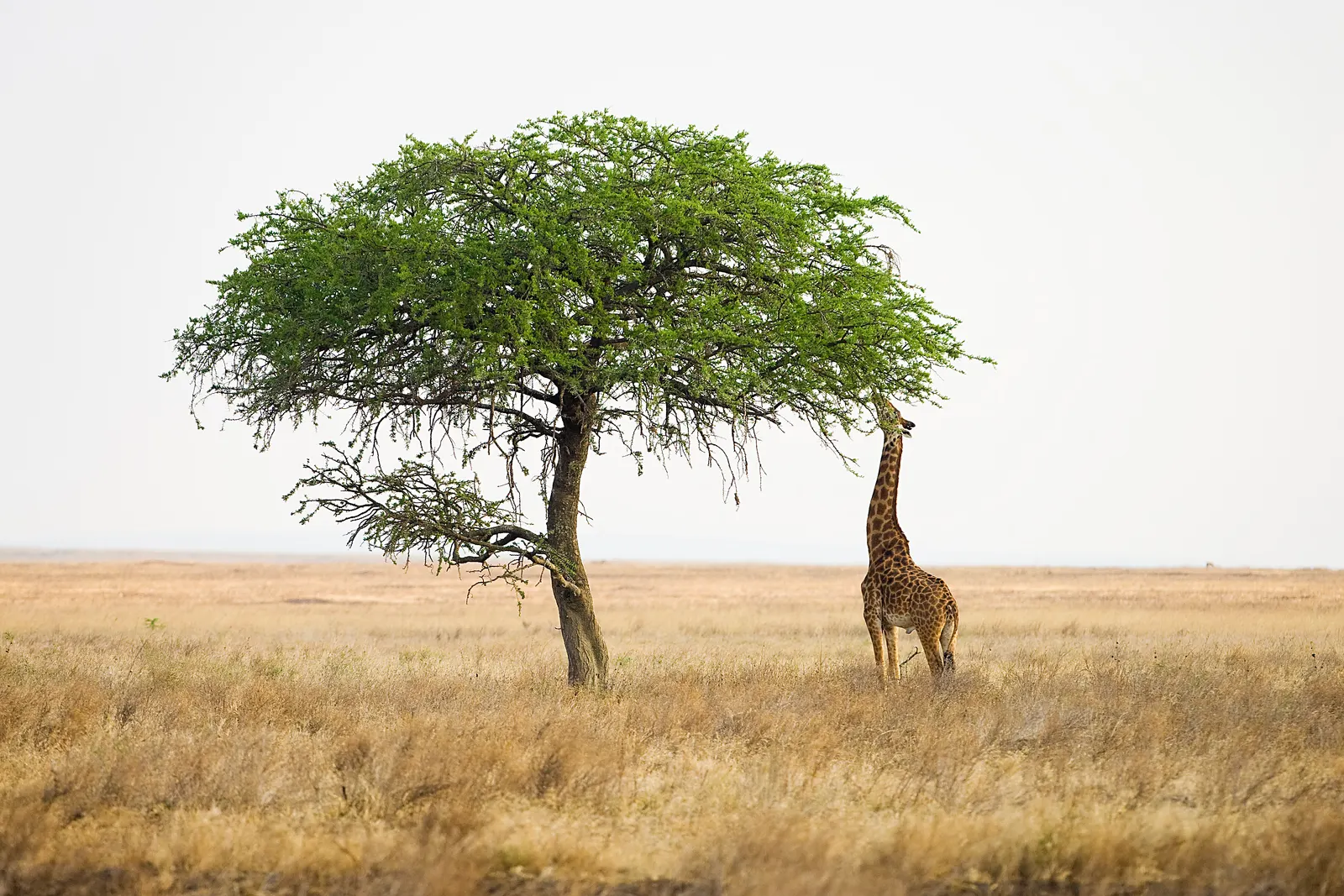
A giraffe browsing an acacia tree on the plains
After day 12

A fourth night in Ruaha

The extension guests most often ask for afterwards. A fourth night allows a second walk and a full day in the north of the park towards the Mdonya sand river, where almost nobody goes.
USD 620 per person, for 2 guests
Dhows moored off a white-sand beach on Zanzibar
Zanzibar · half day

Mnemba reef by boat

The best snorkelling on the island, off the sandbanks and reef of the north-east coast. Dolphins are often seen and never promised. Sea conditions decide the day, not the calendar.
USD 140 per person
Two guests relaxing by a lodge plunge pool
Before day 1

A night in Arusha before you start

Most long-haul flights land in the evening. A second night in Arusha means Tarangire starts rested, and it protects the whole seventeen days if a bag goes missing.
USD 250 per person, for 2 guests
VI · North, south and coast

Where this itinerary takes you

Four parks and an island, from the Rift Valley to the Indian Ocean.
An elephant beside a baobab in Tarangire

Tarangire National Park

2,850 square kilometres along a single permanent river. In the dry months the river concentrates the largest elephant population in northern Tanzania, and it is one of the few parks where night drives are permitted.
Wildebeest in the Ngorongoro Crater

Ngorongoro Crater

The largest intact volcanic caldera in the world and a UNESCO World Heritage Site. Around 25,000 large animals on 260 square kilometres of floor, including the most reliable black rhino in Tanzania.
Dawn over the Serengeti

Serengeti National Park

14,750 square kilometres of plain, kopje and river. Seronera in the centre carries resident lion, leopard and cheetah all year; the north holds the Mara River crossings from July to October and the south the calving from December to March.
Elephants crossing the Great Ruaha River

Ruaha National Park

A little over 20,000 square kilometres — Tanzania’s largest park — on the Great Ruaha River. Big lion prides, big elephant, both kudu, sable and roan, and walking and night drives permitted. A fraction of the Serengeti’s visitors.
Dhows moored off a white-sand beach on Zanzibar

Zanzibar

Stone Town, a UNESCO World Heritage Site, and a reef-fringed coast an hour east of it. The south-east monsoon blows June to October; the tide runs a long way out twice a day on the east coast.
The question everyone asks

Is the south worth the flying day?

20,000+ km²
Ruaha — Tanzania’s largest national park, and one of its emptiest
It is the question every guest asks about this route, and it is the right one. Day 9 is a long day in small aircraft, and it is the only day of the seventeen with no game drive in it. You could stay in the north instead, add the nights to the Serengeti, and fly straight to Zanzibar from Arusha.
What you would lose is the thing the north cannot give you. Ruaha has roughly the same area as the Serengeti and a fraction of the vehicles; whole mornings pass without seeing another one. Lion prides of twenty. Walking with a ranger. A spotlight after dark. Kudu, sable and roan that do not occur on the northern circuit at all. Guests who have done both circuits almost always say the south was the part they did not expect — and the part they would go back for. If you only want the north, our eight-day route does it well; this one exists for people who want the whole country.
VII · Season

The best time to travel

June to October is the season this route is built for. The rest, honestly.
June to October is the season this route is built for, and the only months in which we sell it without a conversation first. All five places work at once: the Tarangire herds are on the river, the migration is in the northern Serengeti, the Great Ruaha has shrunk to pools with everything gathered around them, and the coast is dry with a steady south-east wind. Rates are at the top of the band and camps in Ruaha and the northern Serengeti fill a year ahead.
January to March can work, with adjustments. The migration is calving in the south and the second Serengeti camp moves to Ndutu. Ruaha is green and hot, the grass is high and the game is spread away from the river, so you see less of it; some guests prefer the light and the emptiness. Zanzibar is hot and still. Ask us and we will tell you plainly what changes.
November brings the short rains — usually afternoon storms rather than washouts. The north is fine. Ruaha begins to green and the river rises; it is a quieter, cheaper month there and the walking is still good early on.
April and May are the long rains, and we do not sell this route in them. Most Ruaha camps close, tracks in both circuits become difficult, the light aircraft schedules thin out, and Zanzibar is at its wettest. If these are the only weeks you have, we would rather build you something shorter in the north than take money for seventeen days we know will disappoint.
VIII · Flights

Getting there and back

Into Kilimanjaro, out of Zanzibar. Five or six light-aircraft legs in between.
Fly into Kilimanjaro International (JRO), an hour from Arusha, and fly home from Zanzibar (ZNZ). The trip does not return to where it started, so book an open-jaw ticket rather than a return; most carriers price it no differently, and it saves you a day.
Arrive the day before if you can. Long-haul flights into JRO land in the evening, and day 2 is the first real safari day. An extra night in Arusha is the cheapest insurance on a seventeen-day trip.
Inside Tanzania you take five or six light-aircraft legs, and they have a soft-bag luggage limit that is lower than your international allowance — the exact figure is <span class=”it-todo”>luggage limit to confirm</span> — so pack for it from the start. The Serengeti to Ruaha day is the long one, usually through Arusha and Dar es Salaam with a night in Dar; a direct seasonal link, if one runs on your dates, shortens it.
Tanzania requires a visa for most passports — USD 50, or USD 100 for United States citizens, valid up to 90 days. Apply online in advance rather than on arrival. Zanzibar levies a small infrastructure tax on departing visitors, collected with the ticket or at the hotel.
IX · Other costs

What else you will spend

Visas, insurance, tips and drinks — set out so there is no surprise on the ground.
Tanzania issues a tourist visa online (eVisa) or on arrival at Kilimanjaro. Applying in advance is faster and avoids the queue at immigration, which after an evening arrival can be long.
A yellow fever certificate is required only if you are arriving from a country where yellow fever is endemic. Coming directly from Europe or North America, it is not. Zanzibar immigration sometimes asks for it on arrival from the mainland; carry it if you have one.
We ask every guest to travel insured, and on a route with this much flying and three nights a long way from a hospital, medical cover and evacuation are the parts that matter. The nearest hospital to Ruaha is a flight away, not a drive.
Check that your policy covers walking safaris, night drives and any snorkelling or balloon flight you add. Some insurers exclude one or more of these.
Tipping is customary in Tanzania and genuinely optional. The figures below are what guests commonly give, not what is expected. On this route there are more people to consider than on a northern circuit alone — a driver-guide for the north, camp guides and rangers in Ruaha, and hotel staff on Zanzibar.
Guide tips are usually handled at the end of each section; lodge staff tips go into a shared box at reception so that housekeeping and kitchen are included.
Drinking water in the vehicle is included throughout. Bar bills are charged to your room unless a camp is explicitly all-inclusive, and several of the Ruaha camps are — check your confirmation. Zanzibar is half board, so lunches are your own.
Souvenirs, laundry at the camps, Zanzibar excursions you decide on late, and anything you forgot to pack. Cash in small US dollar notes is more useful than a card once you leave Arusha — the Ruaha camps have little or no connection — and Zanzibar shops and restaurants take shillings or dollars.
Notes dated before 2009 are refused across Tanzania. Bring newer ones.
X · Why us

Why book this with us

01

Arusha-based, and Tanzanian-owned

We are not a booking agent forwarding you to an operator. The vehicles, the guides and the office are ours, in Arusha, and the Ruaha and Zanzibar halves are booked with properties we know rather than from a list.
02

Both circuits, neither rushed

Most north-and-south itineraries give Ruaha two nights and the migration none. This one gives Ruaha three and the herds two, and puts a night in Dar so the connection between them is not left to luck.
03

The flying day described honestly

Day 9 is long, and we say so on the page rather than after you have booked. We price on the routing that always works, and tell you when a direct link would improve it.
04

We will tell you not to come in April

This is the most expensive route we run. There are months when it is not worth the money, and we would rather move you or lose the booking than take it for a trip we know will disappoint.
XI · Questions

Frequently asked

What guests ask before booking this itinerary.
More than any other itinerary we run, because it includes five or six internal flights and sixteen nights across three regions. The rate depends on group size, tier and season, and the table above sets it out for every group size from one to six. Our rates for this route are set out in the table above — ask us and we will quote for your exact dates rather than give you a range.
Not for this route. Only one of the seventeen days has no game drive in it, and four of them are on a beach. What makes a long trip tiring is transfers, not length — and this itinerary has two nights or more everywhere except the Ngorongoro rim and Dar. If it is still too long, our eight-day northern circuit and Zanzibar afterwards is the shorter version.
Because the Serengeti-to-Ruaha connection usually runs through Arusha and Dar, and a same-day link across three aircraft is a gamble we would rather not take with your Ruaha nights. Where a seasonal direct flight exists for your dates, we will tell you and give the night back to the south or the coast. Routing is confirmed when you book.
It depends on your month, and the second Serengeti camp is placed accordingly — the Mara River in the north from July to October, the Ndutu plains in the south from December to March. A river crossing cannot be promised on any day; two nights gives you a fair chance and the herds themselves are certain. See why crossings cannot be booked.
Hotter, hillier, emptier, and with different animals. You will see far fewer vehicles, larger lion prides, both greater and lesser kudu, and the sable and roan that the north does not have. You can walk with a ranger and drive at night, neither of which is allowed in the Serengeti. What Ruaha does not have is the migration, or the crater. Our Ruaha page goes into it.
It is a private safari, so it can be, but the walking safari and the night drives are typically 16 and over, and several of the small camps set their own minimum ages. Serengeti game drives are open from age five; we apply six. Tell us the ages and we will say plainly what works. Child rates are 30% below the adult rate for children sharing with two adults.
Light aircraft in Tanzania apply a soft-bag limit that is lower than your international allowance, and the exact figure is 15 kg per person, including hand luggage. Pack in a soft bag from day one; anything you do not need after the Serengeti can be left with your guide in Arusha and collected when you fly through on day 9.
Yes, but we do not recommend it. Ending on the coast is the shape that works: the safari half has early starts and long days, and four nights of nothing afterwards is what makes it feel like a holiday. Zanzibar first also puts the long flying day at the beginning, when you are still jet-lagged.
Yes. It is a private safari and the route is a starting point. Adding a fourth night in Ruaha, swapping the Dar night for a direct flight where one runs, replacing Stone Town with a fourth beach night, or adding Nyerere to the southern section are all normal requests.
XII · Your trip

Request your personalised safari proposal

Tell us how you like to travel and we will put together a personalised proposal for this route — dates, camps and a firm price per person. No payment is required at this stage.

No payment is required at this stage. We reply by email and WhatsApp within one working day.

Seventeen days across the whole of Tanzania

17
Days
16
Nights
5
Parks &amp; places
Full
Board
Starts
Arusha, Tanzania
Ends
Zanzibar, Tanzania
Departures
Daily — a private safari on the dates you choose
Availability
Open all year, subject to lodge space
From
from$10,690/pp
Per person, sharing
Private safari · internal flights included · we reply within one working day
from $10,690 / person
Loading itinerary…
Saved Trips