The Maasai jumping dance is one of the best-known images of East African tourism, printed on brochures and performed for coach parties outside Ngorongoro’s gate. Almost none of that context is what the dance is for. The adumu belongs to the eunoto, the ceremony that moves a group of warriors into junior elderhood after roughly a decade living apart from their villages, and it means something specific to the men taking part in it.
None of that makes a staged version worthless, only different. What follows is what the adumu actually marks, how a paid demonstration differs from a ceremony, and what questions separate an operator who has done the work of arranging a respectful visit from one who has not.
The short answer
The adumu is the jumping dance performed by Maasai warriors during the eunoto ceremony, which moves an entire age-set from junior warrior to junior elder. What most visitors see at a boma is a paid demonstration of the same dance, not the ceremony itself.
What the adumu is
Maasai society is organised into age-sets rather than families alone. Boys are circumcised together and become ilmurran, junior warriors, who then live for roughly ten years in an emanyatta, a warrior camp built away from the family homestead, before the whole set graduates together. The eunoto is that graduation: days of ceremony that move an entire cohort of men from junior warrior to junior elder at once, not an individual promotion.
The adumu happens inside that ceremony. Men form a circle and jump, one at a time or in short bursts, straight up from a standing start with the legs kept stiff and the heels not touching the ground on the way down. There is no drum. The rhythm comes from the group itself, a low chant that rises as each jumper takes his turn, and the height a man reaches is watched and remembered by everyone present.
What it marks is specific: physical readiness and standing within the age-set, and — in the account most commonly given — a display aimed partly at eligibility for marriage, which formally follows a man’s graduation to elder status rather than the jump itself on the day. Most of the Maasai who perform it still graze cattle and move seasonally with their herds on the Ngorongoro Conservation Area’s shared land, one of the few places in Tanzania where
pastoralists and wildlife occupy the same ground by law.
What a staged version looks like
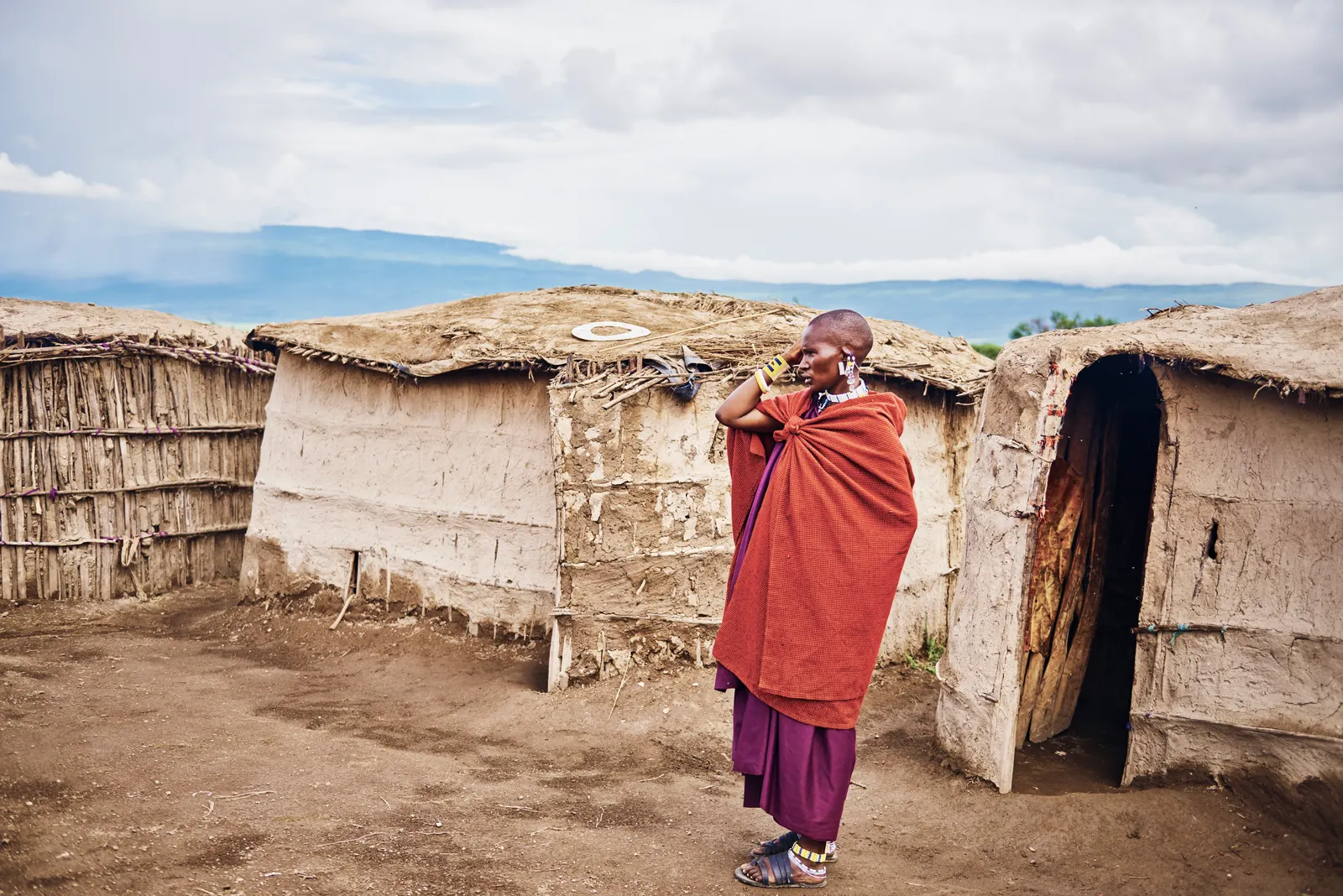
The version most travellers see is not the eunoto. It is a short, paid performance — usually ten to fifteen minutes — staged at a boma near a park gate or a lodge, run for whichever vehicles stop that day rather than tied to any ceremony. The men performing it may or may not currently be within the age-set the adumu belongs to, and the boma itself may exist mainly to host these visits rather than as anyone’s actual home.
None of that makes the performance fraudulent. A demonstration honestly sold as a demonstration — a paid cultural show, not a ceremony you have been let into — is a legitimate thing to offer and to watch. The problem is when it is presented as the real thing, with no acknowledgment that what you are seeing has been assembled for visitors rather than witnessed by chance.
A few signs are worth noticing. Whether anyone explains what the dance is for, rather than just naming it. Whether photography is agreed before it starts, not simply assumed. Whether the group seems to exist independently of tourism, or only appears when a vehicle arrives. And whether you are told, plainly, who is paid — an operator who cannot answer that question has not asked it either.
What a well-run cultural visit looks like
Good practice starts with who controls the visit. A community that decides what is shown, sets its own fee and is paid directly — rather than a charge folded into a general park or lodge bill — is a basic marker of a visit arranged with rather than around the people involved. Group size matters too: a coach party crowding one boma is a different experience from six or eight guests.
Photography consent should be asked, not assumed, and it should be possible to say no to specific photographs without ending the visit. The same goes for participation — being invited to try the jump is different from being expected to. A visit that leaves room to decline things is usually one that was arranged with more care than one that has a fixed script for every group.
None of this is visible from a brochure or a five-star review, which is why it is worth asking about directly before you book rather than taking a description on trust. How an operator answers — specifically, vaguely, or not at all — says more about how a visit is actually run day to day than anything printed on a website. The questions worth asking are the same ones any honest operator should expect and welcome.
What to ask any operator
Ask who receives the fee, and whether it goes to the community directly or disappears into a general charge nobody can itemise. Ask whether the amount is fixed and disclosed before you arrive, not negotiated on the day. A specific answer to both is a good sign; a shrug is not.
Ask whether what you will see is a ceremony you have been invited to observe or a paid demonstration arranged for visitors — both are legitimate, but only one of them is a ceremony, and you should be told which. Ask what happens if you would rather not photograph everything, or not take part in the jump yourself. A visit built with room for that answer tends to be built with room for everything else, too.
These are the same questions worth asking before
a morning with the Hadzabe at Lake Eyasi, or any cultural visit sold alongside a safari. If an operator cannot answer them before you book, that is itself the answer. Our
Crater Highlands journey spends time in Maasai grazing land above the Ngorongoro rim, and
Find a journey filters every itinerary that includes a cultural stop.
Questions people ask
What does the Maasai jumping dance mean?
It demonstrates a warrior’s strength and standing within his age-set, and it belongs to the eunoto, the ceremony that graduates a whole group of warriors to junior elder status together. The jump itself is a display; the ceremony around it is what actually changes a man’s status.
What is the Maasai word for the jumping dance?
Adumu, which means roughly “jumping up and down”. It is performed by ilmurran, the warrior age-grade, usually in a circle with a chant setting the rhythm rather than a drum.
Why do Maasai warriors jump so high?
Height and control are what the group is watching for — a stiff, straight jump with the heels not touching the ground, held over several attempts. It is read as a sign of fitness and self-discipline within the group, not judged by any outside standard.
Is the adumu the same as the eunoto ceremony?
No. The eunoto is the multi-day ceremony that moves an age-set of warriors to junior elder status. The adumu is one part of it — the jumping display — and is also performed on its own, outside any ceremony, as a paid demonstration for visitors.
Is it OK to watch a staged Maasai jumping dance as a tourist?
Yes, as long as it is presented honestly as a demonstration rather than a ceremony, the community controls and is paid for it, and photography is agreed rather than assumed. The problem is being told you are seeing something you are not.
Can I take photographs during a Maasai jumping dance?
Ask first, every time, including whether individual people can be photographed rather than only the group. A visit arranged with proper consent will have already worked out how photography is handled before you arrive.
Do only men perform the adumu?
The jumping dance itself is performed by ilmurran, male warriors. Women and girls take part in other parts of Maasai ceremonial life, including their own songs and dances, which are separate from the adumu.
How do I find a genuine Maasai cultural visit rather than a staged show?
Ask who controls the visit, who is paid and how much, and whether what you will see is a ceremony or a demonstration. A specific answer to all three is the clearest sign an operator has done the work of arranging it properly.
Travel it
Journeys built around this
Last updated 13 September 2026