“How many days do I need?” is the first question every guide gets asked, and the honest answer depends less on how much you want to see than on how much time you are willing to spend moving rather than looking. Tanzania’s northern parks sit close together on the map and far enough apart on the ground that the difference matters.
What follows is the arithmetic behind that answer: what the drives actually cost you in hours, what one night in a park buys and does not buy, and which of our own itineraries is built for four nights, seven, or nine. None of it is a hard rule — it is what to weigh before booking.
The short answer
Plan on at least seven nights for a proper four-park northern circuit: two nights each in Tarangire, the Ngorongoro area and the Serengeti, with a travel day between them. Four nights is enough to see one park well. Fewer than that turns most of the trip into driving rather than game viewing.
Drive times: the arithmetic nobody quotes you
Every itinerary lists which parks you visit. Fewer say how long it actually takes to get between them, or how much of a short trip disappears into a vehicle rather than a game drive. Tanzania’s northern circuit runs on a mix of tarmac, gravel and, on the crater’s ascent and descent roads, switchbacks that no distance in kilometres explains on its own.
Arusha to the Tarangire gate is around 120 km, roughly two hours on tarmac. From Tarangire on to Lake Manyara and up to Karatu is a similar distance and time again, most of it sealed road climbing the Rift wall. Karatu to the central Serengeti at Seronera is the long one: around 250 km, four hours or more, much of it unsurfaced once you are through Naabi Hill gate. The return leg, back up to the Ngorongoro rim, is close to the same again.
Add those legs together and a full four-park circuit spends the better part of half a working day, split over three or four separate transfer days, just moving between parks. That is not a reason to skip any of them — it is a reason to give each leg its own day rather than folding a transfer and a full game drive into the same afternoon.
One night: what it actually buys you
A one-night stop in a park usually means arriving in the mid-afternoon, going out for one evening game drive before the light goes, coming back for dinner, then one morning drive after breakfast before you pack up and move on. That is a drive and a half, not a full day, once you count the hour either side spent unpacking a vehicle the night before and reloading it the next morning.
It is workable for a small park with short internal distances — Tarangire or Lake Manyara, where the whole reserve is within an hour of the gate. It is a poor use of the Serengeti or the Ngorongoro area, both of which reward a guide who can go back to where something was seen the previous evening, or wait out a sighting rather than driving on because the schedule says so.
Two nights is the practical minimum for either of those parks. It buys a full day inside the park with no transfer attached to either end. It is the difference our own
seven-night northern circuit is built around: two nights everywhere that deserves them, not one night in four different places.
Five, eight or ten days: which shape fits
Four nights answers one question well: what is this one park like, properly, without a transfer eating into it. Our own
four-night Tarangire journey is built on exactly that — no drive to anywhere else, just a park with a permanent river and the elephant concentration to go with it. It suits a short trip, a stopover on the way to somewhere else, or a traveller who has already done the wider circuit and wants one park in more depth this time.
Seven nights is the shortest shape that answers the bigger question — Tarangire, the Ngorongoro Crater area and the Serengeti, without cramming any of them into a single overnight. Two nights near Tarangire and Manyara, two more on the Serengeti plains, and a night on the crater rim before the descent. It is the route most first-time visitors to northern Tanzania should be comparing everything else against.
Nine nights buys something different from more parks: time to stop following an itinerary and start following the guide. Our
private guided Serengeti journey sets no fixed schedule — you decide each morning whether to go back to yesterday’s sighting or somewhere new. That only pays off once the transfer days are out of the way and there is time left over to spend.
Flying between camps: when it earns its cost
Every leg above can also be flown rather than driven. Arusha to a Serengeti airstrip is about an hour by light aircraft against six or seven hours by road; the far north around Kogatende, where the Mara River crossings happen, is a similar saving again. What that costs is a company figure and changes with the season, so ask for it directly rather than assuming a flight is automatically the pricier option — over a short trip it sometimes is not, once you count the lodge night a long drive would otherwise cost you.
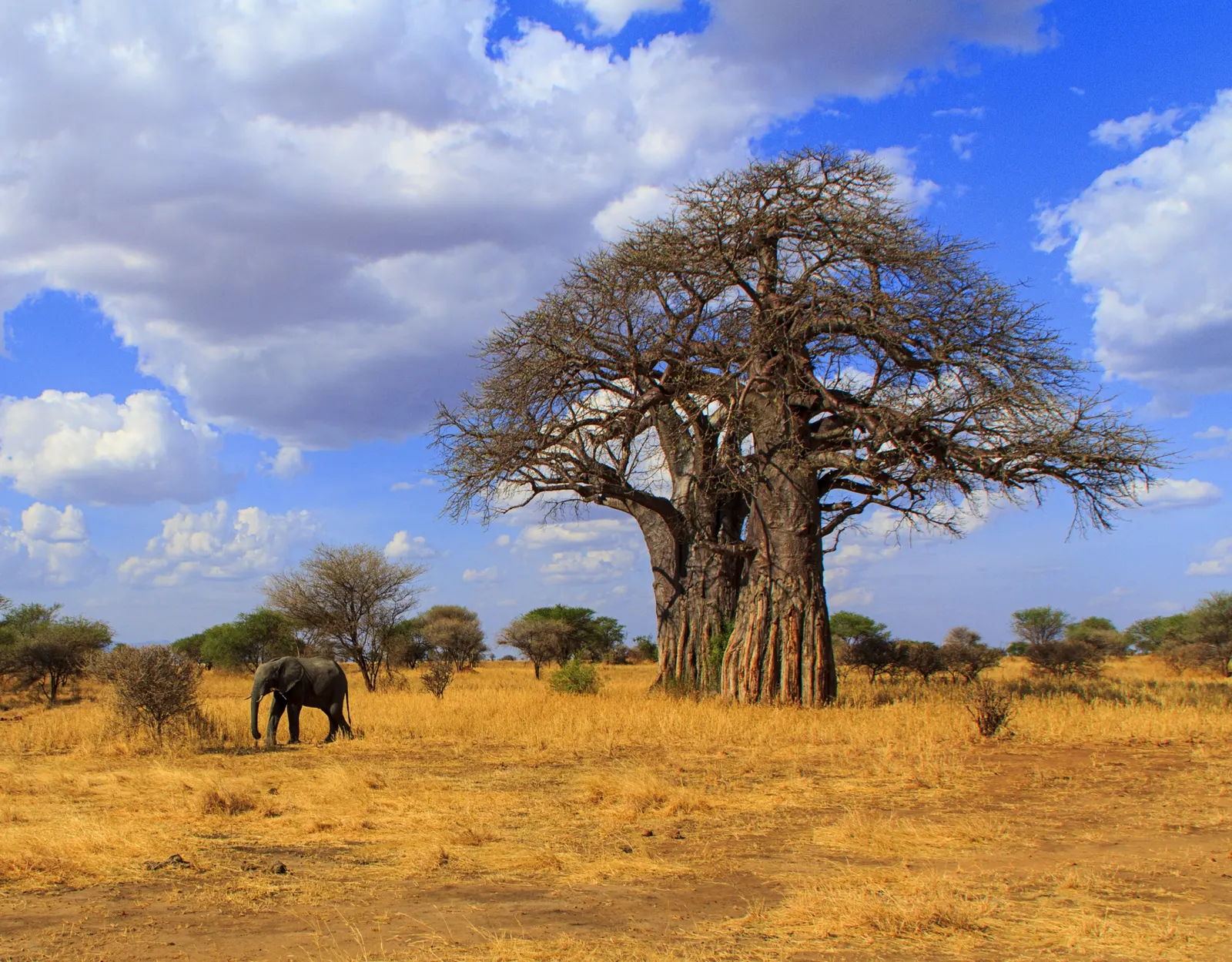
What flying gives up is the drive itself: the Rift wall on the road up to Karatu, the change from cultivated highland to Maasai grazing land to baobab country on the way into Tarangire, the first giraffe seen from the tarmac before you have even reached a gate. On a longer trip those transitions are part of what you came for, and skipping them by air saves time you may not need to save. On a short trip, they are the thing you can least afford.
As a rule of thumb: under seven nights and still wanting a distant park like the far northern Serengeti, a flight is usually worth pricing. Over that, the road time starts pulling its own weight.
Find a journey filters our routes by length, so you can see which shape the parks you want actually take.
Questions people ask
How many days do I need for a Tanzania safari?
For one park done properly, four nights is enough. For a four-park northern circuit — Tarangire, Lake Manyara, the Ngorongoro Crater and the Serengeti — plan on at least seven nights, with two nights in each main park rather than one.
Is five days enough for a Tanzania safari?
Five days works for a single park, usually Tarangire or the central Serengeti. It is not enough to add the Ngorongoro Crater as well without turning at least one of those days into mostly driving.
How long should I spend in the Serengeti?
Two nights is the minimum that gets you a full day in the park with no transfer attached to either end. Three or four nights gives a guide room to follow what the wildlife is doing rather than a fixed route.
Is it worth flying instead of driving between parks?
For a short trip, often yes — Arusha to the Serengeti is about an hour by light aircraft against six or seven hours by road. For a longer circuit the road transitions are part of the trip, past the Rift wall and into the Ngorongoro highlands.
How many hours a day will I spend driving on a northern circuit?
Across a seven-night circuit, allow roughly ten to twelve hours of road driving in total, spread over three or four transfer days — mostly tarmac between Arusha and Karatu, and unsurfaced park roads beyond Naabi Hill gate.
What is the minimum number of nights per park?
Two, for the Serengeti and the Ngorongoro area. One night buys a single evening drive and a single morning drive either side of a transfer — workable for Tarangire or Manyara, tight for anywhere larger.
Can I see the Serengeti and the Ngorongoro Crater in one week?
Yes — that is the shape of a standard seven-night northern circuit: two nights near Tarangire and Manyara, two on the Serengeti plains, and a night on the crater rim before the descent.
Does a longer safari cost proportionally more?
Not exactly. A longer trip spreads park-entry days and transfers over more nights, and it usually swaps a road transfer for a flight at some point, which changes the total in ways a simple nightly rate does not capture. Ask for a breakdown rather than a headline figure.
Travel it
Journeys built around this
Last updated 13 September 2026