Places of Africa Safaris

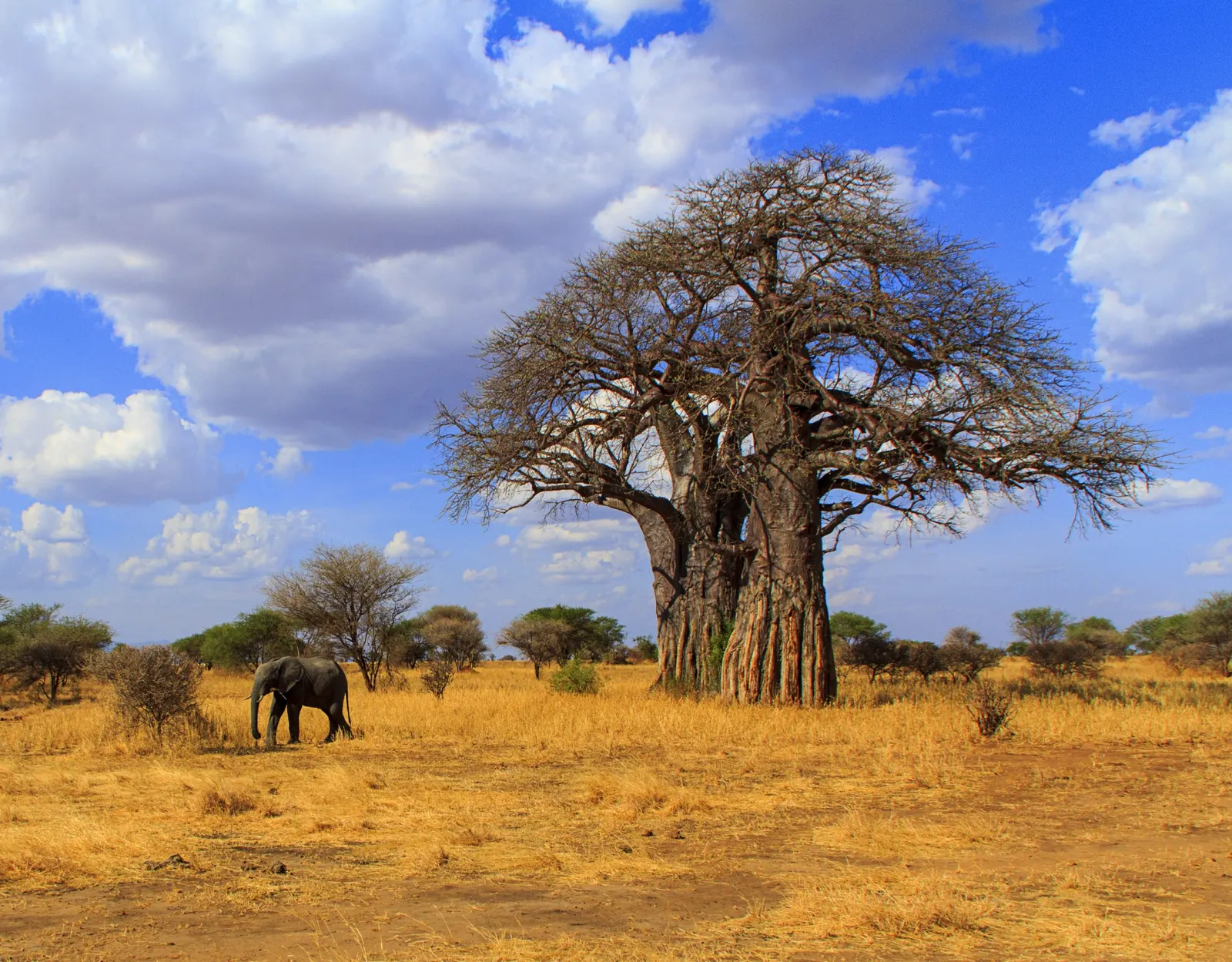
An elephant beside a baobab in Tarangire
Tarangire · Ngorongoro · Manyara · Four Days

Four days, three parks: a mid-luxury wilderness safari

Tarangire’s elephants on the river, a full day on the Ngorongoro Crater floor and Lake Manyara on the way home, with two nights in the highlands so the crater is never a rush.
4
Days
3
Nights
3
Parks
All year
Season
I · Overview

The route, and why this shape

Three parks close to Arusha, one night in Tarangire and two in the highlands.
Four days is the shortest safari we think is worth flying for, and only if the route is honest about distance. This one keeps the driving to the three parks closest to Arusha, all on tarmac or good gravel: Tarangire, the Ngorongoro Crater and Lake Manyara. No day has more than about two and a half hours on the road.
The shape is one night in Tarangire and two in the Karatu highlands. Staying two nights in Karatu means the crater gets a full, unhurried day with an early descent, instead of being squeezed in between two long drives, and you do not pack on the morning you most want to be out early. Lake Manyara is on the direct road home, so it costs no extra driving.
Mid-luxury here means a tented camp on the Tarangire River and a coffee-farm lodge above the crater: en-suite rooms, full board and real character, without the price of the top-end lodges. The Luxury tier swaps in a ridge-top lodge in Tarangire and a historic highland estate. What the trip does not include is the Serengeti. For the plains and the migration you need at least six or seven days.
Length
4 days / 3 nights
Country
Tanzania
Start / end
Arusha → Kilimanjaro International
Tour type
Private safari, mid-luxury lodges and tented camp
Group size
Private — 1 to 6 guests per vehicle
Meal plan
Full board from lunch on day 1 to lunch on day 4
Best months
June – October, and December – March
Activity level
Easy — vehicle-based, one early start for the crater
Vehicle
Toyota Land Cruiser 4×4 with a pop-up roof, a window seat for every guest, charging points and a cool box
II · The days

Day by day, all four

Four days, no long drives: Tarangire, Karatu, the crater and Manyara. See every lodge and camp we use
Day
01
An elephant beside a baobab in Tarangire
Tarangire

Arusha to Tarangire, and the river by afternoon

03°50′S 36°00′E
Lunch · Dinner
An elephant beside a baobab in Tarangire
Arusha to Tarangire, and the river by afternoon
03°50′S 36°00′E
Your guide collects you from your Arusha hotel after breakfast, or from Kilimanjaro International if you land by mid-morning. The road runs south-west on the tarmac of the Great North Road, out of the coffee country under Mount Meru and into Maasai grazing land, and the first baobabs appear about twenty minutes before the gate.
You enter Tarangire late in the morning and eat lunch inside the park, then spend the afternoon on the river circuit. Between July and October the Tarangire River is the only permanent water for a long way in every direction, and the elephant families come down to it in the heat of the day; this is the densest elephant population in northern Tanzania. Outside the dry months the herds spread out, and the birding and the green baobab country take over.
The gate closes at six and you are at camp before it, with the evening on the deck. If your international flight lands in the evening, add the night in Arusha below and this day starts after a proper sleep.
Meals
Lunch · Dinner
Travel
Arusha to the Tarangire gate · about 120 km, 2 to 2½ hours · from Kilimanjaro International add 1 hour
Highlight
Elephants on the river before your first dinner
Collected in Arusha or at JRO
Lunch in the park
Afternoon game drive
Where you sleep
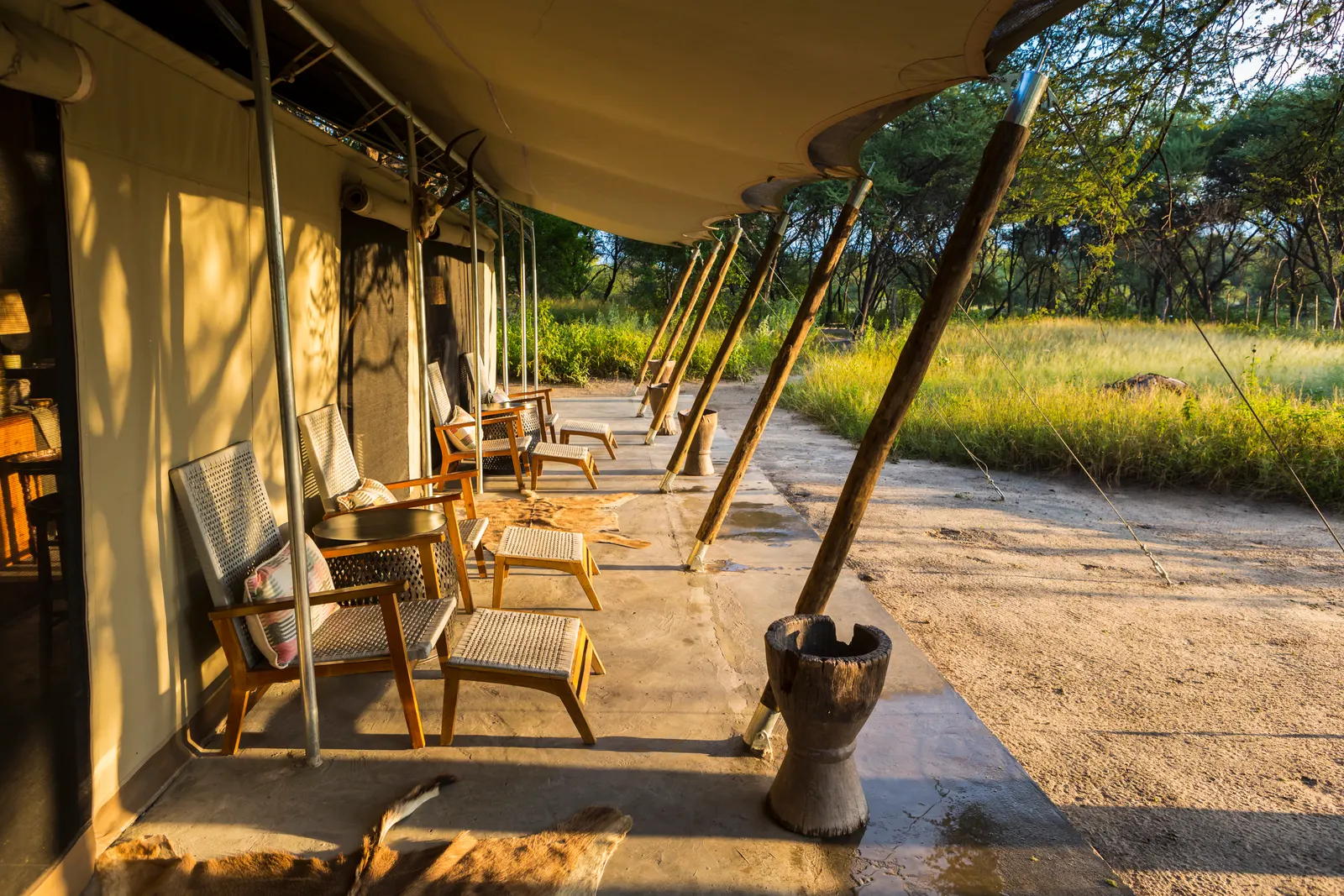
Mbali Mbali Tarangire River Camp: Luxury Guest Tent: thatched tent on a raised deck under a baobab with outdoor bathtub
COMFORT

Mbali Mbali Tarangire River Camp

★★★★☆
Tarangire, tented camp near the river
A tented camp on the river bluff with en-suite tents and a view over the water. Meals and local drinks are included here.
Lemala Mpingo Ridge Lodge: Suite deck with outdoor bathtub and seating overlooking Tarangire at sunset
LUXURY

Lemala Mpingo Ridge Lodge

★★★★★
Tarangire, lodge on the escarpment above the river
Suites on the ridge above the river valley, a pool, and a deck that faces the last hour of light.
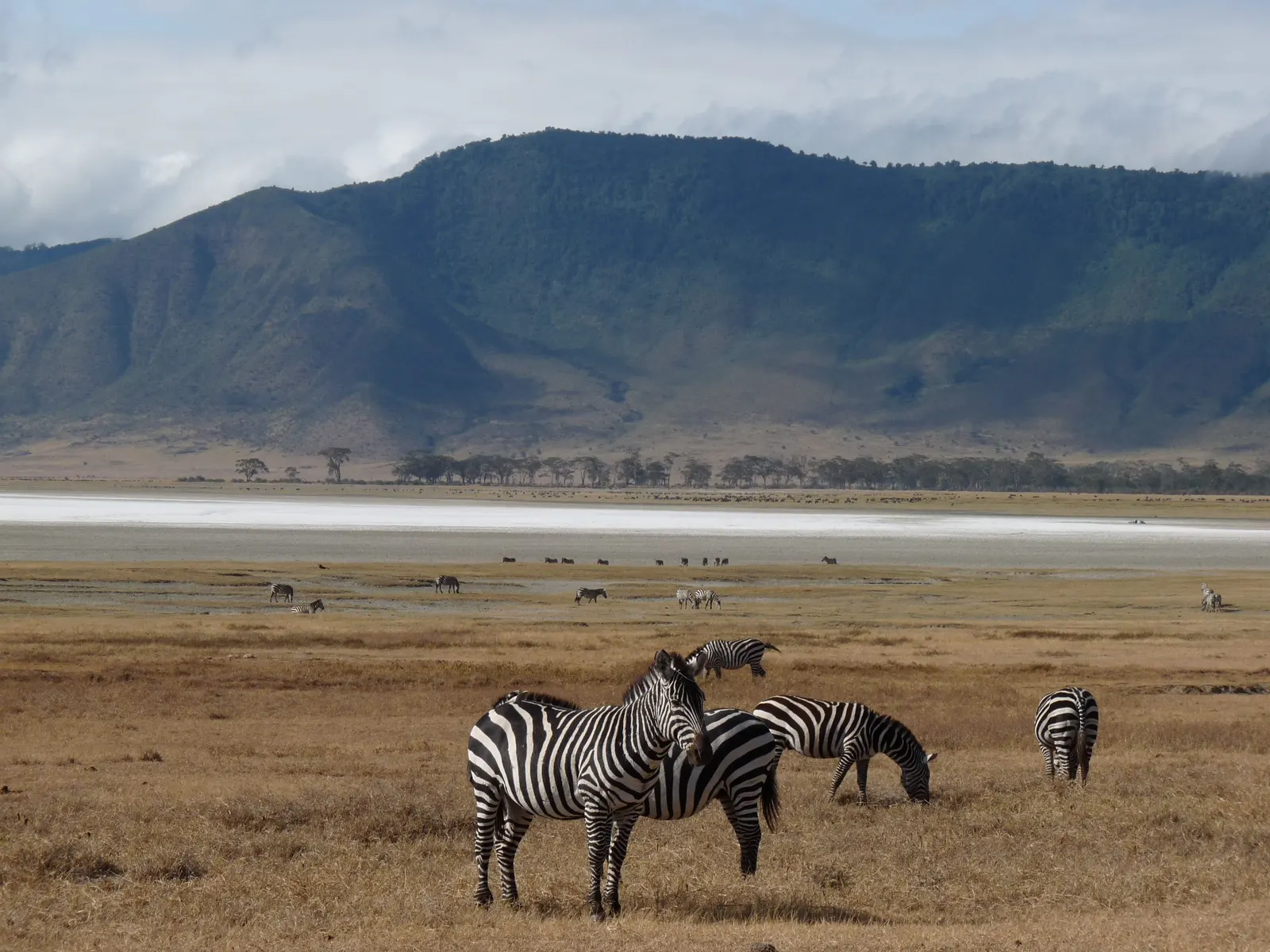
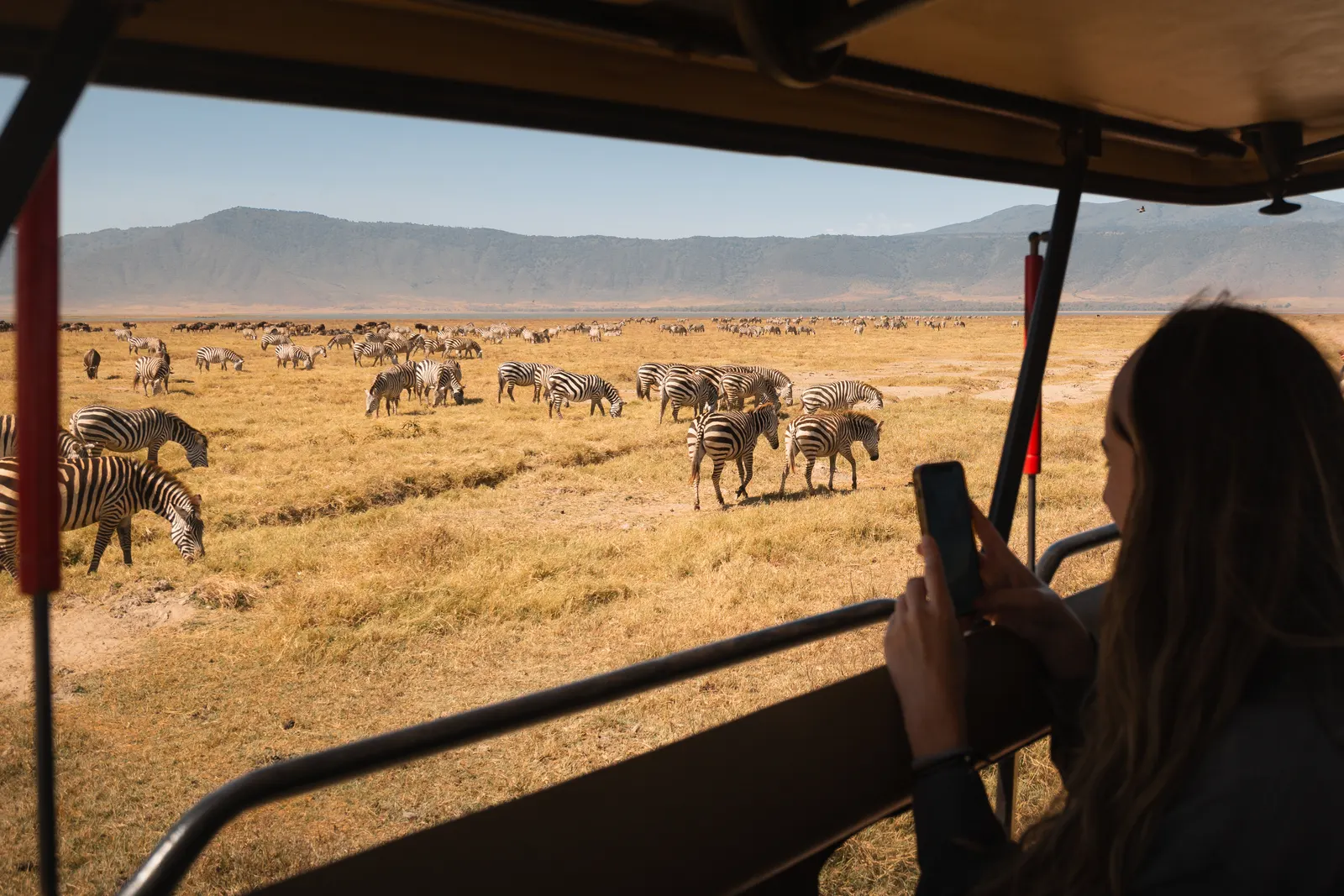
Zebras on the Ngorongoro Crater floor
A morning in Tarangire, then up the Rift wall to Karatu
03°20′S 35°40′E
The morning drive is the one to be out for. The light is soft, the predators are still moving and the vehicles from Arusha have not arrived yet. You work north along the river towards the gate and leave the park before the entry hour of your ticket runs out, late in the morning.
North on the tarmac to Mto wa Mbu, the market town at the foot of the Rift Valley escarpment, where lunch is taken in town or at the lodge depending on the day. The road then climbs the escarpment above Lake Manyara, with the lake spread out below, and on to Karatu at about 1,500 metres.
Karatu is farm country: coffee, wheat and red earth, and noticeably cooler than the parks. The afternoon is yours at the lodge. There is a walk through the coffee and vegetable gardens if you want one, a fire in the evening, and an early night before the crater.
Meals
Breakfast · Lunch · Dinner
Travel
Morning game drive · Tarangire to Karatu about 110 km, 2 hours, with a stop in Mto wa Mbu
Highlight
The best hours in Tarangire, then the cool of the highlands
Morning game drive
Mto wa Mbu
Karatu, 1,500 m
Where you sleep
Tloma Lodge: Swimming pool with umbrellas and loungers, lodge buildings and coffee farm behind
COMFORT

Tloma Lodge

★★★★☆
Karatu, coffee-farm lodge in the highlands
A stone-and-thatch lodge on a working coffee farm near the crater forest. Cottages with fireplaces, full board, and views towards the Ngorongoro highlands.
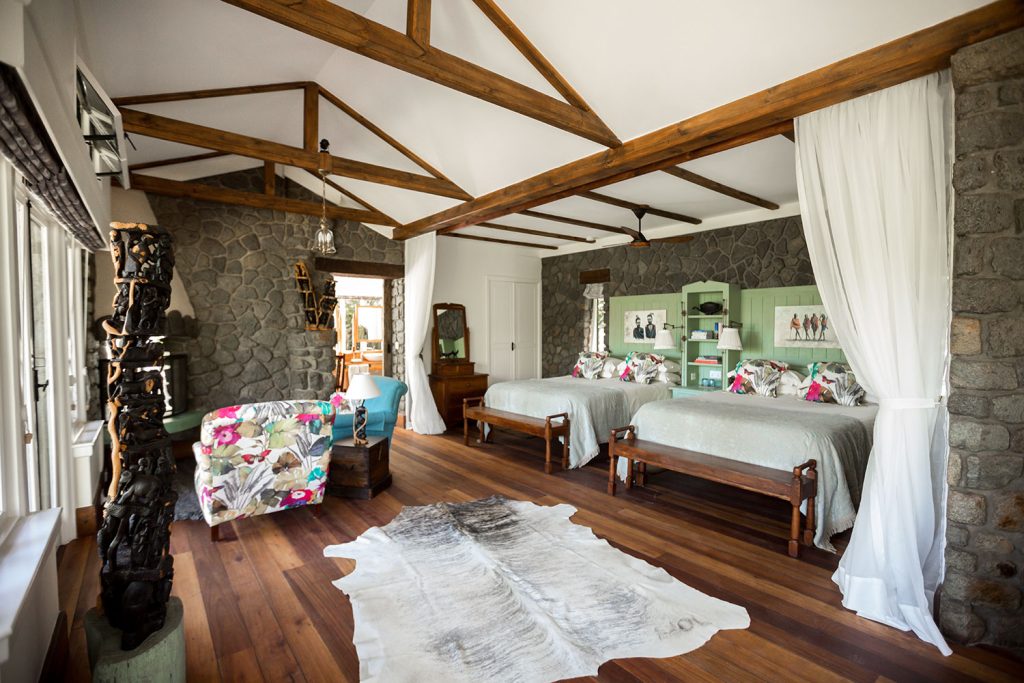
Gibb's Farm: Farm cottage bedroom with twin beds, stone wall, eucalyptus floors and hand-crafted furniture
LUXURY

Gibb's Farm

★★★★★
Karatu, estate lodge on the crater highlands
A 1920s farm estate on the edge of the crater forest, with its own organic farm, spa and garden cottages.
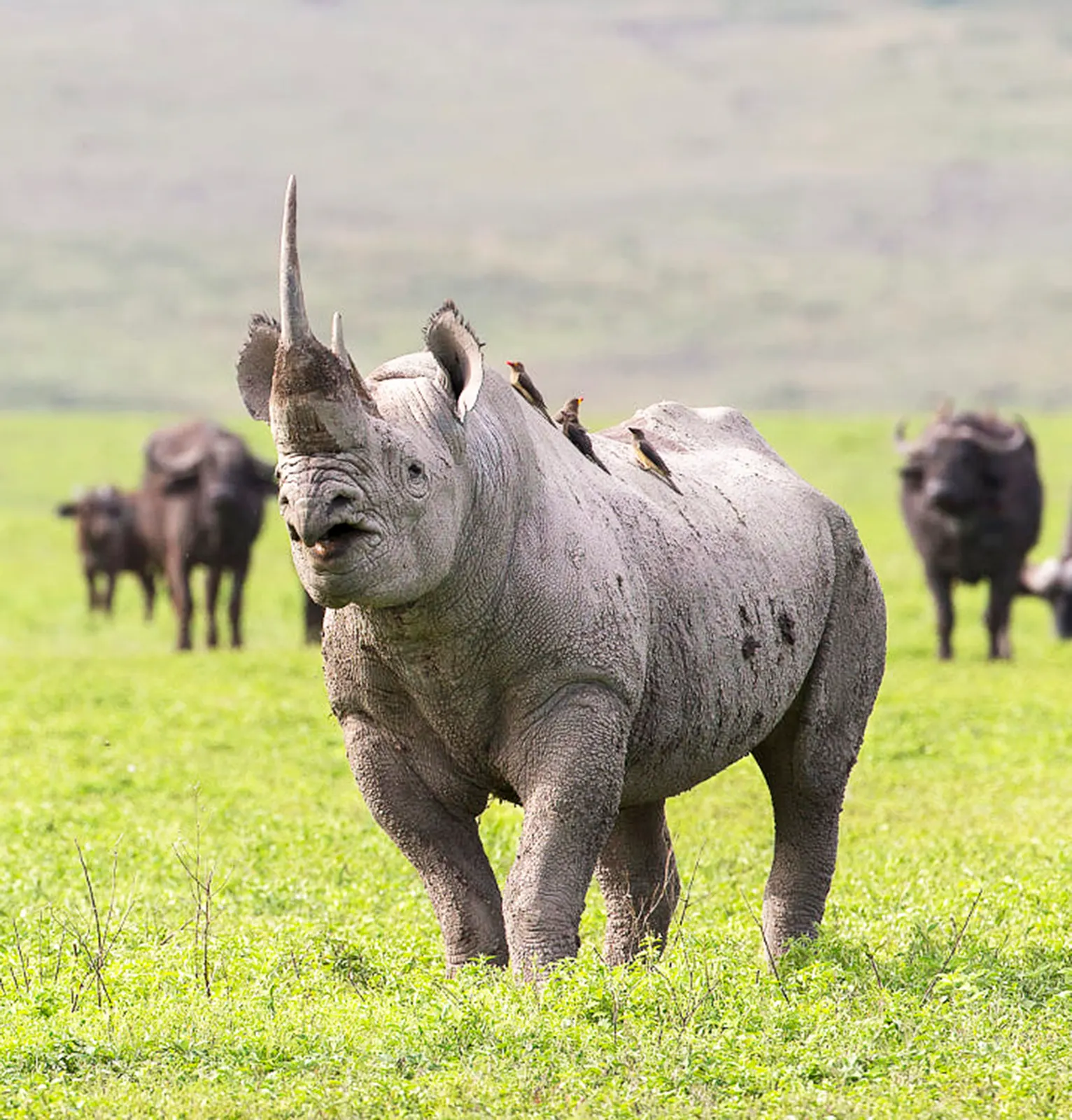
A black rhino with buffalo on green grass
A full day on the crater floor
03°10′S 35°35′E
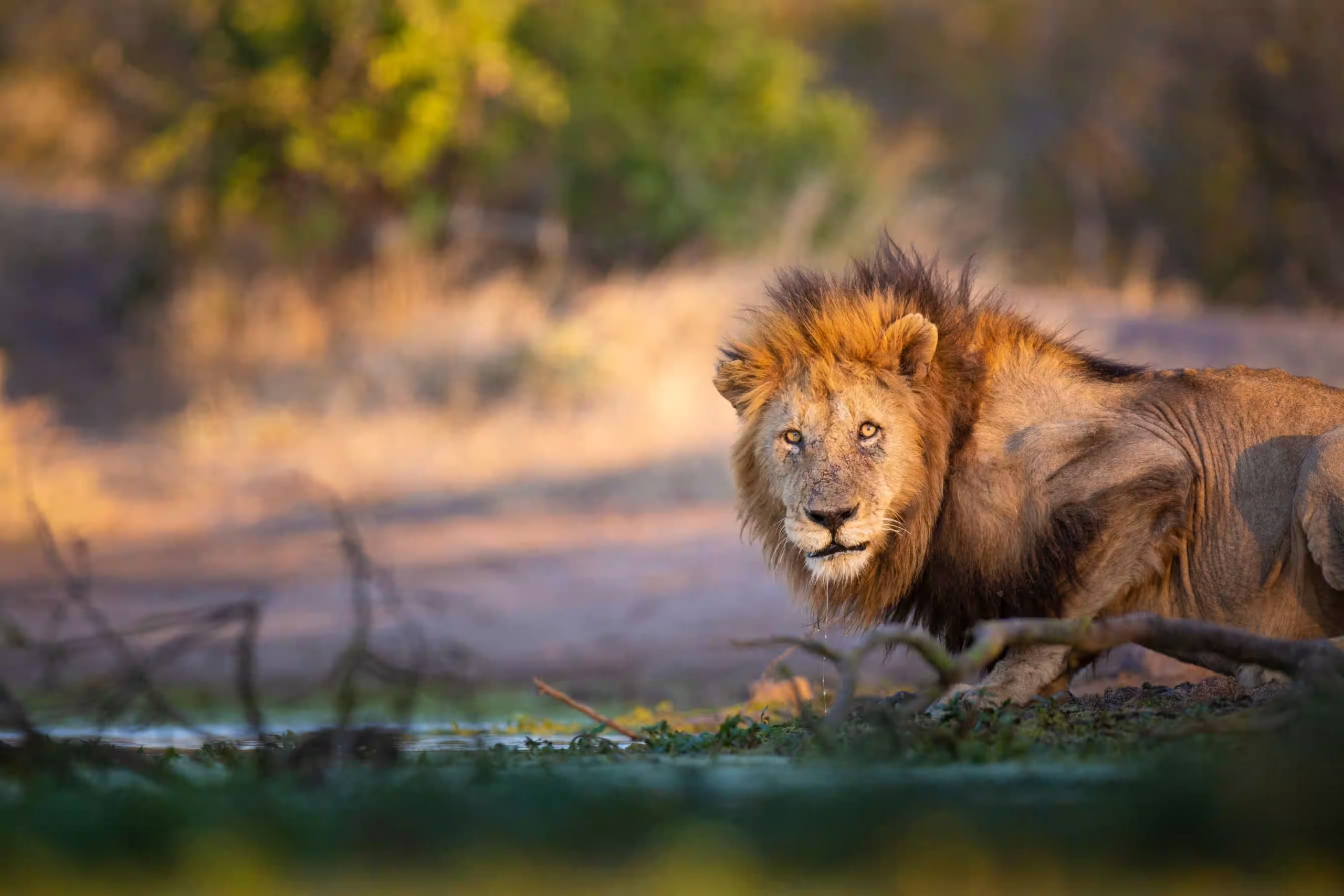
An early start with breakfast packed or taken at six, because the crater floor is at its best in the first hours and the Conservation Area limits every vehicle to six hours on the floor. From Karatu it is half an hour to the Lodoare gate, then up through the montane forest to the rim at about 2,300 metres, where the whole caldera opens up below you.
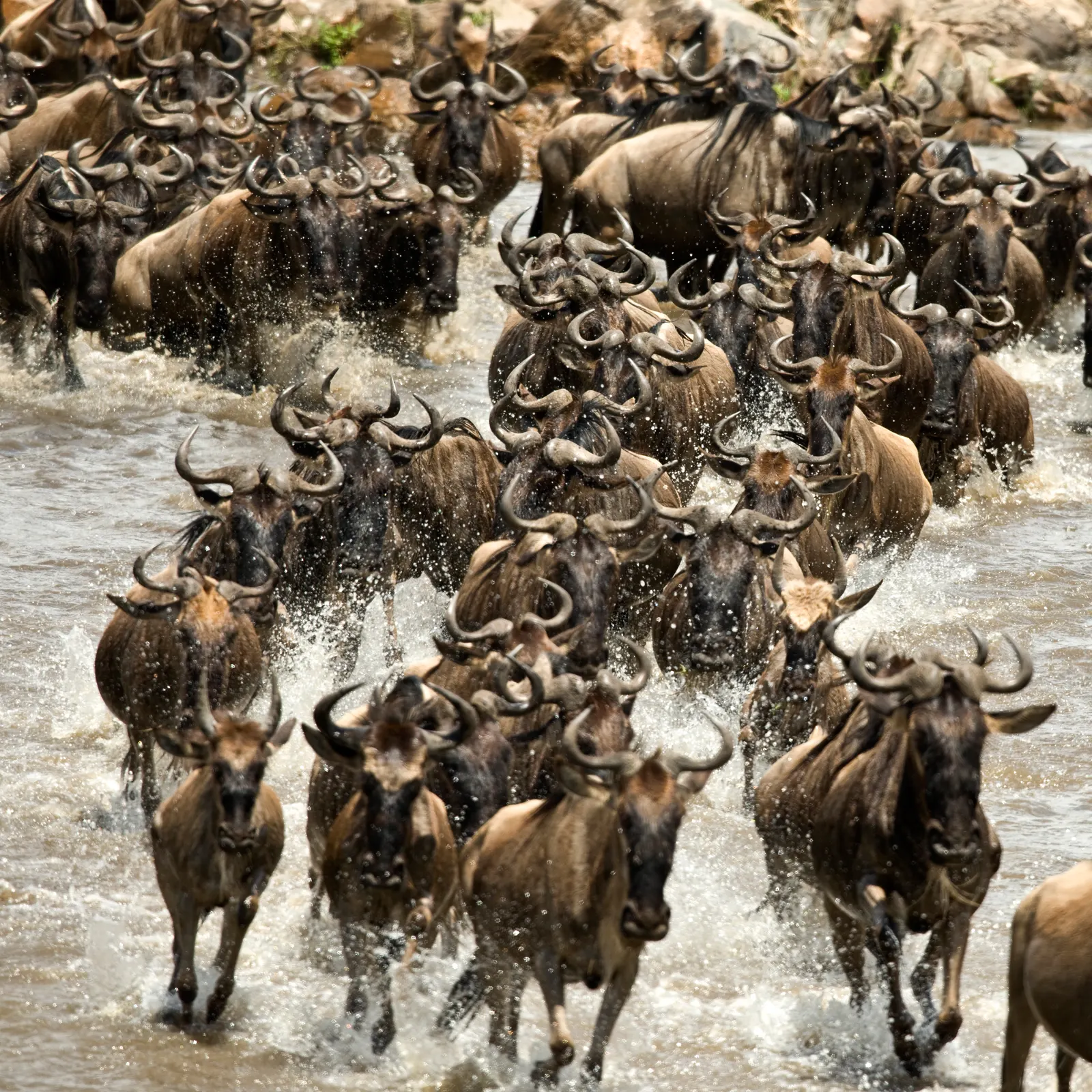
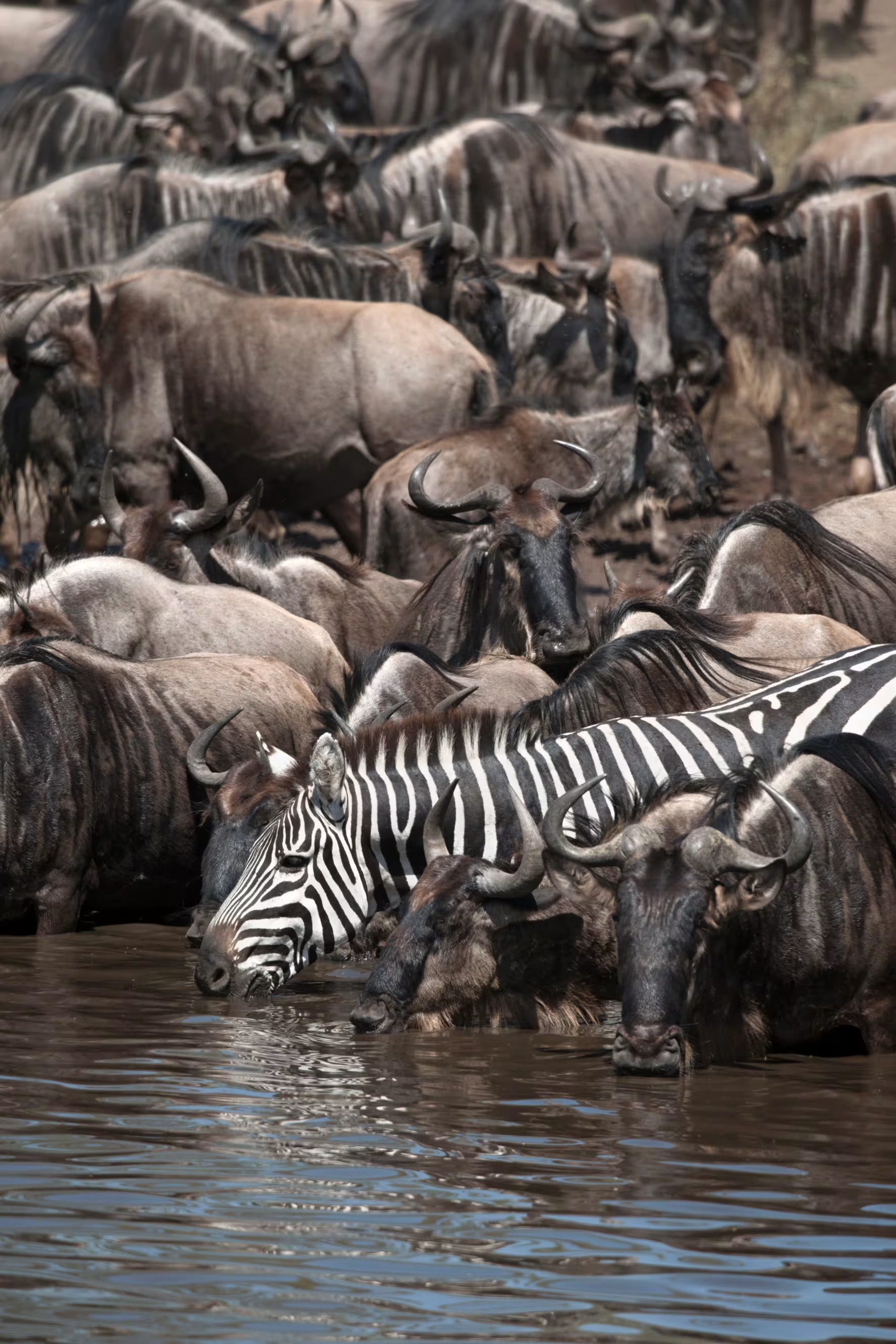
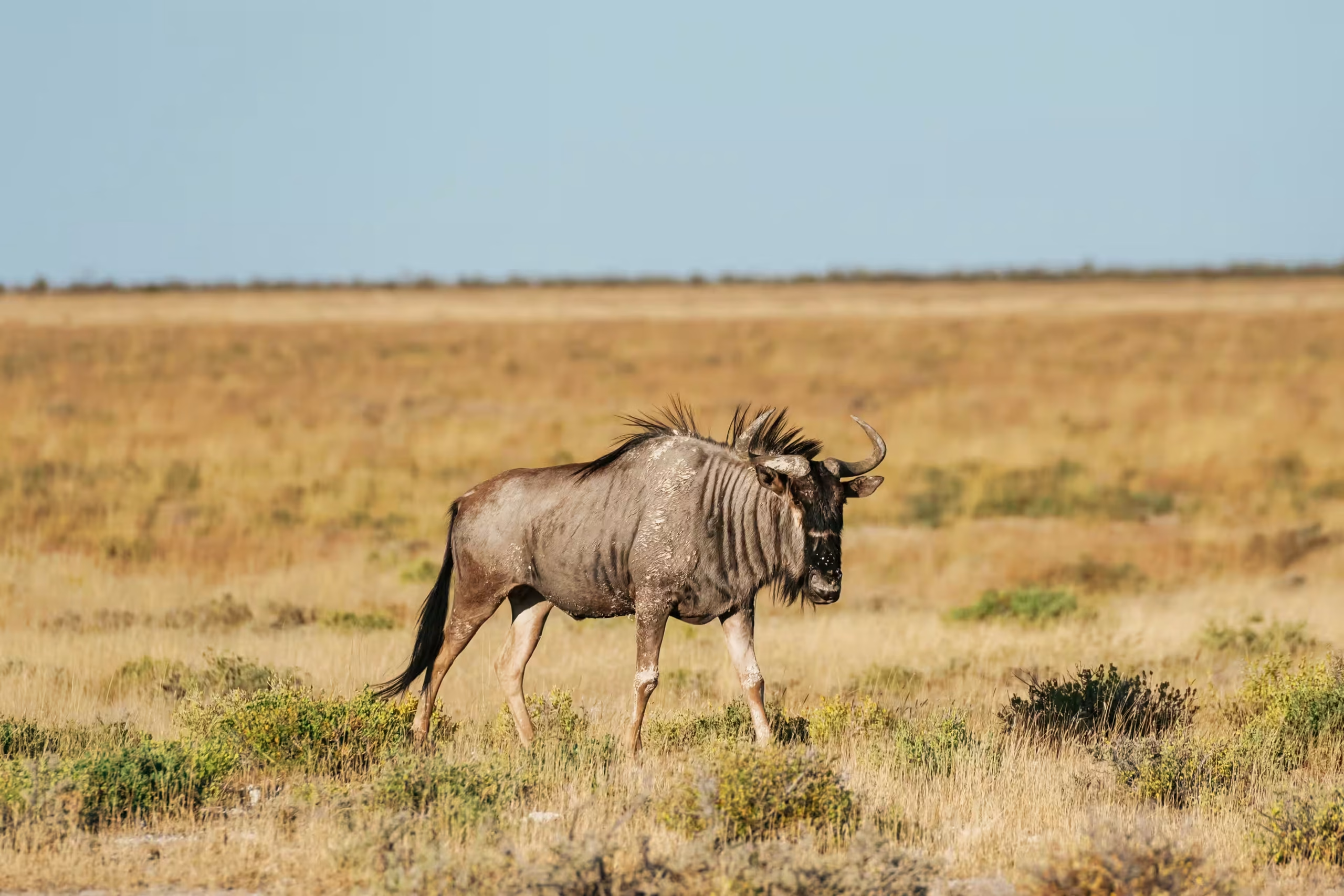
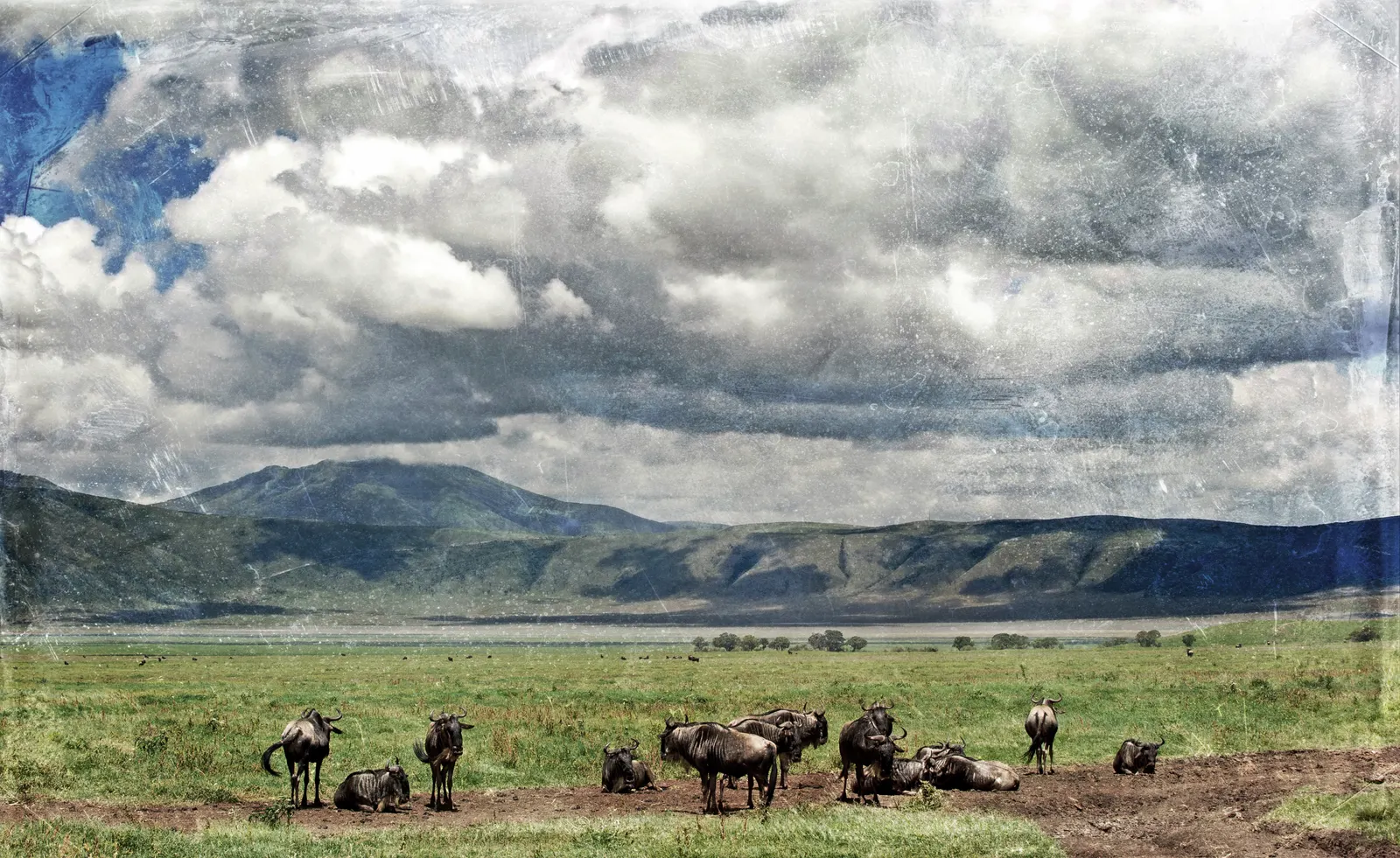
The descent road drops six hundred metres to a floor of roughly 250 square kilometres, and nearly everything on it stays all year: wildebeest and zebra, buffalo, hyena, one of the highest lion densities in Africa, hippo in the Ngoitokitok spring, flamingos on Lake Magadi when the water is right, and the black rhino that are the reason many people come. Rhino are few and often distant; your guide will know where they have been seen that week.
Lunch is a picnic by the spring, and the climb out is in the early afternoon, before the six hours run out. Back at the lodge by mid-afternoon, with time to sit by the fire rather than in the vehicle.
Meals
Breakfast · Lunch · Dinner
Travel
Karatu to the Lodoare gate about 30 minutes · 45 minutes to the descent road · 600 m down to the floor
Highlight
Black rhino, lion and the densest wildlife in Tanzania, in a single caldera
Crater descent
Black rhino country
Picnic lunch on the floor
Where you sleep
Tloma Lodge: Standard room interior with bed, sitting area and fireplace
COMFORT

Tloma Lodge

★★★★☆
Karatu, coffee-farm lodge in the highlands
Second night at the same lodge. No packing, and the crater is done from the door.
Gibb's Farm: One-bedroom cottage interior: bedroom and living area with desk and garden windows
LUXURY

Gibb's Farm

★★★★★
Karatu, estate lodge on the crater highlands
Second night. Dinner is from the estate’s own farm.
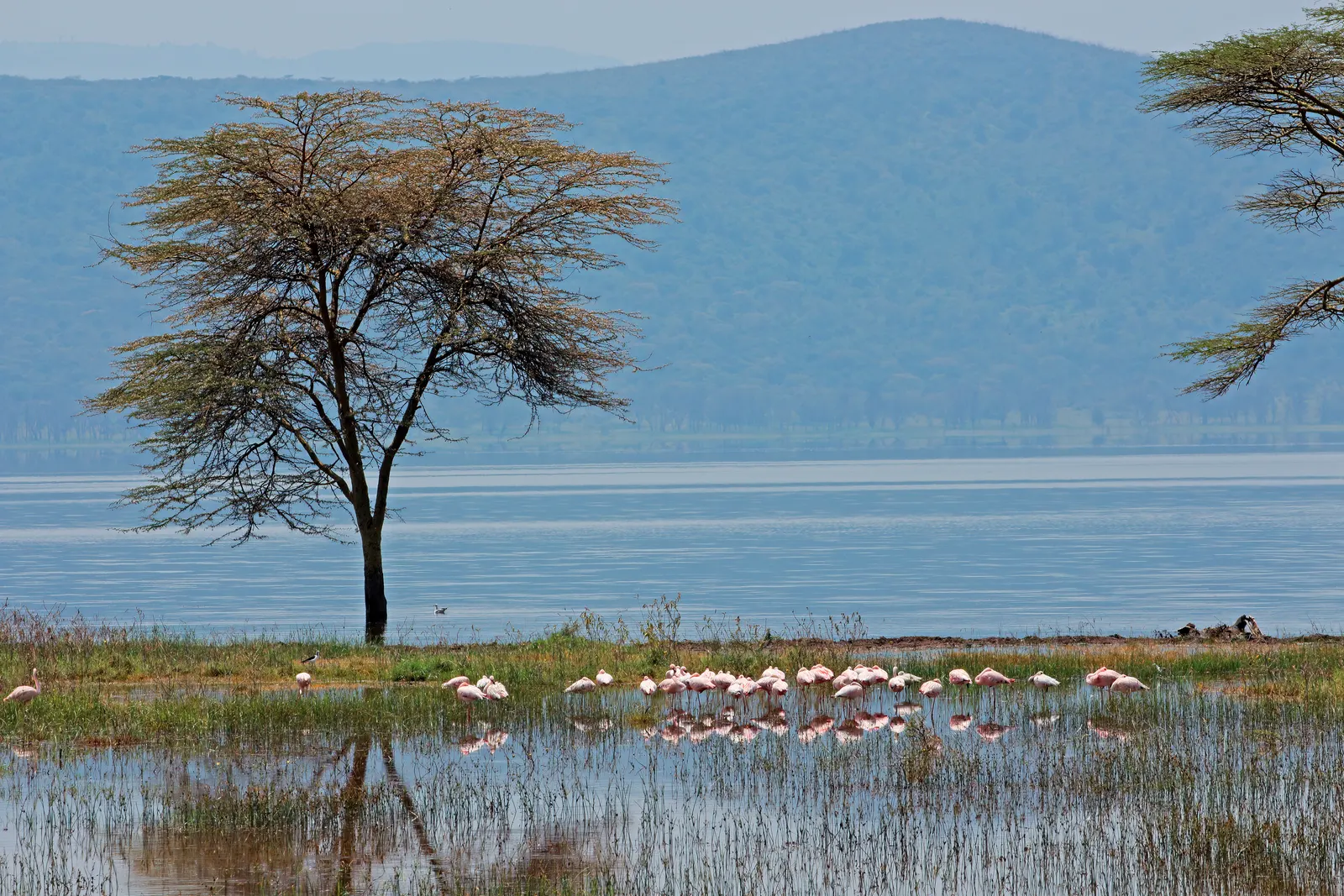
Flamingos in the shallows below an acacia by a lake
Lake Manyara on the way home
03°23′S 35°50′E
Down the escarpment after breakfast to the Lake Manyara gate at Mto wa Mbu. The park is small, about 330 square kilometres of it on land, and it packs a lot into a narrow strip between the Rift wall and the soda lake: groundwater forest fed by springs from the escarpment, big troops of olive baboon, blue monkeys, elephants in the forest, and the hippo pool at the lake edge.
Manyara’s lions are known for resting in the acacia branches, which is not something to count on but does happen. When the lake level suits them, flamingos and pelicans work the shallows, and the birding along the shore is some of the best in the north.
Out of the park by early afternoon, then two hours on the tarmac to Arusha for a late lunch, and another hour to Kilimanjaro International for an evening flight. If you fly the next day or go on to Zanzibar, we will drop you at your hotel instead.
Meals
Breakfast · Lunch
Travel
Karatu to the Manyara gate about 40 minutes · Manyara to Arusha about 125 km, 2 hours · Kilimanjaro International a further hour
Highlight
Groundwater forest, the lake shore, and a last morning in a park
Groundwater forest
Hippo pool
Evening flight home
Where you sleep
Departure day — no overnight
III · Rates

What it costs, by group size

A safari gets cheaper per person as the vehicle fills. Choose a tier to see the table.
Per person, costed September 2026 at high-season rates. Tell us your dates and group size and we will quote them, rather than show you a range.
Comfort rates by group size, per person and group total
Group sizeRoomsPer personGroup total
1 guest1 room$3,200$3,200
2 guests1 room$2,110$4,220
3 guests2 rooms$2,000$6,000
4 guests2 rooms$1,750$7,000
5 guests3 rooms$1,750$8,750
6+ guests3 rooms$1,630$9,780
Single supplement
$390
Added when a guest does not share a room
Child, 3 – 11 years
30% off
30% off the adult rate when sharing a room with two adults
Peak season uplift
None
None — these rates are already high-season; April and May cost less
All figures in US dollars, per person sharing unless stated. Valid for travel until 30 June 2027. Park fees, guiding, vehicle, accommodation and full board are included — see what is and is not covered below.
IV · Included

What is in the price, and what is not

Stated in full, both ways.

What is included

What is not

V · Add-ons

Worth adding, if you have the days

Priced separately and arranged on request.
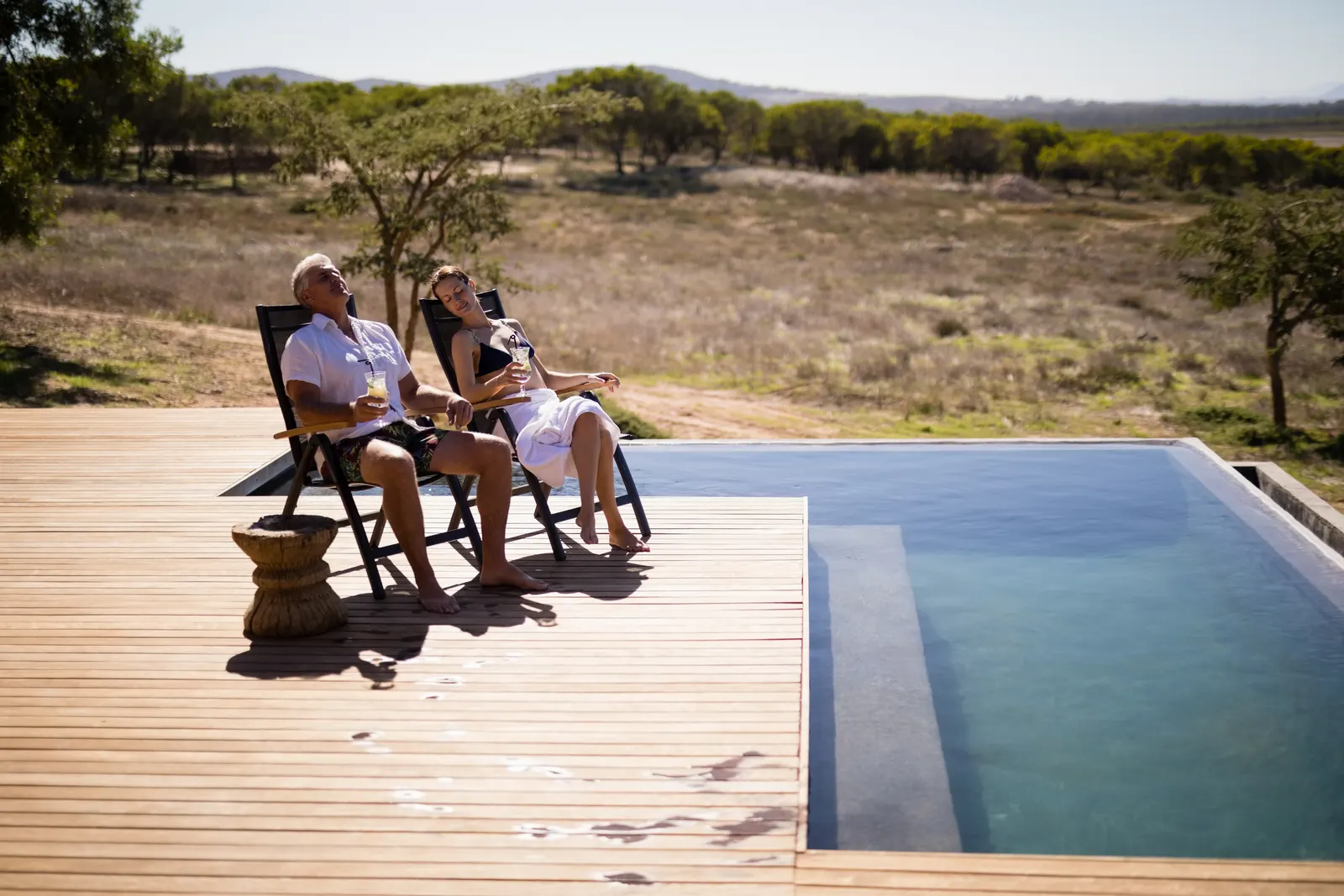
Two guests relaxing by a lodge plunge pool
Before day 1

A night in Arusha before you start

Most long-haul flights land in the afternoon or evening. A night in Arusha means day 1 starts after breakfast instead of straight off the aircraft, and you reach Tarangire with the whole afternoon.
USD 250 per person, for 2 guests
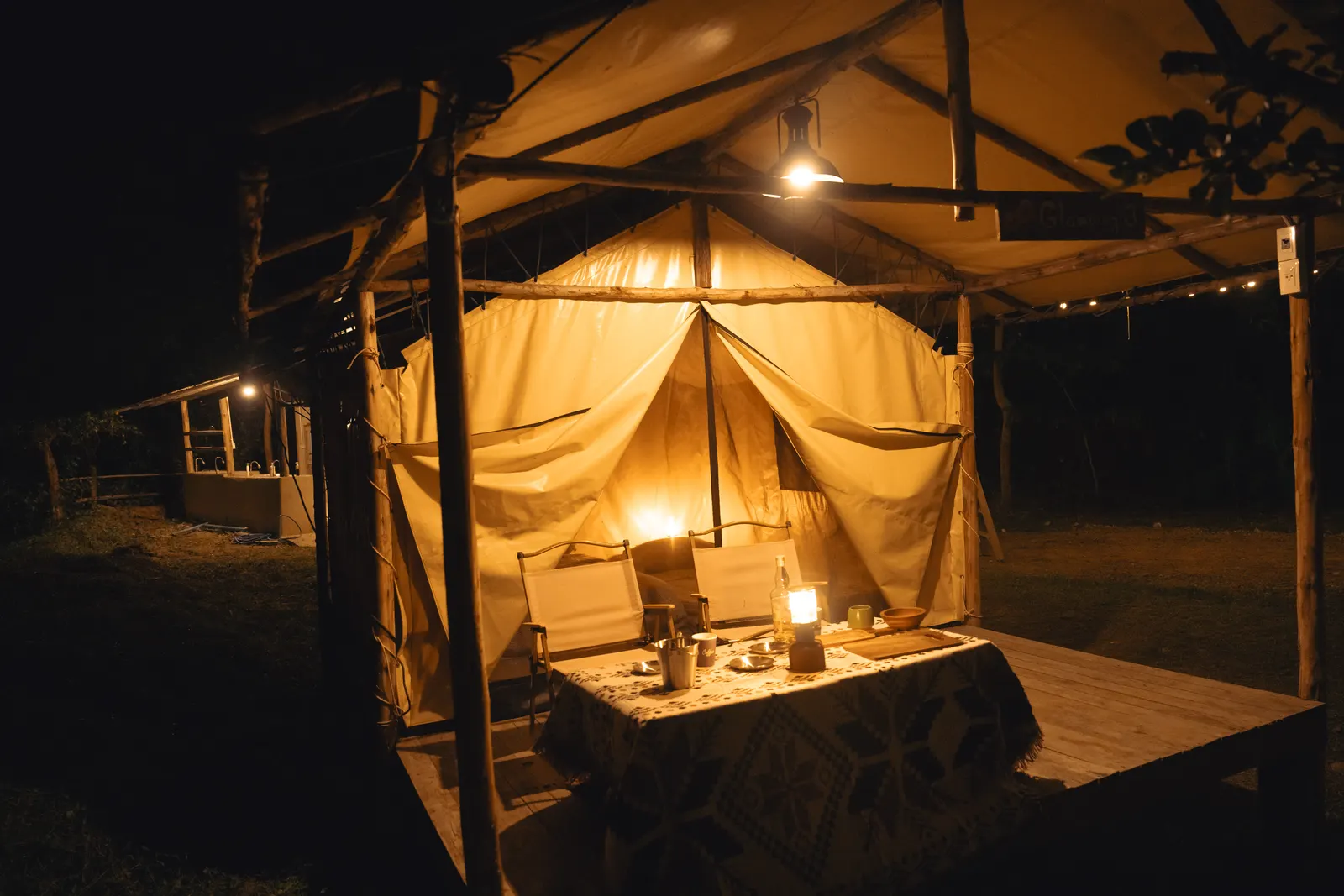
A safari tent at night
Day 1 · after dark

Night drive in Tarangire

Tarangire is one of the few northern parks licensed for night drives. An open vehicle, a filtered spotlight and the animals the day never shows: genet, civet, bushbaby and lion on the move. Ages sixteen and over.
USD 190 per person
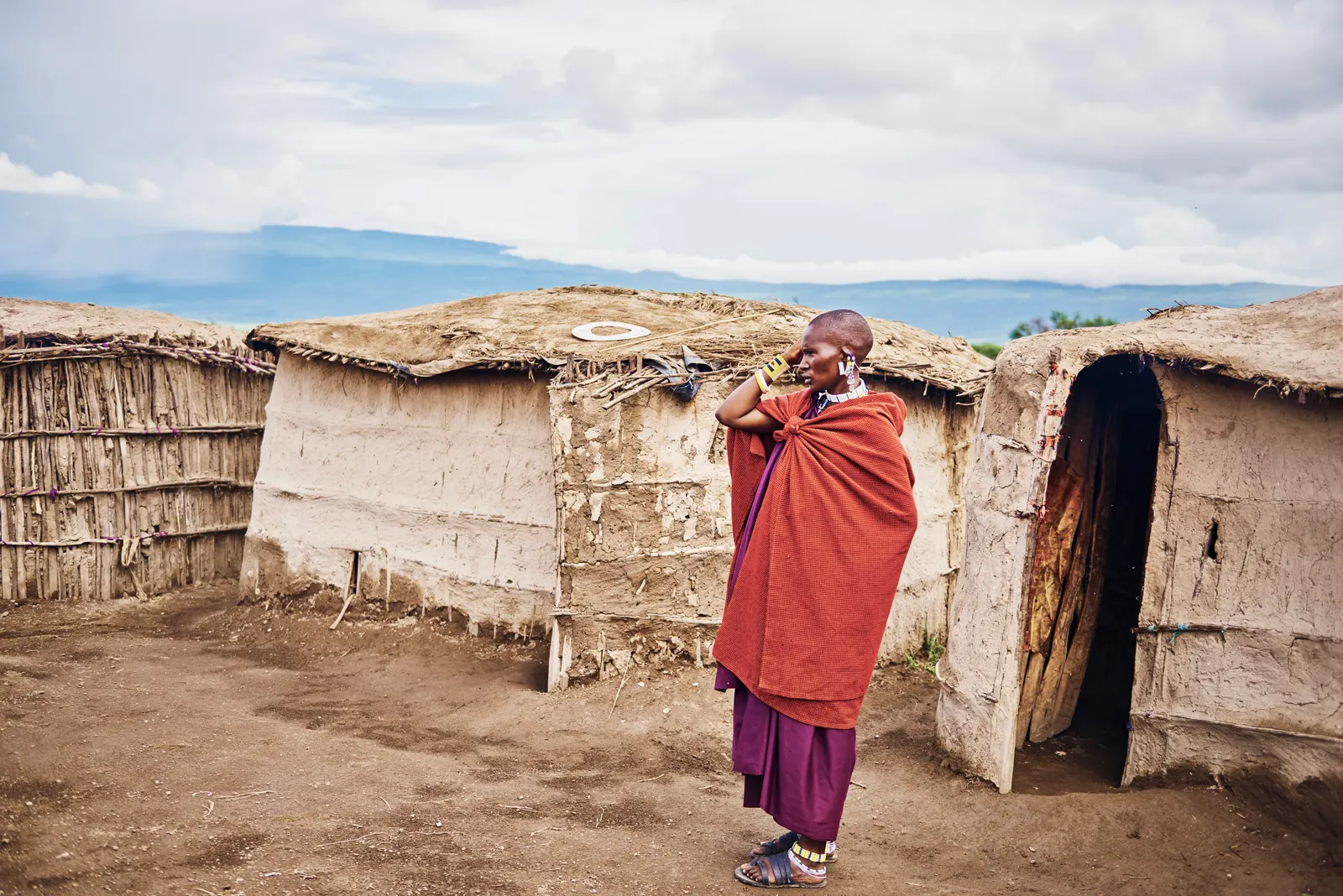
A Maasai homestead
Day 2

A Maasai morning near the park

The land between Tarangire and the Rift wall is Maasai grazing country. An hour or two with a family we work with directly, fitted in on the way north. Payment goes to the household.
USD 100 per person, for 2 guests
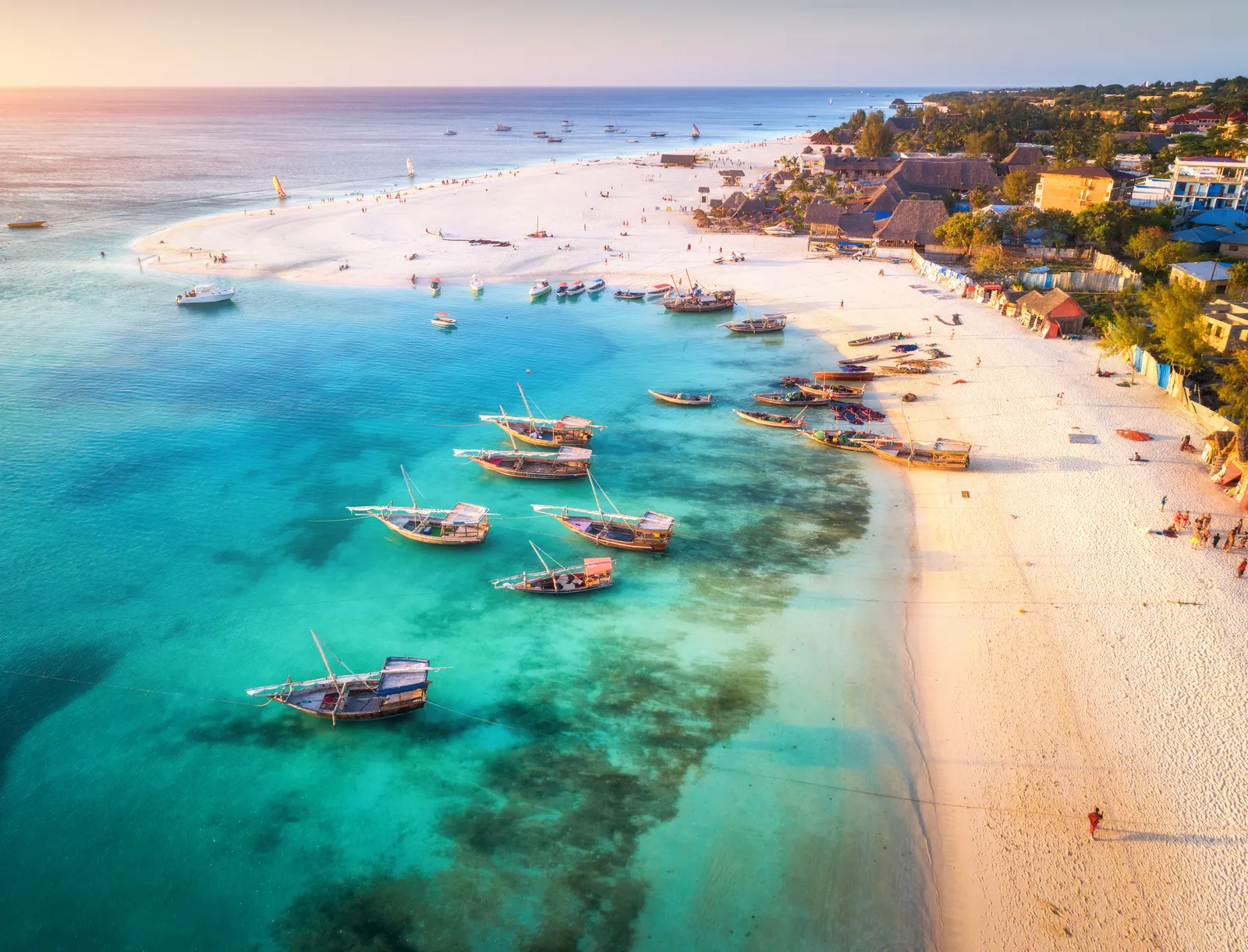
Dhows moored off a white-sand beach on Zanzibar
After day 4 · 3–5 nights

Zanzibar, afterwards

Flights from Arusha and Kilimanjaro reach Zanzibar in under two hours. Three nights on the east coast after four days of parks is the easiest extension there is.
From USD 1,340 per person, 3 nights
VI · The ground

Where this itinerary takes you

The three northern parks a four-day safari can do properly.
An elephant beside a baobab in Tarangire

Tarangire National Park

2,850 square kilometres along a permanent river, about two hours south-west of Arusha. In the dry months it holds the largest elephant concentration in northern Tanzania, among baobabs that are hundreds of years old, and it is one of the best birding parks in the country all year.
Wildebeest in the Ngorongoro Crater

Ngorongoro Crater

The largest unbroken, unflooded volcanic caldera in the world, about 250 square kilometres of floor under a 600-metre wall, inside the Ngorongoro Conservation Area. Resident wildlife all year, including black rhino and big lion prides. Vehicles may spend six hours a day on the floor.
Flamingos in the shallows below an acacia by a lake

Lake Manyara National Park

A narrow park between the Rift Valley escarpment and a shallow soda lake: groundwater forest, baboon troops, elephants, a hippo pool and, when the water suits them, flamingos and pelicans on the shore.
The question everyone asks

Why two nights in Karatu?

6 hours
The most any vehicle may spend on the crater floor each day
Most four-day safaris move lodge every night. That puts the crater descent on a day that starts with packing and ends with a long drive, and the six hours on the floor get cut to three or four.
Sleeping in Karatu on both sides of the crater day fixes that. You leave at first light, go down while the floor is quiet, use the whole allowance, and come back up to the same room. It also puts Lake Manyara forty minutes from the door on the last morning.
VII · Season

The best time to travel

Good all year: dry June to October, green and quiet December to March.
June to October is the dry season and the easiest time for this route. Tarangire is at its best, with the elephants concentrated on the river, the grass is short in the crater and the roads are dry. It is also the busiest period, and rates sit at the top of the band.
December to March, between the short and long rains, is green, warm and quieter. The crater’s wildlife stays put all year, Manyara’s birding is excellent and the light is clear after the showers.
November brings the short rains: afternoon showers, but rarely a full day lost. Tarangire’s herds begin to disperse onto the Maasai steppe as the pans fill.
April and May are the long rains. The crater is still very good and lodges cost less, but some Tarangire tracks become muddy and Manyara’s lake-shore roads can close. The trip runs; expect some rain.
VIII · Flights

Getting there and back

Fly into Kilimanjaro International; land by mid-morning or add a night in Arusha.
Fly into Kilimanjaro International (JRO), about an hour east of Arusha. If you land by mid-morning your guide can collect you at the airport and go straight to Tarangire. Later arrivals should add the night in Arusha before day 1.
Nairobi works too, with a shuttle or a short flight to Arusha, but it adds most of a day.
On day 4 you leave Lake Manyara in the early afternoon and reach Kilimanjaro International in the late afternoon, which suits the evening departures most European and Gulf carriers fly. For an earlier flight we skip Manyara and drive straight back.
Tanzania requires a visa for most passports — USD 50, or USD 100 for United States citizens. Apply online in advance rather than on arrival.
IX · Other costs

What else you will spend

Visas, insurance, tips and drinks — set out so there is no surprise on the ground.
Tanzania issues a tourist visa online (eVisa) or on arrival at Kilimanjaro. Applying in advance is faster and avoids the queue at immigration.
A yellow fever certificate is required only if you are arriving from a country where yellow fever is endemic.
We ask every guest to travel insured, with medical cover and evacuation. The crater and Tarangire are both within a few hours of the hospitals in Arusha.
Tipping is customary in Tanzania and genuinely optional. These are the figures guests commonly give, not what is expected of you.
The guide is usually tipped at the end of the safari. Lodge staff tips go into a shared box so that housekeeping and kitchen staff are included.
The Tarangire camp includes local drinks. At the Karatu lodges, drinks from the bar are charged to your room.
Souvenirs, laundry and anything you forgot to pack. Small US dollar notes dated 2009 or later are the most useful cash.
X · Why us

Why book this with us

01

Arusha-based, and Tanzanian-owned

Our office, vehicles and guides are in Arusha, two hours from Tarangire and three from the crater rim. We run this route every week.
02

A short safari that does not feel rushed

Two nights in Karatu means the crater gets a full day and you never pack before the most important early start of the trip.
03

Mid-luxury, chosen by name

A tented camp on the Tarangire River and a lodge on a working coffee farm, both named on this page, not ‘or similar’.
04

A private vehicle, always

Your group only, a window seat for everyone, and a guide who stops when you want to stop.
XI · Questions

Frequently asked

What guests ask before booking this itinerary.
The rate depends on your group size and the tier you choose. The table above gives the per-person price for one to six guests. As a guide, two people sharing in the mid-luxury Comfort tier pay about USD 2,110 each, including park fees, the crater service fee, full board and a private vehicle.
For Tarangire, the Ngorongoro Crater and Lake Manyara, yes. They are close together and close to Arusha. It is not enough for the Serengeti, which is a full day’s drive further west; for that, look at our seven-day northern circuit.
En-suite tents and rooms, full board, good beds and properties with character, one step below the top-end lodges. The Comfort tier uses a tented river camp in Tarangire and a coffee-farm lodge in Karatu. The Luxury tier upgrades both.
Lion, elephant and buffalo are close to certain between the three parks. Black rhino live in the Ngorongoro Crater and are seen on many days, usually at a distance. Leopard are the hardest; Tarangire and Manyara give you the best chance, and nothing can be promised.
Yes. The driving days are short and there are no age limits for game drives in a private vehicle. Children from 3 to 11 sharing with two adults pay 30% less than the adult rate. The optional night drive is for ages sixteen and over.
About two to two and a half hours on day 1, two hours on day 2, a short hop to the crater on day 3, and two to three hours home on day 4. The rest is game driving inside the parks.
Yes. Flights from Arusha and Kilimanjaro reach Zanzibar in under two hours, and three nights on the coast is the most common extension. See the add-on above.
Yes. This is a private safari, so adding a night in Tarangire, swapping Manyara for a Maasai village visit, or starting from a Moshi hotel are all normal requests.
XII · Your trip

Request your personalised safari proposal

Tell us how you like to travel and we will put together a personalised proposal for this route — dates, camps and a firm price per person. No payment is required at this stage.

No payment is required at this stage. We reply by email and WhatsApp within one working day.

Four days, three parks: a mid-luxury wilderness safari

4
Days
3
Nights
3
Parks
All year
Season
Starts
Arusha or Kilimanjaro International
Ends
Kilimanjaro International or Arusha
Departures
Daily — a private safari on the dates you choose
Availability
Open all year, subject to lodge space
From
from$1,630/pp
Per person, sharing
Private safari · no booking fee · we reply within one working day
from $1,630 / person
Loading itinerary…
Saved Trips