Lake Eyasi sits in a dry corner of the Rift Valley below the Ngorongoro highlands, and the Hadzabe who live around it are among the last people on Earth who still hunt and forage rather than farm or herd for a living. A morning with them is sold on almost every northern-circuit itinerary that includes Lake Eyasi, and it can be one of two very different things: a visit made on the community’s terms, or a show made for a bus.
The difference is not visible from a brochure. It comes down to who decides what happens, who is paid and how, and whether you are told plainly which one you are getting. This piece covers what an ethical visit looks like and what to ask any operator before you book one — not a company policy, but the questions that separate good practice from a show.
The short answer
A Hadzabe morning at Lake Eyasi should be arranged with the community’s consent, paid directly with a disclosed fee, and run with photography agreed rather than assumed. What separates a respectful visit from a staged one is who controls it, and whether you are told plainly which one you are getting.
A staged show, and a well-arranged visit| Sign | A staged show | A well-arranged visit |
|---|
| Who decides | The operator or lodge | The Hadzabe community itself |
|---|
| The fee | Vague, or bundled into a general charge | Disclosed before booking, paid directly |
|---|
| Photography | Assumed, cameras up throughout | Agreed in advance, can be declined |
|---|
| Group size | Large, back-to-back groups | One small group at a time |
|---|
Getting there
Lake Eyasi is roughly two to three hours from the
Ngorongoro highlands on a rough descent road, down through the Rift Valley escarpment past Karatu and the Mang’ola area. It is usually combined with a night near the lake rather than a same-day round trip from the crater, because the walk itself starts before sunrise, while the group is still near camp and animals are still moving.
The walk happens at first light because that is when the Hadzabe themselves go out — animals are moving and the day has not yet turned hot, not because it makes a better photograph. Guests who arrive from a lodge after sunrise usually miss the actual foraging and see only the return, or a walk arranged specifically to fill the slot instead.
Most itineraries pair the morning with a stop at a Datoga homestead nearby. The Datoga are pastoralists and blacksmiths who forge arrowheads, knives and jewellery from melted scrap metal, and they supply many of the arrow tips the Hadzabe use — a working relationship between two different groups sharing the same dry country, not two interchangeable stops on a generic “tribal visit”.
What actually happens
The core of the visit is a walk with a small group of men carrying bows and arrows tipped with poison from a local shrub. You follow rather than lead, and you do not hunt — a Hadzabe hunting party’s actual chances depend on quiet and patience that a group of visitors cannot offer, so what is shown is closer to tracking practice than a live hunt with a guaranteed outcome.
Along the way the group points out what they would normally eat: tubers dug from the ground, wild fruit, baobab pods, and honey taken from wild hives when a guide can find one. Hadza is a click language unrelated to any other spoken tongue, and most of what is said during the walk is to each other, not to you — a translator, where one is provided, fills in afterwards rather than narrating over it.
Fire by friction is often demonstrated at the end, using a wooden hand-drill worked fast enough to produce an ember, and it is one of the few parts of the morning built specifically for an audience rather than observed in passing. That is worth knowing rather than assuming it is a piece of daily life you have simply stumbled into.
The fee, and what a good one looks like
A Hadzabe visit should be paid for directly, in a fee the community itself has set, not folded into a lodge rate or a generic “cultural activity” line on an invoice. Ask your operator, plainly, how much of what you pay reaches the Hadzabe and how it gets there — cash on the day, a payment to a recognised community fund, or something else. A specific answer is the marker of a visit arranged properly; a vague one is not.
Rates for a Hadzabe morning vary between operators and change over time, so any number printed here would be out of date before you read it. What does not change is the principle: the fee should be disclosed before you book, not negotiated at the camp, and it should not depend on how many souvenirs you buy afterwards.
This is one of the more poorly regulated cultural visits on the northern circuit. Some operators run large groups back to back with no community agreement in place at all, and little of what is charged reaches the Hadzabe themselves. Ask the fee question before you book, not after you have already paid.
How to behave
Follow whoever is leading the walk and keep pace rather than wandering off to get a better angle — this is moving foraging ground, not a fixed set. Wear closed shoes; the scrub has thorns and the ground is uneven volcanic soil. Bring water and a hat rather than expecting either to be provided.
Do not hand out sweets, money or gifts directly to children, even with good intentions — it is a well-documented way that casual visits quietly change a community’s relationship with tourism, and most reputable operators ask guests not to do it for that reason. If you want to give something, ask your operator whether there is a community fund it should go through instead.
Ask before touching a bow or arrow, and ask before joining in rather than assuming you are welcome to. A group that has agreed to be visited is not obliged to let every guest handle their equipment, and being asked is the more respectful default.
Why we would rather you did not photograph everything
A camera pointed at someone for an entire walk turns a morning into a photoshoot, whether that is the intention or not. Ask before you raise the camera, ask again for anyone you want a close portrait of, and accept a no without asking twice. The people in front of you are not there for the photograph; the photograph is incidental to what they are actually doing.
Some moments are worth simply watching rather than filming. A short video for your own memory, agreed in advance, is usually fine; a phone held up for the whole walk changes what the walk is, for you as much as for the people you are walking with.
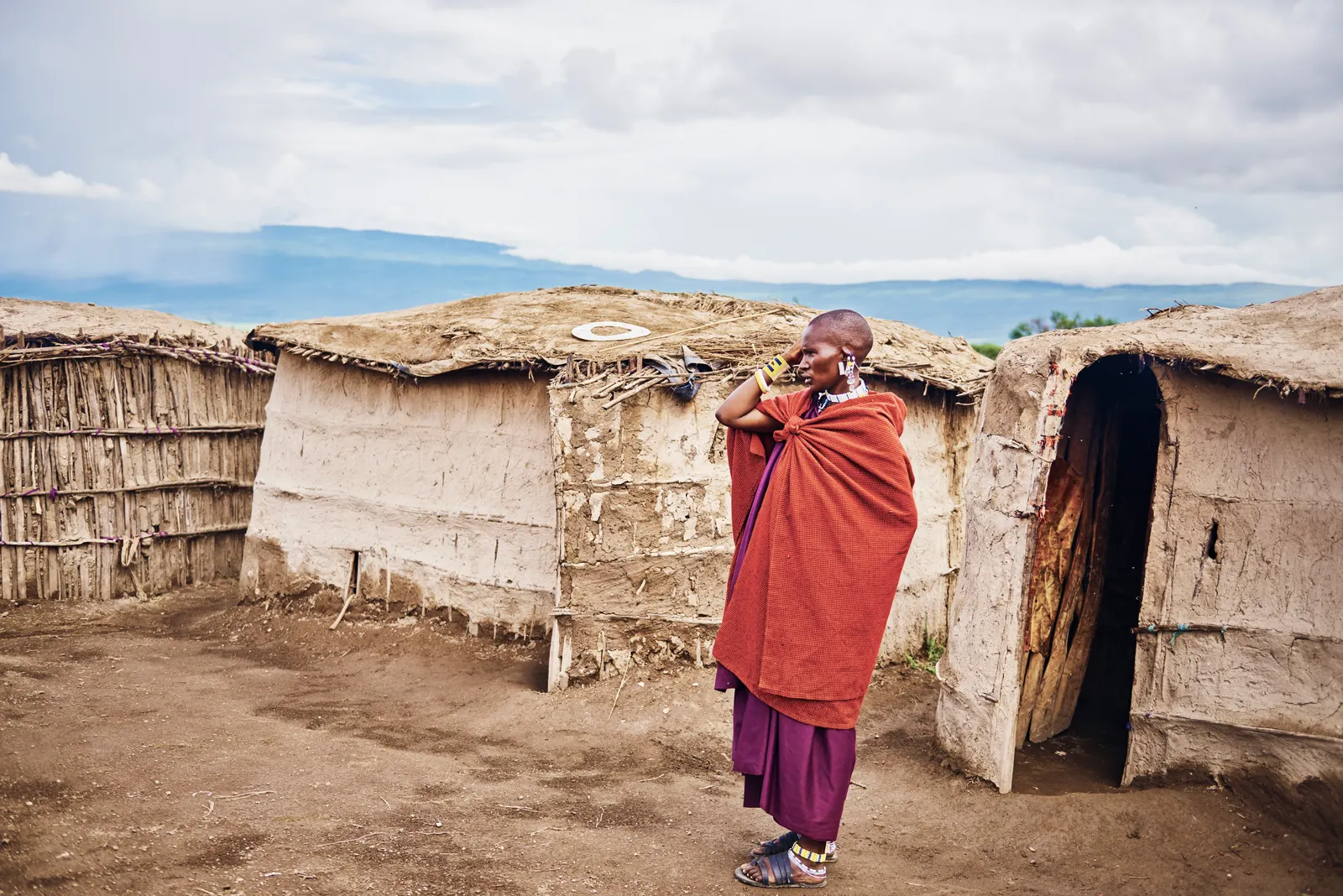
None of this is unique to the Hadzabe — the same courtesy applies to any cultural visit, including a Maasai boma. Read
why the Maasai jump for the same set of questions applied to a different community, and
the Manyara, Eyasi & Crater journey if a Hadzabe morning is what you are planning around.
Find a journey covers every itinerary that includes one.
Questions people ask
What happens on a Hadzabe cultural visit?
A walk before sunrise with a small group of Hadzabe men carrying bows, following the pace of an actual foraging morning rather than a staged re-enactment. Guests observe rather than hunt, and the walk usually ends with a demonstration of fire by friction.
How much does a Hadzabe visit cost?
Rates vary between operators and change over time. What matters more than the number is the principle: the fee should be set by the community, disclosed before you book, and paid directly rather than folded into a general activity charge.
Is visiting the Hadzabe ethical?
It can be, if the community controls the visit, sets and receives its own fee, and photography is agreed rather than assumed. Large, unregulated groups with no community agreement in place are the version worth avoiding.
What language do the Hadzabe speak?
Hadza, an oral click language unrelated to any other known language family. Most of what is said on a walk is between the Hadzabe themselves rather than narrated for visitors, so a translator fills in details afterwards rather than during it.
Can I take part in the hunting, not just watch?
No. Guests follow and observe. A real hunt depends on quiet and patience a visiting group cannot offer, so what is shown is closer to tracking practice than an actual hunt with a guaranteed outcome.
Should I give the Hadzabe children sweets or gifts?
No. Handing gifts directly to children is a well-documented way that casual visits quietly change a community’s relationship with tourism. If you want to give something, ask your operator whether a community fund exists to receive it instead.
How do I get to Lake Eyasi for a Hadzabe visit?
Lake Eyasi is roughly two to three hours from the Ngorongoro highlands on a rough descent road through the Rift Valley escarpment. Most itineraries include a night near the lake, since the walk itself starts before sunrise.
Can I photograph the Hadzabe during the visit?
Ask before you raise the camera, and ask again for any close portrait. A well-arranged visit will have agreed how photography works before you arrive, and a no should be accepted without asking twice.
Travel it
Journeys built around this
Last updated 13 September 2026