Places of Africa Safaris

Chimpanzees in a tree
Western Tanzania · Six Days

Six days at Gombe, where the research began

Tanzania’s smallest national park, reached by boat, with three nights to find the chimpanzee community that has been watched continuously since 1960.
6
Days
5
Nights
1
Park
15+
Min. age
I · Overview

The route, and why this shape

One park, no road, three nights in the forest.
Gombe is about 52 square kilometres — a strip of forested ridges on the eastern shore of Lake Tanganyika with no road in and no road out. It is the smallest national park in Tanzania and it is the one with the longest scientific record: Jane Goodall arrived at the Kasekela beach in July 1960 and the community she began watching has been observed, animal by animal, ever since.
That is why this trip gives the park three nights rather than one. The chimpanzees are habituated but not tame; where they are on a given morning depends on which trees are fruiting, and a single day can be a twenty-minute walk or a scattered, distant, disappointing one. Three mornings turn a gamble into a near-certainty, and the middle day gives you the waterfall and the peak without cutting into the trekking.
The honest trade is comfort. Kigoma is a working port and Gombe sleeps its guests in park bandas or one small tented camp on the sand. There is no lodge in the Serengeti sense anywhere on this route. What you get instead is a forest that has changed the way people think about their own species, and almost no one else in it.
Length
6 days / 5 nights
Country
Tanzania
Start / end
Kigoma → Kigoma
Tour type
Private chimpanzee trek
Group size
Private — 1 to 6 guests per vehicle · park limit 6 per trek
Meal plan
Full board in the park; bed and breakfast in Kigoma
Best months
June – October
Activity level
Moderate to hard — steep forest walking, 2–6 hours
Minimum age
15, by park regulation
II · The days

Day by day, all six

Every day opens. One night in Kigoma, three at Gombe, one back in Kigoma. See every lodge and camp we use
Day
01
Hippos crowded into a pool
Arrival

Kigoma, and the lake

04°53′S 29°38′E
Dinner
Hippos crowded into a pool
Kigoma, and the lake
04°53′S 29°38′E
You fly into Kigoma, the town at the western end of the Central Line railway and the port for Lake Tanganyika. It is a long way from anywhere: the lake is 673 kilometres long and Kigoma sits a third of the way down its eastern shore, with the Congo on the far side. You are met at the airstrip and driven the few kilometres to a lakeside hotel.
The afternoon is Ujiji, ten kilometres south. It was the Arab trading town before Kigoma existed, and it is where Stanley found Livingstone in November 1871. The memorial stands under two mango trees on the spot, with a small museum beside it. Allow an hour; it does not need more, and the walk through the old town is the better part of it.
Back at the lake for the evening. The water here is clear enough to see the bottom several metres down and warm enough to swim in, and the sun sets directly over the Congo hills across the water. Eat early. Tomorrow starts with a boat.
Meals
Dinner
Travel
Dar es Salaam to Kigoma by scheduled flight · about 2 hours; boat to Gombe about 1½ hours · Ujiji 10 km
Highlight
Lake Tanganyika at the end of the railway
Fly in to Kigoma
Ujiji and the Livingstone memorial
Lakeside evening
Where you sleep
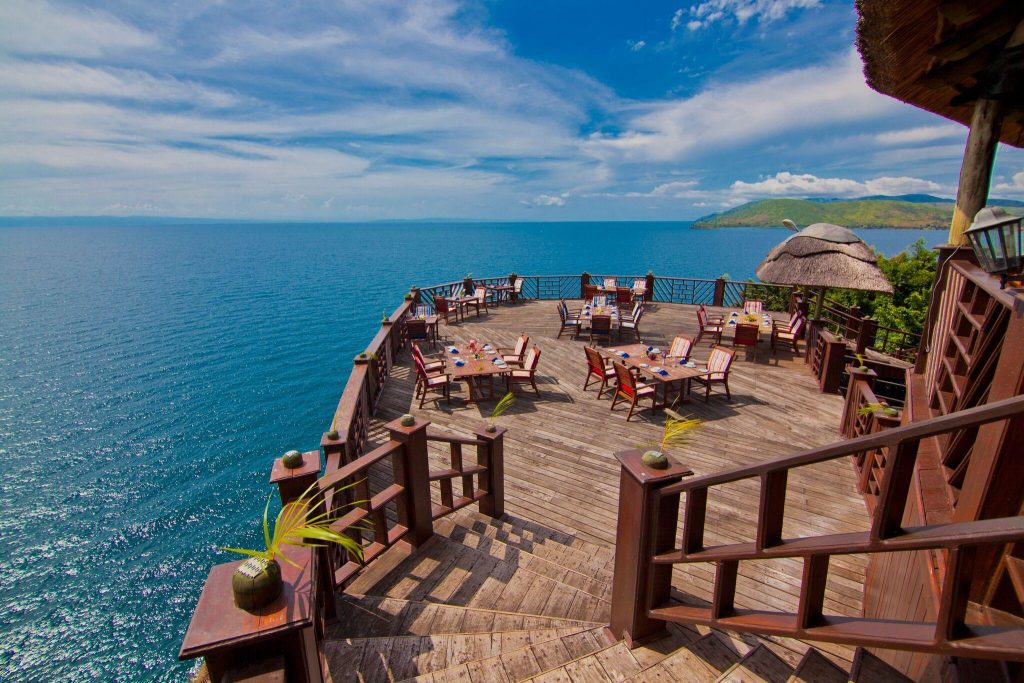
Outdoor dining deck of the Sangara Restaurant at Kigoma Hilltop Hotel
COMFORT

Kigoma Hilltop Hotel

★★★★☆
Kigoma, on the lakeshore
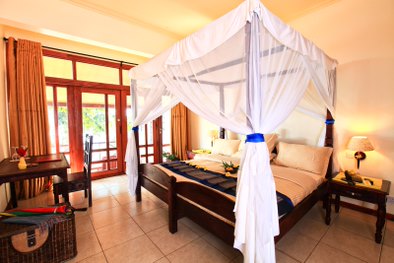
A simple hotel above the water, en-suite, with the boat jetty close enough to walk to in the morning.
Kigoma Hilltop Hotel: Swimming pool
LUXURY

Kigoma Hilltop Hotel

★★★★★
Kigoma, on the lakeshore
The best rooms in town face the lake. Kigoma has no luxury in the safari-lodge sense, and we would rather tell you that now.
A chimpanzee on a branch
North up the lake to Gombe
04°40′S 29°38′E
There is no road to Gombe. You board at Kigoma after breakfast and run north along the shore for about twenty-five kilometres, one to two hours depending on the boat and the wind. Fishing villages give way to steep forested valleys running straight down into the water, and the park begins where the last village ends.
Gombe is roughly 52 square kilometres — a narrow strip of ridge and valley between the lake at 773 metres and the rift escarpment about seven hundred metres above it. Thirteen or so streams cut it into parallel valleys, and the chimpanzees move between them. You land on the beach at Kasekela, where Jane Goodall set up her tent in July 1960.
The afternoon is the park briefing, a walk to the research station, and if the chimpanzees are close, a first trek. The rules are worth hearing carefully: groups of six, one hour with the animals, ten metres back, no one who is unwell, and no one under fifteen. They exist because chimpanzees catch what we catch.
Meals
Breakfast · Lunch · Dinner
Travel
Boat, roughly 1–2 hours depending on the vessel
Highlight
Arriving by water at the smallest park in Tanzania
Boat, not road
Kasekela beach
Park briefing and first walk
Where you sleep
Mbali Mbali Gombe Lodge, Tanzania
COMFORT

Mbali Mbali Gombe Lodge

★★★★☆
Gombe National Park, lakeshore
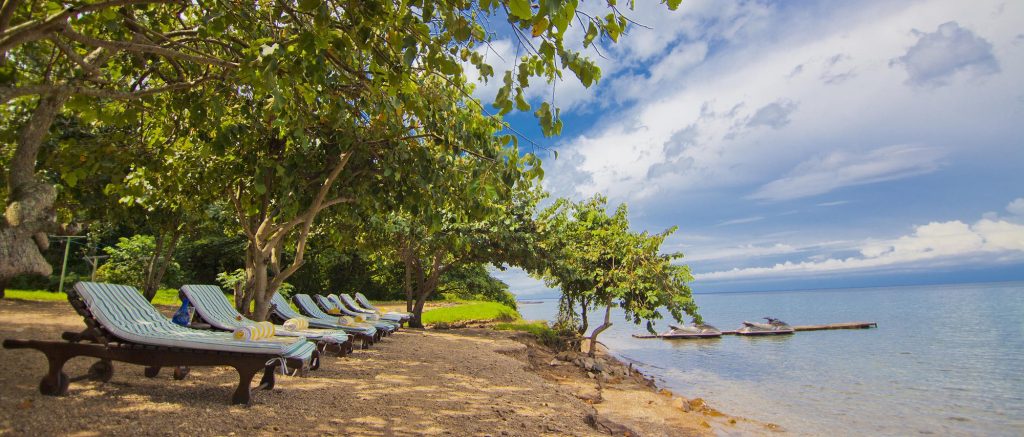
The park’s own bandas at the beach: basic rooms, shared facilities, meals cooked on site, and the forest starting at the back door.
Mbali Mbali Gombe Lodge, Tanzania
LUXURY

Mbali Mbali Gombe Lodge

★★★★★
Gombe National Park, lakeshore
The one tented camp inside the park, on the sand, with en-suite tents and a dining tent facing the water. Still simple; the difference is privacy and the food.
Chimpanzees in a tree
Tracking the Kasekela community
04°40′S 29°38′E
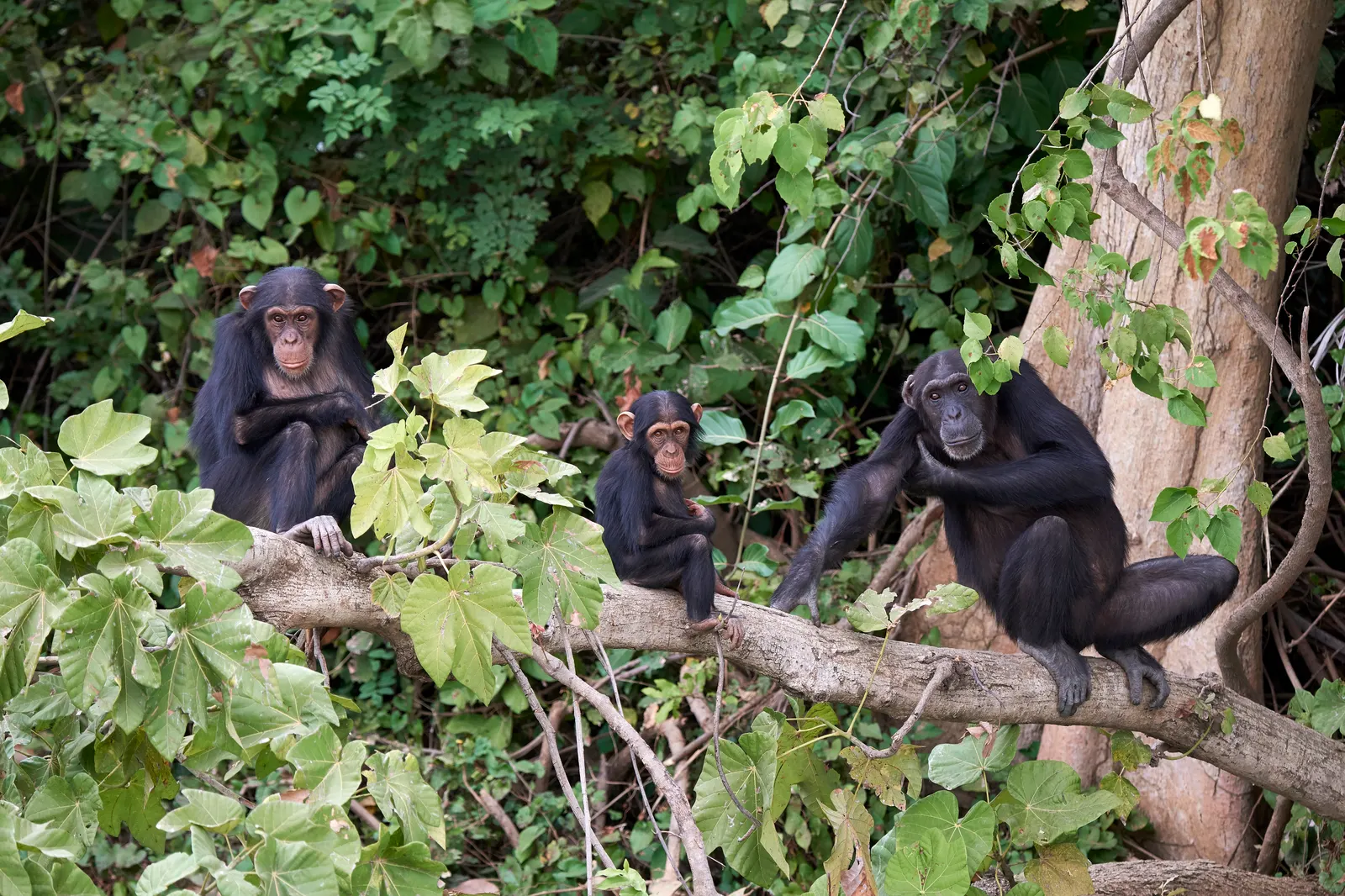
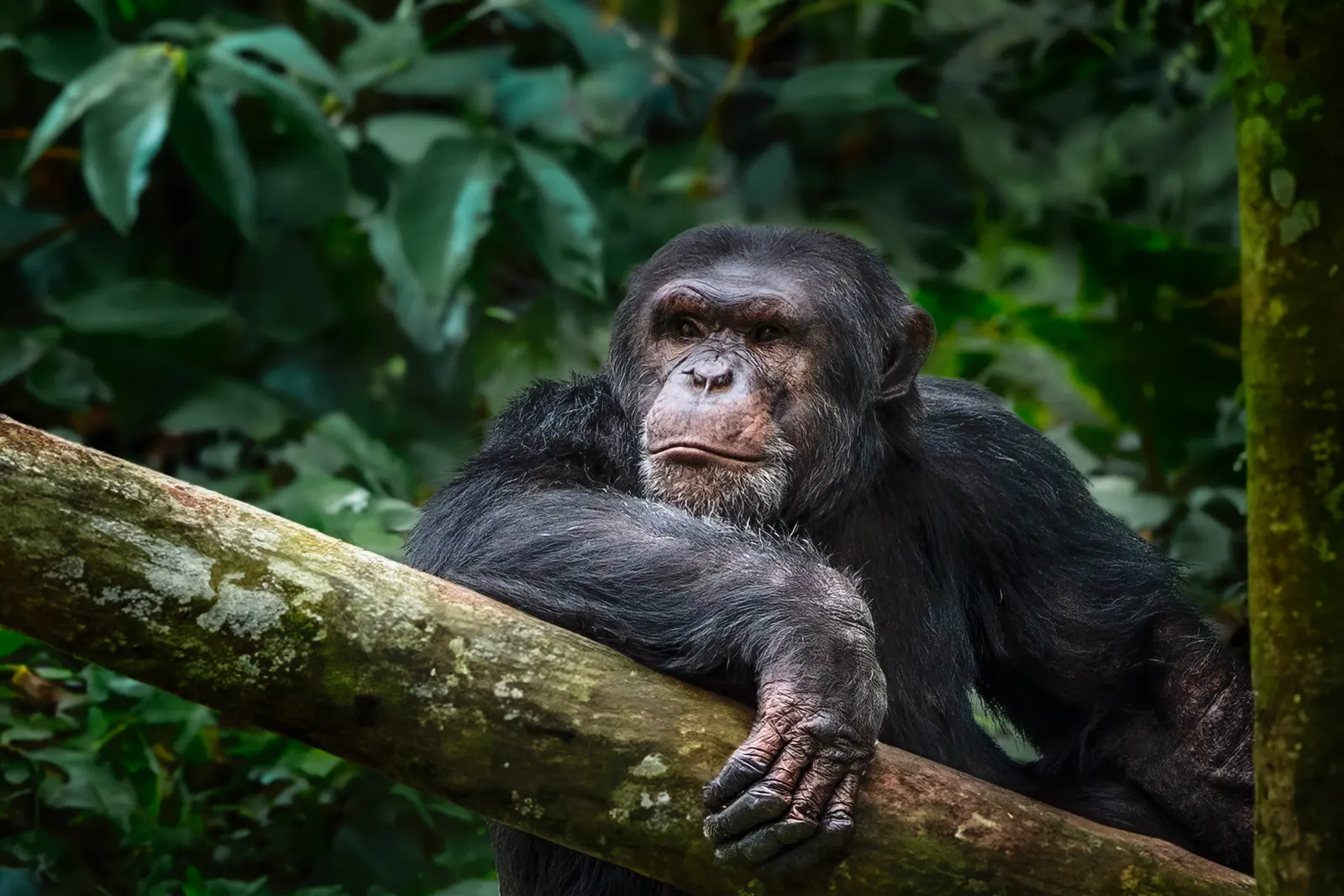
You leave early with a park guide and, usually, one of the trackers who went out at first light to find where the chimpanzees nested. The Kasekela community is the group Goodall studied and it is fully habituated: the animals ignore you, which is exactly the point.
How long it takes is the honest unknown. Some mornings they are feeding in the fig trees behind the station and you are with them in twenty minutes. Some mornings they have gone up over the ridge and it is three hours of steep, wet, hand-over-hand walking before you hear them. The valleys are short but they are not gentle. Bring gloves and expect to sweat.
Then the hour. You will see grooming, feeding, mothers with infants, and the political business of a group that has been continuously watched for more than six decades — the guides know every animal by name and family. What you will not see is a guarantee: on a bad day the community is scattered and distant, and we would rather you planned three days here for that reason than one.
Meals
Breakfast · Lunch · Dinner
Travel
On foot · 2–6 hours in the forest
Highlight
An hour with habituated chimpanzees
Chimpanzee trek
Park guide and tracker
Steep valleys
Where you sleep
Mbali Mbali Gombe Lodge, Tanzania
COMFORT

Mbali Mbali Gombe Lodge

★★★★☆
Gombe National Park, lakeshore
Second night in the bandas. Swim off the beach in the afternoon; the water is clear and warm, and the guides will tell you where it is safe to go in.
Mbali Mbali Gombe Lodge, Tanzania
LUXURY

Mbali Mbali Gombe Lodge

★★★★★
Gombe National Park, lakeshore
Second night in the tented camp. Ask for lunch on the beach rather than in the dining tent.
Chimpanzees in a tree
The waterfall, Jane’s Peak, and the station
04°40′S 29°38′E
A second trek if the chimpanzees are reachable, and they usually are on at least one of your three days. If they are far, the guides will tell you so before you start and the morning goes to the rest of the valley instead.
The Kakombe waterfall is a forty-minute walk up the stream behind the station: a single drop of about twenty metres into a pool, under closed canopy, with the spray keeping the rock green. From there the path climbs to Jane’s Peak, the ridge-top viewpoint she used to watch the community before it accepted her. It is a hard forty minutes and the reward is the whole of the park below you and the lake to the horizon.
The afternoon is for the research station and its small museum — Goodall’s early photographs, the feeding-station history, and the genealogies of animals whose grandchildren you watched this morning. Baboons of the Kasekela troop, also studied since the 1960s, are on the beach most afternoons and are not shy. Keep your food in the banda.
Meals
Breakfast · Lunch · Dinner
Travel
On foot · half day, then free afternoon
Highlight
Kakombe waterfall and the view from the peak
Kakombe waterfall
Jane’s Peak
Research station museum
Where you sleep
Mbali Mbali Gombe Lodge, Tanzania
COMFORT

Mbali Mbali Gombe Lodge

★★★★☆
Gombe National Park, lakeshore
Third night. By now you know the beach and the baboons know you; it is the settled night of the trip.
Mbali Mbali Gombe Lodge, Tanzania
LUXURY

Mbali Mbali Gombe Lodge

★★★★★
Gombe National Park, lakeshore
Third night. A sundowner on the sand with the Congo hills going purple across the water is the thing to do with it.
Hippos crowded into a pool
Last morning in the forest, then south
04°53′S 29°38′E
If the community was scattered on days three and four, this is the morning that matters, and it is why the boat does not leave early. You go out with the guides at first light and come back down to the beach for a late breakfast.
Then south. The run back to Kigoma is the same one to two hours, and it is worth sitting on the shaded side and watching the forest close behind you — the park boundary is obvious from the water, because the trees stop where the villages start. That line is the reason the park matters; outside it the forest that once ran the length of this shore is gone.
You are back on the Kigoma lakeshore by mid-afternoon, with the boat crew to thank and a proper shower waiting. Nothing is scheduled. If you missed Ujiji on day one, or want to see the MV Liemba if she is in port — a German warship of 1913, still working the lake — the afternoon is yours. Dinner is at the hotel, and it is the first meal in four days that did not arrive by boat.
Meals
Breakfast · Lunch · Dinner
Travel
Boat, roughly 1–2 hours
Highlight
A third chance at the chimpanzees before the boat
Dawn trek
Boat south
Free afternoon in Kigoma
Where you sleep
Kigoma Hilltop Hotel: Junior Suite
COMFORT

Kigoma Hilltop Hotel

★★★★☆
Kigoma, on the lakeshore
The same hotel as the first night, for a proper shower and a bed without sand in it.
Kigoma Hilltop Hotel: Executive Room
LUXURY

Kigoma Hilltop Hotel

★★★★★
Kigoma, on the lakeshore
The best rooms in town, again. Ask for the lake side.
Two Maasai men beside a light aircraft on a bush airstrip
Fly out of Kigoma
04°53′S 29°38′E
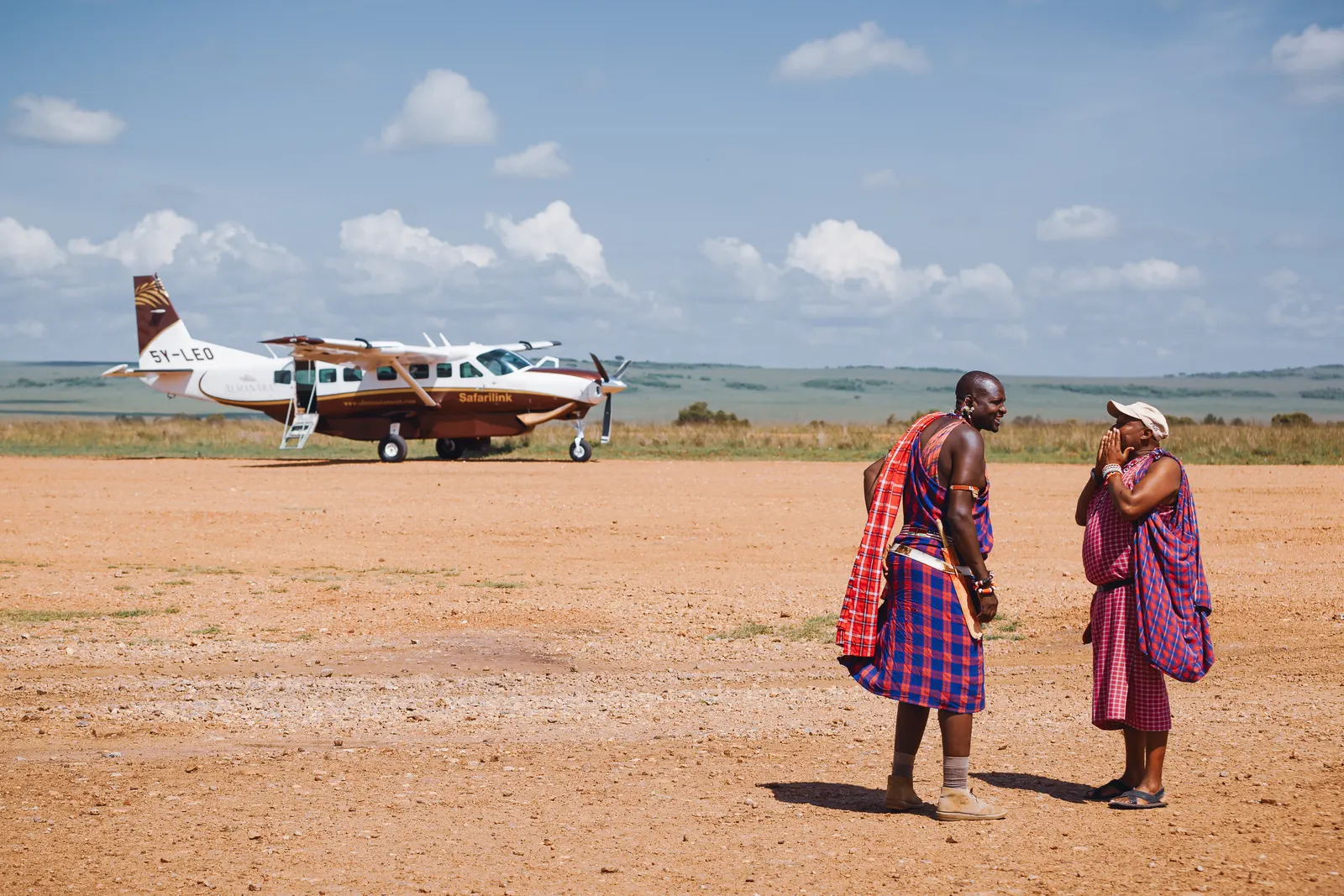
Breakfast on the lake, then a short transfer to the airstrip for the scheduled flight out. Kigoma’s flights do not run every day and they do not run at convenient hours, so the day is shaped by the timetable rather than by us; we will tell you the departure time when we confirm the booking.
From Kigoma you can connect to Dar es Salaam and the coast, or back to Arusha for the northern parks. Either way, plan a night at the connection point rather than a same-day international flight — the margin is not there. If you are going on to Mahale or Katavi, the connection is arranged from Kigoma and this last day changes shape accordingly.
You leave with the thing this trip is for: an hour, or three, a few metres from animals that share 98 per cent of your DNA, in the valley where the human idea of what a chimpanzee is was rewritten.
Meals
Breakfast
Travel
Kigoma to Dar es Salaam by scheduled flight · about 2 hours, then onward
Highlight
Airstrip transfer, and onward
Scheduled flight
Onward to Dar or Arusha
Allow a night to connect
Where you sleep
Departure day — no overnight
III · Rates

What it costs, by group size

Priced per person, with park and guide fees the largest line. Choose a tier to see the table.
Comfort rates by group size, per person and group total
Group sizeRoomsPer personGroup total
1 guest1 room$4,000$4,000
2 guests1 room$3,110$6,220
3 guests2 rooms$3,260$9,780
4 guests2 rooms$3,000$12,000
5 guests3 rooms$3,110$15,550
6 guests3 rooms$2,960$17,760
Single supplement
$670
Added when a guest does not share a room
Under 15
Not permitted
Not permitted on the chimpanzee treks by park rule
Peak season uplift
Included in the rates above
July – October
All figures in US dollars, per person sharing unless stated. Valid for travel until 30 June 2027. Park fees, guiding, vehicle, accommodation and full board are included — see what is and is not covered below.
IV · Included

What is in the price, and what is not

Stated in full, both ways.

What is included

What is not

V · Add-ons

Worth adding, if you have the days

Priced separately and arranged on request. A fourth night is the one that matters.
A chimpanzee on a branch
Inside the park

A fourth night at Gombe

The only way to raise the odds further. A fourth morning in the forest is worth more than anything else on this list if the chimpanzees are the reason you came.
USD 780 per person, for 2 guests
Hippos crowded into a pool
South down the lake · 3–4 nights

Mahale afterwards

The other chimpanzee park on Lake Tanganyika, larger and more remote, with its own habituated community. Reached by boat or charter from Kigoma. Doing both in one trip is the complete version of western Tanzania.
USD 8,950 per person, for 2 guests
A chimpanzee on a branch
East of the lake · 3 nights

Katavi, by charter

A dry-season floodplain park with hippo packed into shrinking pools and very few vehicles. It pairs with Gombe by air and turns a forest trip into a full safari.
USD 4,900 per person, for 2 guests
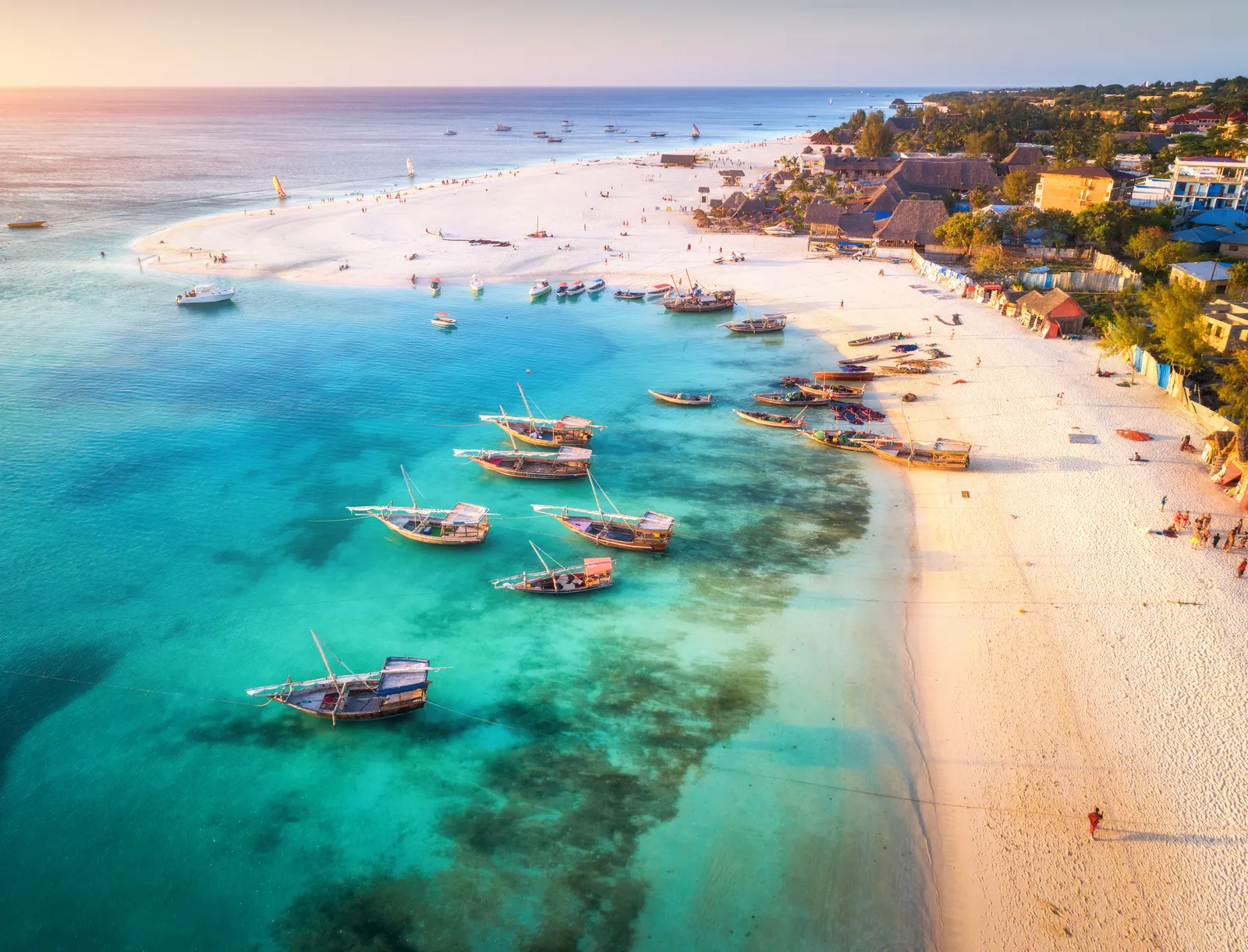
Dhows moored off a white-sand beach on Zanzibar
Via Dar es Salaam · 3–5 nights

Zanzibar, on the way home

Kigoma connects to Dar, and Dar to the island in twenty minutes. Three nights on the east coast after a week of steep forest is the usual shape.
From USD 1,190 per person, 3 nights
VI · The forest and the lake

Where this itinerary takes you

One park and the lake town that serves it, on the eastern shore of Lake Tanganyika.
Chimpanzees in a tree

Gombe National Park

About 52 square kilometres of ridge and valley between Lake Tanganyika and the rift escarpment, gazetted as a national park in 1968. Around a hundred chimpanzees in three communities, of which Kasekela is the habituated one; also red colobus, blue and red-tailed monkeys, olive baboons, and more than two hundred bird species. Minimum age 15.
Hippos in the river

Kigoma and Ujiji

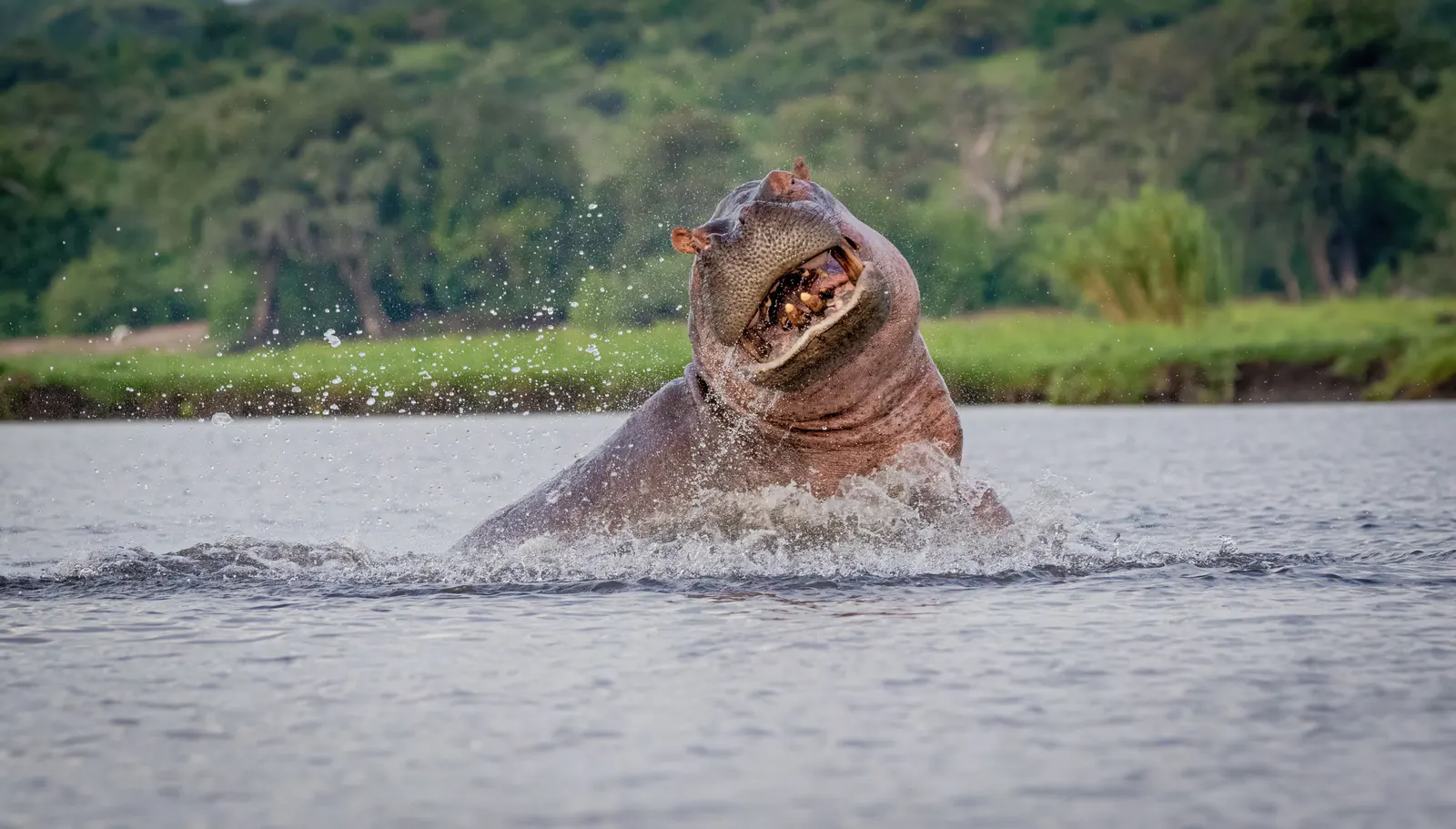
The railhead and port on Lake Tanganyika, 673 kilometres long and the second-deepest lake in the world. Ujiji, ten kilometres south, is where Stanley met Livingstone in 1871; the memorial and museum stand on the site.
The question everyone asks

Will you see the chimpanzees?

3
Mornings in the forest, for one hour each with the animals
Almost certainly, across three days. On any single morning it is not guaranteed: the Kasekela community ranges across the whole park, and if they are feeding on the far ridges the walk can be three hours each way through steep, wet forest. The trackers go out at dawn to find the night nests, which is why most treks succeed, but a scattered community on a hot afternoon can be a few animals glimpsed at a distance rather than the hour on the ground you were promised by a brochure.
That is the argument for three nights and against a fly-in, one-night visit. It is also why we put the trekking on days three, four and five rather than only in the middle: the last morning is protected so that a poor first day is not the end of it. The chimpanzees choose; the itinerary gives them three chances to.
VII · Season

The best time to travel

Dry season for the paths and the lake. Including the months we will tell you to avoid.
June to October is the dry season and the time to come. The paths are dry, the streams are low enough to walk up, and the chimpanzees tend to feed lower in the valleys, which shortens the walk to them. Visibility in the forest is better with the undergrowth thinned.
The lake is also at its calmest in these months, which matters for the boat. The run to Gombe is on open water and a rough afternoon can turn a ninety-minute crossing into a wet three hours.
November to May is wet. The short rains in November and the long rains from March to May make the valley paths steep, slippery and genuinely hard, and the chimpanzees range higher and wider when fruit is everywhere. Some people prefer it — the forest is at its greenest and there is almost no one else in the park.
We would not recommend the long rains for a first visit. December to February is a middle ground: showers, but usually short, and the trekking is workable. If those are your only dates, tell us and we will say honestly what to expect.
VIII · Flights

Getting there and back

Reach Kigoma by air. Arrive in Tanzania a day early; the connection is not made off a long-haul.
Kigoma is reached by scheduled flight; there is no practical road or rail option within a trip of this length. Services run from Dar es Salaam, and depending on the carrier and the season, from Arusha via a stop. The routing that fits this itinerary is to be confirmed at booking, because the timetable changes more often than the parks do.
Flights are not daily. This is the single biggest constraint on the trip, and the reason the itinerary is five nights rather than four: the shape is built around the days the aircraft actually flies.
Arrive in Tanzania the day before day one. Whether you come in through Dar es Salaam or Kilimanjaro, the connection to Kigoma leaves early and cannot be made off an overnight long-haul with any margin.
Tanzania requires a visa for most passports — USD 50, or USD 100 for United States citizens, valid up to 90 days. Apply online in advance rather than on arrival.
IX · Other costs

What else you will spend

Visas, insurance, tips and drinks — set out so there is no surprise on the ground.
Tanzania issues a tourist visa online (eVisa) or on arrival at Dar es Salaam and Kilimanjaro. Applying in advance is faster and avoids the queue at immigration, which after an evening arrival can be long.
A yellow fever certificate is required only if you are arriving from a country where yellow fever is endemic. Coming directly from Europe or North America, it is not.
We ask every guest to travel insured, and on this route it is not a formality. Gombe has no road and no doctor; the nearest hospital is a boat and then a flight away. Medical evacuation cover is the clause that matters.
Check that the policy covers walking in steep terrain and travel by small boat. Some policies exclude one or both.
Tipping is customary in Tanzania and it is genuinely optional. On this trip the people who earn it are the park guides and trackers, who are TANAPA staff rather than ours, the boat crew, and the camp or banda staff.
Tip the guide and tracker at the end of each trek, in cash, since they may not be the same people the next day.
Drinking water is included throughout. Soft drinks and beer are available at the park bandas and the tented camp but the stock arrives by boat, so it is limited and it is warm more often than not. Wine is not something to expect.
Very little to spend on at Gombe beyond the small shop at the research station. Kigoma has a market and a few curio stalls. Cash in small US dollar notes and Tanzanian shillings is essential — there is no card facility in the park and Kigoma’s cash machines are not to be relied on.
Notes dated before 2009 are refused across Tanzania. Bring newer ones.
X · Why us

Why book this with us

01

Three nights, not one

The fly-in, single-night Gombe visit exists and it works when the chimpanzees cooperate. We do not sell it, because when they do not there is no second morning.
02

We tell you what Kigoma is

A railhead town with simple hotels and irregular flights. Guests who expect a safari lodge are disappointed; guests who were told the truth enjoy the place.
03

The park's guides, with ours alongside

Gombe’s trackers are TANAPA staff who know each animal by name and history. We do not replace them; we arrange around them so the logistics — boat, bandas, food, timetable — are not your problem.
04

We will tell you not to come in April

The long rains make the valley paths dangerous and the lake rough. We would rather move your dates or lose the booking than take money for a trip we know will disappoint.
XI · Questions

Frequently asked

What guests ask before booking this itinerary.
The rate depends on your group size, the accommodation tier and the season, and on whether the domestic flights are included. Gombe’s park and guide fees are among the highest per day in Tanzania, which is a large part of the price. Our rates for this itinerary are set out in the table above — ask us and we will quote for your exact dates.
Fly to Kigoma on a scheduled service, then a boat up Lake Tanganyika of one to two hours. There is no road into the park. Flights to Kigoma are not daily and the routing is set at booking, since the timetable changes with the season.
Not on the chimpanzee treks. The park sets a minimum age of 15, and it is enforced at the briefing. For a family with younger children a road-based safari is the better trip; see our family safaris.
Reasonably. The valleys are short but steep, the paths are often wet, and a trek can be anything from twenty minutes to three hours each way. You do not need to be an athlete, but you need to be comfortable with a hard, hot, uphill walk with rests. Tell us about any knee or heart condition before you book.
Across three mornings, almost certainly. On any one morning, no — the community ranges the whole park and on some days they are distant and scattered. Three nights is the honest answer to that uncertainty. You spend one hour with them per trek, by park rule.
Gombe is smaller, closer to Kigoma, quicker to reach and carries the Goodall history; Mahale is larger, wilder, further, and its camps are more comfortable. Mahale’s minimum age is 12, Gombe’s is 15. Both in one trip is the complete version — see Mahale.
Simple. Gombe has the park’s own bandas — basic rooms, shared facilities, meals cooked on site — and one small tented camp on the beach with en-suite tents. Kigoma has lakeside hotels rather than lodges. We would rather say this plainly than have you arrive expecting the Serengeti.
The stretch off the Gombe beach is used for swimming every day and the water is clear and warm. Bilharzia is present in parts of Lake Tanganyika, and crocodile and hippo live in the lake, so swim where the guides say and not elsewhere. They will tell you the day’s conditions.
Yellow fever is required only if you are arriving from a country where it is endemic. Malaria prophylaxis is strongly advised for the lake region. The park will also refuse anyone with a cold or stomach illness on trekking day, because chimpanzees catch human diseases — so travel well and tell your guide if you are unwell.
XII · Your trip

Request your personalised safari proposal

Tell us how you like to travel and we will put together a personalised proposal for this route — dates, camps and a firm price per person. No payment is required at this stage.

No payment is required at this stage. We reply by email and WhatsApp within one working day.

Six days at Gombe, where the research began

6
Days
5
Nights
1
Park
15+
Min. age
Starts
Kigoma, Tanzania
Ends
Kigoma, Tanzania
Departures
Daily — a private safari on the dates you choose
Availability
Open all year, subject to lodge space
From
from$2,960/pp
Per person, sharing
Private trek · minimum age 15 · we reply within one working day
from $2,960 / person
Loading itinerary…
Saved Trips