
Places of Africa Safaris

Ten days, for two

Serengeti & Zanzibar · Ten Days

Ten days, for two

A ten-day Tanzania honeymoon, day by day: the Ngorongoro Crater at dawn, three nights in a small Serengeti camp, then four on a quiet Zanzibar beach.

Duration 10 Days Parks Ngorongoro Crater, Serengeti National Park, Zanzibar
I — Overview

Safari Overview

A honeymoon safari fails in one of two ways: too many single-night stops, so the fortnight is spent packing, or a long road day in the middle that puts two tired people in a vehicle for seven hours. This route removes both. There are four properties in nine nights and the two longest legs are flown, so the only real drive is the morning from Arusha to the crater rim. The shape is simple. A night on a coffee estate to lose the flight. A night on the Ngorongoro rim so that you are on the crater floor at dawn, before the traffic. Then a light aircraft into the Serengeti and three nights at one small camp with a vehicle and guide to yourselves — which means the day runs to your clock, and a balloon or a bush dinner can be fitted without moving anything else. Then a second flight to Zanzibar and four nights on one quiet beach. One thing we do that costs nothing and matters: we write to every property before you arrive and tell them it is a honeymoon. Camps are generous to honeymooners when somebody asks. What they do with that — a better tent, dinner set apart, something on the bed — is theirs to give, and we will not put it on an invoice or promise it on their behalf. We ask, and we tell you we have asked.

A ten-day Tanzania honeymoon, day by day: the Ngorongoro Crater at dawn, three nights in a small Serengeti camp, then four on a quiet Zanzibar beach.
Tour Length 10 days / 9 nights
Country Tanzania
Start / End Arusha → Zanzibar
Accommodation Mid-range
Tour Type Private, for two
Group Size 1–7+ Guests
Meal Plan Full board on safari; half board on Zanzibar
Best Travel Period June – September, and January – February
Activity Level Easy — vehicle, aircraft and beach
Destination Highlights

Your Route Through Tanzania

Click any destination to explore it on the map.

IV — The Days

Day-by-Day Detailed Safari Itinerary

Multiple parks, several days -- and no wasted transfers. Every drive doubles as a game drive.

01
Arusha, and a night among the coffee03°22′S 36°41′E
Day 1

Arusha, and a night among the coffee

You land at Kilimanjaro International, most likely in the evening, because that is when the long-haul routings arrive. Your guide is at the door with your names on a board. The drive west to Arusha is fifty kilometres and about an hour, through coffee shambas and the lower slopes of Mount Meru, and you will not see much of it in the dark.

Tonight is a coffee estate outside town rather than a hotel in it. The estates sit on the volcanic slopes at around 1,400 metres, and the difference from a city hotel is the quiet: you wake to birds and the smell of the drying beds rather than traffic on the Nairobi road. If your flight lands early enough there is a walk through the coffee before dinner; if it does not, there is dinner.

Nothing else is planned. This is the first night of a honeymoon and the last of a twenty-hour journey, and the itinerary is built so that the safari starts tomorrow, rested, rather than tonight. Repack into soft bags — the light aircraft on day 3 has a weight limit and a hold that does not take hard cases.
DriveJRO to Arusha · 50 km · about 1 hour
Route
MealsDinner
NightMoivaro Lodge
02
West to the Ngorongoro rim03°14′S 35°29′E
Day 2

West to the Ngorongoro rim

You leave after a proper breakfast and drive west on tarmac. The road drops onto the floor of the Rift Valley, passes Lake Manyara on the left, and then climbs the Rift wall in a series of bends to Karatu at 1,900 metres — highlands farming country, and noticeably cooler. There is a viewpoint at the top of the escarpment where everyone stops, and it is worth stopping.

From Karatu the road enters the Ngorongoro Conservation Area and climbs again, through forest, to the rim. The crater appears all at once: a caldera nineteen kilometres across with walls six hundred metres high and its own weather, often with cloud pouring over the western wall while the floor stays clear. You reach it by early afternoon with the light still good.

You sleep on the rim tonight rather than in Karatu, and that is the point of the day. It puts you at the descent road at dawn instead of an hour behind the vehicles that stayed below. The rim is at 2,300 metres and cold after dark — properly cold, with fires lit in the rooms. Bring the warm layer out of the bag before dinner, not after.

DriveArusha to the rim · about 180 km · 3½ to 4 hours
Route
MealsBreakfast · Lunch · Dinner
NightPakulala Safari Camp
03
The crater at first light, then the flight in03°10′S 35°35′E
Day 3

The crater at first light, then the flight in

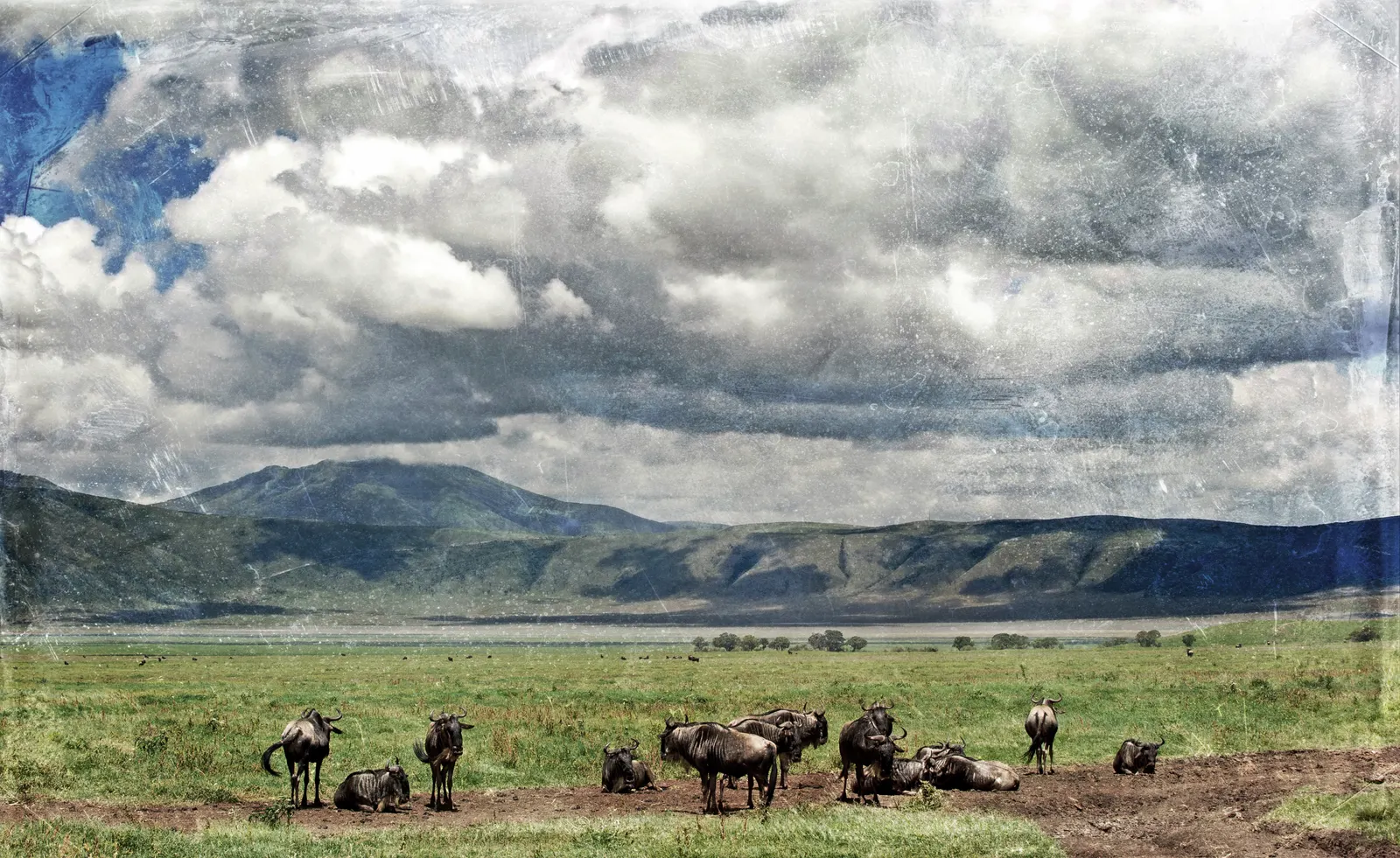
You are on the descent road as it opens, in the dark, with breakfast in a box. The crater floor holds cloud until mid-morning and the first hour after it lifts is the best game viewing of the day. By ten there will be a great many vehicles down there with you; at half past six there are a handful, and the light is low across the Lerai forest.

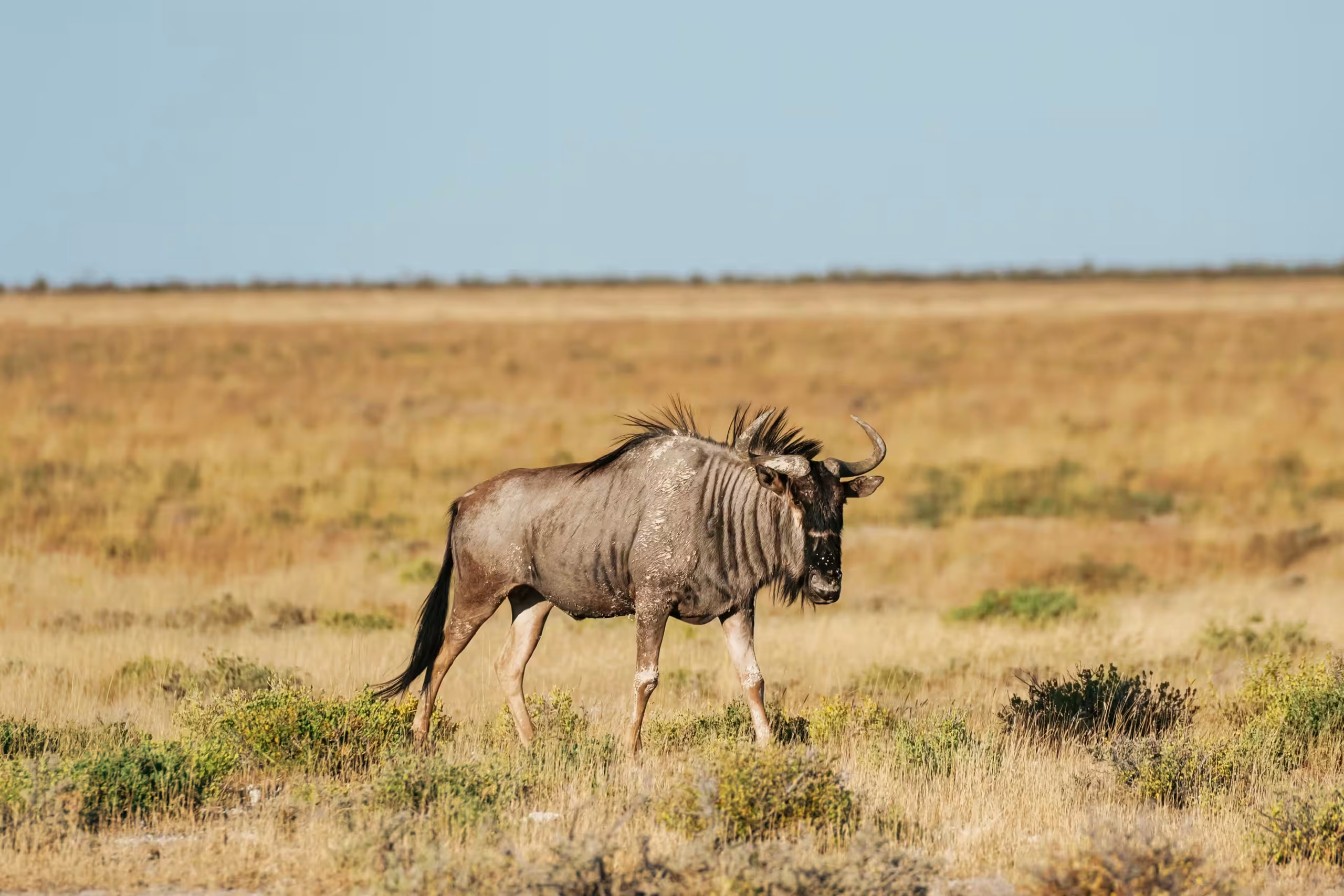
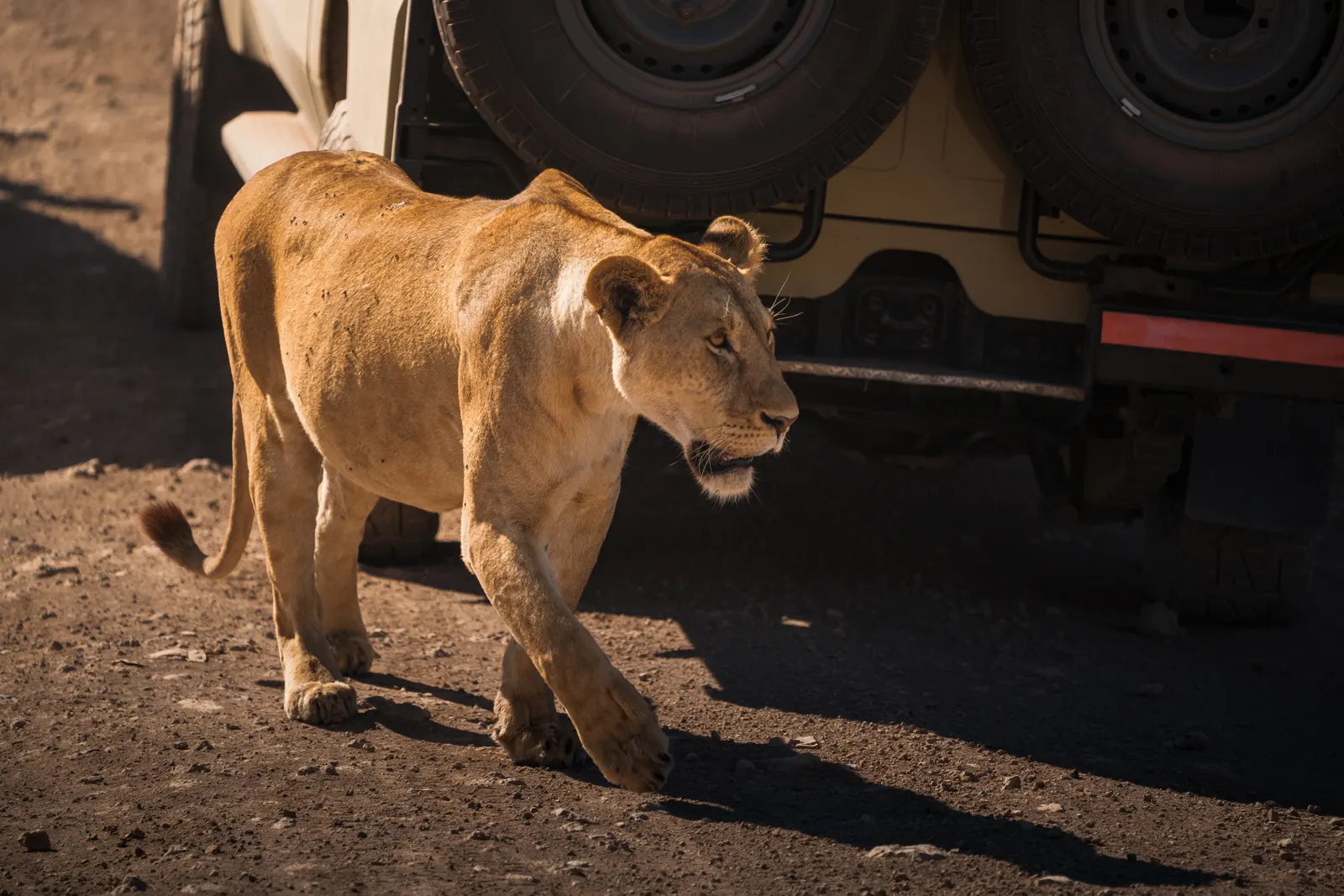
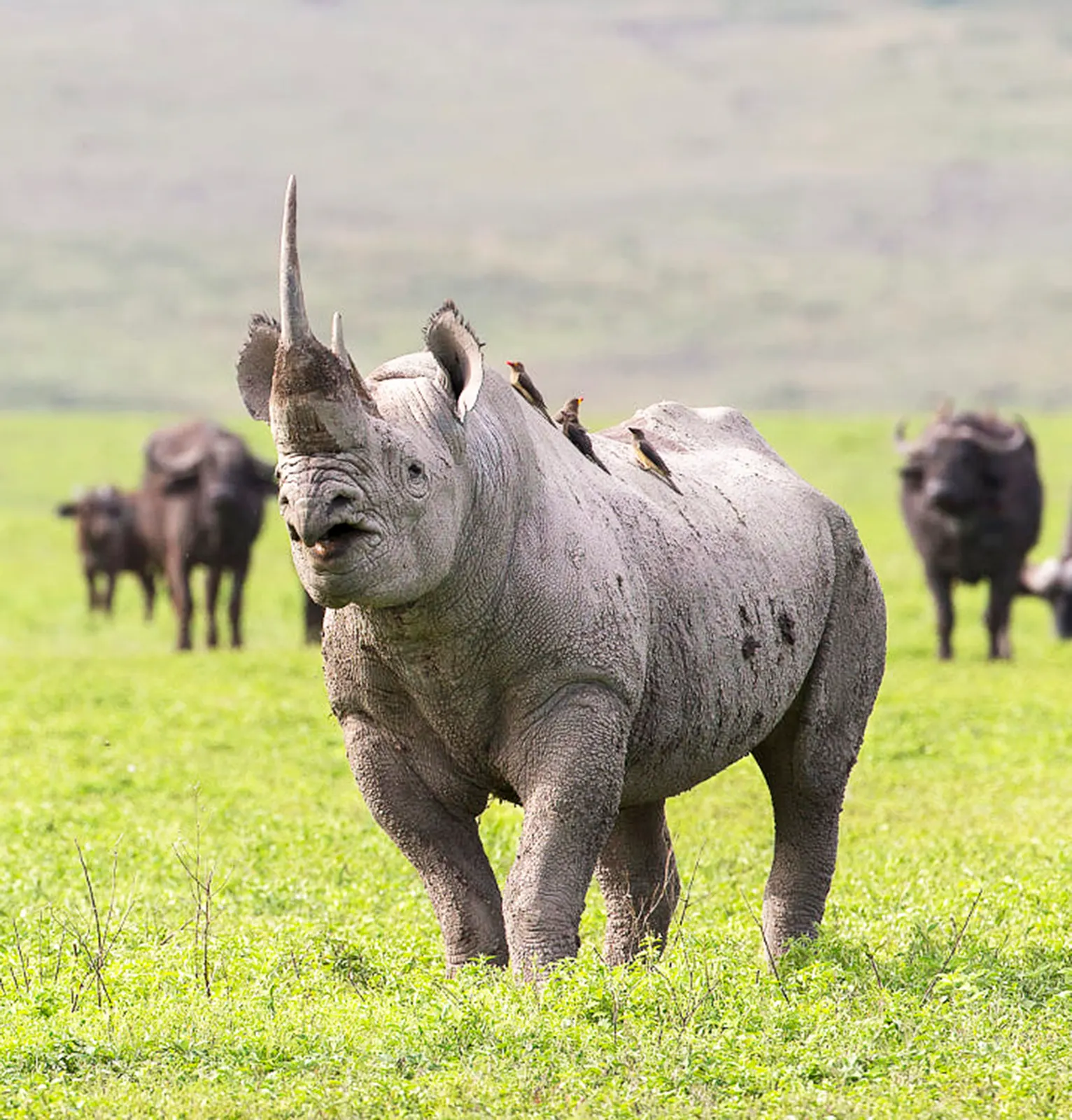
The floor is 260 square kilometres and the animals largely do not leave, which is why the density is what it is. This is the most reliable place in Tanzania to see black rhino — a few dozen animals, usually at a distance, so bring the binoculars. Lion here are habituated to a degree that is almost uncomfortable, and the old elephant bulls on the floor carry some of the heaviest ivory left in East Africa.

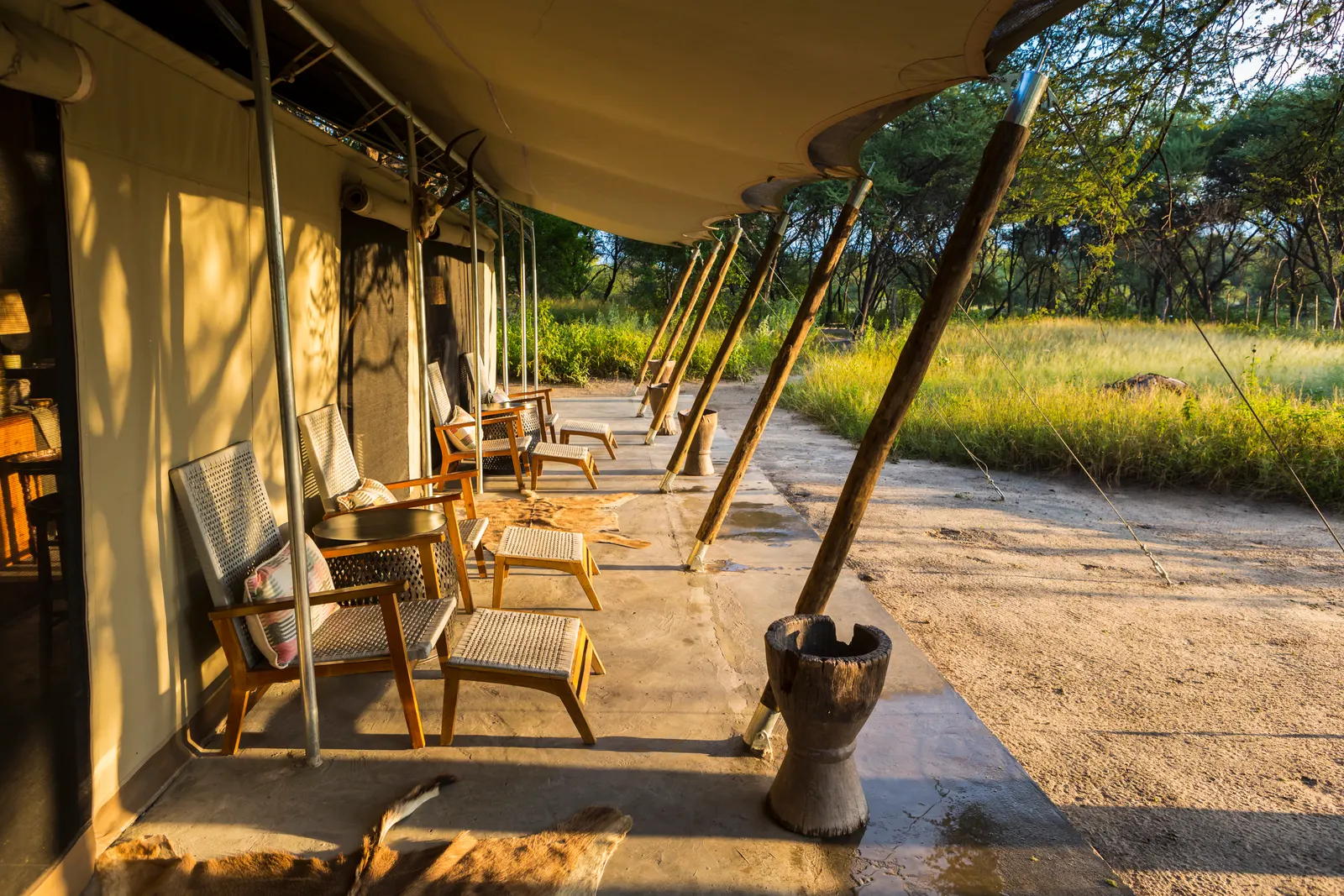
You are up the ascent road by late morning and driving back down to the Lake Manyara airstrip on the Rift floor. The flight to the Serengeti is about an hour, low, with the crater highlands and then the short-grass plains under the wing. Your camp’s vehicle meets the aircraft and the drive to camp is a game drive whether anyone calls it one or not. Three nights here, one camp, no packing.

Drive600 m descent · rim to Manyara airstrip about 1½ hours · flight about 1 hour
Route
MealsBreakfast · Lunch · Dinner
NightKubu Kubu Tented Lodge
04
A full day with the Seronera prides02°26′S 34°49′E
Day 4

A full day with the Seronera prides

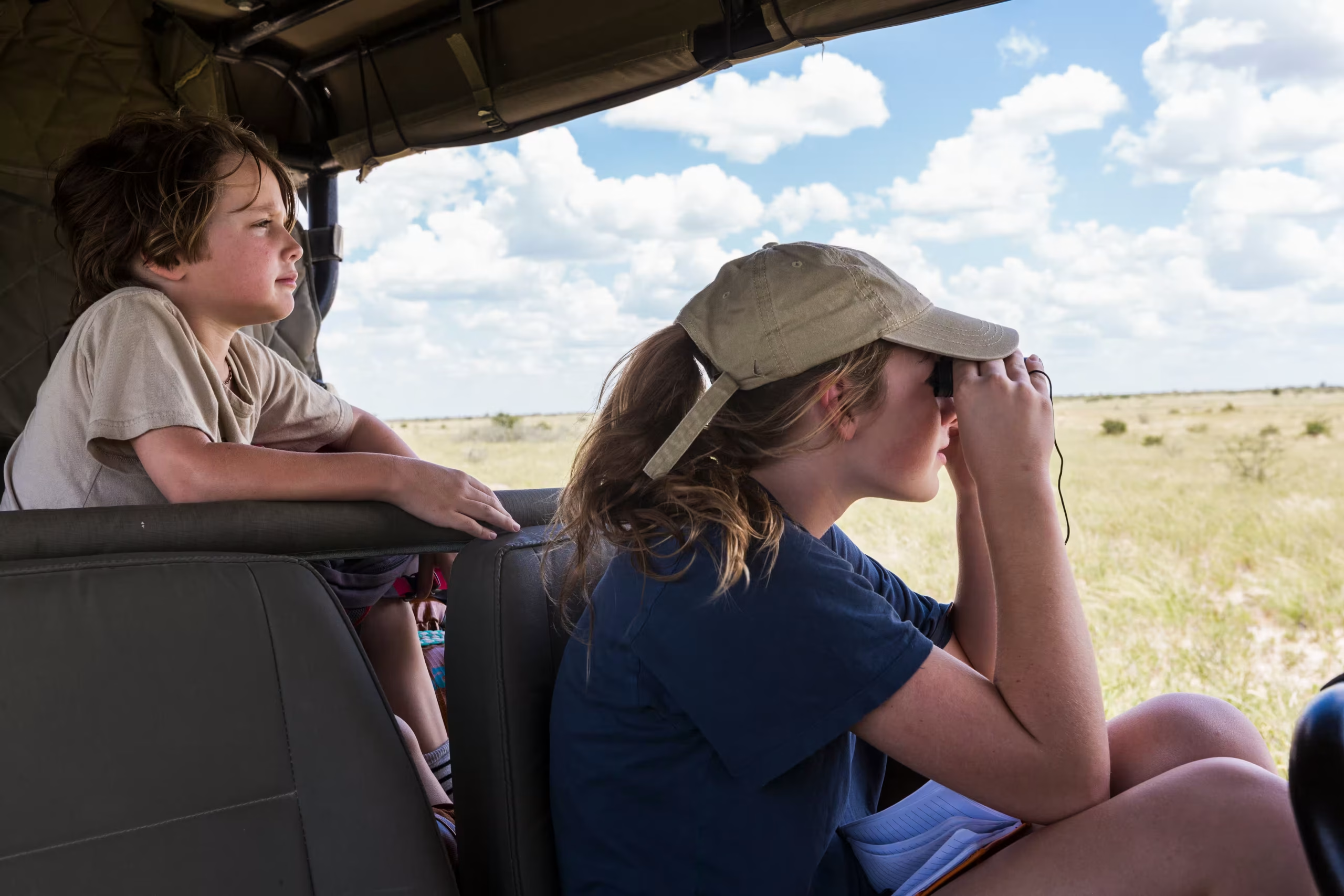
The vehicle is yours, which changes the shape of a day more than people expect. Out at six with coffee, or out at eight after breakfast; back for lunch and a sleep in the heat, or a full day with a picnic under a kopje. Nobody else’s plan is in the vehicle with you.

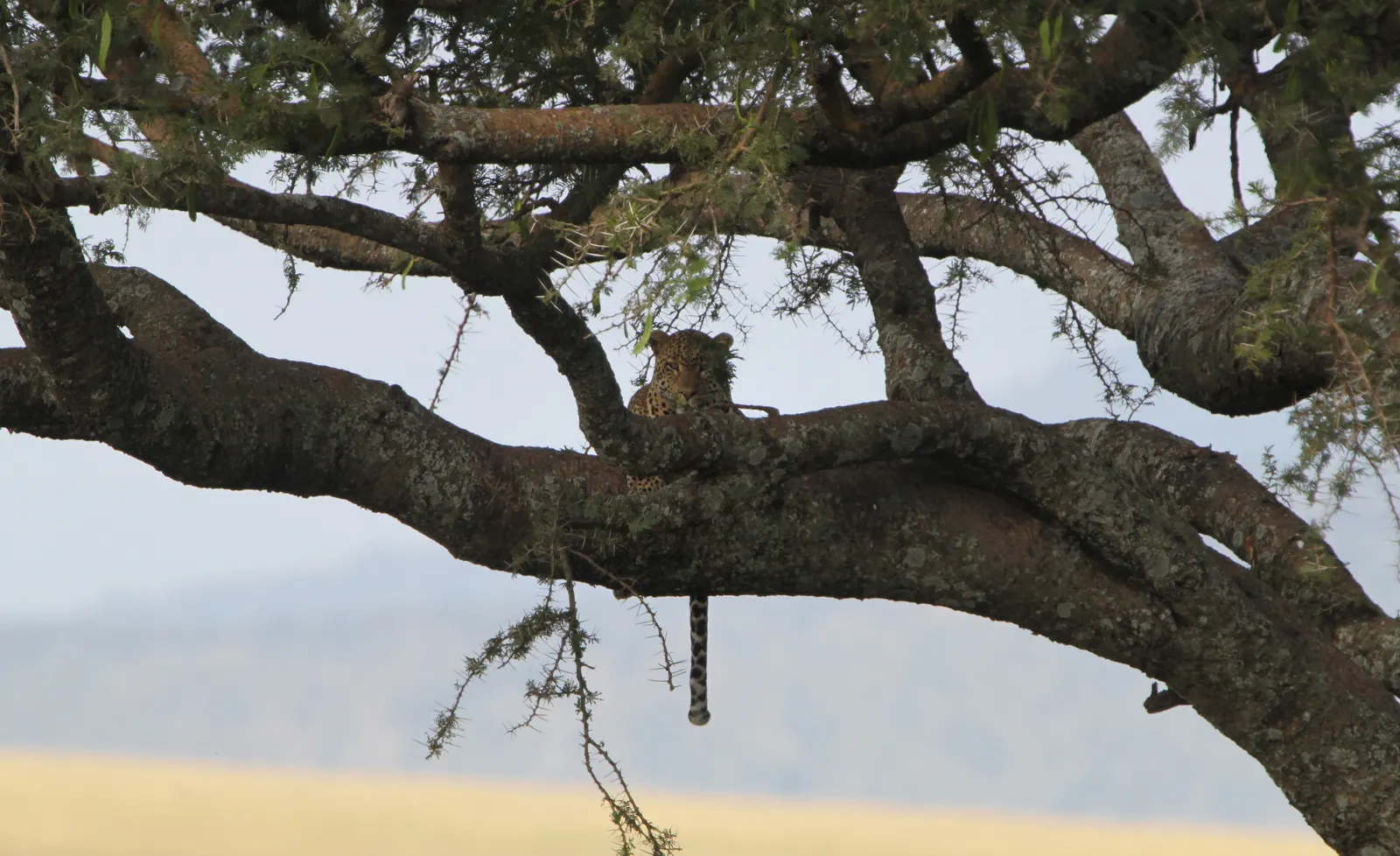
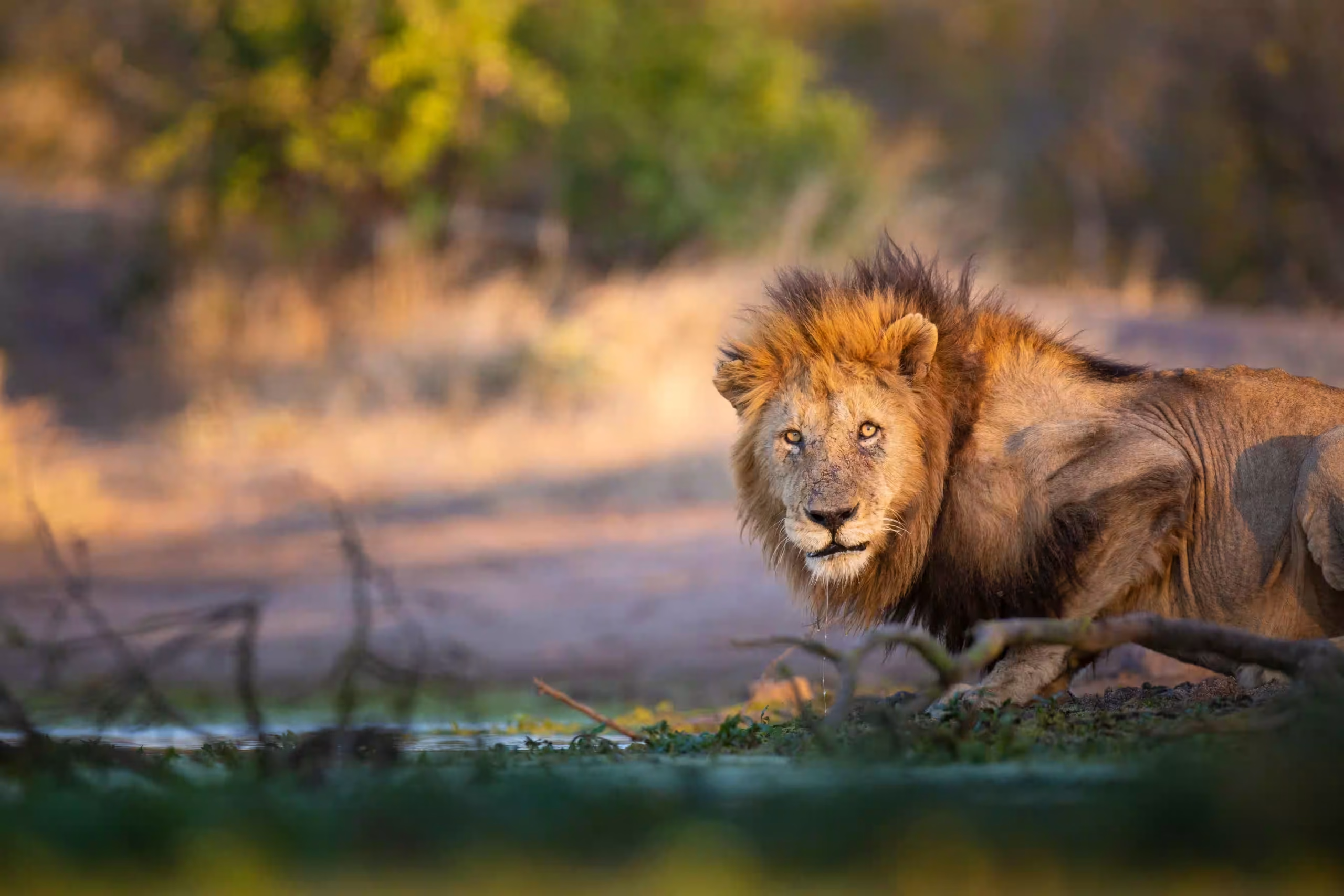
The Seronera river holds water all year and the fig and sausage trees along it are the most dependable leopard habitat in Tanzania. The granite kopjes standing out of the grass are lion furniture — shade, a lookout, and safe ground for cubs — and the resident prides here are the reason the central Serengeti works in any month. Cheetah hunt the open ground south of the river in the early morning before the heat.

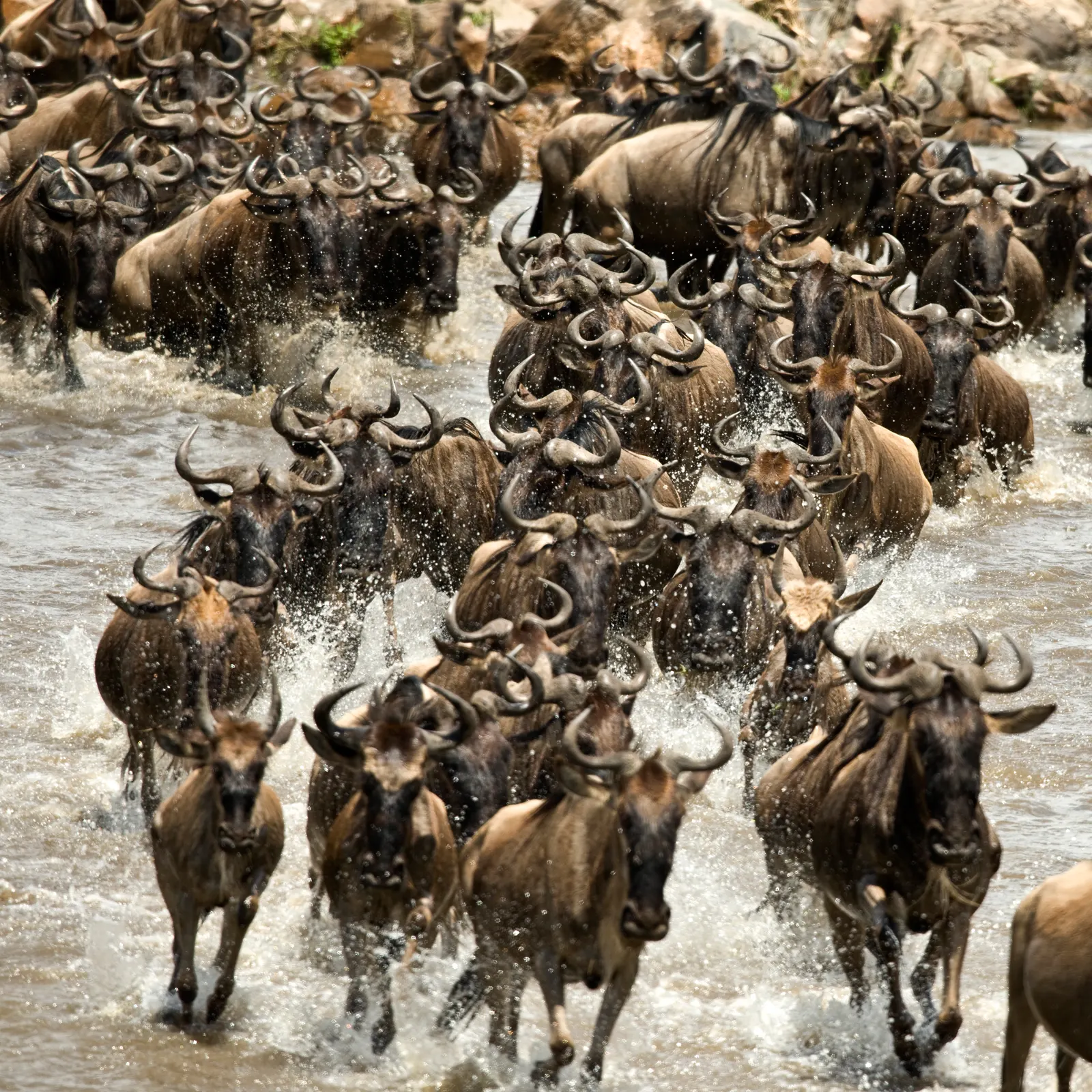
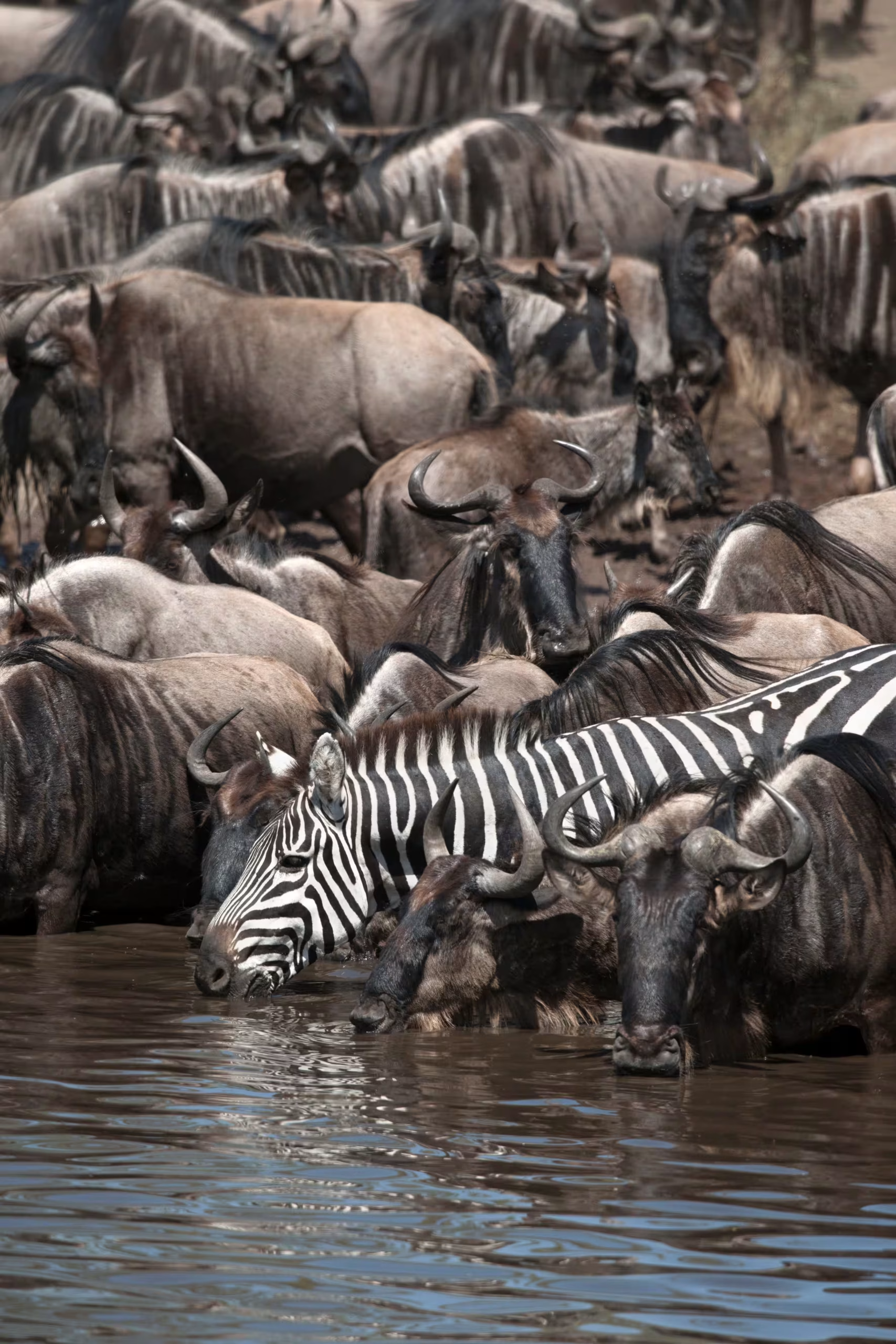
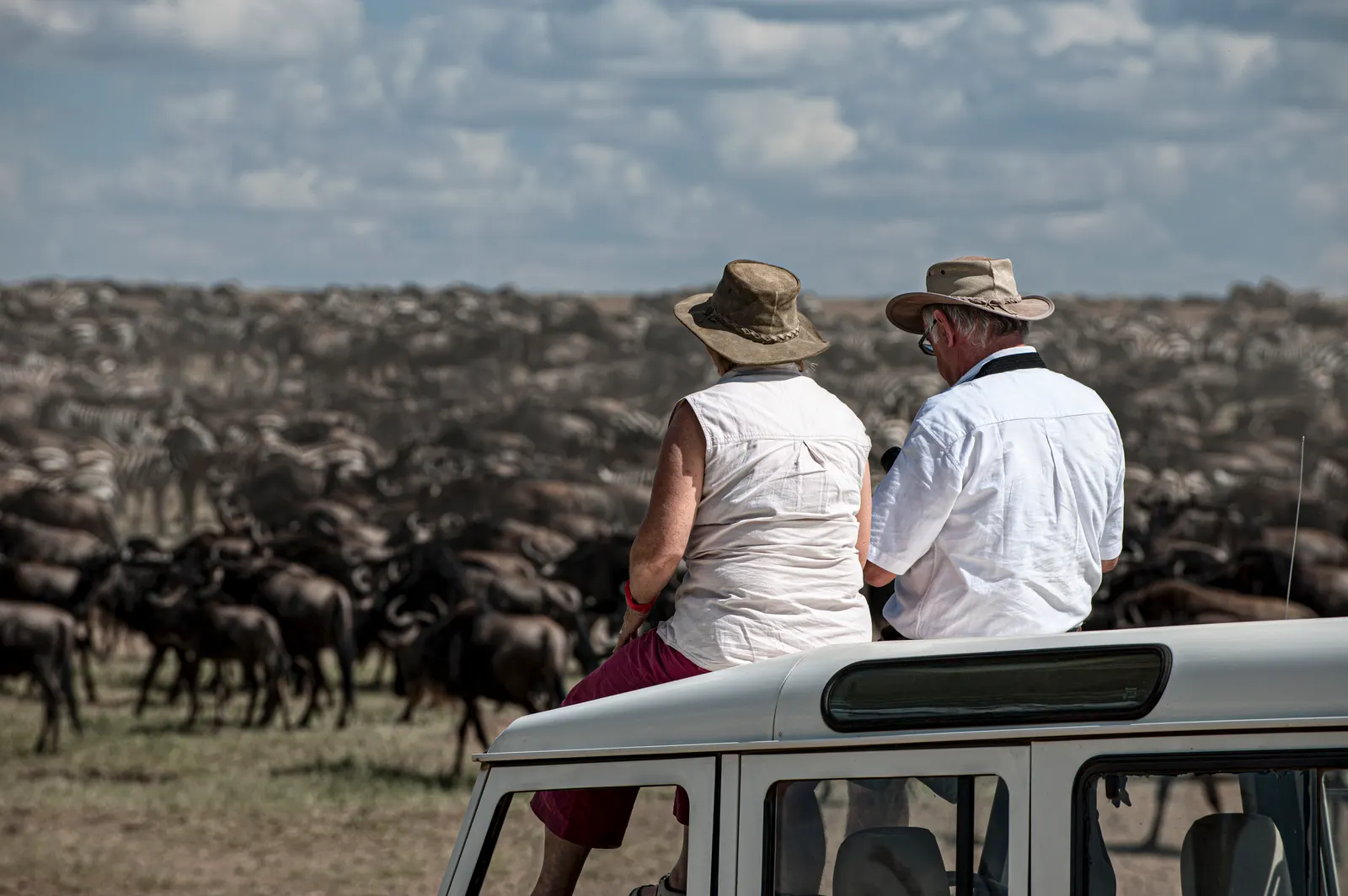
Where the migration is on this day depends on your dates. In June and early July the herds are usually moving through the west and centre; from January to March they are on the southern plains an hour or two south of here. In August and September they are in the far north, a long day’s drive away, and we will say so before you book rather than after. The cats do not move with them.

DriveFull day in the park · private vehicle
Route
MealsBreakfast · Lunch · Dinner
NightKubu Kubu Tented Lodge
05
Dawn from the air, dinner under the sky02°26′S 34°49′E
Day 5

Dawn from the air, dinner under the sky

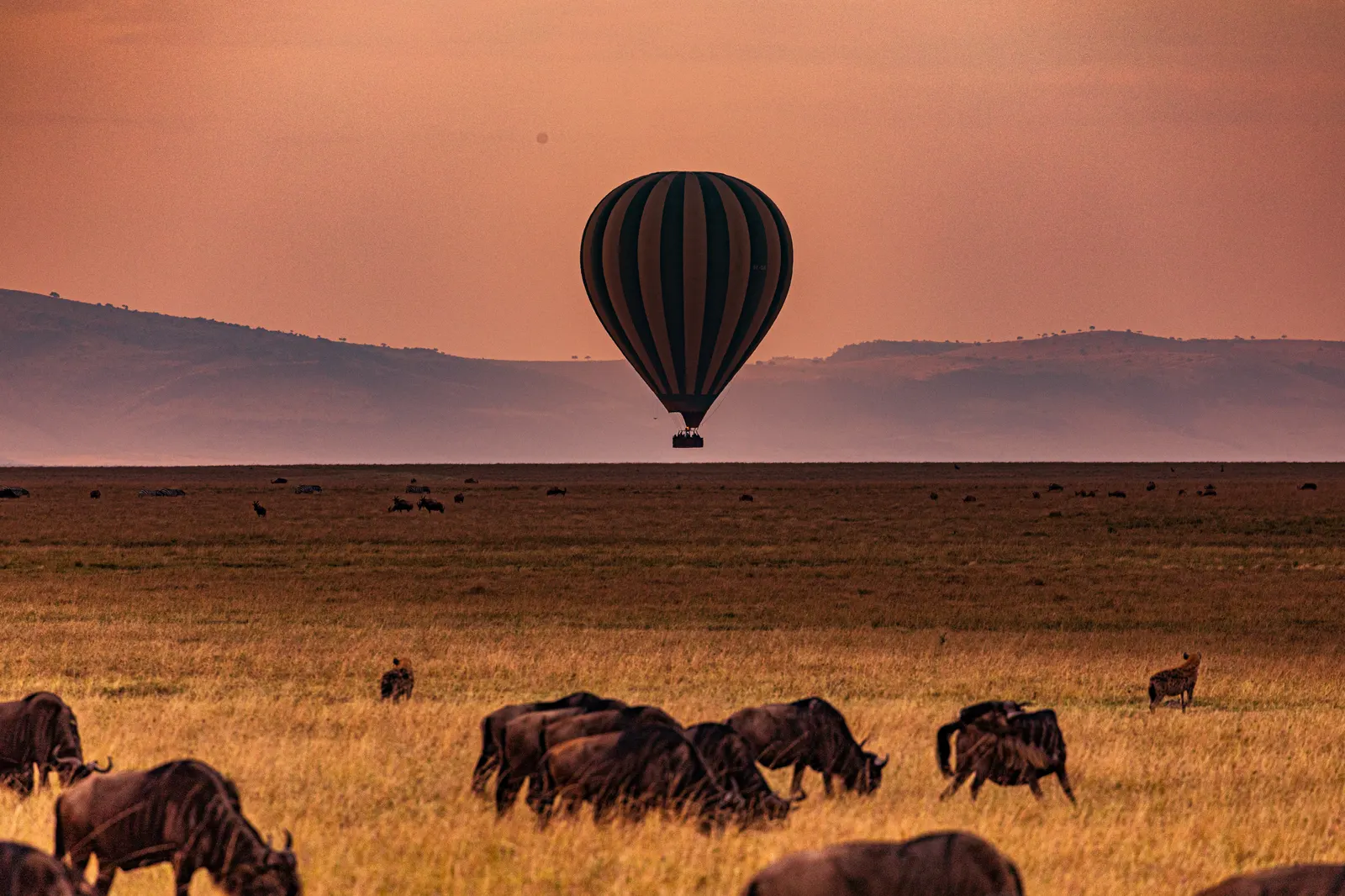
If you have added the balloon, this is the morning. You leave camp in the dark for the launch site, lift off at first light, and spend about an hour drifting over the plains at tree height with the shadows still long. It lands to a breakfast set out in the grass. It is a serious expense and it is weather-dependent — the pilot decides on the morning, and a cancelled flight is refunded, not rescheduled, because there is no spare morning.

If you are not flying, the alternative is the quiet one: a long drive out towards the Moru kopjes, where there is a resident black rhino population, Maasai rock paintings on the granite, and far fewer vehicles than along the river. Your guide will have his own idea of where yesterday’s leopard went, and he is usually right.

The evening is a bush dinner: a table set away from camp, a fire, lanterns, and the Serengeti sky, which has no light pollution at all. We ask every camp for this in advance for honeymoon couples. Whether it happens on this exact night depends on the camp and the weather, and what the camp adds to it — a private table, something on the bed, a bottle — is the camp’s gesture and at the camp’s discretion. We ask; we do not promise on their behalf.

DriveFull day in the park · private vehicle
Route
MealsBreakfast · Lunch · Dinner
NightKubu Kubu Tented Lodge
06
Serengeti to the Indian Ocean05°52′S 39°21′E
Day 6

Serengeti to the Indian Ocean

A last drive on the way to the airstrip, which in practice is the best drive of the three days — early, cold, and everything still out. Then the aircraft. Flights from the Serengeti to Zanzibar normally route through Arusha with a stop on the ground, and the whole thing takes three to four hours door to door. It is a long morning of sitting, and it saves two days on the road.

Zanzibar is at sea level, hot and humid, and the change from the highlands at 1,500 metres is immediate when the aircraft door opens. You are met and driven to the coast. The east and north-east coasts are about an hour from the airport; Stone Town is twenty minutes, and you can see it on the way out on day 10 rather than now.

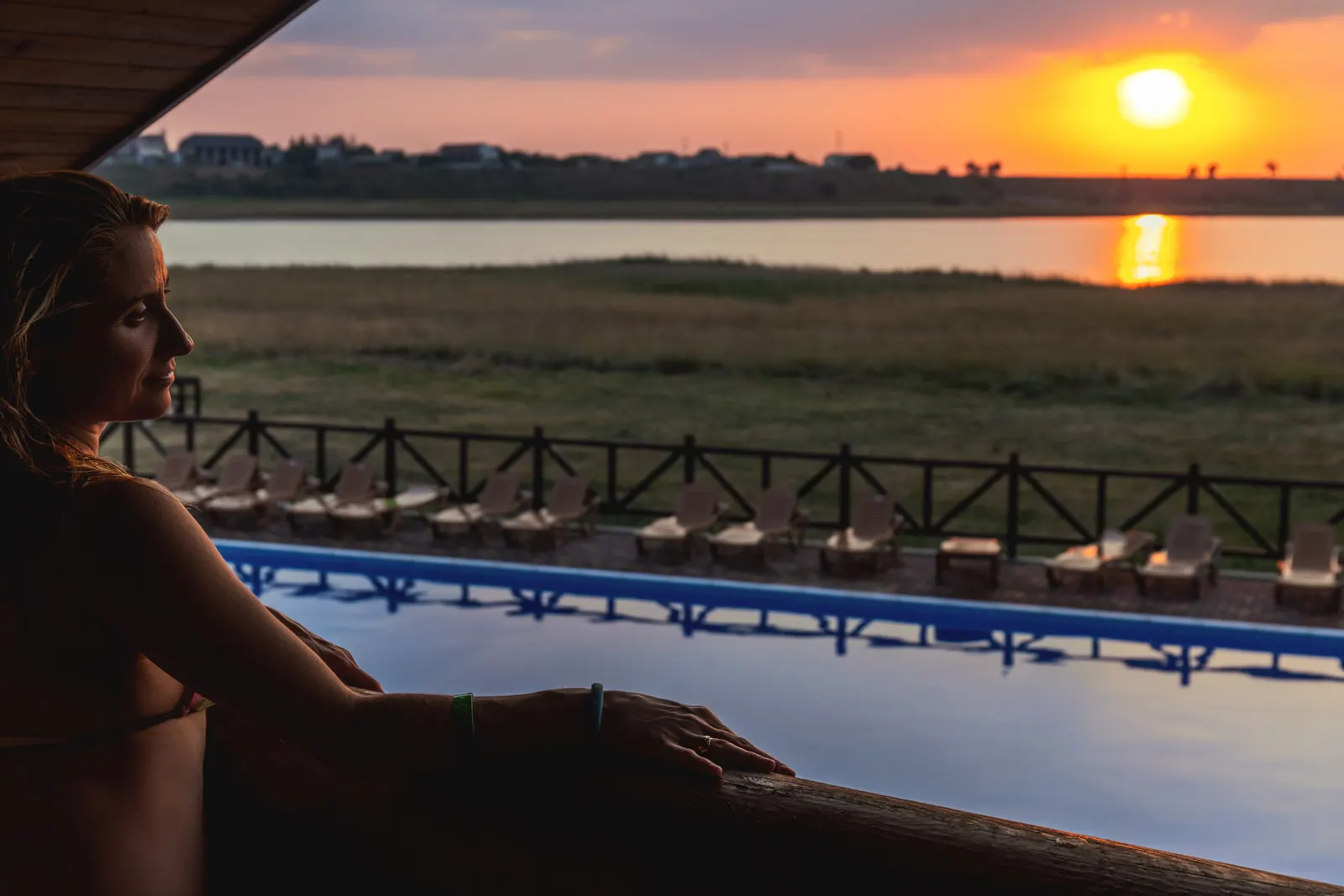
Four nights on one stretch of beach, and nothing scheduled for the rest of today. The Indian Ocean on the east coast has a large tide — at low water the reef flat is exposed for a kilometre and the swimming is off a boat or in the pool; at high water it is off the sand. Ask for the tide table at check-in. It runs the next four days more than the clock does.

DriveFlight Seronera to Zanzibar, usually via Arusha · 3 to 4 hours with the stop
Route
MealsBreakfast · Dinner
NightPongwe Beach Hotel
07
A day that belongs to the tide05°52′S 39°21′E
Day 7

A day that belongs to the tide

The first full day on the coast is the one where you do nothing, and we mean it. Five days of six o’clock starts end here. Breakfast comes when you appear for it. The beach on the east coast faces the sunrise, so the light is best early and the shade is best after lunch.

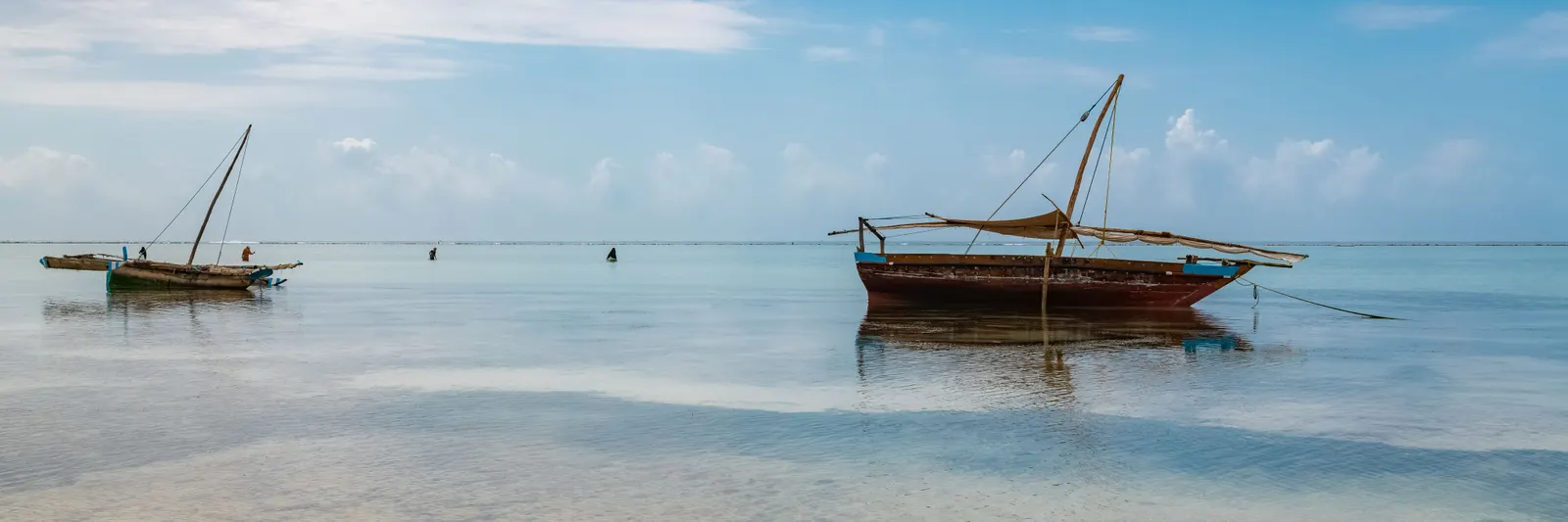
If you want something, the reef is it. Zanzibar’s east coast sits behind a fringing reef a kilometre or so offshore, and at high water a boat runs you out to snorkel over coral in a few metres of clear water — parrotfish, angelfish, the occasional turtle. The Mnemba atoll off the north-east corner is the best of it and is reached by boat from the beach; it is a marine conservation area with a fee per person, which the hotel collects.

In the afternoon the tide goes out and the women of the village walk onto the reef flat to tend the seaweed lines, which are the coast’s other economy. It is worth walking out with the water at your ankles, in reef shoes — the flat is sharp — to see how far the sea goes. Dinner is on the sand if the hotel does that, and most on this coast do.

DriveNo transfer
Route
MealsBreakfast · Dinner
NightPongwe Beach Hotel
08
Spice farm, or the sea — and a dhow at sunset06°03′S 39°18′E
Day 8

Spice farm, or the sea — and a dhow at sunset

A half day inland is the one excursion worth the drive. Zanzibar grew rich on cloves, and the spice farms in the centre of the island still grow clove, nutmeg, cinnamon, vanilla, cardamom and black pepper on the same ground. A guide walks you through and hands you things to crush and smell; it takes two hours and it is the best explanation of why the island exists that you will get. Or stay on the beach. Both are correct.

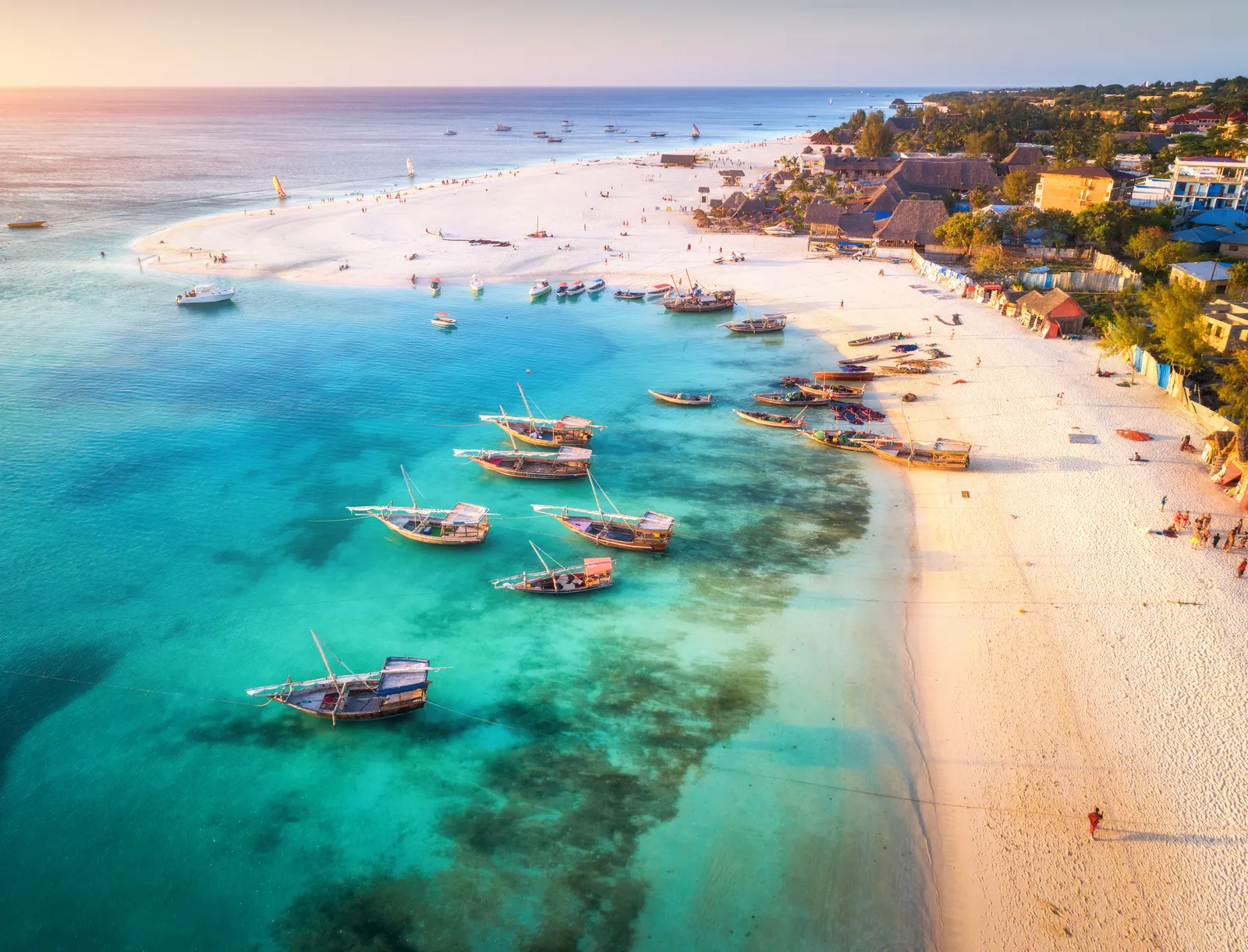
The evening is the one we would add. A dhow — the lateen-rigged wooden boat that has crossed this ocean for a thousand years — taken out for two hours before sunset, with the sail up, the engine off, and nobody else aboard but the crew. On the west coast the sun sets into the sea; on the east it sets behind the island, and the sea goes pink instead. Either works.

The dhow is an add-on rather than included because it is a private charter and priced as one, and because some couples would rather have the evening on the sand. It is weather-dependent and the skipper’s call on the day; in the June to September south-easterly the east coast can be too lively, and we will tell you which coast your hotel is on before you decide.

DriveOptional half-day inland · about 45 minutes each way
Route
MealsBreakfast · Dinner
NightPongwe Beach Hotel
09
The last full day05°52′S 39°21′E
Day 9

The last full day

The last full day is kept empty on purpose, because the itineraries that fill it — Stone Town and a spice farm and a dolphin boat in one day — end a honeymoon with a schedule. If there is something from the week you wanted to do again, this is the day it fits: a second boat to the reef, or a walk up the beach to the village and the fishing boats coming in at midday.

One honest note on the dolphin trips sold along the south coast at Kizimkazi. They exist and they see dolphins; they also put several boats around one pod and drop swimmers on top of it, and we do not arrange them. If you want to be in the water with something, the reef is better and kinder.

Tonight is the last night on the coast. The hotel knows this is a honeymoon — we will have written to them, as we write to every property on this route — and most do something with the last dinner. What that is, and whether it is anything, is theirs to decide. Our part is to ask early and to tell you plainly that we have asked, not to sell you a gesture that belongs to somebody else.

DriveNo transfer
Route
MealsBreakfast · Dinner
NightPongwe Beach Hotel
10
Stone Town, then the flight home06°10′S 39°11′E
Day 10

Stone Town, then the flight home

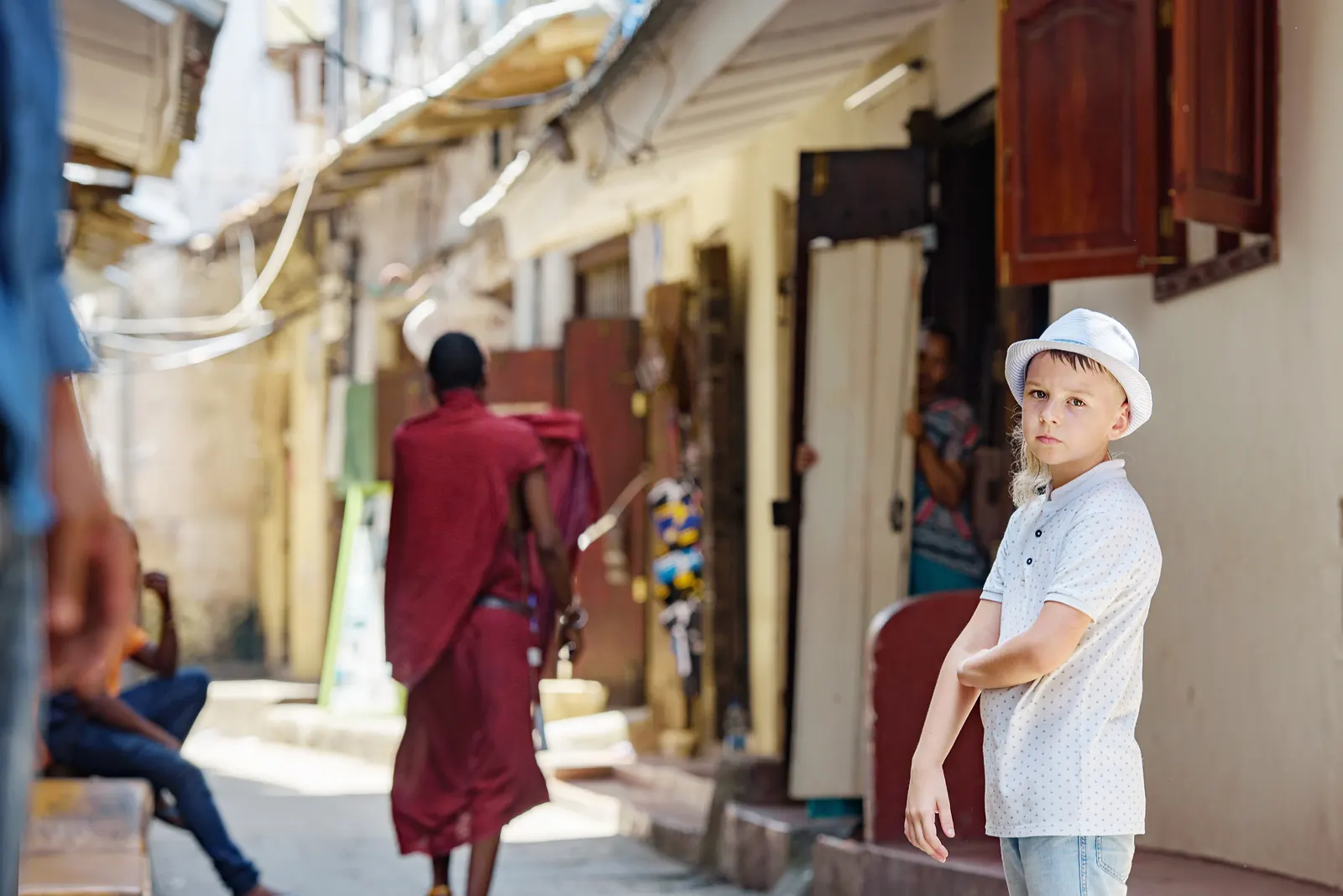
The drive back across the island to the airport takes about an hour from the east coast. If your flight is in the afternoon or evening there is time for Stone Town on the way, and you should take it: the old stone quarter is a UNESCO World Heritage Site, a knot of nineteenth-century Omani and Indian merchant houses with carved doors, a few streets deep and completely walkable in ninety minutes.

The Old Fort, the former slave market under the Anglican cathedral, and the seafront at Forodhani are the three things to see if you have only an hour. The slave market is not a comfortable visit and should not be; the island’s wealth was built on it and the town does not pretend otherwise.

Zanzibar’s airport has direct international flights on some days and connections through Dar es Salaam, Nairobi, Doha and Addis on the others; the routing depends on your home airport and we will set it out when we quote. A morning flight means the coast at dawn and the airport straight after, with Stone Town left for another visit.

DriveCoast to Zanzibar airport · about 1 hour · via Stone Town if time allows
Route
MealsBreakfast
Night

Budget Ten days, for two Prices

Single Supplement — ADD RATE
Budget rates not yet published. These figures are placeholders — do not quote them.
Group size 1 Person2 Persons3 Persons4 Persons5 Persons6 Persons7 Persons
ADD RATE ADD RATE ADD RATE ADD RATE ADD RATE ADD RATE ADD RATE ADD RATE
Rooms 1 Room 1 Room 2 Rooms 2 Rooms 3 Rooms 3 Rooms 4 Rooms

Mid-range Ten days, for two Prices

Single Supplement $1,220 per person
Group size 1 Person2 Persons3 Persons4 Persons5 Persons6 Persons7 Persons
Prices From 2026 $8,630 $6,310 $6,340 $5,750 $5,890 $5,570 $5,690
Rooms 1 Room 1 Room 2 Rooms 2 Rooms 3 Rooms 3 Rooms 4 Rooms

Luxury Ten days, for two Prices

Single Supplement $4,940 per person
Group size 1 Person2 Persons3 Persons4 Persons5 Persons6 Persons7 Persons
Prices From 2026 $22,850 $16,810 $18,090 $16,260 $17,130 $16,070 $16,720
Rooms 1 Room 1 Room 2 Rooms 2 Rooms 3 Rooms 3 Rooms 4 Rooms

High-end Ten days, for two Prices

Single Supplement — ADD RATE
High-end rates not yet published. These figures are placeholders — do not quote them.
Group size 1 Person2 Persons3 Persons4 Persons5 Persons6 Persons7 Persons
ADD RATE ADD RATE ADD RATE ADD RATE ADD RATE ADD RATE ADD RATE ADD RATE
Rooms 1 Room 1 Room 2 Rooms 2 Rooms 3 Rooms 3 Rooms 4 Rooms
Price Details

What's Included

✓ Included

A private 4×4 with a roof hatch and your own guide on the Serengeti days
Light-aircraft flights: Lake Manyara airstrip to the Serengeti, and Serengeti to Zanzibar — routing and baggage allowance to confirm
All accommodation as listed — full board on safari, half board on Zanzibar
All national park, conservation area and crater service fees
Airport transfers at Kilimanjaro International and Zanzibar
The bush dinner in the Serengeti, weather permitting
A letter to every property before you arrive, saying it is your honeymoon
Drinking water in the vehicle throughout
Guide certification to confirm
Emergency evacuation cover — to confirm

✗ Not Included

International flights to Tanzania and home from Zanzibar
Tanzania visa — USD 50, or USD 100 for United States passports
Travel insurance, which we ask every guest to hold
Balloon flight over the Serengeti
The private dhow evening on Zanzibar
Lunches on Zanzibar, and drinks at the lodges beyond what is listed
Mnemba marine conservation fee, if you snorkel there
Tips for your guide, camp and hotel staff
Anything a property chooses to give you — that is theirs, not ours
Personal spending and souvenirs
Interested in This Tour?Request a Free Quote

Mid-range Accommodations During Safari

Luxury Accommodations During Safari

VII — Add-Ons

Optional Safari Add-Ons

Priced separately and arranged on request. The balloon and the dhow are the two most couples add.

Balloon over the Serengeti
Day 5 · at dawn
USD 750 per person

Balloon over the Serengeti

An hour over the plains at first light from a launch site near Seronera, landing to a breakfast in the grass. Weather-dependent, decided by the pilot on the morning, and booked months ahead in the high season. Minimum age 7, to confirm — not a concern here, but stated for completeness.

A private dhow at sunset
Day 8 · Zanzibar
USD 100 per person, for 2 guests

A private dhow at sunset

A wooden dhow chartered for the two of you and its crew, two hours before sunset with the sail up and the engine off. Which coast, and whether the sea allows it, is decided on the day.

A second night on the coffee estate
Before day 1
USD 980 per person, for 2 guests

A second night on the coffee estate

If your flight lands late, a second night in Arusha means the drive to the crater starts on a full night's sleep. It also protects the trip if a bag is a day behind you.

A night in Stone Town
After day 9
USD 130 per person, for 2 guests

A night in Stone Town

Swap the airport dash for a night in the old town — a hotel in a merchant house, the night market at Forodhani, and the airport twenty minutes away in the morning.

VIII — The Ground

Where the Safari Takes You

The crater, the central Serengeti, and the Zanzibar coast — north to east, by air.

01

Ngorongoro Crater

02

Serengeti National Park

03

Zanzibar

Best Time to Travel

Best Time to Do This Safari

June to September is the long dry season in the north and the coolest, driest months on the coast, with the south-east monsoon blowing steadily. Grass is low in the Serengeti and the cats are easy to see; the crater is at its clearest; Zanzibar is warm rather than hot. It is also the busiest window and the highest rates, and in August and September the migration is in the far north, a long day from Seronera. This route does not chase it and we say so. January and February are the second window and, for a honeymoon, arguably the better one. The southern plains are calving, an hour or two south of camp, so the herds are within reach of the private vehicle. The coast is hot and still between the monsoons, which is the best of the year for swimming and the reef. Fewer vehicles than July, and the camps are quieter. March, April and May are the long rains on both the mainland and the island, and we will tell you plainly that this route is not worth doing then. Serengeti camps and many Zanzibar hotels close for part of it, the coast is wet and grey, and the light aircraft schedules thin out. If these are the only weeks you have, we would rather build you something different. October and December work, with caveats. October is the end of the dry and very good in the Serengeti, with the coast warming up. December is festive-season pricing everywhere and books early. November brings the short rains — brief afternoon storms rather than washouts — and the rates drop; it is an honest, quiet month if you do not mind a shower at four o’clock.

Flights

Flight Recommendation

Fly into Kilimanjaro International (JRO), which is an hour from the coffee estate. Most European routings connect through Doha, Istanbul, Amsterdam or Addis Ababa and land in the evening, which is why day 1 has nothing in it. Inside Tanzania the route uses two light-aircraft legs: Lake Manyara airstrip to the Serengeti on day 3, about an hour, and Seronera to Zanzibar on day 6, usually via Arusha with a stop and three to four hours in all. These are scheduled flights on small aircraft with a baggage limit of around 15 kilograms per person in soft bags — pack for that, not for the international allowance. Coming home, the itinerary ends at Zanzibar (ZNZ) on day 10, so book an open-jaw ticket: into Kilimanjaro, out of Zanzibar. Most airlines that serve one serve the other and the fare is rarely more than a return. Zanzibar has some direct international departures and connections through Dar es Salaam, Nairobi, Doha and Addis on the rest. Tanzania requires a visa for most passports — USD 50, or USD 100 for United States citizens, valid up to 90 days and covering Zanzibar. Apply online in advance rather than on arrival.

Supplementary Costs

Supplementary (not included) costs

XII — Why Us

Why Book With Us

01

01 Four properties, not seven Nine nights could be sold as seven stops. We sell it as four, with three nights in one Serengeti camp and four on one beach, because the second day in a place is the first one you stop packing.

02

02 The vehicle is yours On the Serengeti days the guide and the 4×4 are for the two of you. Out at six or out at nine, back for lunch or out all day — the shape of each day is decided at breakfast, by you.

03

03 We write to every property Before you arrive, each camp and hotel hears from us that this is a honeymoon. What they do with that is theirs. Our part is to ask early, ask specifically, and tell you honestly that we have asked.

04

04 We will tell you which months not to come March to May the camps close and the coast is grey, and we would rather move your dates or lose the booking than take money for a honeymoon we know will disappoint.

Good to know

Frequently Asked Questions

Everything travellers ask before booking this safari.

Your safari price typically includes park fees, professional driver-guide, 4x4 safari vehicle with pop-up roof, accommodation on the tier you select (budget camping, mid-range lodges, or luxury lodges), all meals during the safari, drinking water in the vehicle, and airport transfers.
Generally excluded: international flights to/from Tanzania, visa fees, travel insurance, tips for the driver-guide and lodge staff, alcoholic and soft drinks, personal expenses (laundry, souvenirs), optional activities such as hot air balloon flights or night drives.
Most visitors need a visa. Citizens of the US, UK, EU, Canada, Australia and many other countries can obtain a Tanzania tourist visa on arrival or online (eservices.immigration.go.tz). Single-entry tourist visa costs US$50 (US$100 for US passport holders). Passport must be valid 6+ months beyond travel date.
A Yellow Fever certificate is required if you arrive from a Yellow Fever endemic country. Most travellers also take anti-malaria medication — consult your doctor 4–6 weeks before travel. Recommended (not required) vaccines include Hepatitis A & B, Typhoid, and routine boosters.
Tanzania is a year-round destination. The dry seasons (June–October and January–February) offer the best game viewing. The Great Migration river crossings in northern Serengeti typically peak July–September. The green season (March–May, November) brings lush landscapes, fewer tourists and lower prices.
Pack light, neutral-coloured clothing (khaki, olive, beige — avoid bright colours and dark blue/black). Layers are essential. Bring a warm fleece for Ngorongoro Crater, hat, sunglasses, comfortable walking shoes, binoculars, camera with extra batteries, and a soft duffel bag (hard suitcases don't fit safari vehicles). Bush flight luggage limit is usually 15kg.
Tanzania is one of the safest safari destinations in Africa. Petty theft can occur in Arusha and Dar es Salaam — use hotel safes and avoid displaying valuables. Inside parks and lodges you are completely safe. Your driver-guide is professionally trained in wildlife behaviour and emergency procedures.
Yes — Tanzania safaris are wonderful for families. Most lodges welcome children from age 6+; some luxury lodges require minimum age 8 or 12. Children pay reduced rates (often 50–75% of adult price). We can adjust the itinerary with shorter drives, child-friendly lodges with pools, and cultural activities.
A 30% non-refundable deposit is required to confirm your booking. Balance is due 60 days before arrival. We accept bank transfer (SWIFT), credit card (3% surcharge), and PayPal. All prices in US Dollars. A receipt and confirmation voucher are issued immediately on deposit.
More than 60 days before arrival: 30% deposit retained. 30–60 days: 50% of total trip cost. Less than 30 days: 100% of total trip cost. We strongly recommend travel insurance covering trip cancellation, medical emergencies, and emergency evacuation.
Most lodges in the northern circuit have Wi-Fi in main areas — often slow but enough for messages. Mobile signal (Vodacom, Airtel) covers much of Tarangire, Lake Manyara, parts of central Serengeti, and Ngorongoro rim. Deep in the Serengeti you may have limited or no signal — embrace the digital detox.
Tipping is appreciated but not mandatory. Industry guidelines: US$20–30 per day for driver-guide (from whole group, not per person), US$10–15 per day for camp/lodge staff (in the communal tip box), US$5–10 for porters at airports. Tips best in clean US dollar notes.
Loading itinerary…
Saved Trips